How Many Acres Croatan Forest Covers
Understanding the sheer scale of North Carolina's public hunting lands can feel like a puzzle, especially when you're trying to pin down the details for a specific area. It's not always as straightforward as a quick search might suggest, and that uncertainty can really throw a wrench in your hunting trip planning. This guide is going to zero in on Croatan National Forest, diving deep into its exact size, where it sits, and what that means for hunters looking to explore its unique coastal plain environment.
Understanding Croatan National Forest's Scale and Location
When you're eyeing a spot for your next hunting adventure, knowing the lay of the land, especially its sheer size, is absolutely paramount. Croatan National Forest is a gem, but it's also a different beast entirely from our mountain forests, and its scale plays a huge role in how you approach hunting it.
The Official Acreage and Why It Matters
Let's cut right to it: Croatan National Forest covers approximately 160,000 acres. Now, that's a big number, but what does it really mean for a hunter? For starters, it means a vast expanse of territory to explore, but also the challenge of potentially getting disoriented if you don't plan carefully. Unlike some of the sprawling national forests out west, Croatan is more of a mosaic. It's large enough to offer genuine solitude if you're willing to work for it, pushing beyond the easy access points, but it's also broken up in ways that can make its total acreage feel both massive and manageable depending on where you are.
Knowing this specific figure is crucial for several reasons. For one, it dictates the sheer amount of habitat available for game species like deer, bear, and hogs. It tells you there's enough room for these animals to establish diverse home ranges and escape hunting pressure. Secondly, it helps manage expectations for how far you might need to walk to get away from other hunters. A smaller tract might mean intense pressure in every corner, but 160,000 acres gives you options, albeit ones that might require some serious boot leather or even a small boat to access deeper sections. Lastly, it puts Croatan into perspective when compared to other North Carolina hunting lands. It's not as enormous as Pisgah or Nantahala National Forests in the mountains, but for a coastal forest, it's a significant chunk of wild country.
Geographic Footprint Within Eastern North Carolina
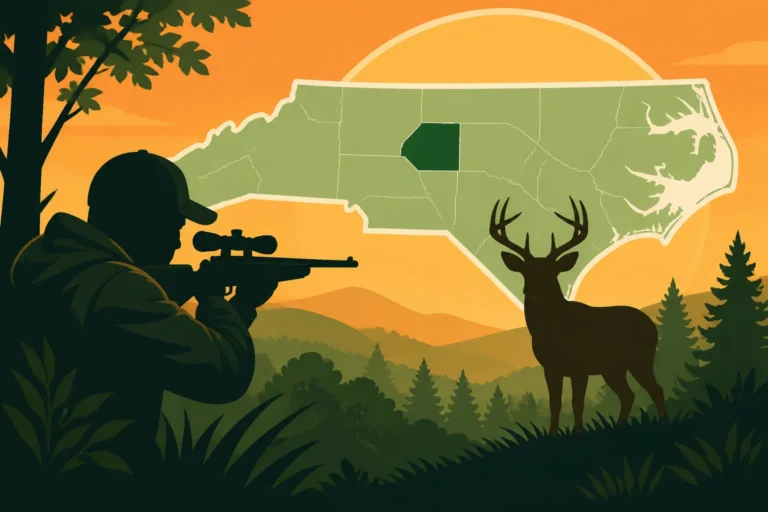
Croatan National Forest isn't just a number on a map; it's a living, breathing ecosystem woven into the fabric of Eastern North Carolina. Spanning parts of Craven, Carteret, and Jones counties, its location is what truly defines its character. You won't find towering peaks or dramatic elevation changes here. Instead, you're looking at a mostly flat, low-lying landscape that is profoundly influenced by its proximity to the coast and the water table. This means a predominant environment of pocosin swamps, vast stretches of longleaf pine savanna, and even pockets of maritime forest hugging the edges of coastal sounds and rivers.
This unique geography profoundly impacts hunting strategies. Forget the mountain thermals and ridge-running tactics you might use in the Appalachians; here, the wind is often the most consistent factor, and water is everywhere. Hunters must contend with dense, often wet, undergrowth, making tracking a different kind of challenge and still-hunting a test of patience and stealth. Deer, bear, and hogs move through these landscapes in distinct patterns, often relying on the slightly higher ground or the edges of dense pocosin thickets for bedding and travel corridors. Imagine a typical day: you might be slogging through knee-deep water in a cypress swamp in the morning, only to be glassing a burn-over longleaf pine flat in the afternoon. This diversity, while challenging, is also what makes Croatan such a rewarding place to hunt. Tools like onX Hunt become invaluable here, allowing you to easily identify water features, high ground, and potential travel corridors from aerial imagery before you even set foot in the woods.
Unique Characteristics and Habitat Types for Hunters
Croatan National Forest isn't a monolithic block of woods; it's a tapestry of distinct habitats, each presenting its own challenges and opportunities for the dedicated hunter. Understanding these different ecosystems is key to unlocking the forest's potential and finding success.
Dominant Pocosin Swamps and Their Challenges
When most folks think of Croatan, the image of "pocosin swamps" often comes to mind, and for good reason. These aren't your typical open swamps; pocosins are dense, often impenetrable thickets of stunted evergreen trees and shrubs like loblolly bay, sweet bay, and titi, growing on deep, acidic, peat soils. They're often waterlogged, creating a truly formidable environment. From a hunter's perspective, this means navigating extremely tough terrain where visibility is limited to mere yards, and every step is a battle against tangled vegetation and standing water. It's the kind of place where you earn every inch you gain.
The challenges are obvious: access is difficult, movement is slow and noisy, and tracking a wounded animal can be a nightmare. Yet, these same challenges create incredible sanctuaries for game. Big coastal black bears absolutely thrive in these thick, remote pocosins, using the dense cover for bedding and escape. Deer will often bed deep within these areas, only venturing out to the edges or slightly higher ground during low-light hours. Hunting Coastal Bears in Thick Pocosin Cover becomes an entirely different game here, often requiring hunters to position themselves on the few accessible edges or along natural funnels where game might be pushed by water or other hunters. If you’re going to venture deep, invest in solid rubber boots, good rain gear, and perhaps a GPS with a pre-marked track-back function. It's not for the faint of heart, but the rewards can be substantial.
Longleaf Pine Ecosystems and Their Opportunities
In stark contrast to the dense pocosins, Croatan also boasts significant areas of longleaf pine savannas. These are often characterized by widely spaced, mature longleaf pines with an open, grassy understory maintained by frequent prescribed fires. These fires are critical, burning off accumulating brush and allowing diverse native grasses and forbs to flourish, which are vital food sources for many species. For hunters, these areas offer a completely different experience. Visibility can be excellent, allowing for longer shots and the opportunity to spot game from a distance. The open understory makes still-hunting much quieter and more effective.
Deer often feed in these savannas, especially in areas with recent burns that promote new growth. The open nature can make them feel exposed, so hunting the edges where the longleaf transitions into thicker cover is often productive. Hunting Longleaf Pine Savanna for Deer can be a fantastic experience, especially if you're patient and pay attention to wind direction. Beyond deer, these fire-maintained habitats are critical for species like bobwhite quail, making Croatan a unique destination for upland bird hunters in certain areas, though quail populations remain a challenge across the state. Understanding the role of fire and looking for areas that have been recently burned (but are safe to enter) can give you a significant advantage.
Transitional Areas and Field Edges
One of the truisms in hunting is that game often uses transitional zones, and Croatan National Forest is no exception. These are the "edges" where one habitat type seamlessly (or abruptly) shifts into another. Think about where a dense pocosin meets an open longleaf stand, or where a hard-to-penetrate swamp gives way to slightly higher, more timbered ground. These interfaces are often heavily utilized by deer, hogs, and even bears as travel corridors, feeding areas, and bedding sites. Animals feel secure with the dense cover of one habitat while having easy access to the food and openness of another.
For a hunter, identifying and focusing on these transitional areas can dramatically increase your odds of success. Look for subtle changes in elevation, changes in tree species, or even old logging roads that mark the boundary between two distinct environments. Setting Up on a Piedmont Field Edge offers similar principles; while Croatan doesn't have many agricultural fields within its boundaries, the "edges" are still present in the form of natural clearings, power line cuts, or the boundary where the forest abuts private land. Deer will often rub and scrape heavily along these lines, leaving abundant sign of their movement. Scrape Lines Along a Logging Road can be hotbeds of activity, providing natural funnels that guide game right past your stand. By concentrating your scouting efforts on these seams, you're putting yourself in the prime position to intercept animals as they move between different areas of their home range.
Practical Implications for Hunters on Croatan National Forest
Hunting Croatan is an experience unlike many others in North Carolina, demanding careful planning and a good understanding of its unique characteristics. From navigating its vastness to contending with hunting pressure, every aspect requires a thoughtful approach.
Access Points and Navigating the Interior
Given Croatan's substantial size of 160,000 acres, understanding how to get in and out, and how to navigate once you're there, is paramount. The forest is crisscrossed with a network of forest roads, some well-maintained and gravel, others little more than two-track paths that can quickly become impassable with rain. Many of these roads offer legitimate access points, but it's crucial to distinguish between those open to public vehicle traffic and those restricted to administrative use, often gated off. Relying solely on a smartphone for navigation without a backup plan can be a costly mistake, especially in areas with spotty cell service.
This is where digital mapping tools become indispensable. An app like onX Hunt, or even GoHunt, allows you to overlay property lines, public land boundaries, and topographic maps directly onto aerial imagery. This helps you identify potential access points, anticipate changes in elevation (even subtle ones), and mark your stand locations, prospective bedding areas, and water sources. Using the NC Wildlife Map Tool in conjunction with a robust outdoor mapping app can provide a comprehensive view. Be aware that vehicle rules on national forest lands can vary; some roads may be seasonal, or open only to licensed vehicles, while others might require walking or even boating. Always check the specific area's regulations. Planning your entry and exit routes meticulously, especially if you venture deep into a pocosin, means you won't be caught off guard if the weather turns or darkness falls faster than expected.
Pressure, Solitude, and Finding Unused Ground
Like any accessible public land, Croatan National Forest experiences hunting pressure, especially during opening weekends and peak deer season. Opening Weekend Crowds on North Carolina Public Land are a reality, and if you show up to a popular trailhead expecting solitude, you might be in for a rude awakening. However, due to its sheer size and the challenging nature of its terrain, Croatan also offers incredible opportunities for solitude—if you're willing to put in the effort. The vastness means that most hunters will stick to the easily accessible areas near main roads or well-worn trails.
The key to finding unused ground lies in venturing further, deeper, and often into the less inviting sections. This could mean walking an extra mile or two from the nearest access point, or even using a canoe or kayak to reach remote areas along creeks or the sound. While it might sound daunting, these are the places where mature animals often seek refuge. Don't be afraid of the thick stuff; often, the harder it is to get to, the less pressure it sees. Using your mapping apps to identify hard-to-reach pockets, or even just long walk-ins that most people pass by, can be hugely effective. Finding Ground Others Walk Past is a principle that applies perfectly to Croatan. Consider hunting mid-week, or later in the season when the initial rush has subsided, for an even better chance at a more private hunting experience.
Specific Game Opportunities and Management
Croatan National Forest is a diverse hunting ground, offering opportunities for a variety of species, all managed by the North Carolina Wildlife Resources Commission (NCWRC). The forest is particularly renowned for its black bear population. The dense pocosins provide ideal habitat for bears, allowing them to grow to impressive sizes. Why Croatan Draws Coastal Bear Hunters is clear – the habitat is perfect. Bear hunting here can be incredibly challenging but equally rewarding. Deer are also abundant, though generally smaller-bodied than their Piedmont or mountain counterparts, they are plentiful and offer consistent hunting. Feral hogs are another prime target, present year-round, and often found in the same dense cover as bears and deer, causing significant crop damage in surrounding private lands and impacting native ecosystems within the forest.
Beyond big game, Croatan also provides opportunities for small game like squirrels and rabbits, especially in the longleaf pine areas and along the edges of thicker cover. Wild turkeys are present, though often in lower densities than in other regions of the state, requiring more dedicated scouting. Waterfowl can be found in the numerous ponds, creeks, and along the sound edges, adding another dimension to the hunting experience. The NCWRC actively manages these populations through regulated seasons and bag limits, and conducts habitat work like prescribed burns to ensure the long-term health of the forest and its wildlife. Hunters are critical partners in this management, providing data through harvest reporting and supporting conservation efforts. North Carolina's Black Bear Population continues to thrive, in large part due to areas like Croatan offering untouched habitat.
| Feature | Description | Hunting Implication |
|---|---|---|
| Total Acreage | Approximately 160,000 acres | Vast space for game, potential for solitude with effort, requires good navigation. |
| Primary Counties | Craven, Carteret, Jones | Coastal Plain geography dictates habitat and game behavior. |
| Dominant Habitat | Pocosin Swamps, Longleaf Pine Savannas | Pocosins = dense cover, difficult access, bear/hog strongholds. Longleaf = open, good visibility, deer and small game habitat. |
| Terrain | Mostly flat, low-lying, often wet | Rubber boots essential, focus on subtle elevation changes, wind important for scent. |
| Key Game Species | Deer, Black Bear, Feral Hogs, Turkey, Small Game, Waterfowl | Diverse opportunities; bear and hog hunting are major draws due to habitat. |
| Access | Network of forest roads (some gated), creeks, private land interfaces | Mix of vehicle, foot, and boat access; digital maps critical for planning. |
Disclaimer
This article is for general informational purposes only and does not constitute professional advice. Laws, prices and regulations vary by location and change over time. Consult a qualified professional for guidance on your specific situation.