Finding Access Near Charlotte
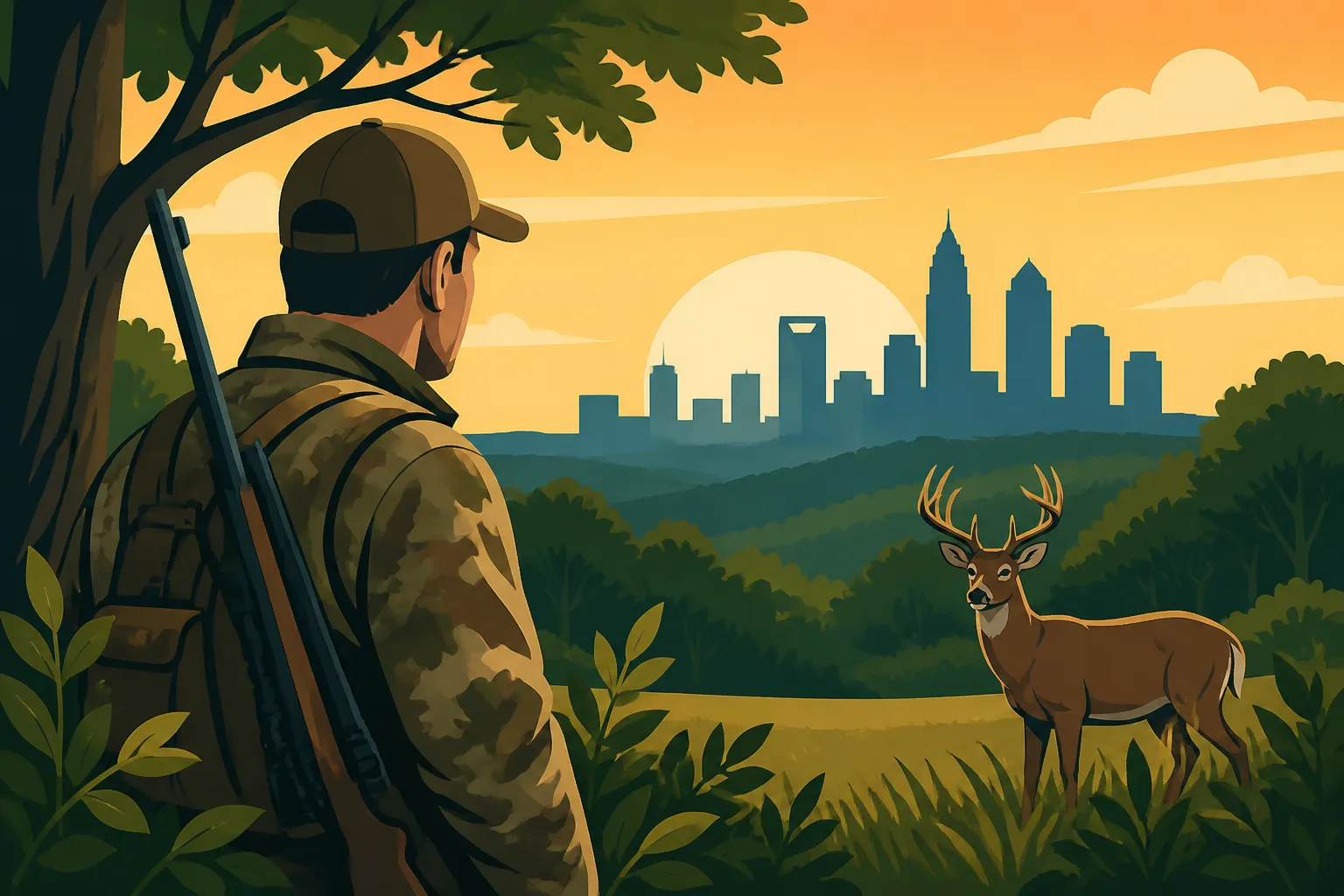
It's a common lament I hear from hunters moving to or living in the Queen City: "How in the world am I supposed to hunt near Charlotte?" The city's rapid growth is fantastic for the economy, but it can feel like a concrete curtain separating you from anything wild. The good news is, while you won't be setting up a deer stand within sight of the Bank of America tower, opportunities for chasing game exist within a reasonable drive, and this guide is going to help you uncover them.
The Urban Hunter's Mindset: Overcoming the Concrete Jungle Myth
Living near a bustling metropolitan area like Charlotte, it’s easy to feel disconnected from the wild places we yearn to hunt. The endless subdivisions, retail developments, and highways can create an overwhelming sense that all good hunting ground has been paved over or swallowed up by private estates with no-trespassing signs. This feeling is totally valid; seeing the cityscape expand can be disheartening when your heart is in the woods. You might drive for miles and miles, seeing nothing but development, and think, "There's just no hunting left around here." This perception can be a major roadblock, leading hunters to believe they need to travel hours upon hours to find viable ground.
But let's be realistic: while Charlotte itself is dense, North Carolina is still a deeply rural state once you get beyond the immediate suburban rings. What feels like an endless concrete jungle is actually just a relatively small dot on a much larger map of forests, farmlands, and river bottoms. The challenge isn't that the hunting isn't there; it's learning to look beyond the immediate surroundings and understanding that "near" a major city means something different to a hunter than it does to a commuter. You just have to shift your perspective and realize that a solid hour or two drive, which might feel like a trek for a daily commute, is often a perfectly acceptable and even common distance for a dedicated hunter seeking solitude and game.
North Carolina's Public Land Gems Within Reach
While North Carolina isn't known for vast tracts of federal land like some Western states, we do have some fantastic public hunting opportunities within striking distance of Charlotte if you know where to look. It's not about driving five minutes from your home, but rather about dedicating a little windshield time to access some truly wild places.
Uwharrie National Forest – The Piedmont's Prime Opportunity
When you talk about public hunting near Charlotte, the Uwharrie National Forest is almost always the first place that comes to mind, and for good reason. It's arguably the largest, most significant tract of public hunting land within a reasonable drive, typically about an hour to an hour and a half east of the city. This isn't flat, open country; the Uwharries are ancient, rolling mountains – the oldest in North America, in fact – though they now stand as modest, heavily timbered hills. The habitat is predominantly mature mixed hardwoods, dotted with pine plantations and crisscrossed by creeks and drainages. It offers a truly immersive forest hunting experience that can feel miles away from any major city.
Hunters flock to Uwharrie for white-tailed deer, which thrive in its diverse environment, as well as for wild turkeys, which can be found strutting the ridges in the spring. Small game like squirrels and rabbits are also abundant, making it a versatile destination. The terrain itself presents a challenge, with steep slopes and deep hollows, but that also means there are plenty of spots where you can get away from other hunters. Scouting here is key; understanding the topography, identifying mast crops, and finding those hidden benches and saddles can make all the difference. Uwharrie National Forest Hunting is a unique experience, offering a blend of physical challenge and rewarding solitude. If you're willing to put in the legwork, it can feel like a mountain hunt right here in the Piedmont. You might even discover some fantastic Hunting Uwharrie's Rolling Piedmont Hollows if you're willing to climb.
Exploring Smaller Piedmont Game Lands
Beyond the grandeur of Uwharrie, North Carolina also boasts a network of state-managed Game Lands that, while often smaller and more fragmented, can provide excellent local opportunities. These Game Lands are scattered throughout the Piedmont region, sometimes encompassing river bottoms, old timber tracts, or even land adjacent to agricultural fields. The key here is not to expect massive, unbroken wilderness, but rather to see these as strategic pockets of huntable land that often get overlooked because they require a bit more legwork and research to pinpoint.
These smaller tracts can be incredibly productive, especially for deer and turkey, as they often serve as travel corridors or bedding areas next to private farmlands. What they lack in sheer size, they can make up for in proximity and potentially less hunting pressure if you find a hard-to-access corner. The trick is diligently searching maps and understanding the specific rules for each tract. Don't dismiss a Game Land just because it looks small on a regional map; zoom in, study the access points, and consider what type of habitat it offers. You can find a useful guide on Finding a North Carolina Game Land Near You to help with your search. These areas often provide fantastic Hunting Small Private Tracts in North Carolina opportunities without the burden of asking for permission, if you do your homework.
Tools and Tactics for Unlocking Public Access
Hunting public land successfully, especially near a populated area like Charlotte, demands a strategic approach. Gone are the days of just blindly walking into the woods hoping for the best. Today's hunter has an arsenal of tools and tactics that can dramatically increase their chances of success and minimize wasted time.
Digital Mapping for the Modern Hunter
In the digital age, mapping applications have become indispensable for any serious hunter, and they are absolutely critical for navigating North Carolina's public lands. These apps allow you to identify property lines, locate access points, understand topography, and scout potential hunting spots from the comfort of your home. A prime example is onX Hunt, which provides incredibly detailed satellite imagery, topo maps, and, most importantly, clear identification of public and private land boundaries. This feature alone is worth its weight in gold, preventing accidental trespass and helping you maximize your time on legal hunting ground. You can layer different map views to see everything from timber cuts to food sources, identifying those subtle features that often hold game.
Many hunters will also combine this with other resources. While primarily focused on Western hunting, tools like GoHunt offer advanced planning features that can still be adapted for general scouting and understanding animal behavior, even if not providing the same hyper-local property line data as onX Hunt for North Carolina. For state-specific regulations and game land information, the NC Wildlife App from the North Carolina Wildlife Resources Commission is also a fantastic resource. Scouting With the NC Wildlife App can provide real-time updates and essential information. Learning to read and utilize different onX Layers for North Carolina Land Status is a game-changer; it helps you find those hidden fingers of public land, isolated creek bottoms, or remote ridgelines that other hunters might overlook.
Understanding Game Land Regulations and Entry
Hunting North Carolina Game Lands isn't as simple as just showing up with your license. These areas have specific rules and requirements that differ from hunting on private land or within the National Forests. First and foremost, you'll need a North Carolina Game Lands License, in addition to your regular hunting license and big game privileges. This permit helps fund the management and maintenance of these valuable public hunting areas. It's a small investment for the access it provides.
Beyond the license, many Game Lands require hunters to sign in and out, often at designated kiosks or via an online system. This isn't just bureaucratic red tape; it's a vital part of managing hunter numbers, collecting harvest data, and ensuring safety. Failing to sign in or out can result in a citation. Additionally, each Game Land often has specific regulations regarding permissible weapons, hunting days, vehicle access, and even how long a treestand can remain in place. You absolutely must check the specific rules for the particular Game Land you intend to hunt before you go. The NCWRC website is the best place for this. Make sure you understand the North Carolina Game Lands License Requirements before heading out. And always, always follow the proper North Carolina Game Lands Sign-In Process to avoid issues.
Strategic Scouting and Evasion of Pressure
Public land, especially those tracts within a couple of hours of a major population center, inevitably sees hunting pressure. It’s a reality we all face, but it doesn't mean success is impossible. It simply means you have to be smarter and work harder. The most effective way to beat pressure is through strategic scouting, both before the season and during. Start by poring over those digital maps, looking for areas that are difficult to access. Think about thickets, steep terrain, or pockets of woods that are surrounded by private land but have a thin public corridor leading to them. These are often the places other hunters bypass because they demand more effort.
Once you’ve identified potential areas, it’s time for boots on the ground. Visit these spots in the off-season or even just a few weeks before opening day. Look for fresh sign—tracks, rubs, scrapes, and bedding areas. But also look for old stand locations, discarded broadhead packaging, or well-worn trails from other hunters. The goal isn't just to find deer, but to find deer in a place where other hunters aren't. That might mean walking an extra mile, crossing a creek, or climbing a steep ridge. Scouting North Carolina Public Land Before Season is crucial for finding success. Remember, deer are incredibly adaptable; they learn to avoid pressure, often using thick cover or going nocturnal. Your job is to Finding Ground That Sees Fewer Hunters and then adjust your tactics to how those deer are behaving. This will also include understanding Hunting Pressure on North Carolina Public Land.
| Feature | Uwharrie National Forest | Smaller Piedmont Game Lands |
|---|---|---|
| Typical Size | Large (over 50,000 acres) | Small to Medium (hundreds to few thousand acres) |
| Terrain | Rolling hills, dense hardwoods, steep slopes | Varied: river bottoms, old fields, mixed timber, fragmented |
| Primary Species | Deer, Turkey, Small Game | Deer, Turkey, Small Game, Waterfowl (near water) |
| Hunting Pressure | Moderate to High, especially near access points; lower in remote areas | Variable; can be high if easily accessible, lower in overlooked pockets |
| Access Points | Numerous roads, trails, parking areas | Often limited, sometimes require walking in from public road or boat access |
| Management | US Forest Service, NCWRC | NC Wildlife Resources Commission |
| Feeling | Wild, immersive forest | More "patchwork," often near civilization |
The Art of Securing Private Land Permission
While public lands offer incredible opportunities, many hunters yearn for the consistent access and often higher quality hunting that private land can provide. Getting permission on private property near Charlotte can feel daunting, but it’s far from impossible. It often comes down to communication, respect, and a bit of old-fashioned neighborliness.
The Power of a Knock on the Door
In our increasingly digital world, sometimes the most effective method is the simplest: a polite knock on a farmhouse door. Farmers and landowners in the rural fringes of Charlotte are often inundated with requests, but a genuine, respectful approach can still open doors. The key is timing, appearance, and what you say. Don't show up in your hunting camo with a gun in hand. Dress casually, look presentable, and approach with humility. Introduce yourself, explain you're a responsible hunter looking for a place to enjoy the outdoors, and ask if they have any issues with deer or turkey. Offer to help them with any small tasks, like mending a fence or clearing brush, if they're agreeable. Building rapport is everything.
Landowners are often worried about liability, damage to their property, or dealing with irresponsible hunters. Emphasize that you are safe, will respect their land, and are happy to work around their farming or personal schedules. A written permission slip, signed by both parties, can offer peace of mind and clarify expectations, even if it's not always legally required. It's a great habit to adopt, and it shows you're serious and responsible. If you're wondering about the legal side, you can find more information about Do You Need Written Permission in North Carolina? to cover yourself. Developing good relationships through honest approaches like Knocking on Doors in Piedmont Farm Country is still a viable strategy for finding hunting land.
Hunting Leases and Clubs – Collaborative Access
For hunters seeking more consistent, exclusive access to private land without the constant pressure of knocking on doors, hunting leases and clubs offer a structured alternative. A hunting lease involves paying a landowner a fee for exclusive hunting rights to a specific parcel of land for a set period, typically a year. This guarantees your access and gives you more control over management and stand placement. Lease costs can vary widely depending on the size of the tract, the quality of the hunting, and its proximity to major population centers. While it's an investment, it can pay off in terms of reduced pressure and improved hunting quality. You can learn more about North Carolina Hunting Lease Costs to get a better idea of what to expect.
Hunting clubs are another popular option in North Carolina. These are groups of hunters who pool their resources to lease larger tracts of land, sharing the costs and the hunting opportunities. Clubs often have their own set of rules, ranging from harvest quotas to work days for habitat improvement. The camaraderie can be a huge benefit, offering a social aspect to hunting, but it also means adhering to group decisions. Both leases and clubs offer a significant step up in access and control compared to public land, but they come with financial commitments and, in the case of clubs, shared responsibilities. If you're looking for more consistent access, exploring how to Joining a North Carolina Hunting Club could be a good option.
Game Species to Target in the Charlotte Region
When hunting near Charlotte, whether on public or private land, certain game species are more prevalent and offer consistent opportunities. Understanding what to target can help you focus your scouting and gear choices.
White-tailed Deer – A Constant Pursuit
The white-tailed deer is, without a doubt, the most popular game animal in North Carolina, and the Piedmont region, including the areas around Charlotte, offers fantastic deer hunting. The mix of agricultural fields, mature hardwoods, and smaller woodlots creates ideal habitat, providing plenty of food and cover. Deer populations are robust, and opportunities exist for both archery and gun hunters throughout the fall and early winter. You'll find that deer here are often accustomed to living near human activity, sometimes utilizing those overlooked pockets of woods right on the edge of development.
Successful deer hunting in this area often involves understanding how deer use habitat edges, creek bottoms, and subtle elevation changes. Look for funnels where deer travel between bedding and feeding areas. Public lands like Uwharrie provide a more traditional timber hunting experience, while many Game Lands and private tracts will have a heavier influence from agricultural crops. Setting up on a Setting Up on a Piedmont Field Edge can be highly effective, especially in the evening. Don't forget to familiarize yourself with the overall North Carolina Deer Season Structure Explained to ensure you're hunting within the legal windows for your chosen zone. The challenge of Hunting Piedmont Farmland Deer means learning how to navigate diverse terrain and wary animals.
Wild Turkeys – The Spring Challenge
If the sound of a gobble echoing through the spring woods gets your heart pounding, you're in luck. Wild turkeys have made a remarkable comeback across North Carolina, and the Piedmont region holds a healthy population. Spring turkey season is a highly anticipated event, offering an exciting challenge for hunters who enjoy the intricate dance of calling and concealment. Turkeys thrive in the same mixed hardwood and agricultural landscapes that deer do, roosting in tall timber and feeding in open fields or oak flats.
Locating roost trees and understanding the daily patterns of turkeys are key to success. This often means early mornings spent listening, then setting up strategically to call a gobbler into range. Patience and good calling skills are paramount. While sometimes elusive, the reward of a gobbler coming in to your calls is unparalleled. Many of the same areas you'd scout for deer can hold turkeys. You can find excellent insights into Turkey Tactics for Piedmont Field Edges which can be very applicable to the areas around Charlotte. Be sure to check the North Carolina Spring Turkey Season Rules for specific dates and bag limits.
Small Game – Accessible and Abundant
For new hunters, those with limited time, or anyone simply looking to enjoy a relaxed day in the woods, small game hunting offers a fantastic, accessible option near Charlotte. Squirrels and rabbits are abundant throughout the Piedmont and can often be found in much smaller tracts of woods than deer or turkey require. This makes them ideal for exploring those overlooked parcels of public land or even getting permission on smaller private properties.
Squirrel hunting is a classic, often enjoyed by walking through mature oak and hickory woods, watching for movement in the canopy. It's a great way to hone your woodcraft and observation skills. Squirrel Hunting North Carolina Bottomland Hardwoods is a productive pursuit, especially in late fall and winter. Rabbit hunting, often done with beagles or by still-hunting thick brush piles and fencerows, provides another fun and active hunting experience. These animals thrive in areas with thick cover. Rabbit Hunting North Carolina Fencerows can be very rewarding, especially after a frost. Small game seasons are generally longer and less restrictive than big game seasons, offering ample opportunity to get out and enjoy nature without the intense pressure often associated with deer or turkey hunting.
Overcoming Pressure and Planning Your Hunt
The reality of hunting close to a major population center like Charlotte is that public land, by its very definition, is open to everyone. This means you will encounter other hunters. This isn't a reason to despair, but rather a call to adapt and plan more strategically.
Hunting Pressure on Public Lands – A Reality Check
It’s easy to feel frustrated when you hike deep into a public land tract, only to find another hunter’s treestand or hear a distant shot. The truth is, on easily accessible public lands near population centers, you are rarely truly alone. Hunting Pressure on North Carolina Public Land is a significant factor. However, this doesn't mean the hunting is impossible; it just means the deer (and other game) are likely highly pressured and have adapted their behavior. They might become more nocturnal, use thicker cover, or travel in ways that avoid common human routes.
Your strategy must shift from simply finding deer to finding unpressured deer, or at least deer that are reacting to pressure in a predictable way. This could mean walking further than most hunters are willing to go, hunting mid-week when crowds are thinner, or focusing on areas with difficult terrain that deters others. Don't be afraid to hunt thickets that seem impenetrable; pressured deer often retreat to these sanctuaries. Learn to identify subtle funnels and pinch points that are less obvious. Scouting isn't just about finding game sign; it's about finding unmolested game sign.
Understanding Regulations and Seasons
Perhaps the most critical aspect of hunting anywhere, but especially near populated areas, is a thorough understanding of all regulations and season dates. North Carolina's hunting regulations can be complex, with different gun deer zones, specific Game Land rules, and migratory bird seasons. Ignorance of the law is not an excuse, and a violation can result in fines, license revocation, and loss of hunting privileges. Before every season, and before hunting any new area, consult the latest North Carolina Inland Fishing, Hunting & Trapping Regulations Digest.
Pay close attention to your specific deer hunting zone, as opening and closing dates for gun seasons can vary significantly. Understand bag limits for all species you pursue. If hunting on a Game Land, make sure you know any specific rules for that tract, such as sign-in requirements, weapon restrictions, or stand placement regulations. Never assume. A few minutes spent reviewing the rules online or in the digest can save you a lot of headache and keep you legal in the field. This also includes understanding rules like those for North Carolina Deer Season Structure Explained and North Carolina Spring Turkey Season Rules, which are crucial for responsible hunting.
Disclaimer
This article is for general informational purposes only and does not constitute professional advice. Laws, prices and regulations vary by location and change over time. Consult a qualified professional for guidance on your specific situation.