Scotland County Sandhills Access
For hunters looking beyond the heavily-pressured mountains or the expansive coastal swamps, the Sandhills region of North Carolina offers a truly unique experience. Scotland County, nestled within this distinctive landscape, can feel like a riddle to unlock for public access, presenting a mix of rolling sandhills, longleaf pine forests, and agricultural lands. This guide aims to demystify hunting access in Scotland County, helping you navigate its unique terrain and identify prime opportunities for deer, turkey, small game, and more.
Understanding the Sandhills Landscape of Scotland County
The Sandhills region is a geological anomaly in North Carolina, a vestige of ancient coastlines that now sits somewhat inland. Scotland County embodies many of the characteristics that make this area distinct, offering a stark contrast to the thick, humid pocosins to the east or the steep, rocky Appalachian slopes to the west. Understanding this landscape is key to successful hunting.
Distinctive Longleaf Pine Ecosystem
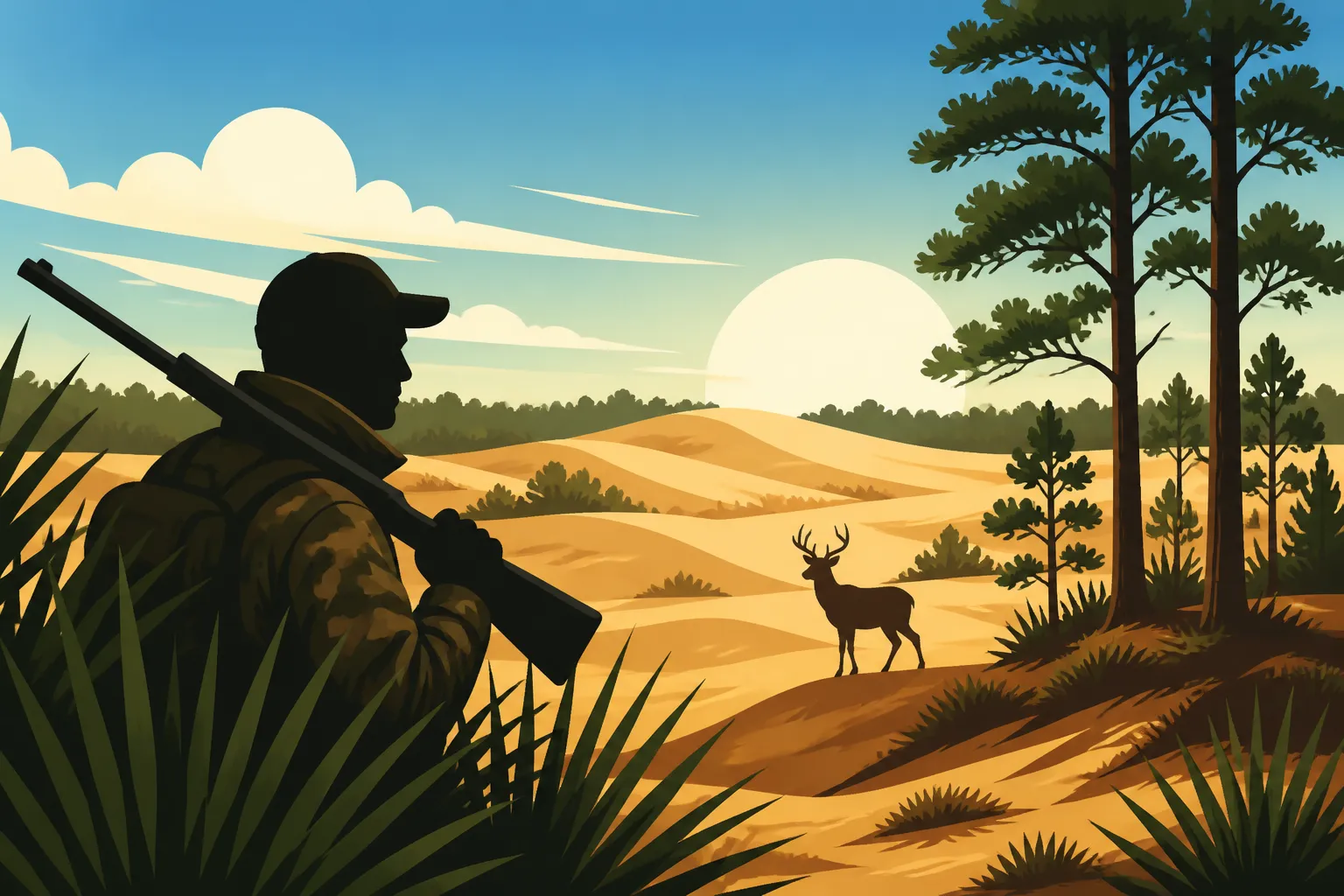
When you step into the Sandhills, you're entering a world dominated by the majestic longleaf pine. These trees, often standing tall and spaced out with an understory of wiregrass and scattered oaks, create an open, park-like environment that's a joy to walk through. This unique ecosystem, shaped by historical wildfires and conservation efforts, influences everything from animal behavior to visibility and sound propagation. The sandy soil, a hallmark of the region, drains quickly, meaning even after a heavy rain, you're unlikely to be slogging through deep mud, unlike some other parts of the state. However, it also means that sign can be less distinct than in softer, loamy soils. You'll often find pockets of thicker vegetation, like scrub oak and gallberry, especially along drainages or where fire has been suppressed. These dense areas become critical bedding and hiding spots for game. The open nature of the longleaf stands can also make spotting game at a distance more feasible, but it also means animals can spot you more easily, demanding careful movement and camouflage.
Game Species Calling the Sandhills Home
The Sandhills might not be known for the massive deer densities of the fertile Piedmont or the giant black bears of the coastal pocosins, but they offer quality hunting for a variety of species. White-tailed deer are certainly present, often smaller-bodied than their counterparts in other regions, but they adapt well to the scattered browse and mast crops found in the longleaf ecosystem. Turkey hunting can be fantastic here, as gobblers thrive in the open pine forests, using the clear understory for strutting and roosting in the tall pines. Small game, especially quail and rabbits, have historically done well in managed longleaf habitats, though populations can vary. You'll also find squirrels, primarily gray squirrels, in areas with mixed hardwoods or where pines drop abundant cones. Feral hogs are increasingly making their presence known across North Carolina, and the Sandhills are no exception; they can be found foraging in the sandy soils, particularly near agricultural fields or creek bottoms. Hunters often appreciate the challenge of pursuing these animals in a landscape that demands a different set of tactics than dense woods or wide-open fields.
Unique Challenges of Sandhills Terrain
Hunting in the Sandhills comes with its own set of challenges that can surprise those accustomed to other North Carolina landscapes. The rolling topography, while not as steep as the mountains, can still lead to significant elevation changes over the course of a day, making a long walk feel even longer through soft sand. The open nature of the pine forests, as mentioned, means less cover to conceal your approach, making stealth paramount. Sound travels differently in this environment, and while a distant gobble might seem close, it could be further than you think. Navigating without good mapping tools can also be tricky; while not as featureless as some coastal areas, the subtle undulations and repetitive nature of pine stands can disorient you, especially when tracking game. The sandy soil can also be tough on boots and vehicles, so come prepared. Finally, insects, especially ticks and chiggers, can be a nuisance in the underbrush, so proper attire and repellents are a must.
Identifying Public Hunting Access Points in Scotland County
Finding good public hunting ground in Scotland County specifically requires a bit of research, as it's not always as immediately obvious as, say, a sprawling national forest. However, there are definitely opportunities if you know where to look and how to prepare.
Navigating Scotland County Game Lands
The primary public hunting access in Scotland County is often through designated game lands. While there isn't a massive national forest unit directly within the county, portions of larger game lands might extend into or border Scotland County. The most prominent example for the Sandhills region is Sandhills Game Land, which, while primarily centered in Richmond and Moore counties, represents the typical habitat and management style you'll encounter. Hunters should always consult the North Carolina Wildlife Resources Commission (NCWRC) website or use a reliable mapping app to identify exact boundaries and regulations for any game land that might touch Scotland County. These game lands are managed specifically for wildlife and public recreation, often incorporating prescribed burns and timber management to enhance habitat for deer, turkey, and small game like quail. Expect a mixture of mature pine stands, areas of regenerating timber, and sometimes strategically placed food plots or openings. Familiarize yourself with the North Carolina Game Lands Sign-In Process as many game lands require sign-in or a permit beyond your standard hunting license.
Leveraging Mapping Tools for Public Access
In today's hunting world, digital mapping tools are absolutely indispensable, especially when trying to find public access in less-trafficked areas like Scotland County's Sandhills. Before you even leave your driveway, I highly recommend pulling up a mapping application like onX Hunt. This tool allows you to see property lines, landowner information, and clearly delineate public game lands from private holdings. Using layers in onX Hunt will show you property lines, which are crucial for staying legal and avoiding trespass. You can also scout satellite imagery for potential bedding areas, travel corridors, or water sources that might attract game. Look for subtle changes in vegetation, clear-cuts, or areas where different habitat types converge. Another valuable resource is the Using the NC Wildlife Map Tool on the NCWRC website, which provides official boundaries for game lands and other managed areas. While GoHunt is primarily known for Western draw hunts, some of its data analysis features, when applied to North Carolina, can help identify potential public land opportunities or key habitat features by studying general land ownership patterns and habitat types available. Always remember to cross-reference any digital map with actual signage on the ground.
Understanding Adjacent Public and Private Land
Scotland County is a blend of natural areas and agricultural landscapes, meaning public hunting areas are often interspersed with private farms and timber tracts. This intermingling can create both challenges and opportunities. While staying on public land is paramount, understanding the surrounding private land can inform your hunting strategy. For instance, deer and hogs will often use dense public cover for bedding during the day and venture out into adjacent private crop fields at night. Setting up on a public land edge bordering agricultural fields can be a highly effective strategy, especially during late season when food sources become scarce in the woods. Always be mindful of property lines and never assume access to private land without explicit permission. Respecting these boundaries is crucial for maintaining good hunter-landowner relations in the area. Look for features like fencerows, creek bottoms, or drainage ditches that might serve as natural funnels or travel corridors between different land types. Reading Aerial Photos for Piedmont Deer offers valuable insights that are equally applicable to identifying such features in the Sandhills.
Hunting Strategies for the Scotland County Sandhills
Once you've identified your access points, the next step is adapting your hunting strategies to the unique Sandhills environment. The longleaf pines, sandy soils, and specific game behavior demand a thoughtful approach.
Deer Hunting in Longleaf Stands
Deer in the Sandhills tend to be more spread out than in denser environments, and their movements are often influenced by the scattered mast crops (like acorns from interspersed oaks) and thicker pockets of cover. Still-hunting can be incredibly effective in the open longleaf stands. Moving slowly, stopping frequently to glass ahead, and using the wind to your advantage allows you to cover ground silently. The sandy soil often makes for quieter walking, which is a big plus. Look for subtle deer sign like tracks in soft sand, rubs on small pines, or fresh droppings. Ground blinds can also be excellent choices here, especially if you can brush them into a thicket bordering more open pine or near a natural funnel. With the open understory, deer can see long distances, so remaining absolutely still and camouflaged is vital. Consider your entry and exit routes carefully to avoid spooking game, especially if you're hunting near agricultural edges where deer feed. Understanding North Carolina Deer Season Structure Explained will help you align your tactics with the correct season dates for Scotland County.
Small Game Opportunities in Wiregrass and Scrub
The Sandhills were historically prime quail country, and while populations have faced challenges statewide, managed game lands within or bordering Scotland County still offer decent small game hunting. Quail thrive in the wiregrass understory of healthy longleaf ecosystems that undergo prescribed burns. Rabbit hunting is also popular, often found in dense brushy areas, clear-cuts, and along fencerows. For quail, hunting with a well-trained bird dog is by far the most effective method, allowing you to cover ground and locate coveys. For rabbits, beagles are traditional, but still-hunting thickets or walking brushy edges can also produce shots. Squirrels will be found wherever mature pines or hardwoods drop their nuts and cones. Early morning hunts, quietly moving through oak-pine mixes or along creek bottoms, can be very productive. Make sure you're familiar with North Carolina Small Game Season Rules before heading out.
Turkey Hunting Among the Pines
Spring turkey hunting in the Sandhills is a quintessential North Carolina experience. The open longleaf stands are ideal for turkey behavior, offering clear lines of sight for gobblers to strut and hens to feed. Roosting birds in the tall pines the evening before a hunt can be a game-changer, giving you a distinct advantage for setting up before dawn. Calling can be very effective in this environment, as sound carries well through the open woods. Focus on getting ahead of a gobbling bird, setting up against a wide tree for back cover, and using subtle calls to draw him in. Run-and-gun tactics can also work when birds are responsive, allowing you to cover more ground and locate active gobblers. Decoy placement is key; with good visibility, a realistic decoy or two can often seal the deal, but ensure they are visible from a distance and portray confident, natural poses. Don't forget to check the Wild Turkeys in North Carolina hub for more general tips that apply across the state.
Essential Permits and Considerations for Sandhills Hunting
Hunting in any new area requires attention to regulations and practical matters. The Sandhills of Scotland County are no different, and a little preparation can save you a lot of headaches.
Required Licenses and Permits
Before you even step foot in the woods, ensuring you have the correct North Carolina hunting licenses and permits is non-negotiable. For deer, turkey, and small game, you'll need a North Carolina hunting license, often combined with a big game privilege license for deer and turkey. If you plan to hunt on any designated game lands, a Game Lands License is also required. These are typically annual licenses, but there are different options for residents and non-residents. The NCWRC website is your best source for current pricing and requirements. You can purchase licenses online or through authorized license agents. Always carry your license and any required permits with you while hunting. For a full breakdown, refer to North Carolina Hunting Licenses and What They Cost.
Blaze Orange and Safety in Open Pine Forests
Safety is always paramount, and in the relatively open environment of the Sandhills, blaze orange requirements become even more critical. North Carolina has specific requirements for the amount of blaze orange (or blaze pink) clothing hunters must wear during certain seasons, especially during gun deer season. This usually means an outer garment visible from all sides. In the open longleaf stands, where visibility can be good but other hunters might be moving, wearing more orange than required is never a bad idea. Be mindful of others, especially during opening weekends or holiday hunts when pressure might be higher. Always identify your target positively and be aware of your backdrop. The sandy terrain can also present footing hazards, and while snake encounters are rare, being aware of venomous snakes like the Eastern Diamondback Rattlesnake or Copperhead, especially during warmer months, is always wise.
Checking Specific Game Land Regulations
While statewide regulations provide a baseline, game lands often have their own specific rules that can differ. These might include special season dates, bag limits, allowable hunting methods (e.g., archery-only sections, restrictions on dogs), vehicle access rules, and even requirements for checking in and out of the area. It is absolutely crucial to check the specific regulations for the game land you intend to hunt. The NCWRC website provides detailed rules for each game land, and these should be your primary reference. You can usually find a downloadable PDF map and regulation summary for each area. Don't rely solely on what you think you know from other game lands or general rules. Misinterpreting or overlooking a specific game land regulation can lead to fines or loss of hunting privileges. Tools like GoHunt sometimes compile this information, but always cross-reference with official NCWRC maps and regulations.
| Game Species | Typical Scotland County Habitat | Common Hunting Method | Key Considerations |
|---|---|---|---|
| Deer | Longleaf pine stands, scrub oak thickets, agricultural field edges | Still-hunting, ground blinds, treestands on edges | Open visibility, scattered food sources |
| Turkey | Mature longleaf pine forests, open areas | Calling, run-and-gun, decoys | Excellent acoustics, clear strutting zones |
| Quail | Wiregrass understory, managed burns, regenerating clear-cuts | Dog hunting | Habitat specific, can be challenging |
| Rabbit | Brushy edges, dense clear-cuts, creek bottoms | Dog hunting, still-hunting thickets | Concentrated in thick cover |
| Squirrel | Mixed pine-hardwood stands, mature pine stands | Still-hunting, walking | Primarily gray squirrels |
| Feral Hog | Agricultural field borders, dense cover, creek drainages | Spot-and-stalk, still-hunting thickets | Often nocturnal, elusive |
Disclaimer
This article is for general informational purposes only and does not constitute professional advice. Laws, prices and regulations vary by location and change over time. Consult a qualified professional for guidance on your specific situation.