Sampson County Public Hunting Ground
For many hunters in North Carolina, especially those living in counties dominated by agriculture and private land like Sampson County, the idea of finding accessible public hunting ground can feel like a real uphill battle. You drive past endless fields of corn and soybeans, vast timber tracts, and fenced-off property, all the while wondering where on earth an average person without a private lease is supposed to find a spot to hang a stand or call a gobbler. This guide is here to walk you through the realistic options and practical strategies for finding and successfully hunting public land within or closely accessible to Sampson County, giving you the knowledge to confidently pursue your passion.
Understanding Public Hunting Opportunities in Sampson County
Sampson County, sitting squarely in North Carolina's Coastal Plain, is known for its rich agricultural heritage and expansive private landholdings. This reality often presents a significant challenge for hunters looking for readily available public access. It's not like hunting in the vast National Forests of the mountains where public land stretches for hundreds of thousands of acres. Here, you're dealing with a different landscape and a different set of opportunities.
The Reality of Hunting Pressure and Limited Public Access
Let's be honest, finding a truly unpressured spot on public land in eastern North Carolina, especially within or near a populous county like Sampson, is a rare gem. The vast majority of the land is privately owned, often passed down through generations or managed by large timber companies and agricultural operations. This means the public hunting opportunities often exist on smaller, more fragmented parcels designated as Game Lands. These areas, while valuable, can see a fair bit of hunter traffic, particularly on opening days and prime weekends. Hunters often deal with the frustration of scouting a perfect spot only to find another truck parked there on opening morning, or hearing dogs running on adjacent private land that spill over onto public tracts. It's a common struggle, and it requires a different mindset and approach than hunting in less populated, more heavily forested regions.
Understanding the type of public land is crucial. Unlike the federal ownership of Pisgah or Nantahala National Forests, many Game Lands in the Coastal Plain are state-managed areas, sometimes leased from private landowners or timber companies, or are tracts of state-owned land. They often have specific rules that might differ from one Game Land to another, so you can't assume a blanket approach. The limited, scattered nature means that finding a genuinely secluded spot often involves walking further, working harder, and employing more strategic scouting.
Key Game Lands Within Sampson County or Nearby
While Sampson County isn't teeming with massive, contiguous blocks of public land, there are certainly options to explore, both within its borders and in closely adjacent counties that are easily accessible for Sampson County residents. Your best bet will generally be to look for "Game Lands" managed by the North Carolina Wildlife Resources Commission (NCWRC).
One of the most notable and accessible areas for Sampson County hunters is Holly Shelter Game Land. While it's primarily located in Pender County to the south, its sheer size (over 64,000 acres) and proximity make it a critical resource. It’s a vast, diverse area of pocosin swamps, pine savannas, and bottomland hardwoods, offering significant opportunities for deer, bear, and hog hunting. You might also consider Green Swamp Game Land to the southwest, largely in Brunswick and Columbus counties, which offers similar challenges and rewards with its unique wetland ecosystems. Closer to home, smaller, often isolated tracts of Game Land might exist along river systems or in scattered timber parcels within Sampson County itself. These smaller tracts can be diamonds in the rough, but they require diligent research to locate. Always check the official NCWRC Game Lands maps for the most accurate and up-to-date boundaries and access points. Hunting Coastal Plain Pocosin Swamps is a great resource if you plan to explore these wetland environments.
Remember that these Game Lands are dynamic. Timber operations, prescribed burns, and natural events like hurricanes can significantly alter the habitat from one year to the next. What was a productive area last season might look completely different this season, requiring you to adapt your scouting and hunting strategies.
Navigating Game Lands and Access Points
Once you've identified a potential Game Land, the real work begins. Hunting public land in an area like Sampson County isn't just about showing up; it's about smart planning, meticulous scouting, and having the right tools in your kit. Without these, you're likely to spend more time frustrated than actually hunting.
Essential Tools for Scouting and Planning
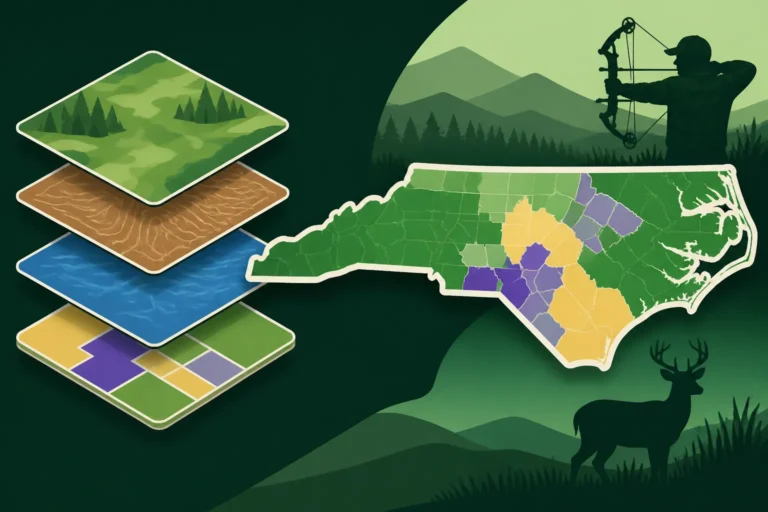
In today's hunting world, digital mapping tools are non-negotiable, especially when you're dealing with fragmented public land that often abuts private property. Apps like onX Hunt have revolutionized how hunters approach public ground. They allow you to instantly see property boundaries, clearly differentiating public from private land, which is absolutely critical in a county like Sampson. You can mark potential access points, identify natural funnels, locate bedding areas, and plan your entry and exit routes—all before you even step foot in the woods. This is invaluable when dealing with small, irregularly shaped Game Land parcels where accidentally crossing a line could lead to an unpleasant encounter. Another fantastic resource for researching hunting areas and opportunities is GoHunt, which can offer insights into game populations and unit-specific data, though always cross-reference with NCWRC's local regulations.
Beyond digital tools, good old-fashioned pre-season scouting is paramount. Spend time walking the ground, even in the off-season. Look for deer trails, rubs, scrapes, and turkey sign like droppings and dusting bowls. Pay attention to changes in elevation, even subtle ones, which can serve as travel corridors. Identify potential food sources, like stands of oaks or persimmon trees, and water sources. Understanding the terrain and how game uses it before the season opens will give you a significant advantage. Don't forget to check the NCWRC website for specific rules and regulations pertaining to the Game Land you intend to hunt. These rules can cover everything from allowed weapons to vehicle access and even specific sign-in requirements. Scouting North Carolina Public Land Before Season delves deeper into these important pre-hunt activities.
Common Game Species and Hunting Methods
Sampson County's landscape, and that of its neighboring Coastal Plain counties, supports a robust population of several popular game species. White-tailed deer are, of course, the primary draw for many hunters. You'll find deer across the agricultural fields, in the river bottoms, and within the various timber cuts and pocosin thickets. Wild turkeys are also prevalent, especially in areas with mature hardwoods and open understories, or along the edges of agricultural fields. You'll also encounter a healthy population of feral hogs, which are open to year-round hunting on private land and often present a target of opportunity on public ground. Small game like squirrels and rabbits are abundant in appropriate habitats.
When it comes to hunting methods, you'll need to adapt to the terrain and the pressure. For deer, still-hunting through thick pocosin cover or along river bottoms can be effective, allowing you to cover ground slowly and quietly. Ground blinds are excellent choices for hunting field edges or areas with limited cover, providing concealment without the need for a suitable tree. If the Game Land allows it and you have a small group, very controlled deer drives on smaller tracts can push deer towards standers. For turkeys, run-and-gun tactics can work well if you're covering a lot of ground, using locator calls to pinpoint gobblers and then moving in strategically. Run-and-Gun Turkey Tactics on Public Land could be a valuable read for turkey hunters. For hogs, opportunistic encounters are common, but setting up over fresh sign, especially near water or rooting areas, can also be productive.
The key across all species and methods on these public lands is patience, adaptability, and an understanding that game animals here are often well-versed in human presence. They've heard calls, seen hunters, and navigated pressure, making them often more challenging to pursue than deer or turkeys on exclusive private properties.
Strategies for Successful Public Land Hunting in Sampson County
Hunting public land successfully in a region like Sampson County isn't about out-spending other hunters; it's about out-thinking them. It requires a blend of physical effort, strategic planning, and a deep understanding of how game animals react to pressure in these unique environments.
Finding Undisturbed Pockets
This is perhaps the most crucial strategy for public land hunters anywhere, and it's especially true in Sampson County. The easiest access points to Game Lands often see the most pressure. To find undisturbed pockets of game, you often need to walk further than everyone else. Look at your map on onX Hunt and identify areas that are a mile or more from a parking area or vehicle access point. These "hard-to-reach" spots often hold animals that have been pushed out of more accessible areas or simply prefer solitude. You might be surprised how quickly the pressure drops off a quarter-mile from the road.
Beyond distance, look for natural barriers that deter casual hunters. Think about dense thickets, overgrown clear-cuts, or areas with standing water or mud that require waders or a willingness to get dirty. These are the places that other hunters walk past, convinced no animal would willingly live there. However, for a mature buck or a wary gobbler, these can be sanctuary zones. Even subtle changes in elevation, like a slightly higher ridge running through a bottomland, can serve as a travel corridor or bedding area that goes unnoticed by most. Think about hunting during the week rather than the weekend, when many people are working, reducing the overall pressure. Finding Ground Others Walk Past offers more insights into this critical mindset.
Adapting to Coastal Plain Habitat
The Coastal Plain offers a distinct hunting environment, very different from the mountains or even the rolling Piedmont. In Sampson County, you'll encounter a mosaic of agricultural fields, river swamps, pine plantations, and those unique pocosin wetlands. Each habitat type presents specific challenges and opportunities. Deer often use the edges of agricultural fields for feeding, especially during the late season when crops are harvested or during the early season when green fields are lush. They'll then retreat into nearby thickets, swamps, or young pine plantations for bedding cover. Understanding these patterns is key.
When hunting pocosin edges or river bottoms, be acutely aware of wind direction and thermals, especially as the sun rises and falls. In these flatter areas, the wind might not be as predictable as on a mountain slope, but it's still your primary concern. Look for funnels created by changes in vegetation or water features. For example, a narrow strip of dry ground between two swampy areas can be a major travel route for deer and hogs. Turkeys will often roost in tall pines or hardwoods along river systems and fly down into more open areas to feed. Adapting your setup to these features, perhaps using a ground blind brushed into a field edge or setting up on a high point overlooking a pocosin, will increase your odds significantly. Hunting Croatan Forest Pocosin Edges provides excellent context for this kind of terrain.
Overcoming Challenges and Maximizing Your Chances
Public land hunting often comes with its own unique set of frustrations, especially in areas with limited access and higher hunter densities. However, with the right approach and a healthy dose of patience, these challenges can be overcome, leading to rewarding experiences.
Managing Hunter Pressure and Ethics
Let's face it, one of the biggest challenges on public land, especially around the initial opening days, is dealing with other hunters. You might hear shots from nearby, encounter other people walking through your spot, or find that the game has become completely nocturnal due to pressure. It's frustrating, but it's part of the deal. The best way to manage this is to understand that it will happen and to cultivate a mindset of courtesy and safety. Always wear your blaze orange as required, even if you’re archery hunting and it’s technically optional in some zones – it’s just smart. Communicate with other hunters if you encounter them, and try to find common ground. Most hunters are respectful if approached correctly.
Beyond just other people, you might encounter issues with dogs, especially in areas where bear or deer dog hunting is practiced on adjacent private land. While frustrating, understanding the local regulations and knowing how to handle such situations (e.g., contacting the dog owner if tags are present) is important. Sometimes, the best strategy is to embrace hunting during less popular times: hunt mid-week, during inclement weather (if safe), or later in the season when many fair-weather hunters have packed it in. These are often when truly smart, older animals start moving during daylight again. Hunting Pressure on North Carolina Public Land offers more detailed advice on navigating these common issues.
Respecting Regulations and Land Boundaries
It goes without saying, but always, always know the rules. Each Game Land can have specific regulations regarding hunting seasons, weapon types, harvest reporting, vehicle access, and even baiting (which is generally prohibited on Game Lands). The NCWRC website and specific Game Land maps are your go-to resources. It’s not just about avoiding a fine; it’s about being a responsible hunter and ensuring the future of public access.
Perhaps the most critical aspect in a county like Sampson, with its patchwork of public and private land, is respecting property boundaries. With onX Hunt or similar apps, there's really no excuse for inadvertently trespassing. Regularly check your location, especially when tracking wounded game or pursuing an animal that's moving near a boundary. If game crosses onto private land where you don't have permission, you must obtain permission from the landowner before pursuing it. This is a non-negotiable part of ethical hunting and maintaining positive landowner relations, which are crucial in areas like Sampson County. Finally, remember to report your harvest accurately and in a timely manner according to NCWRC rules. This data is vital for wildlife management and ensuring healthy game populations for future generations of hunters.
Here’s a quick comparison of general hunting situations a Sampson County hunter might face:
| Feature | Public Game Lands (Sampson/Adjacent Counties) | Private Land (Sampson County) |
|---|---|---|
| Accessibility | Open to anyone with proper license/permit | Requires permission, lease, or ownership |
| Hunter Pressure | Often higher, especially near access points | Typically lower, controlled by owner/lessee |
| Habitat Diversity | Can be diverse (pocosin, pine, bottomland) | Highly variable; farmland, woodlots, timber |
| Game Population | Good, but animals can be wary/nocturnal | Can be excellent, often less pressured |
| Scouting Effort | High, requires searching for undisturbed areas | Moderate to high, depending on familiarity |
| Rules & Regulations | NCWRC Game Land rules apply, specific to area | NCWRC statewide rules apply; landowner rules may add more |
| Gear Considerations | Focus on mobility, ground blinds, mapping | Can use more permanent setups (stands, food plots) |
| Trophy Potential | Possible, but often requires more effort | Higher potential due to less pressure |
| Cost | License/permits only | Varies: permission (free), lease (significant cost) |
Disclaimer
This article is for general informational purposes only and does not constitute professional advice. Laws, prices and regulations vary by location and change over time. Consult a qualified professional for guidance on your specific situation.