Rabbit Hunting Thick North Carolina Brush
North Carolina's dense landscapes offer some fantastic rabbit hunting opportunities, but anyone who's tried to bust a cottontail out of a gnarly briar patch or an overgrown clear-cut knows it's a monumental task. You hear the rustle, you know they're there, but getting a clear shot or even just seeing the rabbit before it vanishes again can feel nearly impossible. This guide is dedicated to helping you tackle those frustratingly thick North Carolina brush piles, providing practical strategies, gear advice, and a deeper understanding of how to put more rabbits in the bag from cover that seems impenetrable.
Understanding North Carolina's Prime Rabbit Cover
Before you even step foot in the woods, understanding where rabbits thrive in North Carolina's thickest cover is your first step to success. Cottontails are masters of camouflage and evasion, and they gravitate towards areas that offer both abundant food sources and immediate, dense refuge from predators. This means we're often looking at places that are tough for humans to navigate, but absolute havens for rabbits.
Identifying Ideal Rabbit Habitat in Dense Areas
Rabbits aren't just hiding in any thicket; they're looking for specific features within that dense vegetation. Think about edges – the transition zones between different types of cover. A field edge bordering a dense pine plantation, or a creek bottom that suddenly gives way to a briar-choked hillside, these are prime spots. These edges allow rabbits to feed on lush grasses, clover, or fallen berries and then dart instantly into the safety of the thick stuff when danger approaches.
Look for areas with a high density of interwoven vegetation. This includes old clear-cuts that have grown up in a tangled mess of saplings, briars, and honeysuckle. These spots provide both browse and overhead cover. Abandoned farmsteads, with their overgrown fencerows and dilapidated outbuildings, are also gold mines. The key is structural complexity—places where the cover is so interwoven that a rabbit can seemingly disappear into thin air. Many seasoned hunters know that if they're struggling to walk through it, a rabbit is probably loving it. Mapping tools, like those available through services such as GoHunt, can be incredibly useful for pinpointing these transition zones and identifying potential rabbit strongholds on public land or properties you have permission to hunt. You'd be surprised what a quick aerial view can reveal about forgotten fencerows or clear-cut boundaries.
Common Types of Thick North Carolina Brush
North Carolina boasts a diverse range of dense cover types that rabbits call home, each presenting its own unique challenge and opportunity. Understanding these different brush types can help you tailor your approach.
- Briar Patches (Greenbrier, Blackberry, etc.): These are arguably the most common and most dreaded. Found almost everywhere from field edges to the understory of thinned timber, briar patches offer an almost impenetrable fortress of thorns. Rabbits will hold incredibly tight in these, often not flushing until you are practically on top of them. The sheer density and thorny nature make these spots difficult to push, but highly rewarding when a rabbit finally bursts out.
- Honeysuckle Thickets: Japanese honeysuckle is an invasive species, but rabbits absolutely adore its dense, low-growing mats. It forms thick, evergreen cover that retains its protective qualities even in winter. These thickets often grow along creek bottoms, old logging roads, and disturbed areas, forming a green carpet that can be surprisingly tough to penetrate.
- Young Pine Plantations/Clear-cuts: When a pine forest is clear-cut, it regenerates into a dense mix of young pines, hardwoods, and a myriad of ground-level vegetation. This creates a dense, multi-layered habitat that is perfect for rabbits. The young pines offer overhead cover, while the undergrowth provides forage and escape routes. These areas can be especially productive during the cooler months when other cover has died back.
- Pocosin Edges and Swamps: In the Coastal Plain, rabbits will utilize the edges of thick pocosin swamps and dense wetland areas. The dense shrubbery, often including gallberry, titi, and bay bushes, provides excellent cover. Hunting these areas often involves dealing with wet ground and even thicker vegetation, but the rewards can be significant, especially in areas with limited upland cover. For more on hunting this specific habitat, you might find our guide on Hunting Coastal Plain Pocosin Swamps insightful.
- Overgrown Fencerows and Hedgerows: These linear strips of dense vegetation are classic rabbit habitat. Often found on the borders of agricultural fields or separating old pastures, they provide cover and travel corridors. Rabbits will burrow into the bases of these fencerows or hide deep within the entangled vines and brush. Our guide on Rabbit Hunting North Carolina Fencerows delves deeper into these specific habitats.
Essential Gear and Tactics for Navigating the Thickets
Hunting rabbits in thick brush is not a casual stroll; it's a physically demanding endeavor that requires the right equipment and a strategic approach. If you're not prepared, the briars will win every time.
Shotgun, Ammo, and Choke Selection
When you're busting brush for rabbits, the shots come fast, close, and through thick cover. You need a shotgun setup that prioritizes quick handling and a wide pattern.
- Shotgun Gauge and Type: A 12-gauge or 20-gauge shotgun is ideal. Pump-action or semi-automatic shotguns are popular for their quick follow-up shots, which can be crucial when a rabbit zig-zags through the brush. The key is a gun that mounts quickly and isn't too long, as you'll be swinging it in tight quarters. Consider a shorter barrel length (24-26 inches) for better maneuverability. For more guidance on choosing the right firearm, check out our piece on Shotgun Gauge Choice.
- Ammunition: For rabbits, you want a shot size that offers a good pattern density without over-penetrating. #6 lead shot is a classic choice, providing plenty of pellets to ensure a clean kill on a fast-moving target. Some hunters prefer #5 or even #4 for slightly more punch in extremely dense cover, but #6 usually gets the job done reliably. Make sure you have enough shells, as you might get multiple opportunities or need a second shot.
- Choke: An open choke is your best friend in thick brush. Improved Cylinder (IC) or even Cylinder (Cylinder Bore) are excellent choices. These chokes spread the pattern quickly, giving you a wider margin for error on those close-range, fleeting shots. A modified choke can work, but it tightens the pattern a bit too much for the typical 10-25 yard shots you'll get in the thick stuff. Our article on Choke Choice for Fast Flushes provides more detail on selecting the perfect choke for upland game.
Dressing for Success in Briar Patches
This is where many new hunters make their biggest mistake. You will get snagged, scratched, and poked if you don't dress properly. Durability and protection are paramount.
- Briar-Proof Pants/Chaps: This is non-negotiable. Heavy-duty briar pants or chaps are essential to protect your legs from thorns and tears. Brands like Dan's Hunting Gear or Filson make excellent options. You want something incredibly tough that can withstand constant abuse. Our guide on Brush Pants for North Carolina Mountain Laurel offers specific advice on protective legwear suitable for dense undergrowth.
- Sturdy Jacket/Vest: A tough canvas or waxed cotton jacket will offer upper body protection from briars. Many hunters opt for an upland game vest, which has the added benefit of large game pouches for your rabbits and shell loops. The Upland Vests With Water Capacity are particularly useful for carrying water, which you'll definitely need on physically demanding hunts.
- Durable Boots: Your feet will take a beating. Invest in high-quality, waterproof boots with good ankle support. Rubber boots are great for wet conditions often found in pocosin edges or creek bottoms, while sturdy leather or synthetic hiking boots can handle drier, rocky terrain. Ensure they are comfortable for many miles of walking. For more on footwear, refer to our article on Boots for North Carolina Swamps and Ridges.
- Gloves: Thick leather gloves are a must to protect your hands when pushing through thorny bushes or retrieving rabbits.
- Blaze Orange: Safety is critical, especially when hunting with others or in popular public areas. North Carolina's blaze orange requirements apply to all hunters during daylight hours outside of archery-only seasons. Ensure you wear a highly visible blaze orange hat and vest or jacket. This is not just a legal requirement but a crucial safety measure when visibility is often limited. You can learn more about specific requirements in our article on Blaze Orange Requirements.
Walking and Pushing the Cover Effectively
This isn't about quietly still-hunting; it's about making noise and forcing rabbits to move. You need to be methodical and relentless.
- Systematic Pushing: Don't just wander aimlessly. Choose a section of cover and push it systematically, moving in a line with any hunting partners. If hunting solo, work in a grid pattern, moving slowly and thoroughly. Kick every brush pile, stomp through every honeysuckle tangle. Rabbits will often hide until the very last second, practically between your feet.
- Pause and Listen: As you move, pause frequently for a few seconds. Rabbits often bolt when they think you've passed or paused, giving you a chance to react. These short breaks also allow you to catch your breath and listen for the tell-tale rustle of a flushing rabbit.
- Know Your Shooting Lanes: In thick cover, shooting lanes are often fleeting and small. You need to be quick on the swing and decisive with your shot. Don't try to force a shot through heavy brush; it's unethical and usually ineffective. Wait for a clear window, even if it's just for a split second. This means keeping your gun mounted and ready to go.
- Work with the Wind: If possible, try to push cover into the wind. Rabbits rely heavily on their sense of smell, and the wind can carry your scent ahead, potentially alerting them before you get close. Pushing into the wind can sometimes give you a better chance to get on top of them before they bolt.
Hunting with Dogs Versus Solo Stalking
The debate over hunting with dogs versus going it alone is perennial, but for rabbit hunting in North Carolina's thick brush, dogs, particularly beagles, offer a distinct advantage.
The Unbeatable Advantage of Beagles
Let's be honest: if you want to maximize your rabbit harvest in truly thick cover, a good pack of beagles is almost unbeatable. They are purpose-bred for this exact task, with an incredible sense of smell and an innate desire to trail rabbits.
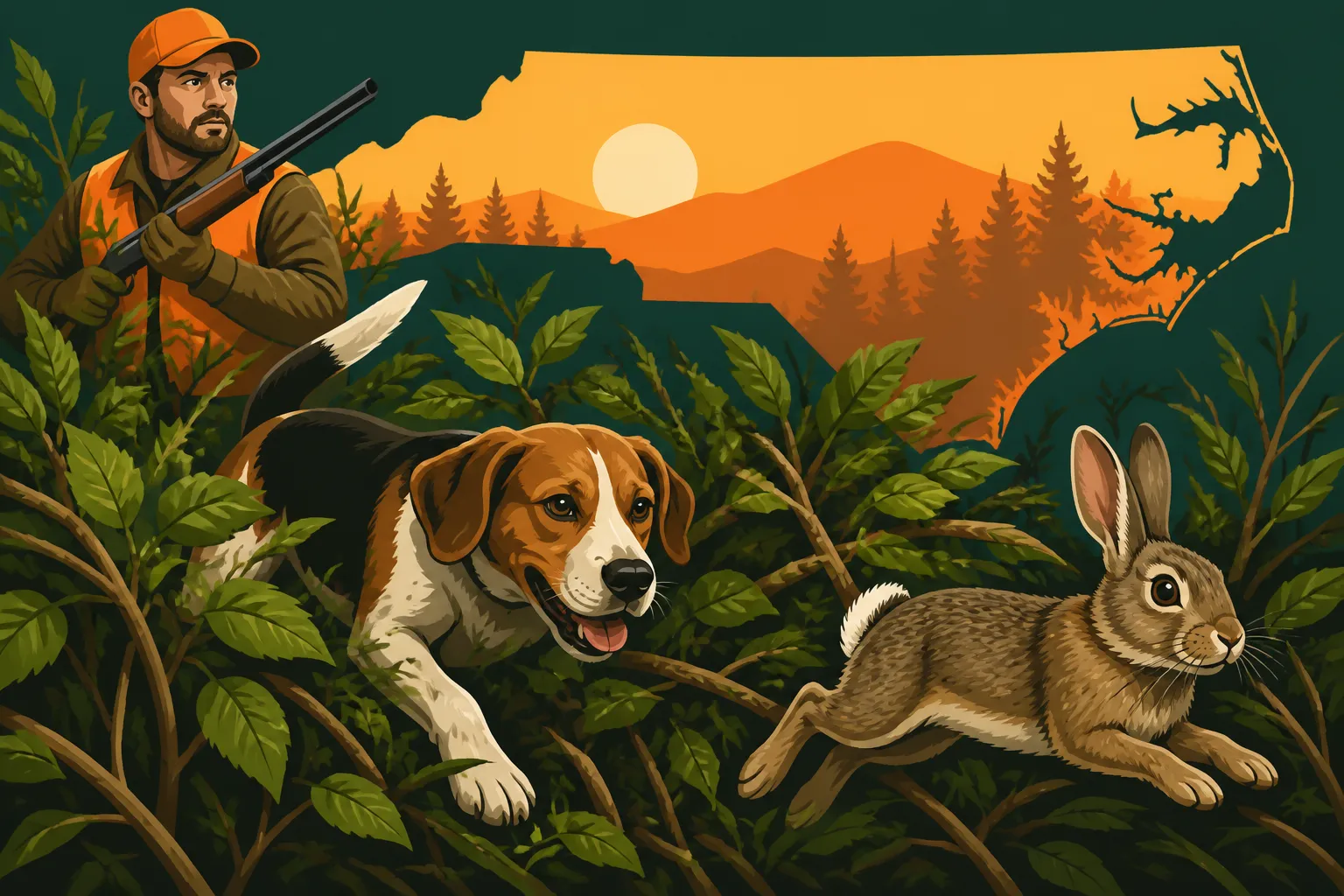
- Scent Trailing Power: Beagles can follow a rabbit's scent trail, even an old one, through the densest briars and honeysuckle. They'll unravel the rabbit's escape route, pushing it out of cover that you could never penetrate. This saves you immense physical effort and greatly increases the number of rabbits you encounter. Our article on Running Beagles on North Carolina Cottontails expands significantly on this topic, covering everything from training to pack dynamics.
- Circumventing the Rabbit's Instinct: Rabbits, when flushed, often run in a large circle back to their original "bed" or a nearby thicket. Beagles, with their persistent baying, will keep the rabbit moving along this circular path. This allows hunters to position themselves strategically along known escape routes or anticipated return paths, getting ready for the rabbit to come back around.
- Finding Hidden Rabbits: Beagles don't just chase; they also find rabbits that are holding tight. Their tireless work in the thickest cover means fewer rabbits are missed, leading to more opportunities for hunters. The excitement of a beagle on a hot track, baying through the woods, is also an experience unto itself.
- Ethical Considerations: It's important to remember that using dogs requires careful management. Ensure your dogs are well-trained, have good recall, and are equipped with GPS collars (like those from Garmin or GoHunt's mapping layers can integrate with some GPS tracking systems) to prevent them from getting lost or straying onto private land where you don't have permission. Always be respectful of landowners and other hunters.
Effective Solo and Small Group Tactics Without Dogs
Not everyone has access to a pack of beagles, and that's perfectly fine. You can absolutely still have productive rabbit hunts in thick North Carolina brush, it just requires more legwork and a slightly different strategy.
- The "Stop and Go" Method: This is a classic solo tactic. Walk through likely rabbit cover at a normal pace, making a fair amount of noise by rustling through leaves and kicking brush. Then, suddenly stop dead still for 10-20 seconds. Rabbits, thinking the danger has passed, will often bolt from their hiding spots during these pauses, giving you a quick shot. It's surprising how effective this can be, playing on the rabbit's natural inclination to freeze and then flee.
- Small Group Drives: If you have a few hunting buddies, you can organize small, informal drives. One or two "pushers" walk through the thickest cover, making noise, while others position themselves as "blockers" at the edges of the thicket or along likely escape routes. Communication is key here, and having a plan for who shoots when and where is vital for safety. This mimics the concept of a deer drive on North Carolina public land, just on a smaller scale for rabbits.
- Focus on Specific Cover Patches: Instead of trying to cover vast areas, concentrate your efforts on smaller, well-defined thickets or brush piles that look like prime rabbit habitat. Pound these areas thoroughly, kicking every bush and log. Sometimes, the most productive strategy is to hit a dozen small, promising spots rather than one massive, impenetrable one. This is where an app like GoHunt can shine, helping you scout these smaller, isolated pockets of cover on a map before you even leave home.
- Utilize Natural Funnels: Rabbits will often use the path of least resistance when escaping. Look for natural funnels created by terrain features, old fences, or thinner strips of vegetation within a larger thicket. Positioning yourself near these funnels can offer better shot opportunities as rabbits are channeled past your position.
| Cover Type | Density Level | Best Tactics | Gear Considerations |
|---|---|---|---|
| Briar Patches | Extremely Dense | Dog drives, systematic pushing, "stop and go" | Briar pants/chaps, open choke, tough gloves |
| Honeysuckle Thickets | High Density | Dog drives, systematic pushing, small group drives | Briar pants/chaps, waterproof boots, shotgun with short barrel |
| Young Pine Plantations | Moderate to High | Systematic pushing, small group drives, listen for rustles | Durable jacket, upland vest, good ankle support boots |
| Pocosin/Swamp Edges | Very High | Dog drives (if dry enough), slow pushes, focus on raised ground | Rubber boots, waterproof outerwear, insect repellent |
| Overgrown Fencerows | Moderate to High | Solo walking "stop and go", small group pushes | Standard upland gear, awareness of property lines |
Safety First When Hunting in Tight Spaces
Hunting in thick brush presents unique safety challenges due to limited visibility and the close proximity of hunters (if you're not solo). Prioritizing safety is non-negotiable.
Visibility and Blaze Orange Requirements
In North Carolina, when hunting small game or big game (except dove hunters, and bowhunters during archery season or muzzleloader season using only archery equipment), all hunters are required to wear blaze orange. This includes rabbit hunting. The specific requirements typically call for a cap or an outer garment visible from all sides.
- Maximum Visibility: Even when not legally required (e.g., during archery-only segments where small game can also be hunted), wearing blaze orange is a smart move. In thick brush, a rabbit can jump right in front of another hunter, and you need to be highly visible to prevent accidents. Wear more than the minimum if possible. A blaze orange vest and hat are standard, but a jacket offers even more surface area.
- Eye Protection: While not always mandated, wearing shooting glasses is highly recommended. Not only do they protect your eyes from stray pellets, but they also offer crucial protection from snapping branches and thorns as you push through dense cover. Clear lenses are often best for the low light conditions found under thick canopies.
Communication and Shot Placement
When hunting in a group, effective communication is paramount. Hand signals, whistles, or simply calling out "hunter up!" or "rabbit!" can make all the difference in preventing accidents.
- Establish Zones of Fire: Before you begin a drive or push, clearly define each hunter's zone of fire. Generally, you should only shoot at game that is moving away from you or clearly to your side, never towards another hunter. In thick cover, this means being extra disciplined. If you can't clearly see your target and what's beyond it, do not shoot.
- Know Your Backstop: Always be aware of your surroundings and what lies beyond your target. In many areas of North Carolina, the terrain is relatively flat, and a missed shot can travel a long distance. In thick brush, the ground or a large tree often acts as a natural backstop, but never assume.
- Retrieve Game Carefully: After a shot, proceed carefully into the thick brush to retrieve your rabbit. Mark the spot mentally or with a physical marker (like a ribbon) before entering. Always open your shotgun's action or engage the safety before entering dense cover or approaching a downed animal. If hunting with dogs, teach them to retrieve quickly and gently to minimize damage to the game.
Rabbit hunting in North Carolina's thick brush is a rewarding challenge. It’s hard work, but the thrill of a flushing cottontail and the satisfaction of a successful hunt makes every scratch and sweat drop worth it. With the right preparation, gear, and tactics, you'll be well on your way to filling your game bag, even when tackling the state's gnarliest thickets.
Disclaimer
Hunting is an inherently risky activity. Always prioritize safety, adhere to all local, state, and federal hunting regulations, and obtain the necessary licenses and permits before heading afield. The information provided in this guide is for informational purposes only and should not be considered a substitute for proper hunter education and experience. Always consult the North Carolina Wildlife Resources Commission (NCWRC) for the most current regulations and season dates.