Why the Early CWD Season Targets Antlered Deer
North Carolina early Chronic Wasting Disease season targets antlered deer to reduce spread and collect surveillance data.
Close the distance.
Archery, muzzleloader, and firearm techniques — calling, stand placement, still-hunting, spot-and-stalk, and the weapon rules that change at the state line.

North Carolina early Chronic Wasting Disease season targets antlered deer to reduce spread and collect surveillance data.
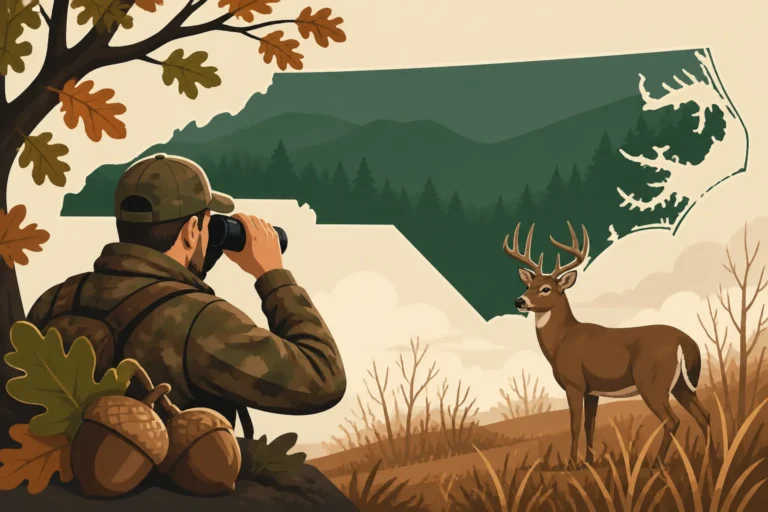
Deer movement patterns and alternative food sources during poor acorn years help North Carolina hunters locate whitetails successfully.

Logging roads in North Carolina provide deer travel corridors, edge habitat, and prime locations for whitetail scrape lines.
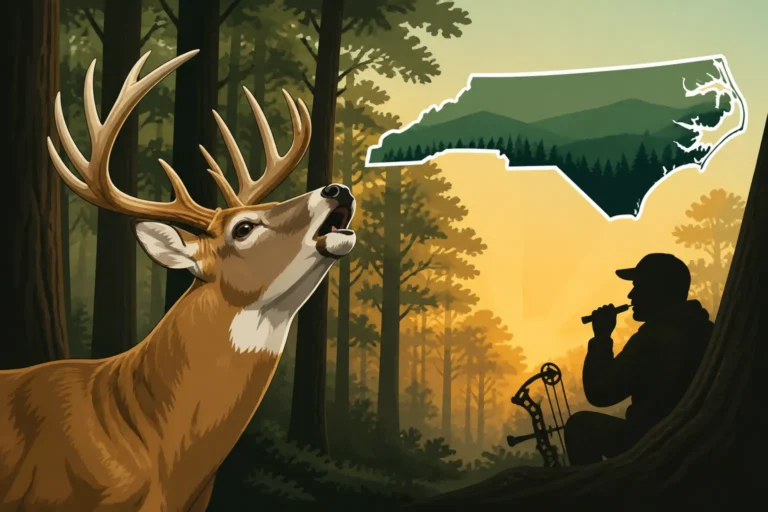
Grunt calls in mature North Carolina timber help hunters attract elusive bucks through thick forest cover and limited visibility.
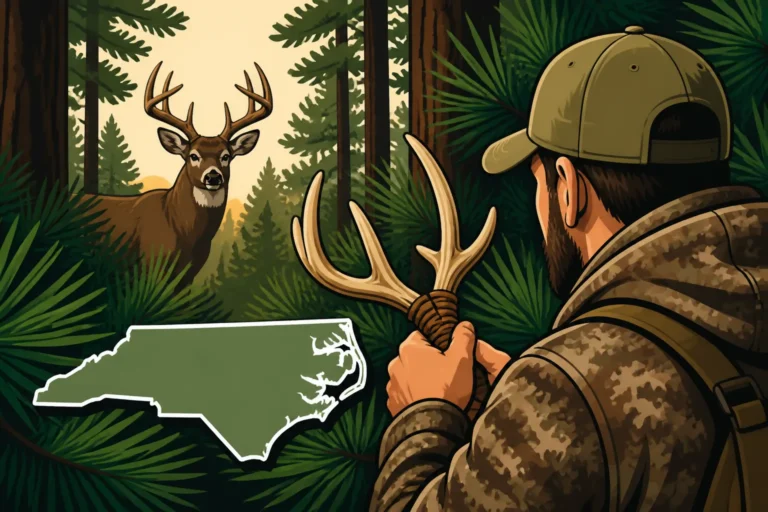
Antler rattling volume adjustments and tactical methods help North Carolina hunters attract big bucks in dense pine thickets.
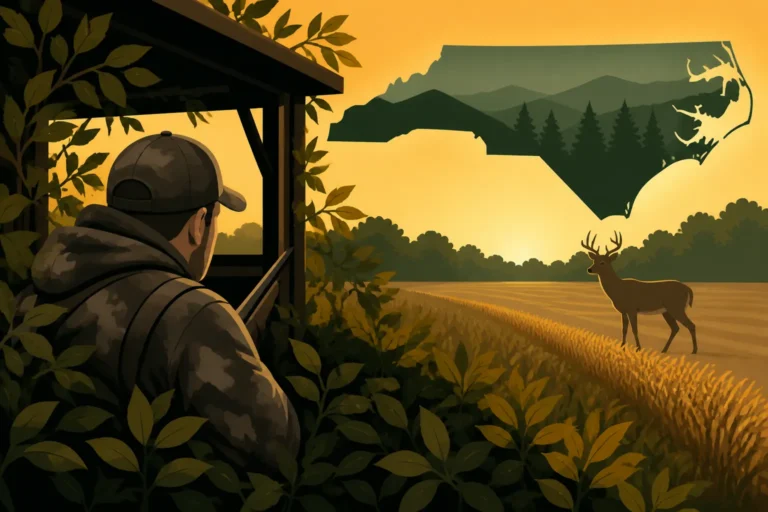
Proper concealment techniques help North Carolina hunters blend ground blinds into field edges, breaking silhouettes and improving deer hunting success.
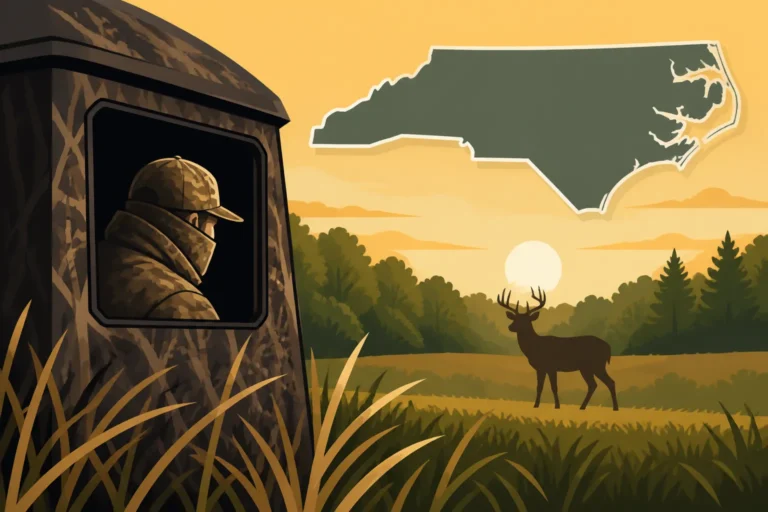
Ground blind use on North Carolina public land helps hunters bypass treestand restrictions and navigate thick mountain and swamp terrain.
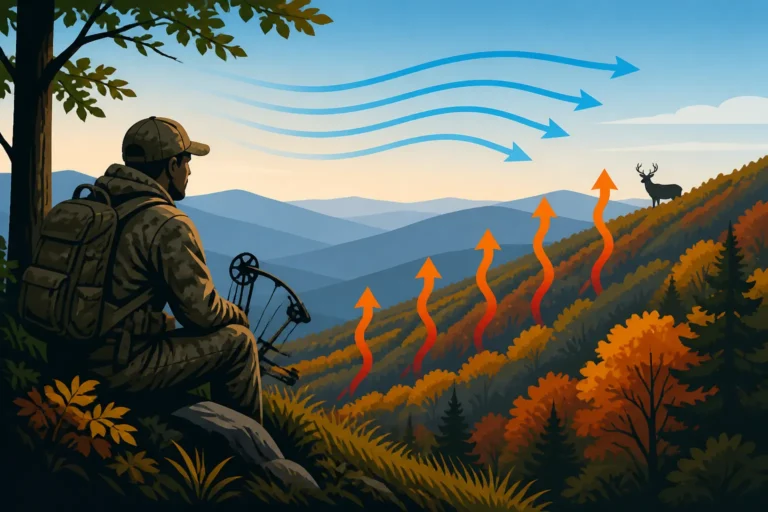
Mountain terrain funnels air into microclimates, and true wind and thermals act at different times of day, so wary deer can bust hunters from unexpected angles.
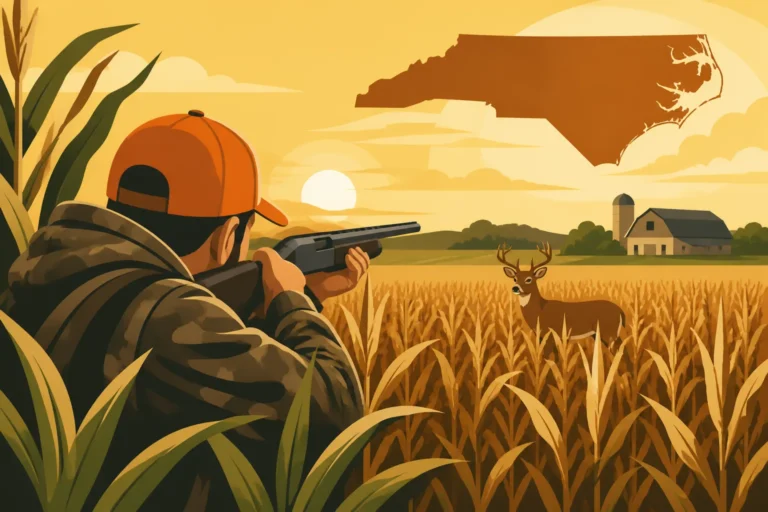
North Carolina standing cornfield deer hunting strategies explain how whitetails use dense crops for food, cover, and security.
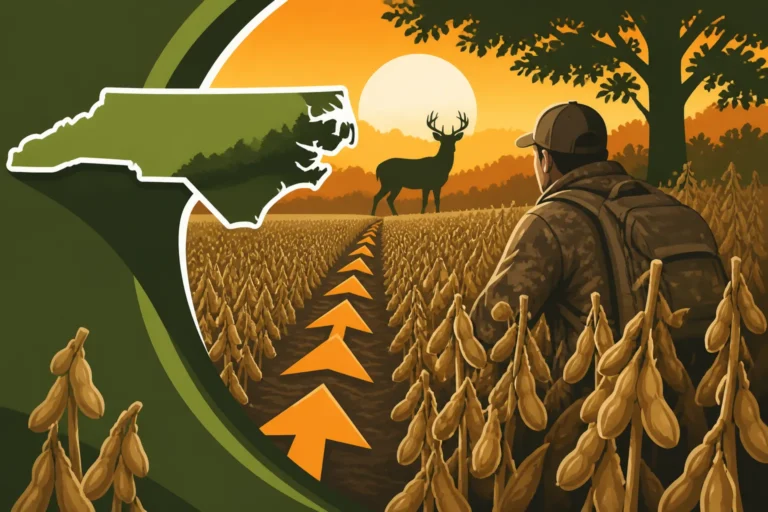
Effective entry routes through standing soybean fields help hunters reach deer hunting positions without spooking wildlife.