Where Mountain Bears Range
North Carolina mountain black bear habitats, Appalachian elevation ranges, and seasonal food sources determine where bears roam.
Know what you’re after.
Big game, small game, upland birds, and waterfowl — identification, behavior, rut and migration timing, and how each species moves through the season.
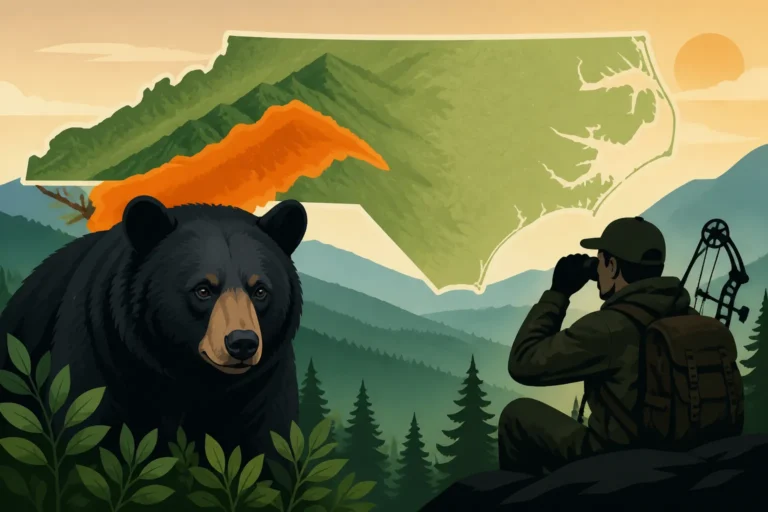
North Carolina mountain black bear habitats, Appalachian elevation ranges, and seasonal food sources determine where bears roam.
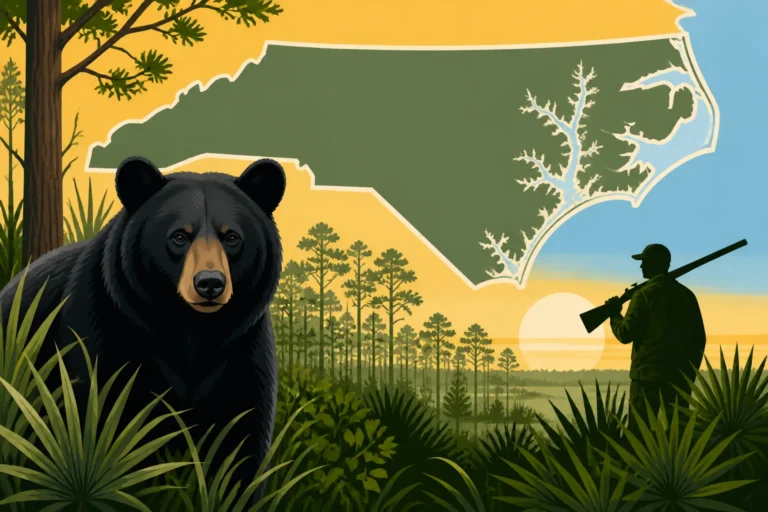
North Carolina coastal pocosin bear habitats and dense wetland ranges across Dare, Hyde, Tyrrell, and Washington counties.
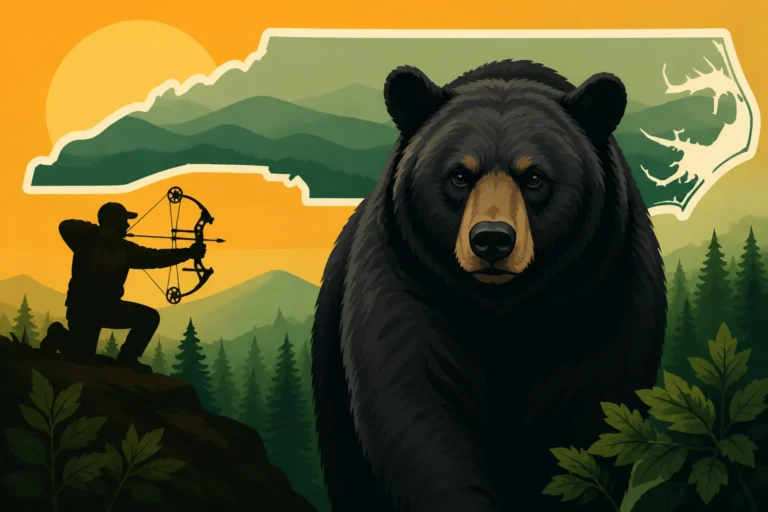
North Carolina black bears reach massive sizes through rich forest diets, abundant acorns, and protein-heavy agricultural lands.
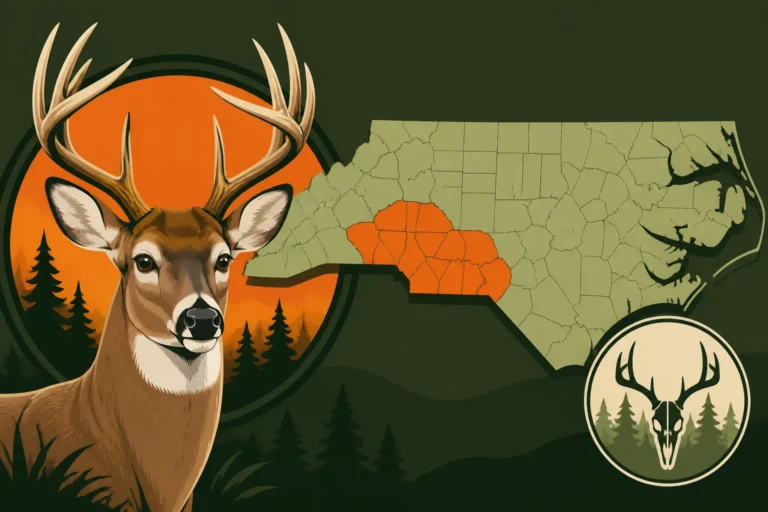
North Carolina deer hunting regulations outline a seven-county Chronic Wasting Disease footprint affecting local cervid populations.
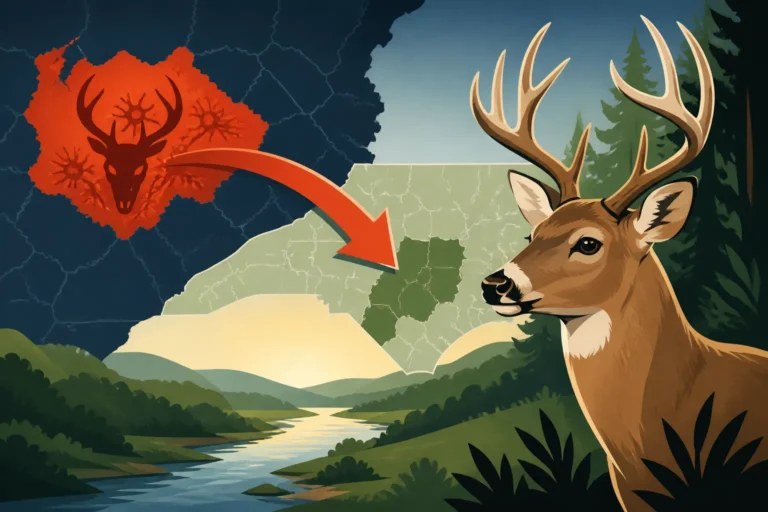
Chronic Wasting Disease reached North Carolina in 2022, appearing in a hunter-harvested deer in Surry County within the Yadkin Valley.
North Carolina deer harvest records show population trends, management strategies, and how reporting helps biologists track whitetail health.
Fertile soils and varied habitats in the North Carolina Piedmont explain how this region grows large whitetail deer antlers.
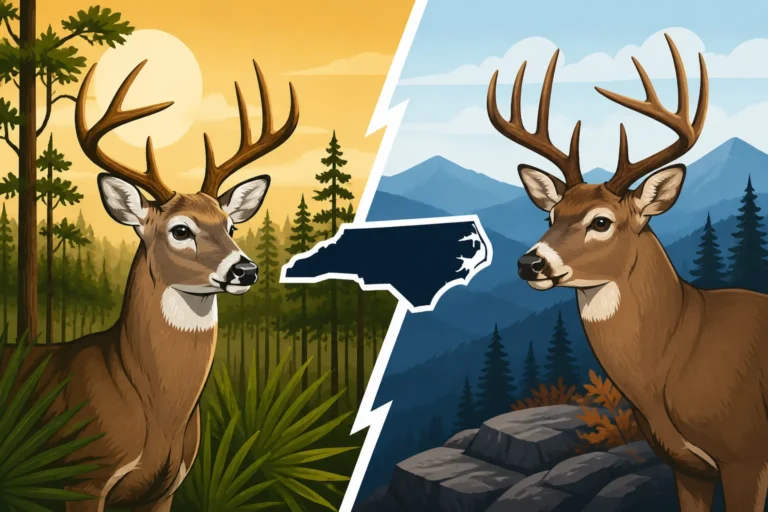
North Carolina deer hunting strategies differ between the flat Coastal Plain and the rugged Appalachian Mountain region.
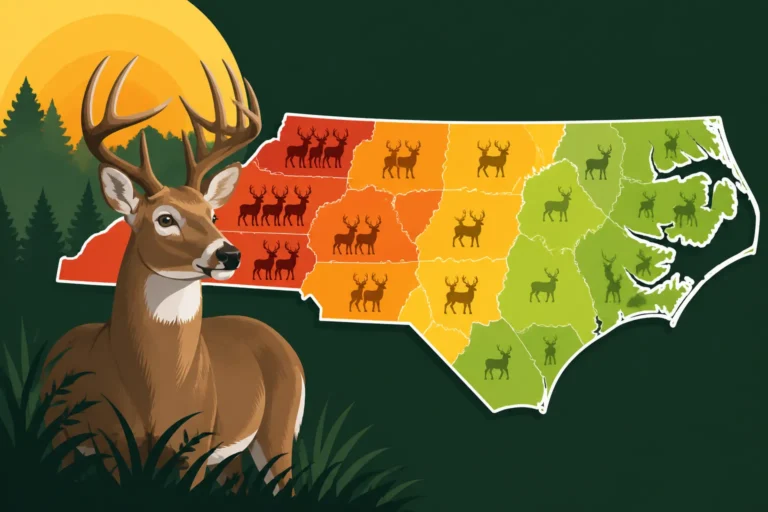
North Carolina deer density across Eastern, Central, and Western hunting zones explains how geography affects regional wildlife populations.
North Carolina deer population estimates explain how harvest data, spotlight surveys, and models help wildlife agencies manage healthy herds.