North Carolina Osprey Nesting Platforms
It's truly something to witness the return of ospreys to our coastal and even inland waterways across North Carolina. For years, folks worried about their numbers, especially with environmental changes impacting their natural nesting sites. When you spend time out on the water, whether you're chasing red drum in the estuaries or setting out decoys in the sound, you quickly realize how vital tall, sturdy structures are for these magnificent birds. Natural snags and old growth near water can be hard to come by, and sometimes, human development or natural erosion just doesn't leave them many safe options. This guide is all about understanding why North Carolina's ospreys benefit so much from nesting platforms and how these simple structures play a crucial role in their continued presence and success.
Why Ospreys Need Our Help with Nesting Sites
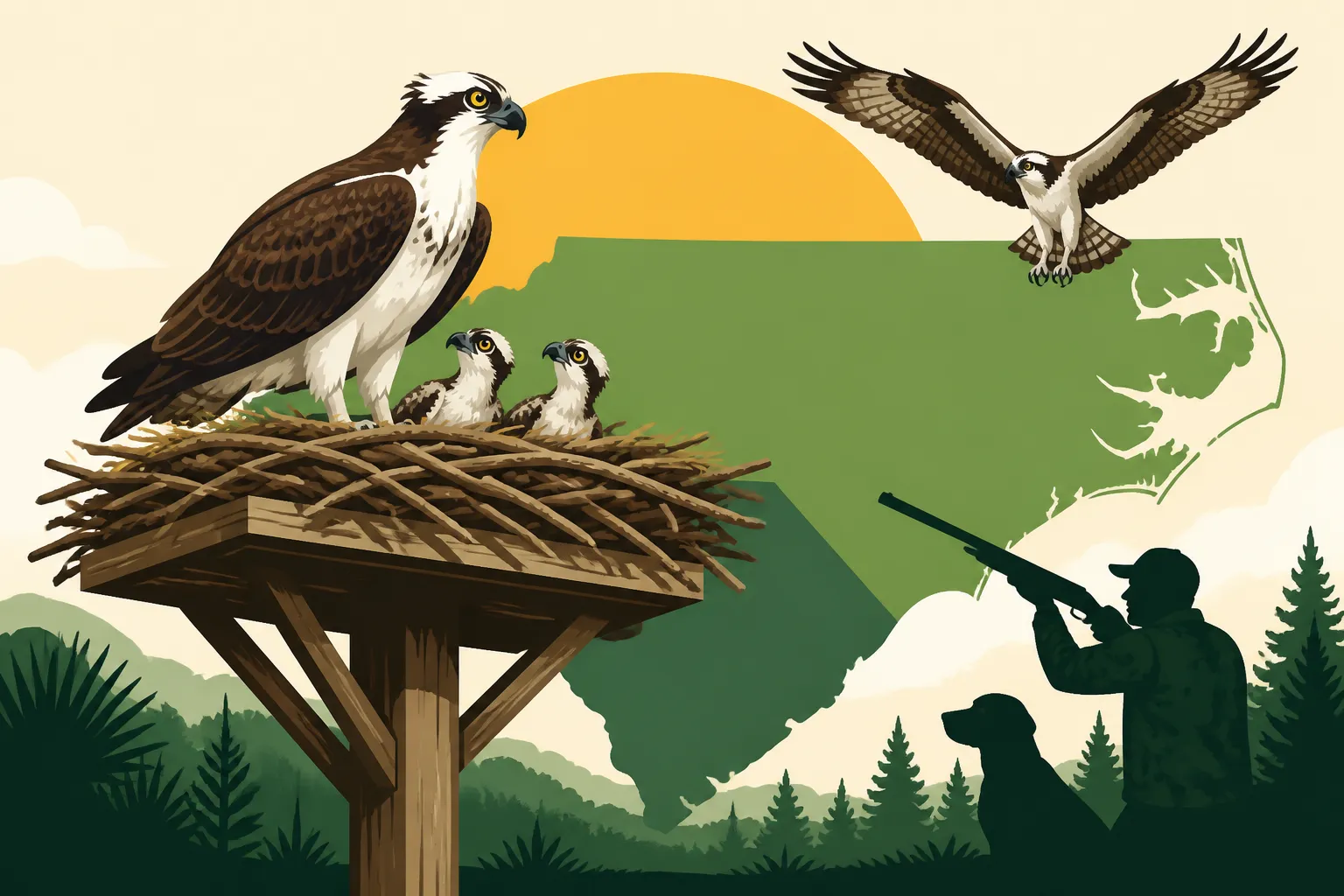
Ospreys are magnificent birds of prey, often called "fish hawks," and for good reason! Their diet is almost exclusively fish, which means they need to nest close to abundant aquatic habitats like large rivers, sounds, estuaries, and even some sizable lakes. The problem is, while North Carolina is blessed with incredible waterways, the availability of ideal, safe nesting sites isn't always a given. These birds prefer tall, isolated structures that offer a wide view of their hunting grounds and protection from ground predators.
The Decline of Natural Nesting Locations
Think about it: an old-growth cypress tree standing strong in a pocosin swamp or a massive pine snag towering over a coastal marsh. These used to be abundant, but between logging, development, and natural processes like hurricanes and erosion, many of those perfect, sturdy perches are gone. Ospreys are adaptable, and you'll see them try to nest on anything tall – power poles, old channel markers, even cell towers. While they try to make do, these artificial sites aren't always safe. Power poles, for instance, pose a significant electrocution risk to both the adult birds and their young. It's a real dilemma for these birds, trying to thrive in a landscape that's constantly changing.
When natural sites vanish, ospreys are left with fewer safe alternatives. This struggle for secure nesting spots impacts their breeding success, and ultimately, the population. It's not just about having a place to put sticks; it's about having a safe place where eggs won't get blown out of a flimsy perch, or where chicks won't fall prey to raccoons climbing up an easily accessible tree. Understanding these challenges helps us appreciate the importance of intentional intervention.
Human Impact and Habitat Alteration
Our presence, while sometimes detrimental, can also be part of the solution. Development along coastlines and major rivers often means clearing land and altering shorelines, which removes potential nesting trees. However, the very infrastructure we build – like old pier pilings or abandoned duck blinds – can sometimes be repurposed or stabilized into effective platforms. It's a constant balance, and recognizing where our activities have created a deficit in natural resources allows us to step in and offer a helping hand.
Even things like boat traffic and fishing pressure, while not directly destroying nests, can create disturbances that make an otherwise suitable location less appealing for a pair of ospreys trying to raise a family. They need a sense of security and peace during the crucial nesting season. When you're out Hunting the Outer Banks Marsh, for example, you might notice areas where birds are abundant and others where they seem absent, and often, human activity plays a role in that distinction.
Designing and Constructing an Effective Osprey Platform
Building an osprey nesting platform isn't just about sticking a pole in the ground. It requires a bit of thought and design to ensure it's safe, durable, and truly attractive to these majestic birds. The goal is to mimic the sturdy, elevated, and isolated nature of their preferred natural sites, but with materials that will last for years.
Key Design Considerations
When you're thinking about putting up a platform, there are a few things that come to mind. First, height is crucial. Ospreys like to be high up, usually at least 15-20 feet off the ground or water. This gives them a clear view of their surroundings and helps protect them from predators. Second, stability. These nests can be surprisingly heavy, accumulating sticks, seaweed, and even fishing line over many seasons. A flimsy platform won't cut it. Third, a good platform will have a perimeter to prevent eggs or chicks from falling out, especially in windy conditions.
Consider the materials too. Treated lumber, galvanized steel, or PVC can all work, as long as they are robust and can withstand North Carolina's weather, from salt spray on the coast to ice in the mountains. Here's a quick rundown of some common materials:
| Feature | Material Choice | Pros | Cons |
|---|---|---|---|
| Support Pole | Galvanized Steel | Very durable, resists rust, strong | Heavier, requires special tools for installation |
| Treated Lumber (6×6) | Readily available, easier to work with | May rot over decades, can be heavy | |
| Composite | Very long-lasting, low maintenance | More expensive, less common for poles | |
| Platform Base | Treated Plywood | Easy to cut and attach | Can rot if not sealed well, heavier |
| Plastic Grating | Excellent drainage, lightweight | May require more support, can be expensive | |
| Rebar/Wire Mesh | Good drainage, durable | Can be harder to secure nesting material | |
| Nesting Rails | Treated 2×4 Lumber | Easy to build a perimeter | Requires maintenance |
| PVC Pipe | Lightweight, durable, easy to install | Can become brittle over time |
When planning your location, think about nearby food sources. Ospreys are fish eaters, so a platform overlooking a productive creek, a sound, or a large lake is ideal. Using mapping tools, like those available through GoHunt, can actually help you identify suitable aquatic features and assess potential nesting territories, even if you're not planning a hunt. You can look for open water, marshy areas, and a good sightline. Using the NC Wildlife Map Tool can also provide valuable information on land ownership and specific habitat types.
Construction and Installation Best Practices
Once you have your design and materials, proper construction and installation are critical. The pole needs to be sunk deep enough into the ground or water to ensure stability – often 4-6 feet deep for a 20-foot pole, especially in soft, marshy soil. Concrete can help anchor poles in some situations, but on tidal flats, simply driving the pole deep is often the most practical solution.
The platform itself should be a square or circular base, typically 3-4 feet across, with a raised edge or "rim" of about 6-8 inches. This rim keeps nesting materials contained and prevents young chicks from accidentally falling out before they fledge. Some folks even add a few starter sticks to the platform to encourage the ospreys. It's like leaving out a welcome mat!
When it comes to installation, safety is paramount. Working with tall poles, especially over water, requires caution and often a team effort. If you're putting a platform in the middle of a shallow sound, for instance, you'll need a boat and some serious leverage to get that pole vertical and stable. For platforms on land, consider accessibility for future monitoring, but ensure it remains isolated enough to deter ground predators. Remember, these birds will use these platforms for years, so a sturdy, well-built structure is an investment in their future.
Impact and Monitoring of Osprey Platforms
The effort of building and installing these platforms truly pays off when you see a pair of ospreys taking up residence. It's a testament to effective conservation and a real joy for anyone who appreciates our state's wildlife.
Success Stories and Local Examples
Across North Carolina, countless individuals, wildlife groups, and even government agencies have contributed to the osprey's comeback story through these platforms. You can find them dotting the landscape from the Outer Banks to Lake Norman, and along major rivers like the Roanoke and Neuse. These platforms have provided crucial nesting habitat, leading to increased breeding success and population growth. It's incredibly rewarding to watch a pair of ospreys build their nest, lay eggs, and then see those fuzzy, awkward chicks grow into strong, soaring adolescents, ready to take their first flight.
These platforms aren't just for the ospreys; they're also fantastic for wildlife observation. Many birdwatchers make special trips to areas known for successful platforms, adding to the local eco-tourism. It's a beautiful cycle where human effort directly supports nature, and in turn, nature provides beauty and educational opportunities. For those interested in wider wildlife monitoring, understanding these patterns can be enhanced by tools that show land features and seasonal changes, much like how a hunter might use GoHunt to understand game movement across Reading Aerial Photos for Piedmont Deer.
Challenges and Ongoing Maintenance
While platforms are incredibly beneficial, they aren't entirely "set it and forget it." There can be challenges. Sometimes, other birds, like Canada geese or even great horned owls, might try to use the platforms, leading to conflicts or taking up the space intended for ospreys. Invasive species of vines can sometimes grow up the poles, potentially weakening the structure or making it less desirable.
Regular monitoring is important to ensure the platform remains stable and safe. Strong winds, especially during hurricanes or nor'easters, can damage platforms or even knock them down. Poles can rot over time, particularly wooden ones, or metal ones can corrode, especially in saltwater environments. Checking annually for structural integrity, clearing out unwanted debris, and performing any necessary repairs are crucial for the long-term success of the platform.
Another common issue is nesting material becoming too deep. Ospreys add to their nest every year, and over many seasons, the nest can become so deep that the chicks are at risk of overheating or falling out. Occasionally, it's necessary to carefully remove some of the old nesting material, usually in the off-season when the birds are not present. Understanding these dynamics is part of being a good steward of wildlife.
Regulations and Best Practices for Platform Placement
Before you get too excited and start digging holes, it's important to understand that there might be some regulations and best practices you need to follow, especially if you're planning to install a platform on public land or in a sensitive environmental area.
Navigating Permits and Environmental Zones
North Carolina has a variety of land classifications, from private property to extensive game lands and national forests. If you're considering a platform on public land, such as a state park or a game land managed by the North Carolina Wildlife Resources Commission, you absolutely need to check with the managing agency first. They will have specific rules, and often, permits are required. Building without permission could lead to fines or the removal of your platform, which is something nobody wants.
Sensitive environmental areas, like coastal wetlands, estuaries, or areas designated for specific wildlife protection, often have even stricter regulations. You might need permits from the Division of Coastal Management or other environmental agencies. These regulations are in place to protect the ecosystem as a whole, ensuring that well-intentioned actions don't inadvertently cause harm. Always start with a phone call to your local wildlife or environmental office. Don't be shy; they are usually very helpful!
| Aspect | Private Land | Public Land (Game Lands, State Parks) | Sensitive Coastal/Wetland Areas |
|---|---|---|---|
| Permission/Permits | Landowner permission required | Required from managing agency | May require multiple permits (e.g., DCM, Army Corps) |
| Environmental Review | Generally not required, but consider impact | Often part of agency permit process | Highly likely to require full environmental review |
| Site Selection | Based on osprey needs, landowner preference | Must align with agency habitat goals, access | Strict guidelines on impact to flora/fauna |
| Construction | Follow safety codes | Adhere to agency material/design specs | Often requires specific low-impact methods |
| Monitoring/Access | Landowner discretion | Agency access often required for monitoring | Regular monitoring by relevant agencies |
It's also worth thinking about where you place the platform relative to existing infrastructure. Ospreys love tall structures, but placing a platform too close to active power lines can still create issues. The idea is to provide a safe alternative, not just another risky perch. Looking at the landscape through a holistic lens, much like when planning for deer drives on Deer Drives on North Carolina Public Land or understanding habitat for Hunting Coastal Plain Pocosin Swamps, helps inform good decisions for osprey platforms too.
Minimizing Disturbance and Long-Term Stewardship
The ultimate goal is to help ospreys thrive with as little ongoing human interference as possible once the platform is established. Choosing a location that's naturally isolated from heavy human activity, if possible, is ideal. While ospreys can become accustomed to some level of human presence, excessive disturbance during nesting season can cause them to abandon a nest. This is why many platforms are placed in remote parts of our sounds or along less-trafficked rivers.
Long-term stewardship means not just putting up the platform, but being prepared to maintain it. This might involve occasional repairs, clearing out excessive nesting material, or even replacing a worn-out pole after several decades. Think of it as a gift to nature that requires ongoing care. The North Carolina Wildlife Resources Commission is always a fantastic resource for best practices and advice on supporting all our state's wildlife, including these incredible raptors. North Carolina Wildlife Disease Monitoring and North Carolina Wildlife Rehabilitation for Injured Game are good examples of other ways the NCWRC helps manage and protect our state's diverse animal populations.
Supporting osprey populations through nesting platforms is a really tangible way for us, as North Carolinians who love our outdoors, to give back. It ensures that when we're out enjoying our coastal waters or fishing on our lakes, we'll continue to see these magnificent birds soaring overhead, a symbol of a healthy and thriving ecosystem.
Disclaimer
This article is for general informational purposes only and does not constitute professional advice. Laws, prices and regulations vary by location and change over time. Consult a qualified professional for guidance on your specific situation.