Coastal Plain Versus Mountain Deer
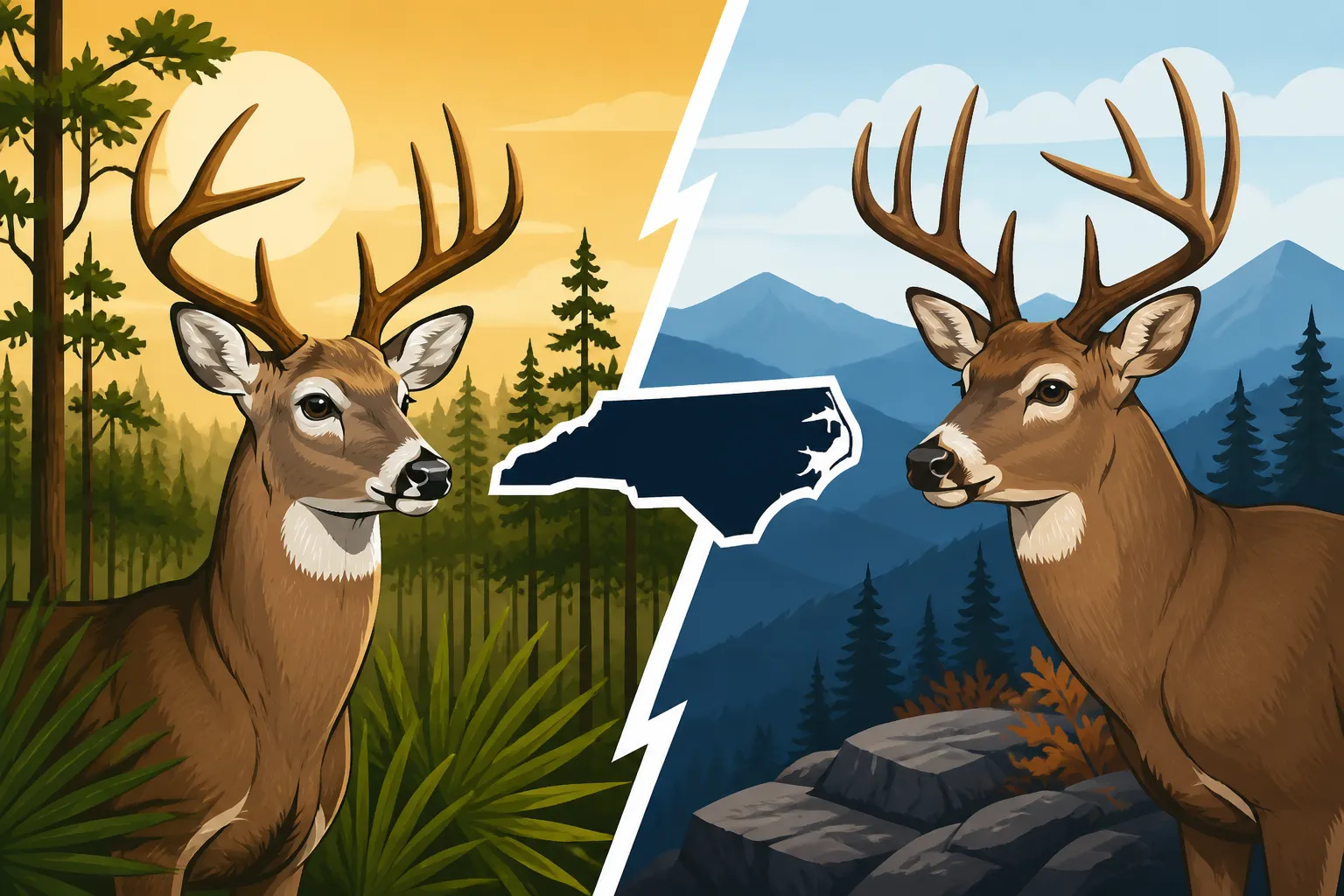
Many hunters, especially those new to North Carolina or who've spent their entire hunting career in one corner of our incredibly diverse state, often grapple with the assumption that "a deer is a deer." However, nothing could be further from the truth when you consider the stark differences between hunting the expansive Coastal Plain and the rugged mountain regions. This guide dives deep into what makes deer, and the pursuit of them, so uniquely varied across North Carolina's distinct geographic landscapes, helping you understand what to expect and how to adapt your strategies for success, no matter where your hunting boots take you.
Understanding North Carolina's Geographic Zones for Deer
North Carolina is a state of remarkable ecological diversity, stretching from the Atlantic Ocean's edge to the highest peaks of the Appalachian Mountains. This geographical variation directly impacts everything from deer genetics and population densities to available forage and, ultimately, hunting strategies. It's not just a matter of changing scenery; it's a completely different deer hunting world.
Defining the Coastal Plain
The Coastal Plain encompasses roughly the eastern two-fifths of North Carolina, characterized by its relatively flat topography, sandy soils, and abundant water. Think vast expanses of pine plantations, dense pocosin swamps, sprawling agricultural fields, and numerous rivers, creeks, and estuaries. This region includes counties like Bladen, Hyde, and Tyrrell, where water and thick cover often dictate deer movement. Deer populations here can be incredibly dense, especially in areas bordering farmland or managed timber. The sheer scale of some of these landscapes, like the vast Holly Shelter Game Land or Croatan National Forest, can be overwhelming if you're not used to it.
Exploring the Mountain Region
Head west, and the landscape dramatically transforms into the Mountain Region, part of the ancient Appalachian chain. This area includes counties such as Haywood, Swain, and Macon, dominated by steep slopes, deep valleys, and expansive hardwood forests. Public lands like Pisgah and Nantahala National Forests define much of this hunting experience. Here, deer densities are generally lower than in the Coastal Plain, but the challenge of the terrain often makes every deer earned feel like a trophy. Water is still abundant in the form of fast-flowing creeks and rivers, but it's typically found at the bottom of steep ravines rather than saturating the entire landscape.
The Piedmont Transition Zone
While not our primary focus today, it's worth a quick mention of the Piedmont, the transitional region between the Coastal Plain and the Mountains. This area features rolling hills, mixed forests, and a significant amount of agriculture and suburban development. Deer here often exhibit characteristics of both the coastal and mountain populations, adapting to fragmented habitats and often navigating significant human presence. Counties like Wake, Guilford, and Mecklenburg are prime examples. The hunting pressure can be intense, but the combination of cover and food sources often leads to impressive deer.
Habitat Differences and Their Impact on Deer
The types of terrain and vegetation available in each region fundamentally shape the deer's life, influencing their diet, bedding habits, movement patterns, and even their physical characteristics. Hunters must understand these environmental distinctions to truly "read" the landscape and anticipate deer behavior.
Coastal Plain: Swamps, Farmlands, and Pine Plantations
In the Coastal Plain, deer are masters of adapting to a mosaic of habitats. The notorious pocosin swamps, with their impenetrable tangles of cane, bay, and sweetgum, offer incredible thermal and security cover, becoming virtual fortresses for deer, especially during hunting season. Hunters who delve into these areas quickly learn the value of being able to traverse such challenging environments, sometimes requiring specialized equipment like swamp buggies or even airboats for deep access. This is where you might find yourself Hunting Coastal Plain Pocosin Swamps.
Alongside the swamps, vast agricultural fields – corn, soybeans, peanuts, and cotton – provide an endless buffet for deer, particularly in the fertile Black River and Roanoke River floodplains. Deer will often bed deep in nearby timber or pocosin during the day, emerging into these fields at dawn and dusk. Understanding crop rotation and field edges is paramount here. The extensive pine plantations, often managed for timber production, also play a huge role. Younger pines offer thick bedding and browse, while mature stands provide travel corridors and mast crops, though less diverse than hardwoods. Using a robust mapping tool like GoHunt can help you differentiate between these habitat types and identify potential pinch points or travel corridors, even in the most monotonous-looking pine tracts.
Mountain Region: Steep Terrain, Hardwoods, and Laurel Thickets
The Mountain Region presents a completely different challenge. Deer here are conditioned to navigate incredibly steep and rugged terrain. Their musculature and agility are honed by constant ascents and descents. The dominant habitat is mature hardwood forest, primarily oaks and hickories, which are critical for mast production. Acorns, especially white oak acorns, are a primary food source, and finding active acorn flats can be the key to locating deer, especially during the early bow and muzzleloader seasons.
Dense rhododendron and mountain laurel thickets, often found along creek bottoms or on north-facing slopes, provide crucial thermal and security cover, much like the pocosins do in the east. These thickets can be nearly as impenetrable, requiring hunters to carefully pick their way through. Elevated benches, saddles, and ridge lines become major travel corridors, especially during the rut. Understanding Still-Hunting Nantahala Forest Ridges and how wind and thermals affect these areas is a critical skill for mountain hunters. The sheer scale of the mountains means you'll often be covering vast amounts of ground, and every deer sighting is hard-earned.
Food Sources and Their Seasonal Availability
The seasonal availability of food sources dictates deer movement in both regions, albeit with different menus. In the Coastal Plain, agricultural crops are consistent draws for much of the fall and winter, supplemented by soft mast like persimmons and muscadines in early season, and browse from the lush undergrowth. You'll often find deer hitting bean fields in September and then switching to corn or winter wheat as the season progresses.
Conversely, the Mountain Region relies heavily on hard mast. Acorn crops are cyclical, meaning a good year can lead to deer concentrated in specific areas, while a poor year forces them to seek alternative browse or less desirable mast. Soft mast, such as wild grapes and berries, can be important in the early season, but come late fall and winter, it's all about those acorns, or sometimes even the remnants of apples from old homesteads. Hunters need to adapt their strategies annually based on the local mast crop, making scouting crucial.
Deer Characteristics: Size, Antlers, and Behavior
While both regions host the same species – the white-tailed deer – the environmental pressures and nutritional differences lead to noticeable variations in their physical attributes and behavioral patterns. It’s fascinating to see how the same animal adapts so differently.
Body Size and Weight Across Regions
Generally speaking, Coastal Plain deer tend to be slightly smaller in body size on average compared to their mountain counterparts. This isn't a hard and fast rule, as exceptional bucks can come from any region, but the dense populations and often lower nutritional quality in some Coastal Plain areas can contribute to smaller average body weights. A mature Coastal Plain buck might weigh in the 120-150 pound range, though heavier animals are certainly taken, especially those with access to prime agricultural land.
Mountain deer, on the other hand, often carry more bulk. While not as numerous, they tend to benefit from a more varied diet in nutrient-rich hardwood forests, and the constant physical exertion of living in steep terrain can contribute to a more muscular build. A mature mountain buck could easily push 150-180 pounds, with some exceeding 200 pounds, especially those from the fertile valleys. The energy required to simply survive and move in the mountains probably means less energy diverted to sheer antler mass, but more on that in a moment.
Antler Development and Genetic Potential
When it comes to antlers, the Coastal Plain often produces more deer with significant mass and wider spreads, particularly in areas with access to robust agricultural food sources. The combination of genetics, nutrition from high-quality forage like soybeans and corn, and less intense competition for resources in certain pockets can lead to impressive rack development. It’s not uncommon to see Coastal Plain bucks with very thick bases and wide frames, especially from private land with good management. North Carolina's Deer Harvest Records show that many of the top-end bucks come from this region.
Mountain deer, while often having solid body weights, typically exhibit slightly less antler mass and spread. This is often attributed to the lower deer densities, less abundant high-protein food sources compared to ag land, and the energy expenditure of living in rugged terrain. However, don't let that fool you; mountain bucks are incredibly tough and often have character-rich antlers that tell a story of their life in the rugged wilderness. A mature 8-point from the mountains is a true trophy, often aged as an older deer with years of surviving harsh conditions. These deer are often older than their antler size might suggest, having simply had less access to the rich nutrients that grow massive racks.
Behavioral Adaptations to Environment
Deer in both regions display fascinating behavioral adaptations. Coastal Plain deer, especially in dense pocosin swamps, often live in tight-knit groups and use the thick cover to their advantage, slipping silently through the vegetation. They are adept at navigating wetlands and can be incredibly elusive, often moving only when forced. Their rut often aligns with the Hunting the Rut in the Eastern Zones opening in late October through November, leading to increased daytime movement in traditionally low-visibility areas.
Mountain deer, on the other hand, often operate with larger home ranges due to sparser populations and food sources. They are masters of using terrain to their advantage, often bedding on benches or high slopes where they can see and smell danger approaching from below. They're also incredibly stealthy on steep, leaf-littered ground, making a quiet approach difficult. Their rut typically peaks later, around mid-November into early December, coinciding with the Hunting the Rut in the Western Zone period when the forests are bare. This later rut, coupled with colder weather, changes their movement patterns significantly.
Hunting Strategies Tailored to Each Region
Trying to apply a Coastal Plain hunting strategy to the mountains, or vice-versa, is often a recipe for frustration. Each landscape demands a unique approach, from scouting to stand placement, and even the type of gear you carry.
Coastal Plain Tactics: Still-Hunting, Drives, and Stand Placement
In the Coastal Plain, still-hunting through pine plantations or swamp edges can be incredibly effective, especially when wind and moisture conditions are favorable. The relatively flat terrain makes quiet movement easier, and slipping through cover can often put you right on unsuspecting deer. When dealing with dense cover like pocosins or large timber blocks, deer drives are a time-honored tradition, especially on public lands where larger groups can coordinate. Coordinating these drives requires careful planning and knowledge of the terrain, as you might read about in Deer Drives on North Carolina Public Land.
Stand placement often revolves around food sources and travel corridors. Hunting field edges, particularly where a thick pine stand or swamp meets agriculture, is a classic and productive strategy. Funnels created by changes in habitat, such as a narrow strip of timber between two clear-cuts or a dry ridge running through a swamp, are prime locations. Water sources, especially during dry spells, can also be dynamite. Elevated permanent stands or well-brushed ground blinds are common, offering comfort for long sits overlooking feeding areas.
Mountain Tactics: Scouting, Glassing, and Covering Ground
Mountain hunting is often a more physically demanding endeavor. Extensive scouting before the season is absolutely paramount. Using an app like GoHunt to study topo maps, identifying benches, saddles, and creek bottoms, and marking potential bedding and feeding areas is critical. Don't underestimate the value of legwork to confirm what you see on the map. You can learn more about Scouting North Carolina Public Land Before Season by getting out there and putting boots on the ground.
Glassing is also a hugely underrated tactic in the mountains. From a high vantage point, especially in the early morning or late evening, you can often spot deer moving on opposite slopes or in clear-cuts. Patience here is key. When you do find fresh sign or a promising area, still-hunting slowly and deliberately, paying close attention to wind and thermals, is often the most effective way to move through the timber. Treestands can be effective on benches or saddles, but often require more effort to hang and access in steep terrain, so portability is a huge plus. This is where Treestand Setups in Pisgah National Forest become an art form, not just a science.
Gear Considerations for Each Landscape
Your gear loadout will also vary. For the Coastal Plain, sturdy rubber boots or waders are often essential, especially for wet conditions or crossing shallow water. Bug repellent is a non-negotiable accessory from early season right through the late fall. A quiet, lightweight treestand or a comfortable ground blind is ideal for setting up near field edges or in thick timber. A good GPS or mapping app is vital for navigating dense, often featureless swamps or pine blocks.
In the mountains, focus on footwear built for rugged terrain, offering ankle support and good traction. Layered clothing is crucial due to rapidly changing temperatures and elevation. A lightweight pack to carry essentials, including extra water, snacks, and rain gear, is a must for covering miles. Good binoculars or a spotting scope are indispensable for glassing distant slopes, and a reliable rangefinder will help confirm shot distances in varying terrain. Physical fitness is perhaps the most important "gear" you can bring to the mountains.
Pressure, Access, and the Hunter's Experience
The hunting experience itself is profoundly shaped by how many other hunters are out there and the ease of accessing prime hunting grounds. Both regions offer unique challenges and rewards in this regard.
Public vs. Private Land Access
In the Coastal Plain, a significant portion of the land is privately owned, often by large timber companies or agricultural operations. Gaining access to these private lands can be challenging but highly rewarding due to potentially lower pressure and better deer management. However, North Carolina also boasts some incredibly large game lands in the Coastal Plain, such as the expansive Roanoke River Wetlands, Croatan National Forest, and Holly Shelter Game Land. These offer incredible public access, but often come with higher hunter densities, especially on opening day or during peak rut periods. Hunters should always check North Carolina Public Land Hunting Hours for their chosen game lands.
The Mountain Region, in contrast, offers vast tracts of public land, primarily within the Pisgah and Nantahala National Forests. While private land exists, the sheer scale of the national forest system means that public access is generally more widespread, if not always easy. However, "access" here often means miles of walking up steep logging roads or bushwhacking through dense timber. This physical barrier naturally spreads out hunters, so while the total number of hunters might be high, the effective hunter density in remote areas can be quite low.
Hunter Density and Its Effects
Hunter density is a significant factor in deer behavior. In high-pressure areas of the Coastal Plain, deer become incredibly nocturnal and wary. They learn quickly to avoid roads, trails, and open areas during daylight hours. This often requires hunters to delve deep into thick cover or hunt less conventional times to catch deer off guard. The challenge isn't always finding deer, but finding deer that haven't been pushed into an impenetrable thicket.
In the mountains, while the deer are fewer, they can also be incredibly pressured in accessible areas. However, the vastness of the national forests often means that if you're willing to walk further and climb higher, you can find pockets of deer that see very little human intrusion. These deer tend to be less wary and might move more freely during daylight, especially if they haven't been disturbed. The sheer effort required to get into these remote areas acts as its own form of "pressure control."
The Overall Hunting Experience
The overall hunting experience in these two regions is distinct. A Coastal Plain hunt might involve navigating muddy trails, swatting mosquitoes, and patiently waiting on a stand overlooking a soybean field, hoping a big buck steps out from the pines. It's often about capitalizing on specific food sources or funnels in relatively flat terrain.
A mountain hunt, however, is an entirely different beast. It's about burning boot leather, climbing steep ridges, reading subtle terrain features, and often the satisfaction of a hard-earned stalk. The rewards are often more about the journey and the physical challenge, culminating in the deep satisfaction of connecting with a resilient animal in its rugged habitat. Both experiences are uniquely North Carolina and offer incredible opportunities for those willing to adapt.
| Feature / Aspect | Coastal Plain | Mountain Region |
|---|---|---|
| Topography | Mostly flat, low elevation, abundant wetlands | Steep slopes, high elevations, deep valleys |
| Dominant Habitat | Pine plantations, pocosin swamps, agriculture | Hardwood forests (oak/hickory), rhododendron |
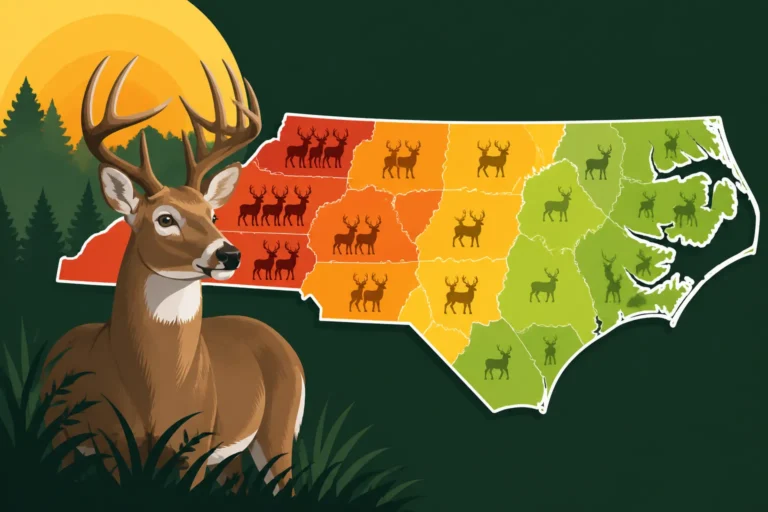
| Deer Density | Generally higher, especially near agriculture | Generally lower, more spread out |
| Average Body Size | Slightly smaller, but highly variable | Often larger, more muscular |
| Antler Potential | Good mass/spread with ample nutrition | Typically less mass/spread, but often older deer |
| Primary Food Source | Agricultural crops, browse, soft mast | Hard mast (acorns), browse |
| Common Tactics | Stand hunting, still-hunting, deer drives | Still-hunting, spot & stalk, glassing, covering ground |
| Hunter Pressure | High in accessible public areas; variable on private | Lower in remote areas; high near access points |
| Key Gear | Waders/rubber boots, bug spray, ground blinds | Hiking boots, layers, binoculars, pack, rangefinder |
| Rut Timing | Often mid-late October through November | Mid-November through early December |
Navigating Regulations and Seasons
Understanding North Carolina's hunting regulations is vital, and the split between the Coastal Plain (Eastern Zones) and the Mountains (Western Zone) is most evident in the deer season structures. It’s not just about what you hunt, but when and how you can hunt it.
Deer Season Lengths and Differences
North Carolina divides its deer hunting into four gun zones, but for the purpose of Coastal Plain vs. Mountain, we're primarily looking at the Eastern Zones (Northeastern and Southeastern) and the Western Zone. The Eastern Zones typically have a much longer deer season, starting with archery in early September and often seeing gun seasons open in mid-October, extending well into January. This generous season length is partly due to higher deer populations and a longer growing season for forage.
In stark contrast, the Western Zone, covering the mountain counties, has a significantly shorter deer season. Archery season still opens in September, but the gun season often doesn't begin until mid-November, closing just before the New Year. This shorter season is a management tool designed to protect deer populations in a region with lower densities and harsher winters. Understanding these differences is crucial, and you can delve deeper into North Carolina Deer Season Structure Explained to get the full picture. Always double-check specific county regulations, as minor variations can occur.
Bag Limits and Special Regulations
Statewide, North Carolina allows for a generous deer bag limit, often set at six deer per hunter, with specific restrictions on antlered versus antlerless deer, and generally no more than two antlered bucks. However, local regulations within specific game lands or management areas might impose stricter limits or permit requirements. For instance, some game lands may have antler point restrictions or antlerless deer quotas.
Both regions require hunters to possess the appropriate North Carolina hunting licenses and privilege licenses, such as the North Carolina Big Game Privilege Requirements. Always remember to check with the North Carolina Wildlife Resources Commission (NCWRC) for the most current regulations before heading afield. A great resource is the NCWRC website, and purchasing your North Carolina Hunting Licenses and What They Cost can often be done easily online.
Chronic Wasting Disease Considerations
A critical and evolving aspect of deer hunting in North Carolina is the presence of Chronic Wasting Disease (CWD). While not exclusive to one region, it has been primarily detected in the Yadkin Valley area, which bridges the Piedmont and the Mountains. Hunters in CWD-affected counties, or those traveling through them, face specific regulations regarding carcass transport and mandatory testing. For example, specific counties in the northwestern part of the state, such as Surry and Yadkin, are designated CWD Management Areas.
These regulations are put in place to monitor and prevent the spread of this fatal neurological disease in deer. If you plan to hunt in or near these areas, you must be aware of special rules, including carcass import/export restrictions and the potential for mandatory CWD testing of harvested deer. This is a dynamic situation, and staying informed about North Carolina's Chronic Wasting Disease Areas is crucial for all hunters, regardless of the region they hunt.
Disclaimer
Hunting is an inherently risky activity. This guide provides general information and recommendations but should not replace official regulations, professional instruction, or personal judgment. Always consult the North Carolina Wildlife Resources Commission (NCWRC) for the most up-to-date hunting regulations and safety guidelines. Hunt safely and ethically.