North Carolina Carcass Movement Restrictions
The regulations around hunting in North Carolina can sometimes feel like trying to untangle a knot of fishing line after a big day on the water – complicated, frustrating, and prone to snags. Especially when it comes to something as serious as Chronic Wasting Disease (CWD) and the rules about moving your hard-earned harvest. Many hunters express real concern about making a mistake and facing penalties, particularly when navigating the specific requirements for transporting deer carcasses. This guide aims to cut through that confusion, giving you a clear, in-depth understanding of North Carolina's carcass movement restrictions, why they're in place, and how to stay compliant, so you can focus on the hunt itself.
Understanding the Threat of Chronic Wasting Disease
Before we dive into the nitty-gritty of regulations, it's really important to grasp why these rules exist. Nobody enjoys more restrictions, but these aren't put in place just to make our lives harder. They're a critical tool in the fight to protect our state's deer herd, and by extension, our hunting heritage, from a truly devastating disease.
What Exactly is CWD?
Chronic Wasting Disease is a neurological disease that affects cervids – that's deer, elk, moose, and reindeer. It's caused by abnormal proteins called prions, which slowly damage the brain and nervous system of infected animals. Think of it like a zombie disease for deer; once an animal contracts it, it slowly wastes away, eventually exhibiting symptoms like extreme weight loss, stumbling, listlessness, and behavioral changes, before ultimately dying. It’s always fatal, and there’s no known cure or vaccine. It's a scary prospect for any deer population, including our vibrant North Carolina herd.
How CWD Spreads and Persists
The real challenge with CWD is its insidious nature. It spreads through direct animal-to-animal contact, but also, critically, through contaminated environments. Infected animals shed prions through their saliva, urine, and feces, and these prions can persist in the soil for years, even decades. This means that a deer doesn't even need to touch another infected deer; it can pick up the disease by grazing in an area where an infected animal once roamed. This environmental persistence is what makes containing CWD so incredibly difficult and why strict carcass movement rules are essential. If an infected carcass is moved from one area to another, it can essentially "plant" CWD prions in a new, previously clean environment, creating a whole new hotspot.
The Threat to North Carolina's Deer Herd
North Carolina has been working diligently for years to prevent CWD from establishing a foothold, but unfortunately, it was confirmed in the state in 2022. The initial detection was in Yadkin County, and since then, the disease has been confirmed in a few other neighboring counties. This is a massive concern for every hunter and wildlife manager. A widespread CWD infection could decimate local deer populations, impact hunting opportunities, and potentially have long-term ecological consequences. Our wild deer are a cornerstone of North Carolina's natural beauty and a cherished resource for countless sportsmen and women, so protecting them from this disease is paramount. This is precisely why understanding and adhering to regulations, like those for North Carolina Carcass Movement Restrictions, becomes a personal responsibility for all of us.
Identifying North Carolina's CWD Management Areas
With CWD now present in North Carolina, the state has established specific CWD Management Areas (CWDMAs). These areas are subject to stricter regulations designed to prevent the further spread of the disease. Knowing these boundaries isn't just a good idea; it's absolutely crucial for any hunter operating within or near them.
Which Counties Are Currently Affected?
As of the latest updates, the primary CWD Management Area in North Carolina encompasses seven counties in the northwestern Piedmont region. These include Surry, Yadkin, Stokes, Wilkes, Forsyth, Davie, and Iredell counties. It's important to remember that these boundaries are dynamic and can change if new cases are detected, so always double-check the latest information from the North Carolina Wildlife Resources Commission (NCWRC) before you head out. These counties are under intense surveillance and specific rules apply to all deer harvested within them. For a detailed breakdown of the affected regions, you can check out the guide on North Carolina's Seven-County CWD Footprint.
Understanding CWD Surveillance Areas
Within these larger CWD Management Areas, you might also hear about "CWD Surveillance Areas." These are typically smaller, more localized zones within or adjacent to where a CWD-positive deer has been found. The rules within these surveillance areas can be even more stringent, sometimes requiring mandatory CWD testing for all harvested deer. This intensified monitoring helps biologists assess the prevalence and spread of the disease in the most critical locations. If you're hunting anywhere in or around these seven counties, assume heightened vigilance is required, and make it a point to understand if your specific hunting spot falls within a surveillance area where rules like mandatory testing apply. Information is your best friend when navigating these complex zones.
General Statewide Precautions Beyond CWDMAs
Even if you're hunting outside a designated CWD Management Area, it's still smart to practice some general precautions. CWD prions are incredibly robust, and while we hope they don't spread further, every hunter plays a role in preventing their transport. This includes responsible carcass disposal, avoiding the use of natural urine-based attractants, and cleaning your gear, especially boots and vehicles, if you've been hunting in a known CWD area. These simple steps, even if not mandated by law in every county, contribute significantly to the health of the broader deer population. Hunters should stay informed about the overall Chronic Wasting Disease Risk in North Carolina to ensure they are always following best practices.
Specific Carcass Movement Rules for Hunters
Now, let's get down to the brass tacks: what can you actually do with your deer after you've harvested it, especially if you're in or near a CWD Management Area? These rules are the heart of the matter, designed to stop infected material from spreading to new places.
What Parts of a Deer Can and Cannot Be Moved from a CWDMA
The general principle is to prevent the movement of high-risk materials – basically, anything that might contain CWD prions. If you harvest a deer within a CWD Management Area, here’s a simplified breakdown of what you can and cannot transport outside that area:
What Can Be Moved Out of a CWDMA:
- Deboned meat: This is the safest and most widely accepted form of transport. If the meat is completely deboned, it can leave the CWDMA.
- Skull plates/antlers: Cleaned skull plates with no brain or spinal cord tissue attached, or antlers separated from the skull, can be moved.
- Cleaned hides: Hides with no head or spinal column material attached are typically allowed.
- Teeth: If you want to keep them for aging or trophies, teeth are generally permissible once removed from the skull.
- Finished taxidermy products: Once the taxidermy process is complete, and all potentially infectious tissue has been removed, the mount can be moved.
What Cannot Be Moved Out of a CWDMA:
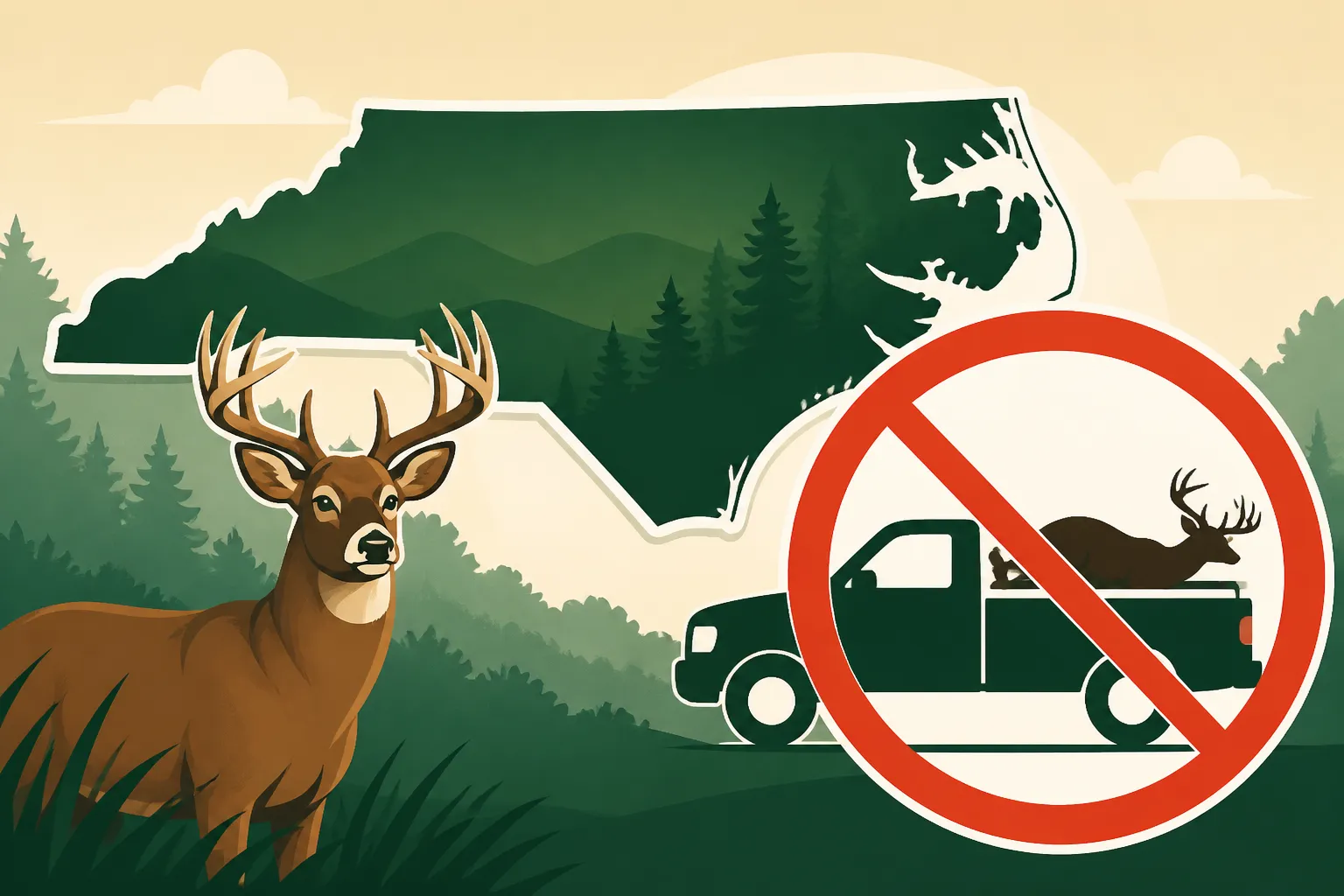
- Whole carcasses: You cannot transport an entire deer carcass, or even a partially field-dressed carcass (head, hide, backbone still attached), out of a CWDMA.
- Spinal column: This includes the backbone, which is considered high-risk tissue.
- Skull with brain material: The brain is a primary site for prions, so whole skulls or skulls with brain matter cannot leave the zone.
- Lymph nodes, tonsils, spleen, eyes: These are also considered high-risk tissues and should not be moved.
This means if you shoot a deer in Surry County and live in Wake County, you cannot simply throw the whole deer in the back of your truck and drive home. You must process it down to the allowable parts before leaving the CWDMA. This often means doing more than just field dressing at the kill site; it might require boning out the animal right there or at a local processor within the CWDMA.
Exceptions for Processed Meat and Taxidermy
The rules are designed to target the highest-risk parts. Therefore, once the deer is processed correctly, it becomes much easier to transport.
- Commercially Processed Meat: If you take your deer to a licensed processor within the CWDMA, they will handle the proper disposal of high-risk parts and return only the deboned meat to you, which you can then transport freely. This is often the easiest option for many hunters. These processors are familiar with the regulations and ensure compliance.
- Home-Processed Meat: If you choose to process your own deer within the CWDMA, ensure that all bones, the head, and other restricted materials are disposed of properly within the CWDMA. This means bagging them securely and using approved waste disposal methods, or burying them deeply on the property where the deer was harvested, if allowed. The key is to prevent those prions from leaving the designated area.
- Taxidermy: For a trophy, you'd typically take the head to a taxidermist located within the CWDMA. They will properly remove and dispose of the brain and other restricted tissues, returning a cleaned skull plate or a tanned cape that is then safe to transport. Make sure to communicate your intentions clearly with your taxidermist.
It’s about making sure that only the lowest-risk parts, like clean meat or antlers, are transported away from potentially infected areas. This table provides a quick summary of what can and cannot be moved:
| Carcass Part | Can Be Moved from CWDMA | Cannot Be Moved from CWDMA | Notes |
|---|---|---|---|
| Whole Carcass (unprocessed) | No | Yes | High risk; contains all tissues. |
| Deboned Meat | Yes | No | All muscle tissue, no bone. |
| Skull with Brain | No | Yes | High risk; brain contains prions. |
| Cleaned Skull Plate (no tissue) | Yes | No | Must be completely free of brain/spinal tissue. |
| Antlers (separated from skull) | Yes | No | No attached skull fragments. |
| Spinal Column/Backbone | No | Yes | High risk tissue. |
| Cleaned Hide (no head/spinal tissue) | Yes | No | All tissue removed from hide. |
| Lymph Nodes, Tonsils, Eyes, Spleen | No | Yes | High risk tissues. |
| Finished Taxidermy Product | Yes | No | All infectious material removed during process. |
This table should be a handy reference for anyone hunting in or near a CWDMA. Always remember that the ultimate responsibility lies with the hunter to understand and follow these rules to the letter.
Mandatory CWD Testing and Sampling Locations
Beyond just carcass movement, North Carolina has also implemented mandatory CWD testing in certain areas. This is another critical component of managing the disease, giving wildlife biologists the data they need to track its spread and intensity. It's not just a suggestion; it's a requirement in specific zones.
The Requirement for Testing in Designated Zones
If you harvest a deer in one of North Carolina’s CWD Surveillance Areas or other designated mandatory testing zones, you are legally required to submit your deer for CWD testing. This isn't optional, and failure to comply could result in penalties. These zones are usually centered around previous CWD detections or areas deemed high-risk for new cases. The NCWRC clearly delineates these areas on their maps and through public announcements, especially around the start of deer season. Always check the latest regulations for Mandatory Testing Inside a CWD Surveillance Area before heading into the field, particularly if you're hunting in any of the seven CWD counties. This requirement is a vital part of the state's surveillance strategy, helping to paint a clearer picture of where the disease is present and how prevalent it is.
How to Find and Utilize CWD Sampling Stations
To make mandatory testing as easy as possible for hunters, the NCWRC sets up a network of CWD sampling stations. These can include drop-off locations at local game lands offices, participating taxidermists or processors, or even temporary sites during peak hunting weekends. The process usually involves providing a sample from the deer's lymph nodes or brainstem, which is then sent to a lab for analysis. You'll typically need to provide your harvest information, contact details, and where the deer was harvested. The results are usually provided online within a few weeks. Knowing where these stations are located is essential for compliance. You can typically find an interactive map or a list of locations on the NCWRC website. If you're planning to hunt in a CWDMA, identify your nearest sampling station before your hunt begins. A great resource for this is the guide on Finding a North Carolina CWD Sampling Location.
What Happens After Submitting a Sample?
Once you've submitted your sample, the waiting game begins. The NCWRC will process the sample and notify you of the results, typically via email or through an online portal. While you await the results, you are generally allowed to consume the meat of the deer (unless otherwise specified for certain high-risk areas), but it's often recommended to hold off until results are known, especially for those who are particularly cautious. If your deer tests positive for CWD, the NCWRC will contact you directly with further instructions. This might involve specific disposal recommendations for any remaining meat or bones, and it will trigger increased surveillance in the area where the deer was harvested. This follow-up is critical for managing potential new hotspots and for continuing to track the disease effectively.
Best Practices for Hunters in CWD Affected Areas
Hunting in North Carolina's CWD Management Areas requires an extra layer of diligence, but it doesn't have to be overwhelming. With a little planning and attention to detail, you can enjoy your hunt while doing your part to protect the deer herd.
Planning Your Hunt with CWD Regulations in Mind
The most important step is proactive planning. Before you even pack your truck, know whether your hunting location falls within a CWDMA or a specific surveillance zone. Utilize online mapping tools from the NCWRC. These digital maps are often updated in real-time and provide clear boundaries. Platforms like GoHunt, for example, often integrate CWD zone information into their mapping layers, making it easy to see where you stand. Knowing this beforehand will dictate your processing plans. Are you going to bone out the deer on site? Do you need to locate a licensed processor or taxidermist within the CWDMA? Planning these logistics before the shot saves a lot of headaches later on. Remember that Scouting North Carolina Public Land Before Season isn't just about deer sign; it's also about knowing the regulations of your chosen area.
Field Dressing and Initial Processing Considerations
If you harvest a deer in a CWDMA, your field dressing routine might need to be adjusted. While you can typically field dress at the kill site, consider leaving the high-risk parts (head, spinal column, etc.) at the kill site if permissible by local regulations, especially if you plan to transport only deboned meat out of the zone. This prevents unnecessary movement of potentially infected material. If you must transport the entire carcass to a processor within the CWDMA, ensure it's properly contained to prevent any leakage. For those brave souls who opt for the "gutless method" in the field, it's a fantastic way to minimize the transport of high-risk parts. Just be sure to dispose of the remaining carcass elements according to NCWRC guidelines for the CWDMA. A good reference for this can be found in our guide on Field Dressing a Deer in Cold Weather, which also offers tips relevant to remote processing.
Transporting Your Harvest Legally and Responsibly
Once your deer is processed into legal parts (deboned meat, cleaned skull plate, etc.), ensure it's packaged and labeled appropriately. Clearly mark packages of meat from a CWDMA, even if legally transported, just for your own record-keeping. When transporting, continue to be mindful of biosecurity. Keep your vehicle clean, and if you've done any processing at home within the CWDMA, ensure all waste is disposed of correctly within the zone. Avoid leaving any deer parts, even legally processed ones, exposed in areas where other cervids might come into contact with them. The goal is always to minimize any potential for CWD prions to spread beyond the designated management areas, protecting future hunting opportunities for everyone in North Carolina. If you're considering Butchering a Deer at Camp, ensure your camp is within the CWDMA if you plan to deal with restricted parts.
The Role of Technology in Staying Compliant
In today's hunting world, technology can be a huge asset, especially when it comes to navigating complex regulations like CWD carcass movement restrictions. Relying on paper maps alone just doesn't cut it anymore.
Utilizing NC Wildlife's Interactive Mapping Tools
The North Carolina Wildlife Resources Commission (NCWRC) offers excellent interactive maps on their website and through their mobile app. These resources are invaluable for any hunter, providing up-to-date information on game land boundaries, season dates, and crucially, CWD Management Area lines. Before every hunt, especially if you're venturing into a new area or near a CWDMA, take a few minutes to check these maps. They can show you exactly where you are relative to any special regulation zones, helping you avoid accidental violations. These tools are often far more current than any printed map you might carry, making them an essential part of your pre-hunt routine. Learning how to effectively use the Scouting With the NC Wildlife App can save you a lot of grief.
Third-Party Hunting Apps and CWD Overlays
Many popular third-party hunting apps, such as GoHunt, have integrated CWD zone overlays into their mapping platforms. These apps often combine public and private land boundaries, property owner information, and CWD regulations into a single, user-friendly interface. This means you can drop a pin on your stand location and instantly see if you're in a CWD Management Area, a surveillance zone, or a regular hunting area. This real-time information is incredibly powerful for making informed decisions about where to hunt and how to handle your harvest. While these apps are fantastic, always cross-reference with official NCWRC sources if there's any doubt, as state regulations are the final word.
Record Keeping and Digital Harvest Reporting
Beyond just navigation, technology also simplifies record keeping and harvest reporting. North Carolina requires all harvested deer to be reported, and this can usually be done quickly and easily through the NCWRC's mobile app or online portal. When hunting in a CWDMA, maintaining clear records of where and when your deer was harvested, and how it was processed, can be extremely helpful if questions arise later. Digital reporting ensures your harvest contributes to the state's biological data, which in turn helps wildlife managers make informed decisions about herd health and CWD management. It’s a seamless way to fulfill your legal obligations and contribute to the bigger picture of wildlife conservation in our state.
Disclaimer
The information provided in this guide is for general informational purposes only and is not intended as legal advice. Hunting regulations, including those related to CWD and carcass movement, are subject to change by the North Carolina Wildlife Resources Commission (NCWRC). Hunters are solely responsible for knowing and complying with all current federal, state, and local hunting laws and regulations. Always consult the official NCWRC website and current hunting regulations digest before engaging in any hunting activities.