Grunt Calls in Mature North Carolina Timber
It’s a scenario every hunter in North Carolina knows all too well: you’re deep in a stand of mature timber, maybe in the Pisgah National Forest or a vast game land in the Coastal Plain, and a buck slips through the dense undergrowth like a ghost. You hear him, perhaps catch a fleeting glimpse, but he's just out of range or moving too fast. This guide is all about giving you a powerful, often underestimated, tool to turn those frustrating moments into successful encounters: the grunt call, specifically mastered for the unique challenges of North Carolina's mature timber.
Understanding Deer Communication in Dense Timber
Hunting mature North Carolina timber presents a distinct set of challenges. The towering trees, thick understory, and often rugged terrain mean that visibility is usually limited. Deer here are masters of using this cover to their advantage, moving silently and rarely exposing themselves for long. This is precisely why understanding and utilizing their vocalizations becomes such a critical skill.
The Silent Language of Whitetails in North Carolina Forests
While deer don't "talk" in the human sense, they communicate constantly through a complex combination of scent, body language, and vocalizations. In the vastness of mature timber, where visual cues might be blocked by dense rhododendron thickets or a stand of pines, sounds become incredibly important. Think about a doe calling her fawn, a buck challenging a rival, or a deer simply signaling its presence. These are the sounds that echo through the quiet woods, often subtly, but effectively.
When you're out there, whether you're still-hunting Nantahala Forest Ridges or sitting patiently in a Piedmont woodlot, it's easy to assume the woods are silent. But beneath the canopy, a constant conversation is happening. Bucks use grunts, snorts, and wheezes to establish dominance, attract mates, or simply communicate their location. Does use bleats and mews. By tapping into this natural communication, you can break through the visual barriers and draw a deer's attention, or even pull it right into your shooting lane. The frustration of watching a deer disappear into the shadows can often be alleviated by understanding that you might just be missing a key piece of the communication puzzle.
How Sound Travels (and Doesn't) in Thick Cover
One of the biggest misconceptions about calling in dense timber is that you need to be extremely loud to be heard. In reality, the opposite is often true. Mature timber, with its dense tree trunks, thick canopy, and leaf litter, is incredibly efficient at absorbing sound. This means that a loud, aggressive call might sound over-the-top and unnatural, potentially spooking a wary buck rather than drawing him in.
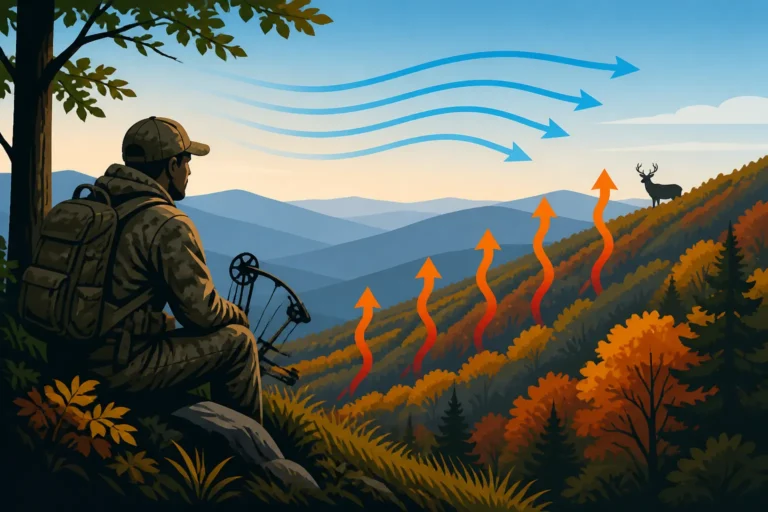
The way sound travels is heavily influenced by the environment. In open fields, sound dissipates quickly over distance. In dense timber, however, sounds can be muffled, redirected, and even seem to originate from a different spot due to echoes and the way sound waves bounce off trees and terrain. Consider the physics: soft, natural materials like leaves and moss absorb sound, while hard surfaces like rock faces can reflect it. This is why understanding Wind and Thermals on a Blue Ridge Slope is so critical; not only for scent control but also for how your call will carry. A soft grunt that mimics a nearby deer is often far more effective than a booming call intended for a deer a quarter-mile away. It’s about creating an illusion of proximity and naturalness, rather than sheer volume.
Mastering Grunt Call Techniques for Mature North Carolina Timber
Using a grunt call isn't just about blowing into a tube; it's an art form, especially when you're trying to fool a wise old buck in the depths of North Carolina's mature forests. The goal is always to sound like a real deer, in a real scenario, to elicit a natural response.
Choosing the Right Grunt and Cadence
There isn't just one type of grunt, and knowing which one to use when is crucial. Different grunts convey different messages:
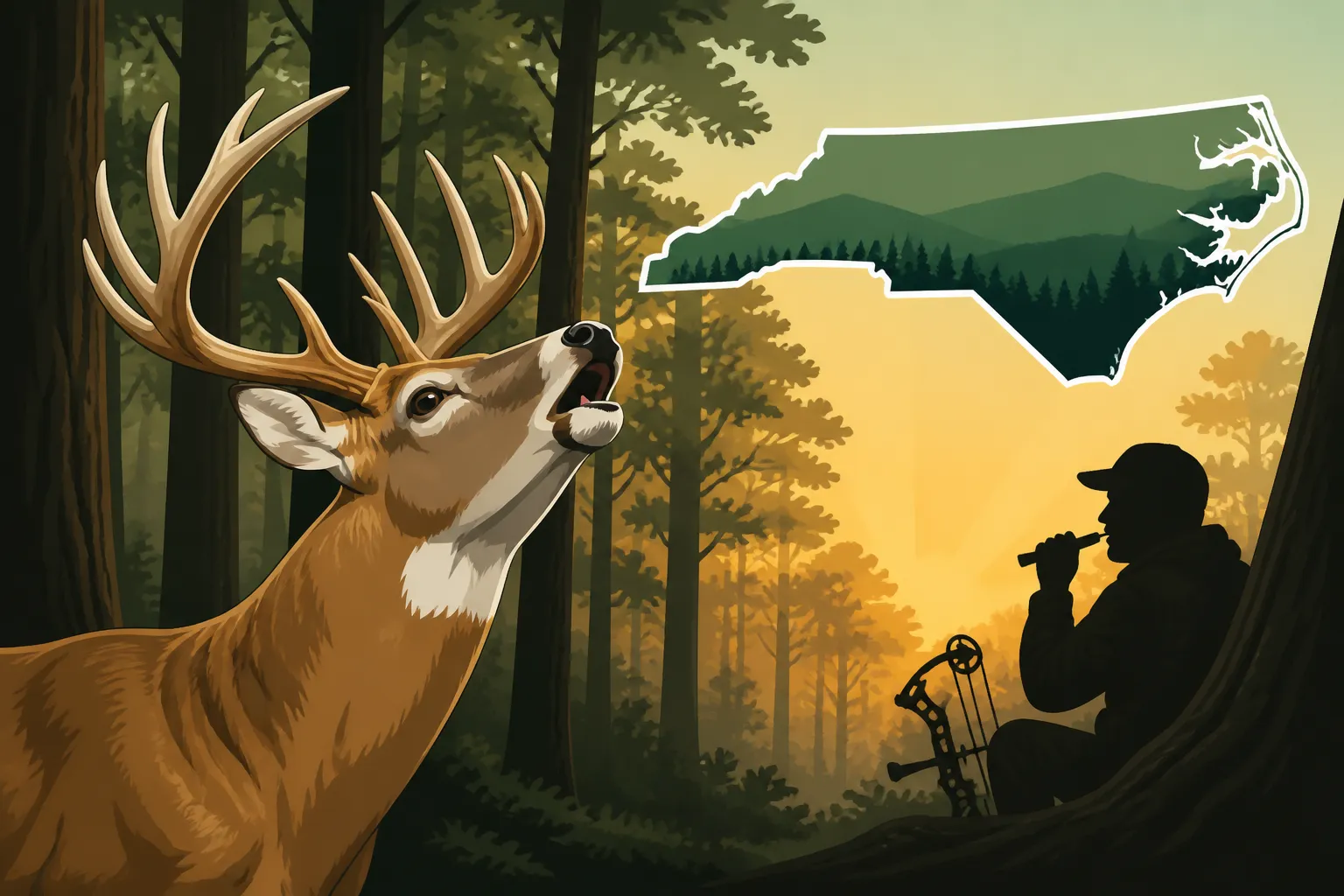
- Contact Grunt: This is a soft, often inquiring "blaaat." It's like a deer saying, "Is anyone around?" or "I'm just passing through." Use this when you're trying to locate deer, draw in a curious younger buck, or simply stop a moving deer for a shot. It's low-risk and very versatile.
- Tending Grunt: This grunt is more excited and drawn out, often accompanied by a "huff" sound. It signals a buck that is actively pursuing a hot doe. This is your go-to call during the peak of Hunting the North Carolina Rut by Zone, when bucks are single-minded in their search for receptive does.
- Aggressive Grunt: Short, loud, and guttural, this is a challenge. It's a buck daring another buck to come closer for a confrontation. Use this sparingly, and only when you're confident there's a dominant buck in the area who might respond aggressively. It's often paired with rattling, but remember that Rattling Volume in Thick Pine Cover needs careful consideration not to overdo it.
The cadence and duration are just as important as the type of grunt. A quick, two-second grunt followed by a minute of silence can be more effective than a continuous, drawn-out sequence. Vary your calls, listen to real deer if you get the chance, and try to mimic their natural rhythm. A good practice tool like the GoHunt app often includes resources or articles on deer vocalizations, which can help you fine-tune your ear for these subtle differences.
Volume, Direction, and Realistic Delivery
The number one mistake hunters make with grunt calls in timber is calling too loud. In mature North Carolina timber, with its dense cover, a loud call can be jarring and unnatural, instantly putting deer on high alert.
- Start Soft: Always begin with soft, subtle grunts. Imagine a deer just a few yards away. This gentle approach is often enough to pique a buck's curiosity without making him feel threatened. If you get no response, you can slowly increase volume.
- Direct the Sound: Cup your hands around the call and point it in different directions. This makes it sound like a deer is moving, adding realism. Turn your head as you call, simulating a deer looking around.
- Use Natural Barriers: Position yourself so that trees or thick brush slightly muffle the sound, making it even more authentic. If you’re sitting on a slight rise, aim your call down into a hollow, letting the terrain help carry and distribute the sound naturally.
- Stop and Listen: After a sequence of calls, stop completely and listen intently for a response. Bucks often circle downwind, so be prepared to turn slowly and scan the area where you expect them to approach. Don't call again too soon if you think a deer is coming; sometimes silence is the most compelling invitation.
Imagine you're hunting a winding creek bottom in the Uwharrie National Forest. You hear a twig snap far off. Instead of blasting an aggressive grunt, try a soft contact grunt, aimed slightly away from your position, perhaps towards a bend in the creek. Then wait. If you don't hear anything for 5-10 minutes, try another, maybe a little louder, or with a slightly different cadence. This subtle approach mimics natural deer movement and interaction.
Integrating Grunts with Other Hunting Strategies
Grunt calls aren't a standalone magic bullet; they're most effective when integrated thoughtfully into your overall hunting strategy. Whether you're in a stand, still-hunting, or even participating in a deer drive, a grunt call can be the missing piece of the puzzle.
- Stand Hunting: This is perhaps the most common scenario. A buck is just out of range, or walking parallel to your position. A well-timed grunt can stop him, or better yet, turn him to offer a shot. If you're hunting a funnel between two clearcuts, a grunt can be invaluable in diverting a buck's path.
- Still-Hunting: When you're slowly working through cover, like Still-Hunting Nantahala Forest Ridges, periodically making soft grunts can reveal deer you might have otherwise walked past. It can also cause a deer to pause momentarily, giving you time to raise your rifle or bow. If you're covering ground, a quick grunt can check for deer without demanding a full setup.
- Deer Drives: While less conventional, a grunt call can even play a role in carefully executed deer drives on North Carolina Public Land. Drivers or standers positioned strategically might use a soft grunt to gently nudge deer in a certain direction, or to pause them for a shot opportunity as they try to slip through the lines.
The key is knowing when to integrate it. If a buck is already committed and coming your way, don't over-call. If he's hesitant, or trying to give you the slip, a soft grunt can be the convincing argument he needs to commit.
Strategic Application: When and Where Grunts Excel in Timber
Understanding the "how" is crucial, but knowing the "when" and "where" to use grunt calls effectively in North Carolina's timber can elevate your success significantly. It’s all about putting yourself in the buck’s shoes and anticipating his behavior.
Peak Rut and Beyond: Timing Your Calls
The effectiveness of grunt calls fluctuates with the deer's annual cycle.
- Pre-Rut (Late October – Early November): As bucks begin to feel the urge, their testosterone levels rise, and they become more responsive to calls. Younger, more curious bucks are often the first to respond to soft contact grunts, checking out any new sound in their territory. Older bucks might be more cautious but can be drawn in by a challenging aggressive grunt if they perceive an intruder. This period often aligns with the lead-up to North Carolina's Gun Deer Season by Zone in many areas.
- Peak Rut (Mid-November – Early December): This is prime time for grunt calls. Bucks are actively chasing does and are less cautious, often responding aggressively to challenges or seeking out "hot" does. Tending grunts are incredibly effective now, as they mimic a buck already with a doe, which drives other bucks crazy. Don't be afraid to be a bit more aggressive with your calls during this window, especially when Hunting the Rut in the Eastern Zones where activity can be intense.
- Post-Rut (Mid-December – January): Bucks are often worn out from the rut, but they can still be drawn to calls. Softer contact grunts might work as they search for any remaining receptive does or just companionship. They're trying to recover, but the instinct to breed is still there, albeit muted. This is when patience with softer, less aggressive calls can pay off, especially when deer are focused on Late-Season Food Sources for North Carolina Whitetails.
No matter the phase, observing deer behavior is paramount. If you see a buck acting aggressively towards another deer, that's a perfect cue for an aggressive grunt. If he's just cruising, a contact grunt is safer.
Hotspots: Identifying Prime Grunting Locations
Not all timber is created equal for grunt calling. Certain areas within mature North Carolina timber will yield better results due to natural deer movement patterns and acoustics.
- Funnels and Saddles: These are natural travel corridors that concentrate deer movement. A buck moving through a saddle on a ridge in the mountains, or a narrow strip of timber connecting two larger woodlots in the Piedmont, is often in a curious state. A grunt can stop him or divert him towards your stand.
- Thick Bedding Areas: Deer often bed in the densest, most secluded parts of mature timber. Grunting near the edges of these areas, especially during the rut, can sometimes pull a buck out. Be cautious, though, as you risk spooking him if he's not in the mood to move. Knowing Where Nantahala Forest Bucks Bed can give you a significant advantage in these spots.
- Creek Bottoms and Drains: These low-lying areas often serve as highways for deer, providing cover and access to water. The natural contours can also help carry sound.
- Edges of Clear-Cuts or Food Sources: Bucks often skirt the edges of open areas or food plots before entering. A grunt from the timber edge can pull them out into the open or closer to your position.
Use a mapping tool, like the one offered by GoHunt, to identify these topographical features and thick cover ahead of time. Digital scouting is a massive advantage here, allowing you to pinpoint potential grunting setups long before you set foot in the woods. Look for changes in elevation, pinch points, and areas of dense evergreen cover that offer security.
Adapting to North Carolina's Diverse Timber Types
North Carolina's landscape is incredibly diverse, from the ancient hardwoods of the mountains to the longleaf pine savannas and pocosin swamps of the Coastal Plain. Each timber type interacts with sound differently.
- Mountain Hardwoods: In areas like Pisgah or Nantahala, the sound can echo and bounce off steep slopes, making it hard to pinpoint. Here, softer, more controlled grunts are best. Consider how sound will carry up or down a slope and factor in Wind and Thermals on a Blue Ridge Slope.
- Piedmont Mixed Forests: These areas often feature a mix of pines and hardwoods, with varying densities of undergrowth. Grunts here need to be versatile, adapting to the immediate cover. A soft grunt along a field edge might be very different from one made in a dense pine thicket.
- Coastal Plain Swamps and Pocosins: These are extremely dense environments. Sound doesn't travel far. You'll need to be closer to deer for calls to be effective, and softer calls are even more critical. The humidity can also affect sound transmission. When Hunting Coastal Plain Pocosin Swamps, think about very short, controlled sequences.
The key is to always assess your immediate surroundings. What kind of timber are you in? How dense is the cover? How far do you realistically think your call will carry while still sounding natural? Adjust your volume and cadence accordingly.
Avoiding Common Mistakes and Advanced Grunting Tactics
Even experienced hunters can fall into common grunt calling traps, especially in challenging environments like mature North Carolina timber. Being aware of these pitfalls and adopting advanced tactics can significantly boost your success rate.
The Pitfalls of Overcalling and Improper Scents
The most prevalent mistake, as mentioned before, is overcalling. It's easy to get excited and keep grunting, especially if you think a deer is nearby. But think about it: how often do real deer just grunt continuously? Rarely. Continuous calling sounds unnatural and can make even the most curious buck wary. Stick to short sequences, followed by long periods of silence and observation.
Another crucial factor that often goes hand-in-hand with calling is scent control. You can make the most realistic grunt call imaginable, but if a buck circles downwind and catches your scent, the game is over. This is particularly true in mature timber, where deer often use the cover to approach cautiously from downwind. Always be mindful of the wind direction and use scent-elimination products, store your hunting clothes properly, and shower before a hunt. In a place like North Carolina, with its varied winds and thermals, paying close attention to this detail is non-negotiable. Don't let your perfect call be ruined by a gust of wind carrying human odor.
Using Grunts to Gauge Deer Behavior
Beyond simply attracting a deer, grunt calls can be an excellent tool for gauging a deer's mood and predicting its next move. It's a two-way conversation.
- Reading Responses: Pay close attention to any reaction from a deer. A head snap, an ear flick, a slight shift in weight, or a brief pause can all be indicators that your call has been heard and acknowledged. If a buck starts walking towards you, he's interested. If he circles downwind, he's being cautious.
- Adjusting Your Strategy: If a buck is approaching quickly and purposefully, stop calling. Let him come. If he's hesitant, or seems to be losing interest, a softer follow-up grunt might re-engage him. If he's circling downwind, get ready for a shot or consider another slight movement to create another angle. Sometimes, just a single, soft grunt is all it takes to get that deer to pause or turn, giving you a precious few seconds for a clean shot.
- Aggressive Responses: If a buck stomps, snorts, or grunts back aggressively, it might be a good time to escalate your own call, perhaps with a more challenging grunt or a short rattling sequence, if the cover allows. But remember, this can also signal an imminent charge, so be prepared!
The art lies in reading the deer and adapting your "conversation" to what they're telling you. GoHunt articles on deer behavior can be invaluable for understanding these nuances.
Scouting and Practice for Grunt Call Success
You wouldn't head into the woods with an un-sighted rifle, and you shouldn't head out with an unpracticed grunt call either.
- Practice, Practice, Practice: Practice using your call at home. Listen to recordings of real deer vocalizations and try to mimic them. Learn the different sounds your call can make and how much air pressure is needed for various volumes. Get comfortable with different sequences and cadences.
- Scouting is Paramount: No matter how good you are at calling, it won't work if there are no deer to call. Scouting North Carolina Public Land Before Season is absolutely crucial. Use tools like the GoHunt app's mapping features to identify bedding areas, travel corridors, food sources, and funnels. Knowing where deer are likely to be, and what they're doing, will inform your calling strategy. Look for fresh sign: rubs, scrapes, tracks.
- Trail Cameras: Deploying trail cameras can give you invaluable insight into the vocalizations of the specific deer in your hunting area. Listen to the sounds they make in different situations. This hyper-local data can help you fine-tune your calls to what the local deer are accustomed to hearing.
- Location, Location, Location: Even if you're hunting an area generally known for deer, finding ground others walk past can make all the difference. Look for overlooked pockets of timber, steep bluffs, or dense swamps that deter casual hunters. These less pressured deer may be more responsive to calls.
By combining diligent practice with thorough scouting, you'll be well on your way to mastering grunt calls in the challenging yet rewarding environment of North Carolina's mature timber.
| Grunt Call Type | Description | Best Use Scenario (NC Timber) | Cadence/Volume |
|---|---|---|---|
| Contact Grunt | Soft, inquiring "blaaat" | Locating deer, drawing curious deer, or stopping a moving buck | 1-2 grunts every 15-30 min, soft-medium volume |
| Tending Grunt | More excited, drawn out, often with a "huff" | During the rut when a buck is with or looking for a hot doe | 2-4 grunts in quick succession, medium volume |
| Aggressive Grunt | Short, loud, guttural | Challenging a dominant buck, stopping a fight | 1-2 sharp, loud grunts, followed by silence |
| Fawn Bleat | Soft, distressed "maaa" | Drawing a doe or curious buck (less common for specific buck grunting) | 1 long bleat, or several short, soft ones |
Disclaimer
Hunting involves inherent risks. Always prioritize safety, follow all North Carolina Wildlife Resources Commission regulations, and obtain proper licenses and permits. This guide is for informational purposes only and does not replace professional instruction or local regulations.