Night Hunting Hogs With Lights on Private Land
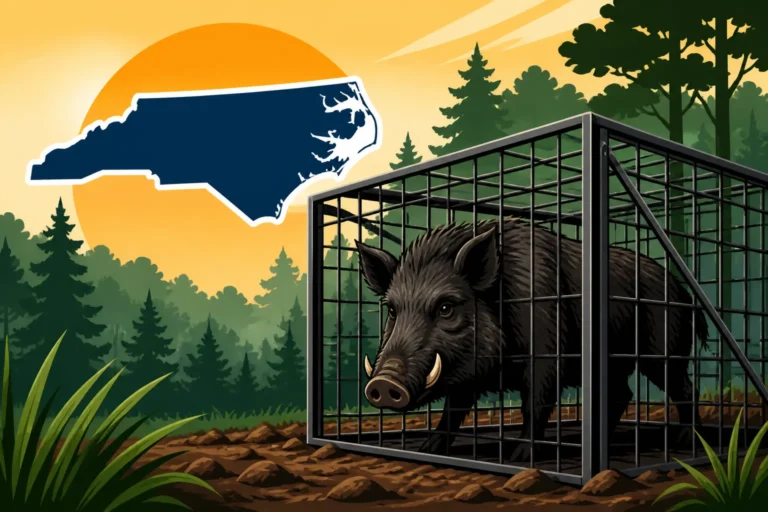
Feral hogs are a scourge across North Carolina, destroying crops, tearing up fields, and threatening native wildlife populations. Their destructive habits are often amplified under the cover of darkness, making them incredibly frustrating to deal with during daylight hours. This comprehensive guide will walk you through the specifics of effectively and legally hunting these nuisance animals at night with lights on private land, helping you reclaim your property and mitigate the extensive damage they cause.
Understanding North Carolina's Rules for Night Hunting Hogs
Dealing with feral hogs often feels like an uphill battle, and the rules around hunting them can sometimes add to the confusion, especially when you consider hunting after dark. Many folks, particularly those who've seen their hard work in a cornfield or pasture ruined overnight, wonder if they're even allowed to pursue these destructive animals when they're most active. The good news is, North Carolina has specific regulations designed to give landowners and hunters the tools they need to combat feral hogs effectively on private land.
Legal Framework for Night Hunting
The North Carolina Wildlife Resources Commission (NCWRC) understands the significant impact that feral hogs have on agriculture and the environment. Because of this, they've established very permissive rules for hunting them on private property. For starters, there's absolutely "no closed season, no bag limit" for feral hogs on private land. This means you can hunt them 365 days a year, day or night, without worrying about daily or seasonal limits. This is a huge relief for farmers and landowners who need to take action as soon as hogs show up.
The critical distinction comes with the use of lights and hunting after legal shooting hours. While hunting most game animals after sunset is strictly prohibited, feral hogs are specifically exempted from these restrictions on private land. This exemption is a game-changer because hogs are predominantly nocturnal, especially in areas with human pressure. They learn quickly to avoid people during the day, making night hunting with lights a far more effective strategy. It’s important to remember that this leniency regarding lights applies only to private land. You cannot typically use lights for night hunting hogs on most public lands in North Carolina; those areas have much stricter rules regarding hunting hours and methods. Always double-check specific public land regulations if you plan to hunt anywhere other than your own property or a private parcel you have permission to access. For a deeper dive into the general legalities of managing these animals, check out our guide on North Carolina Feral Hog Regulations.
Allowed Equipment and Methods
When it comes to the specific tools you can use for night hunting hogs with lights, North Carolina is quite accommodating for private land operations. You have a good deal of flexibility, which is crucial for adapting to different situations and hog behaviors.
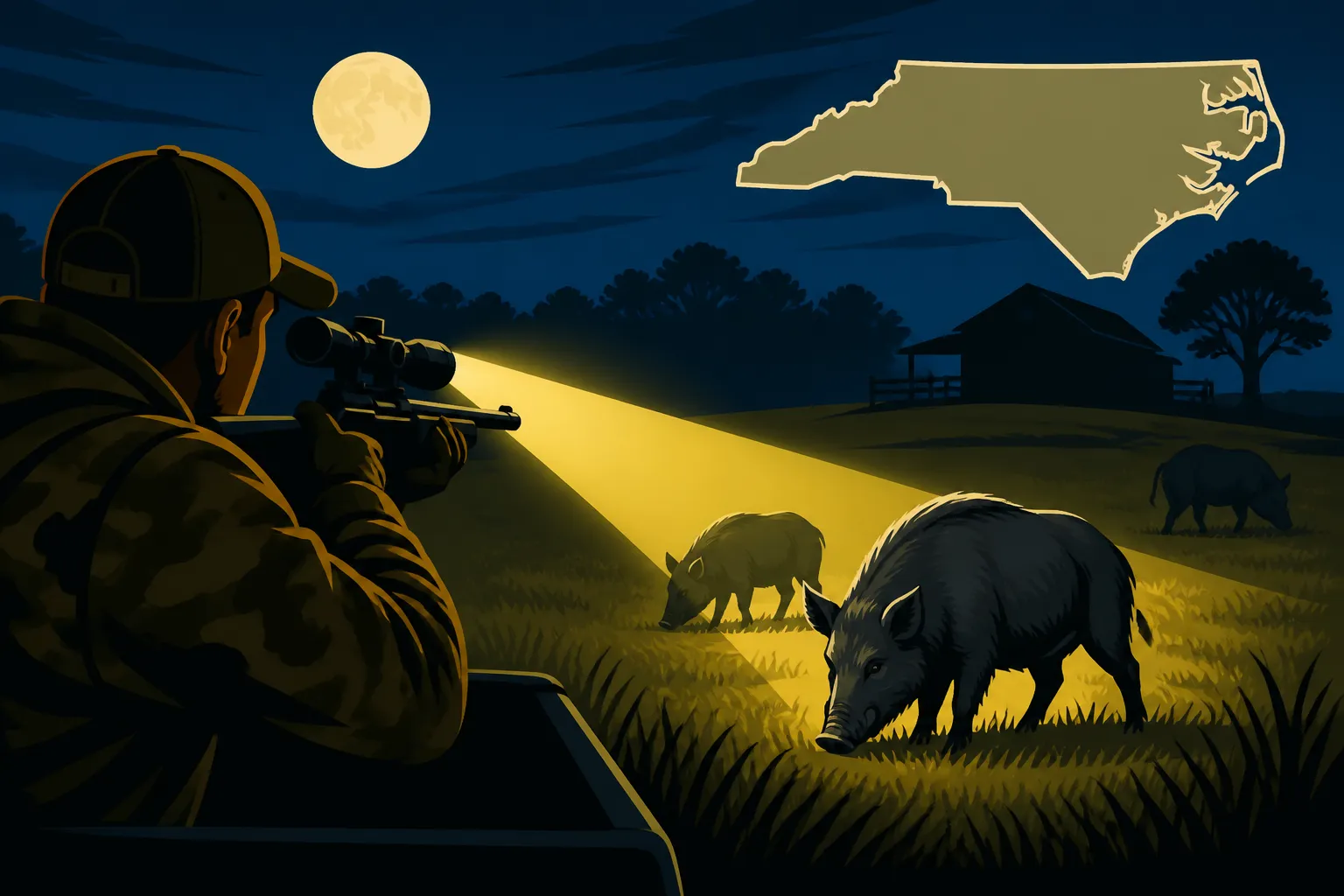
First, let's talk about lights. You are permitted to use a variety of lighting systems. This includes weapon-mounted lights that attach directly to your rifle or shotgun, handheld spotlights for scanning fields, and even fixed feeder lights that illuminate a bait site. The type of light (white, red, or green) is generally up to hunter preference, though many find red or green lights less likely to spook hogs. These lights allow you to identify your target clearly, ensure a safe shot, and make recovery much easier.
Regarding weapons, you can use any legal firearm or archery equipment. For firearms, common choices include rifles like AR-15s chambered in .223/5.56 or larger calibers, shotguns loaded with slugs, or even traditional hunting rifles. The key is to use a firearm you are proficient with and that is powerful enough to ensure a clean, ethical kill. For archers, a good compound bow or crossbow (if legal during the specific hunting season, though for hogs on private land, these rules are much more relaxed) can be incredibly effective at close ranges, especially over a bait pile. Beyond just lights and weapons, thermal optics and night vision devices are also legal for night hunting hogs on private land. While these come with a higher price tag, they offer a significant advantage in detection and target acquisition, allowing for maximum stealth and minimal disturbance.
Why Night Hunting is So Effective for Feral Hogs
If you've spent any time trying to hunt feral hogs during the day, you've probably felt that creeping frustration. They're smart, elusive, and seem to vanish into thin air as soon as the sun rises. This isn't just bad luck; it's a direct reflection of their behavior, which is precisely why night hunting isn't just an option—it’s often the most effective strategy for controlling these destructive animals.
Hogs Are Primarily Nocturnal
The truth is, feral hogs are largely built for the night. As the sun beats down on a hot North Carolina summer day, these animals seek the cool, dense cover of swamps, thickets, or deep woods. They'll bed down, conserving energy, and only emerge when the temperatures drop and the human activity subsides. This means that fields that look perfectly clear and undisturbed at noon can be torn to shreds by a sounder of hogs just a few hours later, under the cloak of darkness. This behavioral pattern is learned and reinforced, especially in areas where they experience hunting pressure during daylight hours. Hogs are incredibly intelligent and quickly associate human presence with danger, pushing them further into their nocturnal habits. They know that when the sun goes down, the world often becomes safer for them to roam, root, and feed.
Their preferred feeding times often coincide with the darkest hours. You'll find them hitting agricultural fields, food plots, and natural mast crops most heavily between late evening and early morning. They move through familiar travel corridors—creek bottoms, logging roads, and field edges—with surprising stealth for such large animals. If you're wondering How Wild Hogs Spread Across North Carolina, their nocturnal nature allows them to travel significant distances under cover, moving from one food source to the next, expanding their range, and causing continuous damage. Targeting them during these active periods simply aligns with their natural routine, drastically increasing your chances of encountering them.
Minimizing Disturbance and Maximizing Opportunity
One of the often-overlooked benefits of night hunting for feral hogs on private land is how it allows you to minimize disturbance to other game animals. If you’re managing your property for deer or turkeys, pressuring hogs during the day can inadvertently push other desirable game off your property or alter their patterns. By focusing your efforts on hogs at night, you can leave your deer stands and turkey roosts undisturbed during daylight hours, allowing those animals to maintain more natural routines. This separation of hunting efforts is a significant advantage for integrated wildlife management.
The element of surprise that lights, thermal, and night vision provide is unparalleled. Hogs, while intelligent, are often less wary of light at night than they are of direct human scent or movement during the day. A well-placed feeder light or a sudden beam from a weapon-mounted light can freeze them in their tracks, giving you precious seconds to make an ethical shot. Thermal optics, in particular, completely strip away the cover of darkness, revealing hogs hidden in tall grass or brush that would be invisible to the naked eye. This allows for incredibly stealthy approaches and precise shot selection. By observing their patterns with game cameras and then setting up over known nocturnal food sources or travel lanes, you create prime ambush points. This methodical approach, leveraging their nocturnal habits against them, dramatically maximizes your opportunities to reduce the Feral Hogs Across North Carolina population on your property.
Essential Gear for Successful Night Hog Hunting
Venturing out after dark to hunt feral hogs requires more than just your typical deer rifle and a headlamp. The right gear can make the difference between a frustrating night with missed opportunities and a successful outing that significantly impacts the local hog population. It's an investment, for sure, but a necessary one given the destructive nature of these animals.
Lighting Systems and Optics
This is where night hunting truly differentiates itself. Your ability to see clearly and identify your target is paramount for safety and effectiveness.
Weapon-mounted lights are a popular choice for their convenience. They keep your hands free, and the light beam aligns directly with your point of aim. Many models offer adjustable brightness and different color filters (red, green, white). Green light is often favored because it provides good contrast against foliage and hog hair, while red light is considered less likely to spook animals and is better for preserving your natural night vision. However, some hogs can become wary of very bright white lights. While useful for quick target acquisition, relying solely on a weapon light can sometimes limit your scanning capabilities, as you're always pointing your firearm in the direction you're looking.
Handheld spotlights offer versatility. You can scan wide areas without pointing your weapon, identify potential targets, and then bring your rifle up once a hog is confirmed. The downside is that it requires two hands, which can be awkward for shooting. Often, a combination of a handheld light for scanning and a weapon-mounted light for the shot provides the best of both worlds.
For those serious about hog eradication and willing to make a significant investment, thermal optics and night vision are game-changers. Thermal imagers detect heat signatures, allowing you to "see" hogs in complete darkness, through dense brush, or hidden in tall crops. They excel at detection at long ranges. Night vision devices, on the other hand, amplify ambient light (starlight, moonlight), providing a green-tinted, realistic view of the environment. Both offer incredible stealth, as you don't need to project any visible light until the moment of the shot (if using a scope with an IR illuminator for night vision). For serious hunters, platforms like GoHunt often feature reviews and comparisons of the latest thermal and night vision devices, offering insights into what features are most beneficial for different hunting scenarios. The ability to detect and approach hogs without them ever knowing you're there is a massive advantage.
Firearm and Ammunition Choices
Selecting the right firearm and ammunition is critical for humane and effective night hunting. You want something reliable, accurate, and with sufficient power for a quick, clean kill.
For rifles, semi-automatic platforms like the AR-15 are incredibly popular due to their high capacity, quick follow-up shot capability, and modularity for mounting lights and optics. Common calibers include .223/5.56, which is effective for smaller hogs, and larger calibers like .308 Winchester or 6.5 Creedmoor for bigger boars or longer shots. If you're interested in selecting the right rifle, consider our detailed guide on Choosing a Rifle Caliber for North Carolina Deer, as many of those principles apply to hog hunting too. Shotguns, particularly those chambered for 12-gauge, can also be highly effective when loaded with slugs, especially in dense cover at closer ranges. The sheer energy of a slug can drop a hog in its tracks.
Ammunition choice matters. While hogs aren't nearly as tough as, say, a bear, they have a thick hide, dense bone structure around the shoulders, and are notoriously tenacious. You need a bullet designed for controlled expansion and good penetration. Standard ballistic tip hunting rounds or bonded bullets usually perform well. Avoid varmint-specific rounds that might fragment too quickly.
Finally, consider the use of suppressors. While an additional investment and NFA item, suppressors (often called "silencers") are legal in North Carolina and offer significant benefits for night hunting. They drastically reduce muzzle blast, which is not only crucial for protecting your hearing in low-light situations but also minimizes disturbance to other wildlife and can prevent spooking an entire sounder of hogs after the first shot, potentially allowing for multiple animal harvests. They also make hunting more neighbor-friendly, reducing noise complaints.
| Lighting/Optic Type | Cost Range (Approx.) | Detection Range (Hogs) | Identification Ability | Stealth Level | Notes |
|---|---|---|---|---|---|
| Weapon-Mounted Light | $100 – $400 | 50 – 200 yards | Good (with proper aim) | Moderate | Hands-free; can spook wary hogs with bright white light. |
| Handheld Spotlight | $50 – $250 | 100 – 300 yards | Excellent | Moderate | Versatile for scanning; requires two hands. |
| Digital Night Vision | $300 – $1000 | 100 – 300 yards | Good (often B&W/green) | High (with IR) | Amplifies ambient light; often requires IR illuminator for best results. |
| Thermal Scanner | $500 – $2000 | 200 – 1000+ yards | Excellent for detection | Very High | Detects heat; great for finding hogs, but identification of small details can be challenging. |
| Thermal Scope | $2000 – $8000+ | 200 – 1000+ yards | Excellent for detection & ID | Very High | Integrated for shooting; highest cost but superior performance. |
Strategic Setup and Execution on Private Land
Having the best gear is only half the battle; knowing where and how to use it is what truly brings success in night hunting feral hogs. Their patterns can be predictable, but only if you put in the time to understand their movements and feeding habits on your specific property. This is where scouting, strategic placement, and smart baiting come into play.
Scouting and Stand Placement
The first step to successful night hunting, just like any other hunting, is thorough scouting. However, for nocturnal animals, your scouting methods need to adapt. You’re looking for signs of activity that specifically indicate nighttime use. Focus on high-traffic areas where hogs frequent. These often include creek bottoms, swamp edges, dense pine thickets, and the edges of agricultural fields—especially corn, soybeans, or peanuts. Look for fresh rooting, tracks in soft soil, wallows, and rubs on trees, all of which point to recent hog presence. Keep an eye out for their distinctive "pig trails" that cut through dense vegetation.
Trail cameras, even those with low-glow or no-glow IR flashes, are indispensable tools for confirming nocturnal hog activity. Set them up on known travel corridors or potential bait sites. Analyze the timestamps on the photos to understand exactly when the hogs are moving. This intelligence is invaluable. For more tips on using cameras, check out our insights on Where to Hang a Camera on a Logging Road.
Once you've identified these hot spots, it’s time to consider stand placement. A good ground blind or a strategically placed treestand can provide the concealment and stable shooting platform you need. Think about your shooting lanes: are they clear enough for a good shot under limited light? What's your backstop? This is even more crucial at night when visibility is compromised. Always ensure any shot you take has a safe background. Also, pay close attention to wind direction and thermal currents. Even at night, hogs have an incredible sense of smell. Thermals often drop and flow downhill as the air cools after sunset, so positioning yourself downwind and lower than their likely approach path can give you a significant advantage. A slight elevation change, like a small knoll or ridge, can sometimes be all you need to catch the scent currents just right.
Baiting and Calling Tactics
North Carolina's regulations are very clear: on private land, it is entirely legal to bait for feral hogs. This is a critical advantage for managing their populations, as baiting allows you to concentrate hogs in a specific, predictable location, making them much easier to target.
The most common and effective bait is corn. You can simply broadcast it in a chosen area, or for longer-lasting attraction, you might choose to sour or ferment it. Many hunters swear by soured corn, as the smell can attract hogs from a greater distance. Commercial hog attractants, often containing strong scents like cherry or grape, can also be added to corn or used alone to draw hogs in. Another popular method is using timed gravity feeders or spin-cast feeders, which dispense corn at specific times, conditioning hogs to show up during your preferred hunting window. Some of these feeders can even be equipped with their own low-intensity lights, helping to illuminate the area once the hogs arrive.
When setting up your bait site, consider the surrounding cover. Hogs prefer to approach food from areas where they feel secure, so placing bait near the edge of a thicket or dense woods is often more effective than in the middle of a wide-open field. This also provides them with a quick escape route, which might seem counterintuitive, but it makes them feel safer and thus more likely to visit.
While calling can be effective for some game, it's generally less crucial for night hunting hogs, especially if you're using bait. Hogs are usually focused on feeding when they come out at night. However, some hunters have found success with distress calls or feeding sounds to get a sounder to stop moving or to draw a curious hog a bit closer. Don't expect dramatic responses like you might get from a turkey, but a soft grunt or a feeding sound could sometimes provide that extra moment you need for a shot. The main goal here is to get them into your killing zone, and baiting is usually the most reliable way to achieve that under the cover of darkness. For comprehensive strategies on dealing with these animals, consider integrating tactics discussed in Trapping North Carolina Feral Hogs as well.
Safety Considerations and Ethical Hunting Practices
Night hunting hogs, while incredibly effective, introduces unique challenges and responsibilities. The reduced visibility demands an even greater emphasis on safety and adherence to ethical hunting principles. You're operating in a low-light environment, which means your margin for error is significantly smaller.
Prioritizing Safety in the Dark
The golden rule of firearm safety—always identify your target and what is beyond it—becomes paramount when hunting at night. Never, under any circumstances, shoot at a sound or a vague shadow. Thermal and night vision optics greatly aid in target identification, but even with these tools, positive identification is critical. What might look like a hog's heat signature from a distance could potentially be another animal or even a person if you're not absolutely sure. Take your time, confirm your target, and ensure you have a clear, safe backstop for your bullet.
If you're hunting with partners, communication is absolutely essential. Establish clear zones of fire before you even step foot in the dark. Use two-way radios or pre-arranged signals to let each other know where you are, if you're moving, or if you have a target in sight. Never assume your partners know your position. It's also vital to be intimately familiar with the property boundaries you're hunting. Using a GPS with property line overlays (like those found on GoHunt or other mapping apps) is highly recommended. You do not want to inadvertently trespass or, worse, shoot onto an adjacent property. Before you even head out, inform any neighbors that you'll be night hunting hogs on your property. This courtesy can prevent misunderstandings or even emergency calls from concerned residents. Always carry a reliable flashlight, even if you're using thermal or night vision, for walking to and from your stand and for tracking game.
Respect for the Animal and the Resource
Ethical hunting extends beyond just following the law; it's about respecting the animal and the broader ecosystem. When night hunting, ensure you have a clear, ethical shot placement to achieve a quick and humane kill. Avoid marginal shots that could wound an animal and lead to a difficult, prolonged recovery in the dark.
Speaking of recovery, once a hog is down, swift recovery is essential. A wounded hog in the dark can be dangerous, and you want to ensure you find the animal quickly to prevent spoilage of meat, especially on warmer North Carolina nights. A good bright light, or ideally, a thermal scanner, can greatly assist in blood trailing and locating downed game.
Finally, proper carcass disposal is crucial. While North Carolina's North Carolina's Year-Round Hog Rule on Private Land allows for extensive hog control, it doesn't mean you can disregard responsible carcass management. If you plan to consume the meat, process it promptly and properly. If not, dispose of carcasses away from water sources and in a manner that won't attract other nuisance animals or spread disease. While Chronic Wasting Disease (CWD) is a concern for deer in some parts of North Carolina, it's not typically found in hogs. However, hogs can carry other diseases, so good hygiene practices are always recommended. By adhering to these safety guidelines and ethical practices, you contribute to a responsible hunting culture and ensure that your efforts to control North Carolina's feral hog problem are both effective and respectful.
Disclaimer
Hunting is an inherently dangerous activity. Always prioritize safety, follow all local and state regulations, and obtain appropriate licenses and permits. The information provided in this guide is for informational purposes only and should not be considered legal advice. Hunters should consult the North Carolina Wildlife Resources Commission for the most current and accurate regulations before engaging in any hunting activities.