Ground Blind Anchoring in Wind
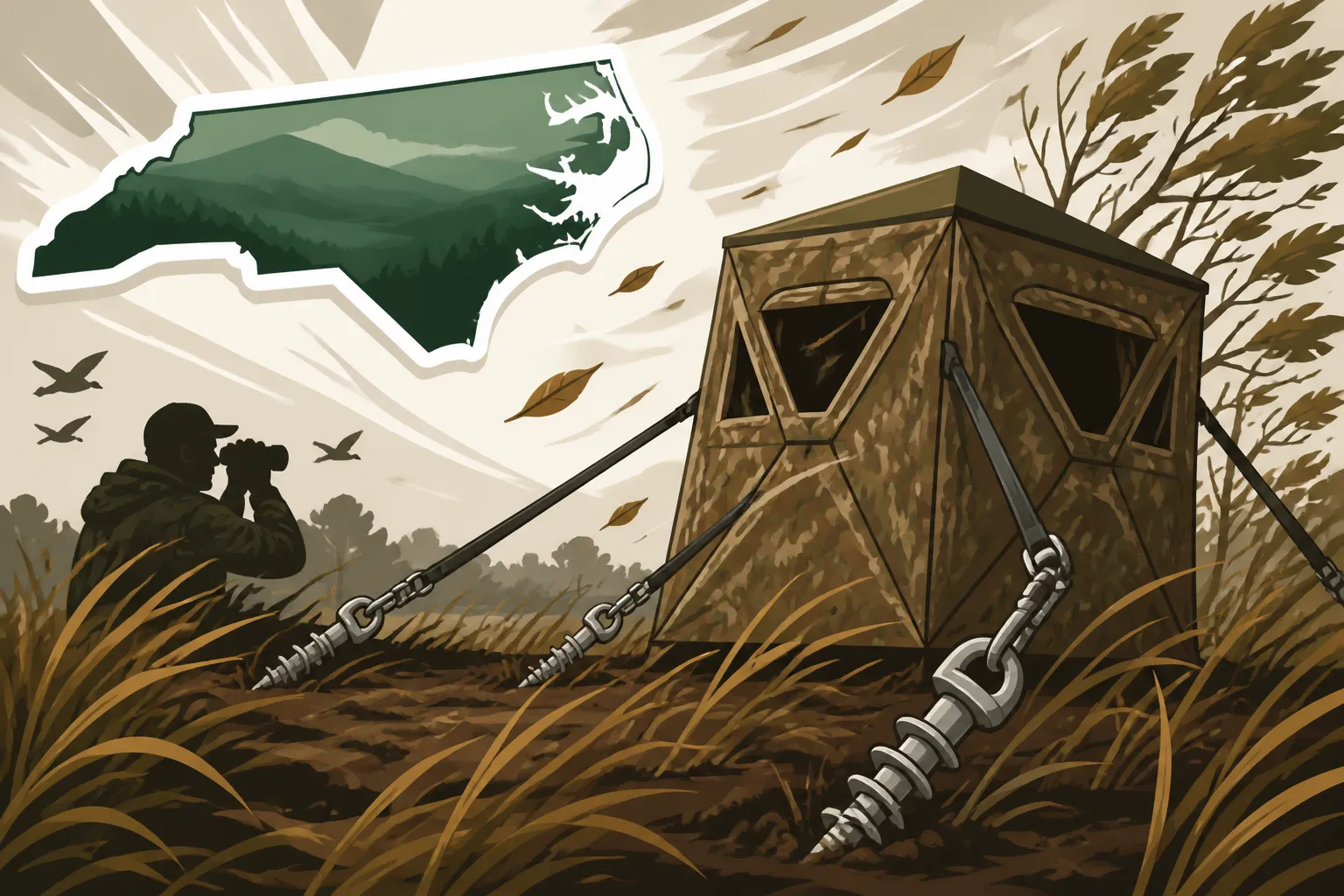
There’s nothing quite as frustrating as meticulously setting up your ground blind, getting everything just right, only to have a sudden gust of wind come tearing through and turn your perfectly camouflaged hideaway into a flapping, rattling mess – or worse, a crumpled heap. Whether you’re nestled in a Piedmont field or tucked into a coastal pocosin, North Carolina’s weather can be notoriously unpredictable, and a poorly anchored ground blind can ruin a hunt faster than an unexpected text message. This guide will walk you through proven methods to ensure your ground blind stays put, no matter what Mother Nature throws at it.
Understanding North Carolina's Wind Challenges for Ground Blinds
North Carolina's diverse geography means we face a wide range of wind conditions, each presenting its own unique challenge for ground blind hunters. What works perfectly in a sheltered mountain cove might utterly fail in an open agricultural field in the Eastern Coastal Plain. It's crucial to consider the typical wind patterns and the specific terrain you're hunting to properly prepare your setup.
Coastal Plains and Open Fields: The Wind Tunnel Effect
Down east, especially in the vast agricultural lands or near the coast, there's often nothing to break the wind's path. Imagine a cold front sweeping in from the west, unobstructed for miles. That can create sustained high winds that push against the broad sides of your ground blind like a sail. We're not talking about a gentle breeze; we're talking about gusts that can make your blind shimmy, shake, and eventually pull free if not secured properly. This is particularly true when you're Hunting Piedmont Farmland Deer or trying to make the most of an exposed field edge near the coast.
Even a strong "Carolina blue sky" day can surprise you. I've seen blinds in cut cornfields or along soybean edges get absolutely thrashed when a strong, steady breeze picks up around midday. The material can chafe, the poles can bend, and those flimsy stakes that came with your blind will be nothing more than expensive toothpicks in the face of a sustained blow. You're trying to be stealthy, and a blind that sounds like a windsock isn't exactly helping you keep a low profile.
Mountain and Piedmont Terrain: Shifting Thermals and Gusts
While the mountains and Piedmont often offer more natural windbreaks like dense timber and rolling hills, they come with their own set of challenges. Up in the higher elevations of Pisgah or Nantahala, you’re constantly dealing with Wind and Thermals on a Blue Ridge Slope. Winds can funnel through gaps in ridges, creating localized, high-speed gusts that feel like a sudden punch. Thermals shift throughout the day, often increasing in strength as the sun heats the ground, and these can create unpredictable swirling patterns around your blind.
In the Piedmont, dense woods might seem protective, but even here, strong winds can snap tree limbs, sending debris crashing down, or create swirling eddies that test your blind's stability from multiple directions. When you're trying to blend into a thicket or position yourself along a creek bottom, a robust anchoring system ensures your blind is a silent, immovable part of the landscape, not an advertisement for the nearest deer. These hidden gusts can be just as destructive as the sustained winds of the plains, often catching you off guard.
Essential Anchoring Techniques and Gear for Ground Blinds
Securing your ground blind effectively involves more than just pushing a few stakes into the ground. It's about combining different methods and selecting the right gear for the job. Think of it as building a small, temporary fortress against the elements.
Upgrading Your Stakes: Beyond the Factory Standard
Most ground blinds come with a few flimsy metal or plastic stakes. These are barely adequate for a calm day, let alone a typical North Carolina windy front. This is where your first upgrade should come in.
- Heavy-Duty Tent Stakes: Look for stakes made of hardened steel or thick, durable plastic. They should be at least 8-10 inches long, preferably with a hook or T-handle top for easy removal and better grip when hammering them in. Some even have a spiral design for extra purchase in soft soil. These are a significant improvement over the standard ones and can be found at any outdoor supply store.
- Rebar or Rebar J-Hooks: For serious holding power, especially in areas with soft, sandy, or loamy soil, rebar is king. You can buy short sections (18-24 inches) of rebar at hardware stores and bend one end into a "J" shape using a vise. Drive these deep into the ground at an angle, securing the blind's corner loops or guy lines with the J-hook. They're heavy, but they will not pull out easily.
- T-Posts: While a bit overkill for every situation, small, lightweight T-posts (like those used for electric fences) can be driven into the ground outside your blind, then you can tie off your blind's guy lines to them. This is particularly effective in very open, windy locations where you want absolute security and don't mind the extra effort.
Anchoring Stakes Comparison
| Anchor Type | Material | Length (Typical) | Ideal Soil Type | Pros | Cons |
|---|---|---|---|---|---|
| Factory Stakes | Thin metal/plastic | 4-6 inches | Very soft | Lightweight, included with blind | Very poor holding, prone to bending/breaking |
| Heavy-Duty Stakes | Steel/durable plastic | 8-12 inches | Soft to medium | Good holding, reusable, better grip | Can still pull out in extreme wind/soft soil |
| Rebar J-Hooks | Steel | 18-24 inches | Soft to loamy | Excellent holding, durable, cheap | Heavier, requires bending, harder to remove |
| T-Posts | Steel | 2-3 feet | All soil types | Superior holding, very stable | Heaviest, most visible, more effort to set |
| Sandbags/Weight Bags | Heavy fabric | Variable | Hard/rocky, any | No ground penetration needed, portable | Requires filling/carrying weight, bulky |
The Power of Guy Lines and Ropes
Stakes are your first line of defense, but guy lines are what distribute the force and provide tension, preventing the blind from collapsing inward or flapping excessively. Most quality ground blinds will have loops along the top and sides for attaching guy lines.
- Paracord or Durable Rope: Always carry extra paracord or strong nylon rope. Attach lines from the top corners of your blind down to stakes driven into the ground several feet away, creating a wider, more stable base. The wider the angle, the more stable the blind will be. Use proper knots that hold securely but can be untied easily, like a taut-line hitch for adjustable tension.
- Tension is Key: You want your guy lines taut, but not so tight that they pull on the blind's fabric excessively, which could cause tearing in a strong wind. A little bit of give is fine, but the blind should feel firm and not wobble significantly when pushed. Check these regularly, especially after rain, as ropes can stretch when wet.
- Anchoring to Natural Features: Sometimes, you can skip the extra stakes. If your blind is near a sturdy tree or a strong bush, use it! Tie a guy line directly to the tree trunk or a thick branch. This provides an incredibly strong anchor point that won't pull out of the ground. When Setting Up Against a Big Oak, you have an immediate, robust anchor for your blind, negating the need for a separate stake on that side. This is especially useful in rocky areas where driving stakes is difficult.
Sandbags, Water Jugs, and Natural Weights
What about those frustrating spots where the ground is too rocky or frozen to drive stakes? Or maybe you're just looking for extra security. Weight is your friend.
- Sandbags or Weight Bags: These are fantastic for adding weight to the inside corners of your blind. You can buy empty ones and fill them with local sand, gravel, or dirt, or simply use gallon jugs filled with water. Place one in each corner, and they will help hold the blind down, especially at the base, preventing lift and flapping. This also helps keep the blind's structure rigid.
- Rocks or Logs: Don't underestimate nature's anchors. If you're hunting in an area with plenty of rocks or fallen logs, position them strategically around the base of your blind, particularly on the windward side. You can even tie off a guy line to a heavy log if stakes aren't an option. This is a common tactic when Using a Ground Blind on North Carolina Public Land where you might not want to leave expensive gear behind.
Advanced Strategies for Extreme Wind Conditions
Sometimes, the forecast calls for truly blustery conditions, or you're hunting a notoriously exposed location. These situations demand a little extra thought and effort to keep your blind operational and safe.
Strategic Placement: Using Natural Windbreaks
The best defense against wind is avoidance. Before you even set up, consider the prevailing wind direction and look for natural shelters.
- Tree Lines and Thickets: Position your blind on the leeward side (the side protected from the wind) of a dense tree line, a thick briar patch, or a cluster of evergreens. These natural barriers will absorb or deflect much of the wind's force before it reaches your blind.
- Terrain Features: A slight dip in the terrain, the backside of a small knoll, or even a wide drainage ditch can offer surprising protection. Spend some time scouting the area, perhaps using a mapping app like GoHunt to analyze topography and potential wind funnels. Identifying these natural shields can save you a lot of grief.
- Against a Larger Structure: If you're hunting near a barn, an old fence line, or even a standing agricultural implement (with permission, of course), setting your blind close to the leeward side can provide substantial cover. Remember, the goal is to break the wind's direct path to your blind.
Brushing In and Camouflage: More Than Just Concealment
Brushing in your blind isn't just about hiding it from wary deer; it's also a fantastic way to add structural integrity and wind resistance.
- Weave in Branches and Foliage: Once your blind is set up and anchored, take local branches, small trees, and brush and weave them into the blind's exterior loops or mesh. This creates a more solid, less "flappy" profile. The added material helps break up the wind and distributes pressure over a larger, more irregular surface, making it harder for the wind to get a purchase.
- Against a Backdrop: When Brushing In a Blind on a Field Edge, try to place it against a dense backdrop of tall weeds, a thick fencerow, or a stand of pines. Not only does this enhance your concealment, but it also gives the wind less surface area to grab onto from behind. The wind can hit the natural cover first, and only the residual turbulence reaches your blind.
- Concealment and Stability: The more you integrate your blind into the natural environment with local foliage, the more it becomes part of that environment, offering less for the wind to "see" and push against. This also minimizes the sound of flapping fabric.
Internal Support Systems
For those truly extreme conditions, or if you have an older blind that's lost some of its rigidity, internal supports can be a lifesaver.
- PVC Pipe or Tent Poles: Cut sections of lightweight PVC pipe or extra tent poles to span the inside corners or along the roofline of your blind. These can be wedged into place or tied to the blind's frame to add rigidity and prevent the roof from caving in or the walls from flexing excessively. This is particularly useful for blinds with large, unsupported wall panels.
- Collapsible Poles: Some hunters even carry small, collapsible tarp poles that can be extended inside the blind to brace the roof or walls against internal pressure from the wind. This creates a solid internal skeleton, much like a tent, reinforcing the blind's original frame.
Maintenance and Pre-Season Checks for Wind Resilience
A ground blind that fails in the wind isn't just a nuisance; it can be a hazard. Regular checks and maintenance are key to ensuring it performs when you need it most.
Inspecting Your Blind Before Every Season
Don't wait until opening day to discover a problem. Before the season kicks off, set up your blind in the backyard or a clear space and give it a thorough going-over.
- Check Poles and Hubs: Are all the fiberglass poles intact and free of cracks? Are the hubs functioning smoothly? A broken pole or a sticky hub can compromise the entire structure’s integrity in the wind. Replace any damaged sections.
- Fabric and Stitching: Look for tears, rips, or frayed seams, especially around anchor points and zippers. Small holes can quickly become large ones in strong winds, turning your blind into tattered rags. Repair them with heavy-duty thread and fabric glue or patch kits specifically designed for outdoor gear.
- Zipper Functionality: A sticky or broken zipper can mean you can't get in or out quickly, or worse, it creates a weak point where wind can sneak in and cause flapping and noise. Lubricate zippers with a silicone spray or wax if they're stiff.
Keeping Your Anchoring Gear Organized and Accessible
You can have the best stakes and ropes in the world, but if they're tangled at the bottom of your pack or left at home, they're useless.
- Dedicated Bag: Keep all your stakes, ropes, mallets, and even those sandbags in a dedicated mesh bag or bucket. This ensures they're always together and ready to go.
- Pre-Cut Ropes: Cut your paracord or ropes to appropriate lengths (e.g., 6-8 feet for corner guy lines, longer for larger anchors) and coil them neatly with a rubber band or Velcro strap. This avoids frustrating tangles when you're trying to set up in the pre-dawn dark.
- Mallet or Hammer: Don't rely on a rock or your boot heel. A small, lightweight rubber mallet or even a sturdy camping hammer makes driving stakes much easier and ensures they go in straight and deep. This also helps when you need to remove those deeply embedded rebar stakes.
Practice Makes Perfect: Setting Up in Challenging Conditions
The more you set up your blind, the faster and more proficient you'll become. Practice in varying conditions if you can.
- Simulate Wind: On a breezy day in your yard, try setting up your blind and anchoring it as if you were in an open field. Pay attention to how the blind reacts to the wind and where the weakest points are. This helps you understand the forces at play and refine your technique.
- Darkness Drills: Try setting up your blind in low light or complete darkness using only a headlamp. Most hunting setups happen before dawn, and fumbling with stakes and ropes in the dark is no fun. The more familiar you are with your gear, the smoother your morning will be. Remember, the less noise you make and the quicker you get set up, the less you disturb the surrounding woods. This also minimizes the time your blind is a "flapping beacon" before you have it properly secured.
- Utilize Scouting Tools: Consider using an app like GoHunt to scout your hunting area beforehand, noting potential blind locations, windbreaks, and terrain features. This pre-planning can inform your anchoring strategy, allowing you to pack the right gear for the specific conditions you expect. Knowing if you're going to be in a flat, open area versus a rocky hillside means you'll pack stakes versus sandbags.
Ultimately, a well-anchored ground blind isn't just about comfort; it's about safety, stealth, and maximizing your chances for a successful North Carolina hunt. Don't let a gust of wind send your hunting dreams (and your blind) flying.
Disclaimer
This article is for general informational purposes only and does not constitute professional advice. Laws, prices and regulations vary by location and change over time. Consult a qualified professional for guidance on your specific situation.