Columbus County Public Land for Deer
Hunting public land for deer in North Carolina's Coastal Plain can feel like a daunting task, especially when you're targeting a specific county like Columbus. The sprawling, often impenetrable swamps, thick pocosins, and vast pine plantations can make finding a deer, let alone a good deer, seem like searching for a needle in a haystack. But don't despair! This guide is designed to cut through that dense coastal curtain, offering actionable insights and highlighting opportunities for successful deer hunting on public lands right here in Columbus County.
Understanding Columbus County's Deer Habitat and Challenges
Columbus County is a quintessential piece of North Carolina's Coastal Plain, and that means a unique set of circumstances for deer hunters. Unlike the rolling hills of the Piedmont or the rugged peaks of the mountains, this region presents its own brand of beautiful, yet challenging, terrain. If you're coming from another part of the state, be prepared for a different kind of hunt.
Coastal Plain Habitat and Deer Behavior
When you step into the woods of Columbus County, you're entering a landscape dominated by a mix of thick pocosin swamps, towering longleaf pine forests, dense cypress bottoms along rivers and creeks, and a generous smattering of agricultural fields. Deer here have adapted perfectly to this environment. They thrive in the impenetrable cover of the pocosins and titi thickets, using them as sanctuaries from pressure and as bedding areas. These dense, often wet, areas provide safety and a reliable food source in the form of browse.
You'll find deer utilizing the edges of these thickets, especially where they transition into more open pine stands or agricultural fields. These transition zones act as natural travel corridors, funnels, and feeding grounds. Think about how deer move from bedding to feeding—it's rarely a straight line across open ground. Instead, they'll weave through the densest cover possible, often using creek beds, subtle rises in elevation within swamps, or the edges of recent timber cuts. Understanding this movement is key to anticipating where they'll appear. The deer in the Coastal Plain generally have different behaviors and patterns compared to their counterparts further west, a topic explored further in Coastal Plain Versus Mountain Deer.
Public Land Pressure and Finding Solitude
Let's be real: hunting public land, anywhere, comes with the understanding that you won't be the only one out there. Columbus County's public hunting areas are no exception, even if they don't get the same national attention as some Western big game units. While you might not encounter bumper-to-bumper trucks like on opening day in a popular Piedmont game land, local pressure can still concentrate deer and push them into even thicker, harder-to-reach spots.
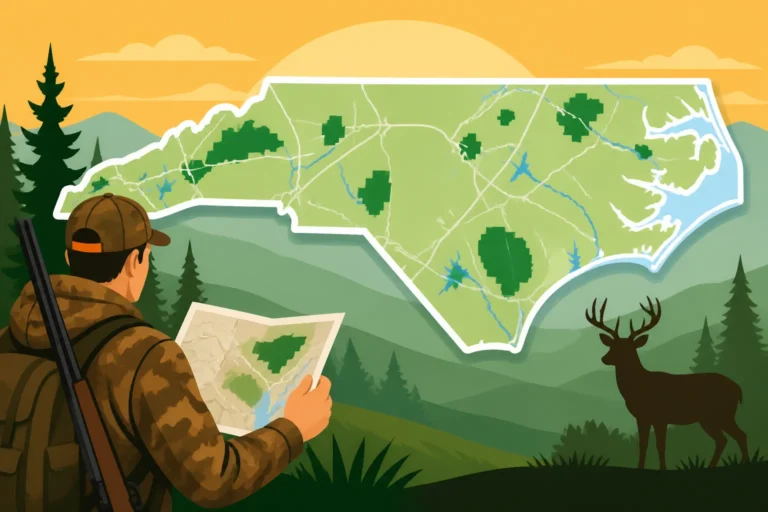
Finding solitude and undisturbed deer means you often have to work for it. This might involve walking further than most hunters are willing to go, venturing into those daunting swamps, or identifying small, overlooked pockets of cover that offer a haven for deer. Digital mapping tools, like those offered by onX Hunt, become invaluable here. They allow you to scout from your couch, identifying potential access points, mapping out long walks, and pinpointing areas that look less accessible. These "digital boots on the ground" can save you hours of wasted effort and help you discover those hidden gems. Being aware of Hunting Pressure on North Carolina Public Land can help frame your approach.
Key Public Hunting Areas in Columbus County
Columbus County offers access to a couple of significant game lands that provide opportunities for deer hunting. Each has its own distinct character, challenges, and rewards. Knowing what to expect from each can drastically improve your chances of success.
Holly Shelter Game Land
Holly Shelter Game Land is an absolute beast, one of the largest and wildest tracts of public land in the Coastal Plain, spilling into parts of Columbus, Pender, and Duplin counties. It's truly a primitive hunting experience. This vast area is characterized by immense pocosins—dense, stunted pine and cypress forests growing in peat soils—interspersed with longleaf pine uplands and extensive cypress-gum swamps. It’s rugged, wet, and often unforgiving.
For deer hunting, Holly Shelter demands a strategic and patient approach. Deer in these pocosins are experts at disappearing. Still-hunting slowly and quietly through the more open pine stands, especially after a rain, can be effective. Focus on the edges where the impenetrable pocosin gives way to more navigable timber or smaller clearings. Look for subtle changes in elevation, old logging roads, or drainage ditches that deer might use as travel routes. Setting up a treestand or a ground blind on these natural funnels or pinch points, especially near water sources or areas with fresh browse, can be productive. Be prepared to deal with water; waterproof boots are a necessity, and sometimes even waders are warranted. You can learn more about this area's challenges by reading Holly Shelter Bear Hunting Access, which shares similar terrain characteristics, or Hunting Coastal Plain Pocosin Swamps.
Green Swamp Game Land
The Green Swamp Game Land, primarily located in Brunswick and Columbus counties, offers a different, yet equally unique, coastal hunting experience. This area is famous for its rare carnivorous plants and its vast, open longleaf pine savannas, punctuated by dense bay thickets and pocosin wetlands. It's a land of contrasts, where you can walk through relatively open pine forests and then suddenly plunge into a thick, tangled swamp.
Deer in the Green Swamp often utilize the dense bay thickets and pocosin edges for bedding and security. When habitat management, such as prescribed burns, has recently been conducted in the longleaf savannas, fresh new growth attracts deer, making these areas prime feeding grounds. Scouting here involves looking for subtle trails that connect the open savannas to the thicker cover. Setting up a stand along these travel corridors, especially during the early morning or late evening, can yield results. The open nature of some areas might allow for longer shots than in Holly Shelter, but always be prepared for a deer to emerge from dense cover just yards away. Pay close attention to the specific regulations for this game land, as they can sometimes vary to protect its unique ecological features. A thorough understanding of Green Swamp Deer Hunting Rules is a must before planning your trip.
Strategies for Success on Columbus County Public Land
Hunting the unique environments of Columbus County demands a tailored approach. What works in the mountains or Piedmont might not be as effective in the vast, flat, and often wet coastal terrain. Adaptability and meticulous preparation are your best friends here.
Scouting and Digital Tools
Pre-season scouting is absolutely non-negotiable for success on Columbus County public lands. The sheer scale and uniformity of some of these areas can be overwhelming if you just show up on opening day. I always recommend starting your scouting process long before you ever step foot in the woods, by leveraging powerful digital mapping tools like onX Hunt or GoHunt. These platforms allow you to analyze aerial imagery, identify potential bedding areas (often the densest, darkest green spots), major drainage features, old logging roads, and subtle elevation changes that could funnel deer.
Look for pinch points created by water bodies, swamp edges, or changes in vegetation density. Identify potential access points and plan your routes to avoid disturbing deer unnecessarily. Once you have a few promising spots identified on your map, then it's time for boots on the ground. When you're physically scouting, look for fresh sign: rubs on small pines, active scrape lines (especially along logging roads or field edges), and abundant tracks. Pay attention to what deer are eating—are there acorns in the pine stands? Fresh browse in the cutovers? Scouting With the NC Wildlife App is another great resource for identifying game land boundaries and specific regulations, and understanding how to apply Reading Aerial Photos for Piedmont Deer principles to the coastal environment will give you an edge.
Adapting Tactics to Coastal Terrain
The flat, often dense nature of Columbus County's public land requires specific hunting tactics. Still-hunting is a highly effective method here, especially in areas with moderate visibility. Move slowly, taking one or two steps, then stopping to scan the cover. Use your binoculars to pick apart the shadows and look for horizontal lines (a deer's back) in a world of vertical trees. The key is patience and a keen eye.
When it comes to stand placement, both treestands and ground blinds have their place. Treestands are excellent for getting above the dense undergrowth, improving visibility, and helping your scent dissipate. Focus on setting them up on those identified travel corridors, near fresh sign, or overlooking natural openings within the thicker cover. However, finding suitable trees for treestands in certain pocosin areas can be a challenge. That's where a well-brushed-in ground blind shines. They can be particularly effective on field edges, near food plots, or in areas where suitable stand trees are scarce. Just remember to brush it in well, allowing it to blend naturally. For general advice, consider principles from Treestand Setups in Pisgah National Forest, adapting them to the flatter coastal landscape. Also, a dedicated guide on Using a Ground Blind on North Carolina Public Land will prove useful. Don't forget scent control; the high humidity in the Coastal Plain can make it even harder to contain your scent, so be meticulous.
Essential Gear and Considerations for Columbus County
Hunting in Columbus County isn't just about tactics; it's also about having the right gear to comfortably and safely navigate this unique environment. Being prepared for the conditions will make your hunt much more enjoyable and productive.
Clothing and Footwear
The coastal environment, with its humidity, heat (especially early season), and frequent wet conditions, demands specific clothing choices. Durability is paramount. You'll be pushing through dense brush, briars, and often wading through shallow water, so choose tough, rip-resistant clothing. Quick-drying synthetics are often a better choice than cotton, which holds moisture and can lead to discomfort. Layering is always smart, as temperatures can fluctuate throughout the day, even in the "flatlands."
When it comes to footwear, invest in high-quality, waterproof boots. Rubber boots are often preferred by many coastal hunters for their ability to handle standing water and mud, and to keep scent off your boots when traversing wet areas. Snake boots are also a wise consideration, as venomous snakes are active in these habitats. Ensure your boots are comfortable for long walks, as you’ll likely be covering some ground. And, of course, don't forget your blaze orange! North Carolina Blaze Orange Requirements are strictly enforced and essential for safety, especially during gun season. For more footwear insights, check out Boots for North Carolina Swamps and Ridges.
Navigation, Safety, and Game Recovery
Given the often featureless and dense nature of the terrain in places like Holly Shelter and Green Swamp, a reliable navigation system is non-negotiable. Don't rely solely on your phone unless you have a robust offline mapping solution and a portable charger. A dedicated GPS unit or a smartphone app like onX Hunt (with downloaded maps) will be your best friend. Mark your vehicle, your stand location, and any key terrain features or fresh sign you find. It's incredibly easy to get turned around in the vastness of a pocosin or a dense pine plantation.
Safety should always be your top priority. Carry a basic first-aid kit, a whistle, and always inform someone of your hunting plans, including your exact location and expected return time. The remoteness of some areas means help can be a long way off. Finally, consider game recovery. If you're fortunate enough to harvest a deer in one of these thick, wet environments, getting it out can be a monumental task. A sturdy game cart might struggle with thick mud and water, so a robust drag sled, or even the "gutless method" to bone out the deer and pack it out, might be necessary. Having a buddy or two to help with game retrieval is always a huge advantage. Learn more about how to navigate these challenges with Dragging a Deer Out of a Coastal Swamp.
Comparing Columbus County's Key Public Hunting Areas
| Feature | Holly Shelter Game Land | Green Swamp Game Land |
|---|---|---|
| Primary Habitat | Vast Pocosin Swamps, Stunted Pines, Cypress Swamps | Longleaf Pine Savanna, Bay Thickets, Pocosin Wetlands |
| Terrain | Very Flat, Often Wet, Extremely Dense Cover | Flat to Gently Rolling, Mix of Open Pine & Dense Thickets |
| Key Deer Tactics | Still-hunting, Stand Placement on Swamp/Pocosin Edges, Funnels | Still-hunting Savannas, Stands on Thicket Edges, Burned Areas |
| Challenges | Impenetrable Cover, Water, Navigation, Bug Pressure | Dense Thickets, Navigation in Uniform Savannas, Bugs |
| Access | Numerous Gated Roads, ATV Trails (check regulations) | Designated Parking Areas, Walking Trails, Limited Roads |
| Best For | Hunters seeking solitude and thick cover expertise | Hunters who enjoy varied terrain and open pine opportunites |
Disclaimer
This article is for general informational purposes only and does not constitute professional advice. Laws, prices and regulations vary by location and change over time. Consult a qualified professional for guidance on your specific situation.