Sandhills Longleaf Public Ground
Hunting the vast, often deceptively open terrain of North Carolina's Sandhills longleaf pine ecosystems can feel like trying to find a needle in a haystack for many hunters. These unique public grounds, while beautiful, present distinct challenges from the dense hardwoods of the Piedmont or the steep slopes of the mountains. This guide will walk you through understanding this special habitat, navigating its public lands, and employing effective strategies to fill your tags.
Understanding the Sandhills Longleaf Ecosystem
The Sandhills region of North Carolina is a truly special place, a relic of an ancient coastline now characterized by rolling, sandy terrain and, most notably, the majestic longleaf pine. This isn't just a pretty forest; it's a dynamic ecosystem shaped by millennia of natural forces, primarily fire. For hunters, understanding this unique environment is the first step toward consistent success.
What Makes Longleaf Pine So Unique for Wildlife?
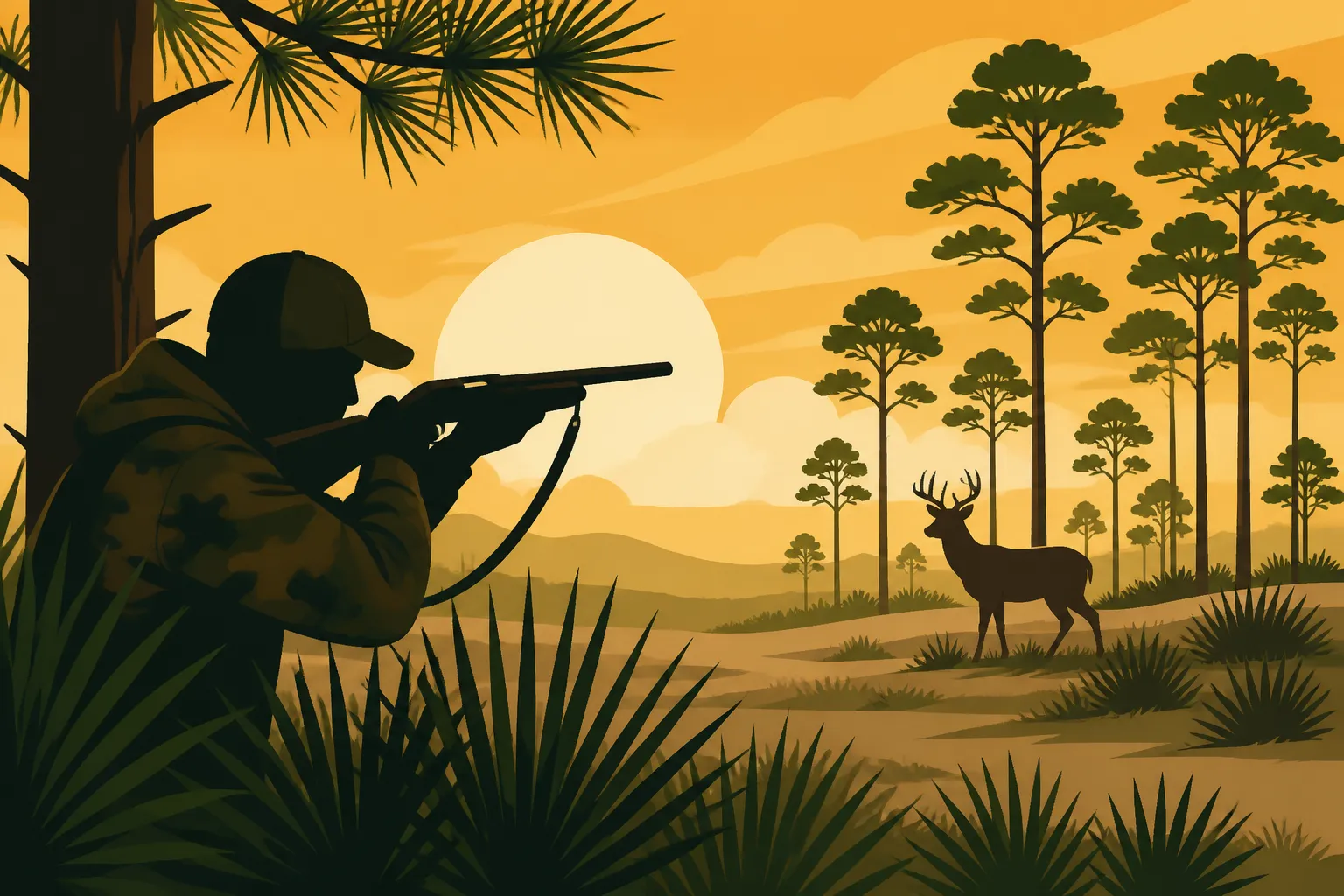
Imagine walking through a forest where the trees are widely spaced, forming an open canopy that allows abundant sunlight to reach the forest floor. That's the hallmark of a healthy longleaf pine ecosystem. Unlike the thick, tangled undergrowth you might find in other parts of the state, the longleaf understory is typically dominated by wiregrass and a diverse array of wildflowers and herbaceous plants. This open structure is critical. It allows for easy movement for both game animals and hunters, provides exceptional visibility, and fosters a specific plant community that offers unique food sources. The deep taproots of the longleaf pine help them thrive in the sandy, nutrient-poor soils, creating a landscape that is remarkably resilient to drought but utterly dependent on fire for regeneration and health.
This open nature means deer, turkey, and other animals rely less on dense cover for bedding and more on subtle terrain features, specific patches of thicker growth, or simply the sheer vastness of the woods for security. When you step into a thriving longleaf stand, you'll immediately notice the difference – the air feels open, the light filters down in dapples, and you can often see much further than in other forest types. This makes for a different kind of hunting, one that often rewards patience and keen observation over busting through thick brush.
Key Game Species Thriving in Sandhills Longleaf
The longleaf ecosystem supports a fascinating array of wildlife adapted to its unique conditions. White-tailed deer are certainly present, though their densities might not always match the agricultural rich Piedmont. They thrive on the diverse herbaceous growth and the occasional mast crop from scattered oaks or other hardwoods that manage to grow in pockets. Turkeys absolutely love the open longleaf. The clear understory makes for easy strutting grounds and allows them to spot predators from a distance. The big, open woods are ideal for gobblers to survey their domain and for hens to raise poults, benefiting from the insect-rich environment created by the fires.
Perhaps one of the most iconic game species of the Sandhills longleaf is the bobwhite quail. While their populations have faced challenges statewide, well-managed longleaf stands with frequent prescribed burns are crucial strongholds for these elusive birds. The combination of open ground, wiregrass for nesting, and diverse seeds and insects provides ideal habitat. And let's not forget the ever-present feral hogs. These destructive animals have found the sandy soils and diverse forage to their liking, and they can be found across many Sandhills public lands. Hunters here also pursue rabbits, squirrels, and various migratory birds, making it a truly diverse hunting landscape.
The Role of Prescribed Burns
You cannot talk about the Sandhills longleaf without talking about fire. Prescribed burns are not just a management tool; they are the lifeblood of this ecosystem. Historically, natural lightning-strike fires swept through these woods regularly, clearing out undergrowth, returning nutrients to the soil, and stimulating the growth of fire-adapted plants. Today, land managers mimic this natural process with carefully controlled prescribed burns.
From a hunter's perspective, understanding burn regimes is paramount. Burns create fresh, nutritious forage for deer and other herbivores, attracting them to newly regenerating areas. They expose the ground, making it easier for turkeys to find insects and seeds. For quail, burns are essential for creating the open, grassy habitat they need for nesting and foraging. When scouting, pay close attention to recent burn areas. Often, within weeks or months, these areas will green up with succulent new growth, acting like natural food plots that draw game in. Conversely, areas that haven't burned in many years might be overgrown and less productive for certain species. North Carolina Longleaf Pine and Quail Habitat dives deeper into how vital these burns are for quail, but the benefits extend to nearly all game species here.
Navigating Public Ground in the Sandhills
Hunting public land in the Sandhills means learning to read a unique landscape and understanding the regulations specific to these areas. It's often not about finding the thickest cover, but understanding how game uses the more open pine stands.
Key Game Lands and Their Characteristics
When you think of public hunting in the North Carolina Sandhills, the most prominent area that comes to mind is the vast Sandhills Game Land. This sprawling tract covers tens of thousands of acres across several counties, including Richmond, Scotland, and Moore, and is a prime example of managed longleaf pine habitat. It's well-known for deer, turkey, and particularly for Sandhills Game Land Quail Hunting. Other areas like the Pee Dee River Game Land, while having some bottomland, also incorporate significant Sandhills terrain, offering a mix of habitats.
Each of these game lands, while sharing the longleaf characteristic, might have slightly different features. Some may have more dense pine plantations mixed in, others might have more scattered hardwood drains, or small ponds and wetlands. It's crucial to consult detailed maps and, if possible, scout these areas ahead of time. Don't assume one section of a game land hunts like another. The sheer size of these areas can be intimidating, but it also means there's plenty of ground to explore and find less pressured pockets. Remember that North Carolina Game Lands often have specific check-in procedures or rules, so always verify those before heading out.
Essential Tools for Scouting and Navigation
Given the often monotonous appearance of miles of pine trees, navigation can be a real challenge in the Sandhills. A GPS unit or a reliable mapping app on your phone is absolutely essential. I personally rely heavily on apps like onX Hunt. Its satellite imagery and property line overlays are invaluable for understanding the terrain, identifying subtle elevation changes, drainages, and burn lines, and staying within public boundaries. GoHunt is another excellent resource for planning hunts, especially when looking at broader landscape features. Before you head out, download offline maps for your chosen area, as cell service can be spotty, especially in the deeper sections of these game lands.
Beyond digital tools, don't underestimate the power of good old-fashioned topo maps. They can reveal subtle elevation changes that might funnel deer or provide a higher vantage point for turkeys. When Scouting North Carolina Public Land Before Season, look for old logging roads, creek crossings, and areas where the longleaf transitions to denser pine thickets or hardwoods. These edge habitats are often magnets for game. Learning to read the subtle nuances of the land on a map can save you miles of walking once hunting season arrives.
Understanding Public Land Access and Regulations
Hunting public land comes with its own set of rules and responsibilities. In the Sandhills, these often include specific vehicle access regulations. Many interior roads are gated or restricted to foot traffic, so be prepared to walk. Check the current regulations for the specific game land you plan to hunt – you can often find these on the NC Wildlife Resources Commission website or through their mapping tools. Some game lands require a specific game lands license in addition to your regular hunting license and big game privileges.
| Aspect of Access | Typical Sandhills Public Land Rule | Why It Matters for Hunters |
|---|---|---|
| Vehicle Access | Limited to main gravel roads; many interior roads gated/foot traffic only. | Plan for long walks; consider a game cart for retrievals. |
| Sign-In | Often required at designated kiosks or online for specific game lands. | Crucial for tracking hunter pressure and mandatory for legal hunting. |
| Blaze Orange | Mandatory during gun seasons (check specific dates). | Safety first! Adhere to requirements for visibility. |
| Camping | Generally prohibited in undesignated areas; check specific rules. | No overnight stays on the spot; plan lodging or designated campsites. |
| Tree Stands | Portable stands generally allowed, but must be removed daily/seasonally. | No permanent stands; consider saddle hunting or mobile setups. |
| Trail Cameras | Rules vary, often prohibited or require specific tagging. | Check local rules; avoid potential conflicts or violations. |
Be mindful of designated safety zones, residential areas bordering public land, and any quota hunt requirements. Ignorance of the rules is never an excuse. Always double-check the latest regulations before you go, and consider carrying a copy of the rules with you. Vehicle Rules on North Carolina Public Land and Treestand Rules on North Carolina Public Land are great resources to review before planning your trip.
Hunting Strategies for Longleaf Pine
Hunting the Sandhills longleaf pine requires a different mindset and approach than other habitats. The open nature of the woods changes everything, from how you approach a stand to how you call a turkey.
Deer Hunting Tactics in Open Pines
Deer hunting in the open longleaf can be challenging, but also incredibly rewarding. Unlike dense woods where deer might feel secure in thickets, here they often rely on their eyesight and the sheer expanse of the woods. Still-hunting becomes a highly effective tactic. Move slowly, taking a few steps then stopping for several minutes to scan for movement. Use the widely spaced pines to break up your silhouette. Look for the horizontal lines of a deer's back or belly against the vertical trees.
Focus on terrain features that provide even subtle cover or funnel movement. This could be a slight depression, a band of thicker younger pines, or a transition zone where the longleaf gives way to a mixed hardwood bottomland along a creek. Deer often browse on the diverse understory that emerges after a prescribed burn, so target those areas. During the rut, scrapes and rubs might be more spread out, but a distinct line of rubs along an old logging road or subtle ridge can indicate a travel corridor. In the Sandhills, wind direction is always paramount, as deer can easily spot and scent you from a distance in the open woods. Hunting the Coastal Plain and Sandhills provides more insights into deer behavior in this unique region.
Turkey Hunting Strategies
The Sandhills longleaf is turkey heaven, especially if you love to run and gun. The open woods make it easy to cover ground and hear gobblers from a distance. Early in the morning, listen intently from a high point (even a slight rise can make a difference) for gobblers on the roost. Once you pinpoint one, use the open woods to your advantage for a quiet approach. Try to get as close as you dare without being seen, setting up against a tree that provides good back cover and allows you to see the bird approaching through the open pines.
Calling can be highly effective, but adjust your volume. The sound carries well in the open, so you might not need to call as loudly or aggressively as in denser woods. Soft tree yelps and clucks can be deadly. If a gobbler hangs up, as they often do, you might have the option to try a slow, deliberate stalk if the terrain allows, or reposition and try calling from a different angle. Look for dusting bowls in sandy patches and strut zones on open ridges. Wild Turkeys in North Carolina thrive here, and understanding their preferences for open ground is key.
Small Game and Hog Hunting Approaches
Beyond deer and turkey, the Sandhills longleaf offers fantastic opportunities for small game and feral hogs. For quail, it’s all about finding properly managed habitat. Areas that have been recently burned (a year or two out) with a good mix of wiregrass and patchy cover are ideal. Hunting with well-trained bird dogs is by far the most effective method for quail in this terrain. Without dogs, it becomes a much harder task, relying on chance flushes.
Rabbit hunting can also be productive in areas with thicker patches of briars and palmetto, often found along the edges of the open longleaf or in unburned sections. Running beagles is a classic and very effective method here.
Feral hogs are a constant presence. They root extensively in the sandy soil, leaving obvious sign. Still-hunting for hogs during daylight hours can work, especially if you focus on areas near water sources or where recent burns have created fresh forage. Night hunting is also a popular and effective method for hogs on private land where legal, often utilizing thermal optics. Hogs will root up huge sections of ground, especially after rains, so look for these disturbed areas. Trapping is also a common tactic for Feral Hogs Across North Carolina, especially when managing persistent populations.
Overcoming Challenges and Maximizing Success
Hunting in the Sandhills isn't without its unique difficulties. From the intense heat of early season to the subtle art of tracking in sand, being prepared makes all the difference.
Dealing with Heat and Hydration
North Carolina's hunting seasons often kick off in the heat of late summer and early fall, and the Sandhills can feel particularly relentless. Early archery seasons or even late-season hunts on warm days can be physically demanding. Dehydration is a real concern. Always carry more water than you think you'll need, and consider electrolyte supplements. Light, breathable clothing is essential, even if you still need to wear blaze orange for safety. Plan your hunts for the cooler parts of the day – early mornings and late evenings – and be prepared to take breaks.
If you make a kill in warm weather, immediate field dressing and proper meat care are critical. Bringing a cooler with ice to the field, if possible, or planning for a quick trip to a processor can save your hard-earned venison. The effort to retrieve a deer from deep in the woods during hot weather can be grueling, so think about deer carts or sleds to aid in extraction.
Reading Sign in Sandy Soil
One of the biggest differences you'll notice in the Sandhills is the soil itself. The sandy ground can be a blessing and a curse when it comes to reading sign. Fresh tracks are incredibly clear and can provide a wealth of information about deer size, speed, and direction of travel. However, older tracks can quickly get washed out by rain or blown away by wind, making it harder to determine freshness.
Look for areas where deer have pawed at the sandy soil, especially along trails or near water sources. Rubs and scrapes on the pine trees can be harder to spot than on hardwoods, but they are there. Pay close attention to how deer move through the more open woods; they often follow subtle contours or use the shade of a small cluster of trees as a temporary cover. Learning to distinguish fresh sign from old is crucial, and it's a skill that only comes with time spent in this specific environment. You can often see small, subtle deer trails cutting through the wiregrass, even if they aren't deeply worn into the sand. Reading North Carolina Mud for Fresh Deer Movement offers great foundational advice that can be adapted to sandy soils.
Respecting the Environment and Other Users
As hunters, we are stewards of the land. This is particularly true on public ground like the Sandhills Game Lands. Always practice Leave No Trace principles. Pack out everything you pack in, and then some. This includes shell casings, food wrappers, and anything else that doesn't belong. The beauty of the longleaf ecosystem is fragile, and it's up to us to keep it that way.
Be mindful of other users. Hikers, birdwatchers, and other outdoor enthusiasts also enjoy these public spaces. Maintain a respectful distance, and always ensure your hunting practices are safe and considerate. This also extends to how you interact with the land itself. Avoid damaging trees, cutting new trails, or doing anything that could negatively impact the habitat. By being responsible and ethical hunters, we ensure these incredible Sandhills longleaf public grounds remain open and productive for generations to come.
Disclaimer
This article is for general informational purposes only and does not constitute professional advice. Laws, prices and regulations vary by location and change over time. Consult a qualified professional for guidance on your specific situation.