Trail Camera Rules on North Carolina Public Land
Few things are as exciting as checking a trail camera after a week or two in the woods, hoping to see that monster buck or elusive gobbler you’ve been chasing. But when you're hunting North Carolina's vast public lands, there's often a gnawing doubt about where you can even put that camera. You don't want to accidentally run afoul of the rules, risking a fine or, worse, losing your valuable equipment. This guide is here to clear up the confusion, walking you through the ins and outs of trail camera regulations on public lands across our great state, so you can scout with confidence.
The General Lay of the Land: North Carolina's Approach to Trail Cameras
North Carolina's public lands offer incredible opportunities for hunters, but they also come with a responsibility to understand and abide by specific regulations. Trail cameras are a fantastic scouting tool, offering a glimpse into wildlife activity when you're not there, but their use on public ground isn't as straightforward as just hanging them wherever you please. It's a common point of confusion for many, and frankly, the rules can feel a little ambiguous at times, especially when you're used to the freedom of private land.
Understanding NCWRC's Stance
The North Carolina Wildlife Resources Commission (NCWRC) is the governing body for hunting regulations in our state, and they have specific guidelines regarding trail camera use on lands they manage, particularly our Game Lands. Historically, trail cameras, or "game cameras" as they're often called, have been allowed on most public lands, including our National Forests and Game Lands, provided they don't interfere with other users or damage natural resources. The key has always been non-invasive and temporary. This means no cutting trees to clear a view, no permanent structures, and ensuring your camera isn't a hazard or an eyesore. It's about respecting the land and other outdoor enthusiasts. The NCWRC generally considers them a permissible scouting tool, but that permission comes with caveats that are important for every hunter to know.
Key Distinctions: Public vs. Private Land
The biggest difference when it comes to trail cameras is, quite obviously, whether you're on public or private land. On private land, with the landowner's permission, you generally have a lot more leeway. You can use cellular cameras, leave them out for extended periods, and perhaps even trim some brush around your setup. The rules are largely dictated by what the property owner allows, within broader state hunting laws.
However, when you step onto public land – be it a National Forest like Pisgah or Nantahala, or one of our many North Carolina Game Lands – those freedoms shrink considerably. Public lands are shared resources, managed for multiple uses including recreation, conservation, and timber. This means your trail camera use must fit within a framework that protects these resources and respects other users, from hikers to birdwatchers. What might be perfectly acceptable on your buddy's 100-acre farm might get you in hot water on a Game Land. It’s crucial to know which rules apply where, because ignorance, unfortunately, won't spare you from a citation or the loss of your gear.
Specific Rules and Regulations You Need to Know
Alright, let's get into the nitty-gritty of what's allowed and, more importantly, what's definitely not allowed when it comes to setting up your trail cameras on North Carolina public lands. This is where most hunters get tripped up, and understanding these specifics can save you a lot of headache and potential hassle. Remember, these rules are in place to preserve the integrity of our wild spaces and ensure everyone has a fair and respectful experience.
Permitted Practices and Equipment
Generally speaking, if you're using a standard, non-cellular trail camera and following a few common-sense rules, you're likely in the clear. Here’s what’s typically permitted:
- Non-Invasive Attachment: Your camera must be attached to a tree or post without causing any damage. That means no screwing into trees. Use straps, bungees, or rope that won't girdle the tree or leave lasting marks. Think about the long-term health of the tree; it's a living thing, not just a camera stand.
- Temporary Placement: While there's no hard-and-fast rule on how long "temporary" means, it generally implies you're not leaving it out year-round, season after season, without checking on it. Most hunters will put them out a few weeks before a season, during the season, and then pull them. Leaving them unattended for months on end is generally frowned upon and can lead to issues.
- Identification: It's a good practice, though not always explicitly mandated for all public lands, to clearly mark your camera with your name and contact information. This isn't just for law enforcement; it can also help if another hunter discovers your camera. A simple, waterproof tag zip-tied to the strap can do the trick.
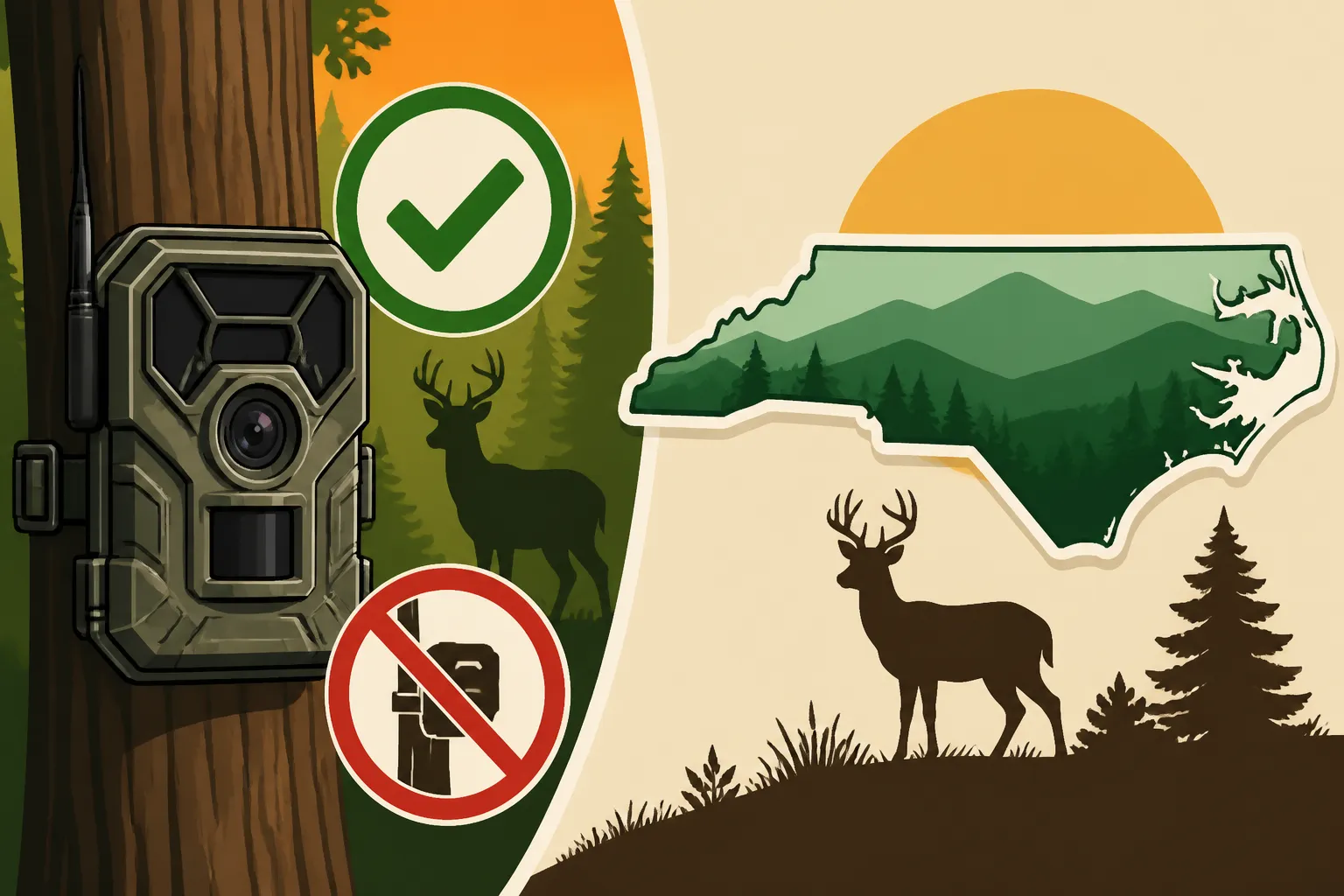
- Non-Cellular Cameras: This is a big one. As of my last check, the use of cellular-enabled trail cameras (those that transmit images wirelessly to your phone or email) is generally prohibited on North Carolina Game Lands and many other public land areas. The reasoning often revolves around fairness, reducing hunting pressure, and preventing real-time scouting advantages. If you’re scouting on public land, stick to traditional cameras that require you to physically retrieve the SD card.
- No Property Damage: This goes beyond just the tree you're strapping it to. Don't cut shooting lanes, trim branches, or otherwise alter the natural landscape to get a better camera angle. This kind of "habitat modification" is typically illegal on public land and can carry hefty fines. You should be able to walk up, hang your camera, and walk away, leaving no trace of your presence beyond the camera itself.
Prohibited Actions and Common Missteps
This is where things can go wrong if you're not careful. These are the "don'ts" that hunters often overlook, leading to frustration and potential legal trouble.
- Cellular/Transmitting Cameras: I'll reiterate this because it's the most common mistake: no cellular trail cameras on NC Game Lands or National Forests. This rule is strictly enforced. That fancy camera that sends you real-time photos of deer at your stand? Keep it on private property. Using one on public land is a clear violation and can result in confiscation of your camera and a citation.
- Damaging Trees or Vegetation: As mentioned, drilling, screwing, or nailing your camera to a tree is a big no-no. Any act that damages public property, including living trees, is illegal. This also extends to cutting brush or small trees to improve your camera's field of view. The rule of thumb is: leave no lasting impact.
- Leaving Cameras Unattended Indefinitely: While "temporary" isn't a precise timeframe, abandoning a camera for months or even a full year can be seen as littering or leaving personal property on public land, which is often against regulations. It also makes your camera a target for theft or damage. Make a plan to check and retrieve your cameras promptly after the season or when you're done scouting.
- Interference with Other Users: Your camera should be discreetly placed and not obstruct trails, access points, or other recreational activities. If a hiker stumbles upon your camera prominently displayed on a popular trail, it's not ideal. Position them in out-of-the-way spots where they won't be seen or bothered by casual users.
- Baiting Violations: While trail cameras themselves aren't bait, if you combine their use with illegal baiting practices (which are very restricted on public lands in NC, particularly for deer), you're looking at a much more serious violation. Ensure your camera is scouting natural movement, not an illegal bait pile.
- Leaving Litter: Make sure all packaging, straps, or any other items related to your camera setup are taken with you when you leave. "Leave No Trace" principles are paramount on public lands.
Here's a quick summary table to help keep things straight:
| Category | Permitted (Generally) | Prohibited (Generally) |
|---|---|---|
| Camera Type | Standard, non-cellular cameras | Cellular/transmitting cameras (on public land) |
| Attachment | Straps, bungee cords, rope (non-damaging) | Screwing, nailing, or drilling into trees/vegetation |
| Duration | Temporary placement (weeks/months, not year-round) | Indefinite abandonment, leaving out for extended periods |
| Identification | Marking with name/contact info (recommended) | No identification (can lead to confiscation if found) |
| Habitat Impact | No alteration to natural environment | Cutting shooting lanes, trimming branches, clearing brush |
| Placement | Discreet, out-of-the-way locations | Obstructing trails, access points, or high-traffic areas |
| Associated Use | Scouting natural animal movement | Using in conjunction with illegal baiting practices |
Understanding these rules is your first step to being a responsible public land hunter in North Carolina. Don't let a simple mistake ruin your season or cost you your gear.
Navigating Public Lands with Your Trail Camera
So, you know the rules. Now, how do you actually put these cameras to work effectively and legally on North Carolina's public hunting lands? It's not just about slapping a camera on the first tree you see; it's about strategic placement, minimizing your impact, and leveraging technology to stay on the right side of the law. Public land hunting is challenging enough without adding unnecessary complications.
Choosing a Spot and Minimizing Impact
When you're out there on a Game Land or in a National Forest, scouting for that perfect spot for your camera, think beyond just where the deer might walk. You also need to think about other people and the environment.
First, consider the type of public land. Are you on a heavily used section of a Game Land near a major road, or deep in the backcountry of Nantahala? High-traffic areas mean a higher chance of your camera being discovered, moved, or even stolen. For this reason, many hunters choose to hike a little further, getting off the beaten path where few others venture. This not only increases your chances of capturing undisturbed wildlife but also reduces the likelihood of human interference. When scouting, I often look for natural funnels, pinch points, or bedding areas away from main trails. Sometimes, the nastiest, thickest cover holds the best sign, and coincidentally, is where fewer people go.
When you find a spot, choose a sturdy tree that offers good concealment. Don't pick the most obvious tree right next to a trail. Look for one slightly off the path, perhaps with some natural cover like thick pines or dense undergrowth. Angle your camera so it captures the intended area, but also so it's not pointing directly at a well-used trail where it might photograph every hiker or mountain biker. Remember, the goal is to be effective and unobtrusive. Using camouflage tape on your camera can help it blend in, further reducing its visibility to casual passersby. This is a critical part of Finding Ground Others Walk Past.
Legal Retrieval and Security Considerations
Once your camera is out there, you'll need to go back and get those memory cards. This is another area where planning is key. If you’ve placed your camera deep in a swampy Hunting Coastal Plain Pocosin Swamps or high up a Reading a Ridge for Mountain Zone Deer, you need to ensure you can retrieve it without violating other rules or putting yourself in danger.
Always make sure you have legal access to the area for retrieval. Some public lands might have seasonal closures or restricted access points. Plan your trips to coincide with open access periods. When you do go in, try to minimize your disturbance. Walk quietly, don't leave trash, and retrieve your camera efficiently.
Security is also a real concern. While it's disheartening to think about, trail camera theft on public land is a reality. Using a security cable or lockbox can deter opportunistic thieves, though nothing is foolproof. Some hunters swear by positioning cameras higher up on a tree, out of easy reach, or even placing "dummy" cameras in obvious spots to draw attention away from their more valuable units. Make sure any locking mechanisms or cables do not damage the tree. And for goodness sake, if you see someone else's camera, leave it alone. We're all out there trying to enjoy the woods.
Tools to Help You Stay Compliant
In today's age, technology can be a huge asset in ensuring you're compliant and effective with your trail camera strategy. While cellular cameras are out for public land, mapping apps are your best friend.
Mapping applications like onX Hunt are incredibly valuable for public land hunters in North Carolina. They allow you to clearly see property boundaries, distinguishing between public Game Lands, National Forests, and private parcels. This is absolutely critical because inadvertently placing a camera on private land without permission, even if it's just a few feet over a boundary line, is trespassing. With onX Hunt, you can download offline maps to your phone, which is vital when you're in remote areas with no cell service. You can drop pins for your camera locations, track your routes in and out, and double-check land ownership before you ever set foot in the woods. This is especially helpful when dealing with patchwork public land areas or smaller Game Lands. onX Layers for North Carolina Land Status can be a lifesaver.
Other resources, like those offered by GoHunt, can provide insights into game movement patterns, habitat types, and even topographical features that might influence where you place your cameras. While GoHunt focuses heavily on Western big game, many of the underlying scouting principles and mapping tools can be adapted for our North Carolina woods. Think about how topo maps can reveal subtle saddles or benches that deer might use, perfect spots for a camera, or how aerial imagery helps you identify potential bedding areas or travel corridors. Scouting With the NC Wildlife App is another great resource from the state itself.
By combining careful planning, respect for the land, and smart use of these mapping and scouting tools, you can confidently and legally deploy your trail cameras, gathering valuable intelligence for your next hunting adventure on North Carolina's public lands.
Disclaimer
This article is for general informational purposes only and does not constitute professional advice. Laws, prices and regulations vary by location and change over time. Consult a qualified professional for guidance on your specific situation.