Reporting a Poacher in North Carolina
There’s almost nothing more frustrating for an ethical hunter in North Carolina than seeing someone break the rules. Whether it’s a shot fired out of season, a deer killed over the limit, or suspicious activity on public land, illegal hunting — poaching — undermines everything we stand for. This comprehensive guide will walk you through exactly how to report a poacher in North Carolina, what information you need to gather, and why your vigilance makes such a critical difference to our state's wildlife resources.
Why Reporting Poaching Matters More Than You Think
When you witness poaching, it’s not just about one animal or one bad actor. It's a direct threat to the integrity of our hunting heritage, the health of our wildlife populations, and the conservation efforts funded by license sales that benefit us all. It can feel daunting to get involved, maybe even a little uncomfortable, but your actions protect what we love.
The Impact on Wildlife Populations
Illegal hunting can have devastating effects, especially on local wildlife populations. Imagine a small deer herd in a specific tract of woods. If a poacher repeatedly takes deer, particularly does out of season or more than the legal limit, it can decimate that local population, making it harder for legal hunters to find deer and disrupting the natural balance. These actions can throw off years of careful wildlife management by the North Carolina Wildlife Resources Commission (NCWRC). For species with lower populations or specific management plans, like black bears in certain zones or wild turkeys, poaching can set conservation efforts back significantly. It’s not just about reducing numbers; it's about potentially taking genetically superior animals or animals crucial to breeding cycles, impacting the long-term health and vitality of the entire population. We rely on science-based bag limits and seasons, and poaching completely ignores these vital safeguards.
Protecting Ethical Hunters and Fair Chase
Beyond the direct impact on animals, poaching casts a long shadow over the entire hunting community. It fuels negative stereotypes and misinformation about hunters, making it harder for us to gain public support for conservation initiatives. Every time a poacher breaks the law, it makes it tougher for ethical hunters who follow the rules, purchase their licenses, and contribute to wildlife management. We abide by strict regulations on things like North Carolina Legal Firearms for Deer Hunting or specific rules for Bowhunting North Carolina's Statewide Archery Season, and seeing someone disregard these rules is a slap in the face. It’s a matter of fair chase, too – ensuring animals have a reasonable chance, and that hunters aren't gaining an unfair, illegal advantage. Your decision to report helps ensure that hunting remains a respected and sustainable activity for future generations, separating legitimate conservationists from those who merely exploit resources.
How to Report a Poacher in North Carolina
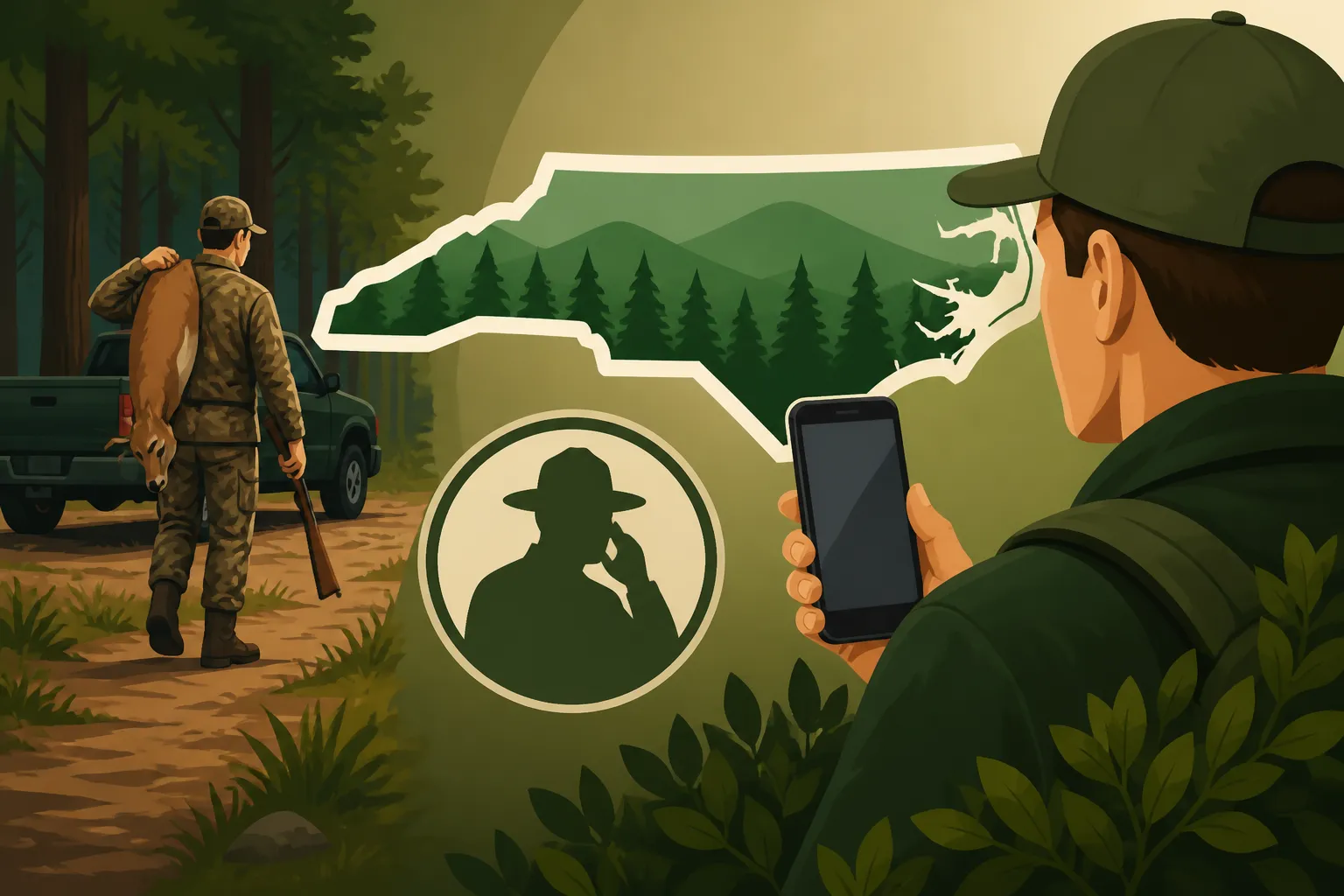
So, you’ve witnessed something suspicious, or maybe you've got solid evidence of illegal activity. What do you do next? Knowing the right channels and what information to provide is crucial for the NCWRC to act effectively. Don't confront the individual; your safety is paramount, and it could also compromise any future investigation. Your role is to be a keen observer and a clear communicator.
Immediate Contact Options for Urgent Situations
If you witness a crime in progress, or something that has just happened and requires immediate attention, calling 911 is always an option, especially if there's any perceived danger. However, for wildlife violations, the most direct and effective route is usually to contact the NCWRC Law Enforcement Division directly.
The NCWRC has a dedicated toll-free hotline specifically for reporting wildlife violations. This is your go-to number for situations that are happening right now, or where quick action could lead to an apprehension. It's available 24/7, because poaching doesn't follow a business schedule.
- NC Wildlife Resources Commission Law Enforcement Hotline: 1-800-662-7137.
When you call this number, you'll be connected to a dispatcher who can immediately relay the information to wildlife enforcement officers in the area. This is particularly important if you see someone actively breaking laws, like illegally shooting a deer from a road or in a closed area, or if you suspect someone is violating North Carolina Sunday Hunting Rules where they shouldn't be. The quicker you can get this information to them, the higher the chance they have of intervening.
Non-Emergency Reporting Channels
Not every violation requires an immediate officer response. Maybe you found evidence of an old kill site with obvious signs of poaching, or perhaps you've heard persistent rumors about illegal activity in a specific area. For these non-urgent situations, there are other ways to report.
You can still use the 1-800-662-7137 hotline for non-emergencies, but be sure to specify that it's not a crime in progress. This helps the dispatcher prioritize calls. Alternatively, the NCWRC website often provides an online reporting form, which can be useful for detailing extensive information or attaching photos if you have them. This allows you to compile your thoughts and evidence thoroughly before submitting.
Another excellent resource is the "GoHunt" platform, if you use it for planning and mapping. While not a direct reporting tool for the NCWRC, platforms like GoHunt can help you log observations or even mark locations where you've seen suspicious activity. This can be incredibly helpful for gathering the precise location data you'll need when you do make a report to the authorities. Knowing exactly where you are, down to the parcel boundaries, can be critical for an investigation.
It's also worth reaching out to your local wildlife enforcement officer directly if you know who that is. Building a relationship with your local officer can be beneficial, as they often have a deep understanding of local issues and can follow up on information more personally. Their contact details might be available through local game lands offices or by calling the main hotline for a general inquiry.
What Information to Gather Before You Call
The more specific and detailed information you can provide, the better equipped wildlife enforcement officers will be to investigate and apprehend poachers. Think of yourself as an investigative reporter, gathering facts. Even if you don't have all of this, report what you do have.
Here’s a breakdown of the critical details to try and capture:
-
Who:
- Number of people involved.
- Descriptions of individuals: gender, approximate age, height, weight, hair color, clothing. Note any distinguishing features like tattoos, scars, or limps.
- Any names or partial names heard.
-
What:
- The specific violation (e.g., shooting deer out of season, hunting at night, taking more than the North Carolina Deer Bag Limit, using illegal equipment).
- Type of animal involved (deer, bear, turkey, etc.).
- Any weapons observed (type of rifle, shotgun, crossbow, etc.).
- Was the animal retrieved? How?
-
When:
- Date and exact time of the incident. This is extremely important for officers trying to determine if it was within legal hunting hours or seasons. Knowing if it's the period for Spring Turkey Hunting in North Carolina or North Carolina's Gun Deer Season by Zone makes a big difference.
-
Where:
- The precise location of the incident. Use landmarks, road names, mile markers, GPS coordinates, or even descriptive terms like "north end of Smith's field, near the old oak tree."
- Was it on public land, like a Game Land (knowing the North Carolina Game Lands License Requirements for that area can be helpful), or private property? If private, can you identify the landowner?
-
How:
- Vehicle description: make, model, color, license plate number (even a partial one!), any distinguishing features like dents, stickers, or custom parts.
- Direction of travel: which way did the vehicle or individuals go when leaving?
- Any other methods used (e.g., spotlights, bait, dogs where not permitted).
-
Why: (Less critical, but if you have any insight into motive, it can be useful).
Example Scenario: You're scouting a familiar logging road near Pisgah National Forest and suddenly hear a rifle shot, followed by another. It's a Tuesday in late July, long before the North Carolina Deer Season Structure Explained kicks off. You peek through the pines and see two men dragging a small buck toward a beat-up blue Ford F-150. You note the truck has a broken taillight on the driver's side and a "Carolina Panthers" sticker on the back window. They load the deer and quickly drive away, heading north on the logging road.
In this situation, you have the "who" (two men), "what" (shooting a buck out of season), "when" (Tuesday in late July), "where" (logging road near Pisgah National Forest, heading north), and "how" (rifle shots, F-150 with specific details). Even if you don't get a license plate, this is a wealth of actionable information.
Reporting Information Checklist
Use this table as a quick reference when preparing to make your report:
| Information Category | Specific Details to Look For | Importance |
|---|---|---|
| Suspect(s) | Number, gender, age, height, build, clothing, hair, distinguishing features (tattoos, glasses) | Helps identify individuals later |
| Vehicle(s) | Make, model, color, license plate (full or partial), dents, stickers, direction of travel | Critical for tracking and identification |
| Violation | Type of animal, specific illegal act (out of season, baiting, night hunting), weapons used | Confirms the nature of the crime |
| Location | GPS coordinates, road names, landmarks, property names, public/private | Pinpoints where officers need to investigate |
| Time/Date | Exact date and time of incident, how long ago | Determines legality and urgency |
| Evidence | Photos, videos, physical evidence (do not touch or move if possible) | Strengthens the case, provides proof |
| Your Info | Name, phone number (optional for anonymity) | Allows officers to follow up for more details |
It's natural to be a little flustered in the moment, but taking a deep breath and quickly jotting down these details on your phone or a small notebook can make all the difference. Remember, the GoHunt app or other mapping software can also help you quickly pinpoint your exact location for the "where."
What Happens After You Report
You’ve made the call or submitted the report, and now you might be wondering what happens next. The process isn’t always instant, and often, investigations take time and careful planning. But rest assured, your report is taken seriously.
The Investigation Process
Once the NCWRC Law Enforcement Division receives your report, a chain of events is set in motion. First, the dispatcher assesses the urgency and assigns the call to an officer in the vicinity. If it's a crime in progress, an officer will attempt to respond as quickly as possible. If it's a non-emergency, the information is still logged, and an officer will follow up during their shift or when resources allow.
Wildlife enforcement officers are highly trained professionals. They will use the information you provided to begin their investigation. This might involve patrolling the area, looking for the described vehicle or individuals, or searching for evidence at the scene. They may interview witnesses, gather forensic evidence, or conduct surveillance. For instance, if you reported someone baiting illegally, officers might monitor the site over several days. The more precise your details are, the less time they have to spend on initial fact-finding, and the more quickly they can move towards enforcement.
Sometimes, an investigation might not lead to an immediate arrest or citation. This doesn’t mean your report was ignored. Some cases require extensive evidence collection, or officers might be building a larger case against repeat offenders. They may even pass along information to other agencies if the crime extends beyond wildlife violations. They are also well-versed in understanding North Carolina Wildlife Violation Penalties, so they know what they need to gather to make a charge stick.
Anonymity and Follow-Up
Many people worry about retaliation or simply prefer not to be directly involved beyond making the report. The NCWRC understands this and offers the option to remain anonymous. When you call the hotline, you can explicitly state that you wish to remain anonymous, and your personal information will not be shared with the suspected poachers. This is a critical feature that encourages people to come forward without fear.
However, if you're comfortable providing your contact information, it can be incredibly helpful for the officers. They might have follow-up questions, need clarification on certain details, or want you to identify suspects from photographs. If you choose to provide your contact details, you might also receive updates on the case, though this isn't always guaranteed due to the sensitive nature of ongoing investigations. Officers will typically only contact you if absolutely necessary for the case.
The most important thing is that the initial report is made. Your act of reporting, whether anonymous or not, contributes significantly to protecting North Carolina's natural resources and upholding the laws that govern our hunting seasons, from North Carolina's Twenty-Two Bear Management Zones to the rules around Hunting North Carolina's Year-Round Feral Hogs.
Common Poaching Scenarios and Red Flags
Understanding what constitutes poaching can help you identify suspicious activity more easily. It's not always a clear-cut case, but some situations are definite red flags.
Out-of-Season or Bag Limit Violations
One of the most common types of poaching involves taking game outside of legal seasons or exceeding bag limits. This is often driven by a desire for venison or trophies without respect for the established rules.
- Sounds of Shots in the Off-Season: Hearing rifle or shotgun blasts during the summer months, or long after the North Carolina Turkey Season Closing Date, especially in areas known for deer or turkey, is a major red flag. While some small game seasons might be open, or target shooting could be occurring on private land, consistent shooting in wild areas during closed big game seasons warrants suspicion. For example, if you're scouting in mid-August for deer, ahead of North Carolina's Archery Season Opening Day, and hear multiple rifle shots followed by vehicle activity, that's highly suspicious.
- Excessive Game Harvest: Seeing someone consistently bringing home multiple deer or turkeys when the daily or seasonal bag limits are much lower is another clear sign. While the North Carolina Deer Bag Limit allows for several deer in a season, seeing an individual with an unusual number of animals over a short period, especially if they are consistently large bucks, could indicate a violation. This often becomes apparent in local communities or through social media posts that boast about excessive kills.
- Harvesting Protected Species or Illegal Sex/Age Classes: Shooting an antlered deer during an antlerless-only season, or vice versa, is poaching. Similarly, targeting species that are not open for harvest (like elk in North Carolina, which are viewing-only), or violating specific rules such as those for the North Carolina Youth Turkey Weekend, constitutes poaching. An ethical hunter using GoHunt or other resources would always double-check the North Carolina Deer Season Structure Explained to ensure legality.
Illegal Methods and Locations
Poachers often resort to illegal methods or hunt in prohibited locations to gain an unfair advantage or simply because they don't care about the law. These methods are not only unethical but can also be dangerous.
- Night Hunting with Lights: Using artificial lights (spotlights) to illuminate and shoot deer or other game at night is a classic poaching tactic. This is highly illegal in North Carolina. If you see vehicle headlights sweeping through fields or woods at night, stopping abruptly, and then hear a shot, it's almost certainly poaching. This practice is extremely dangerous as the shooter cannot properly identify their target or what lies beyond it.
- Hunting from a Vehicle or Public Road: Discharging a firearm from a public road or hunting from within a moving vehicle is illegal and incredibly unsafe. If you observe someone doing this, it's a serious violation. Similarly, shooting across a public road or highway is a massive safety hazard.
- Baiting Violations: While baiting for deer is legal in some parts of North Carolina on private land, there are strict rules, and it is largely prohibited on public lands. Baiting for bears is also legal in some areas with specific regulations, but unauthorized baiting, especially on Game Lands or National Forests, is illegal. If you see large piles of corn, apples, or other attractants on public land, or in an area where baiting is not permitted, and then observe hunting activity, it's a red flag.
- Trespassing and Hunting on Posted Land: Hunting on private land without permission, especially if the land is clearly posted, is trespassing and often leads to poaching. This is a violation of North Carolina Trespass and Permission Law. Even if a hunter has a valid license, if they are on someone else's property without explicit permission, they are breaking the law. If you see hunters in an area you know is private and posted, and you don't recognize them as having permission, a call to the NCWRC or local sheriff is appropriate.
- Hunting in Closed Areas: Some areas, like certain state parks, urban zones, or even parts of our National Forests during specific times (e.g., during a prescribed burn or a managed hunt closure), are closed to hunting. Someone hunting in a clearly designated "no hunting" zone is poaching. Even with a North Carolina Hunter Education Requirements certification, some hunters still push boundaries. When planning a hunt, resources like the NCWRC website and GoHunt are great for checking specific boundary rules and area closures.
Keep your eyes and ears open, and if something doesn't feel right, chances are it isn't. Your commitment to reporting helps everyone, from the deer to the dedicated wildlife enforcement officers and ethical hunters across North Carolina.
Disclaimer
The information provided in this guide is for informational purposes only and is not intended as legal advice. Always consult the official North Carolina Wildlife Resources Commission regulations or a legal professional for specific legal questions or interpretations. Laws and regulations are subject to change.