North Carolina Opossum and Skunk Trapping
Living in North Carolina, we cherish our beautiful wildlife, but let's be honest, sometimes those critters can cross the line from welcome neighbors to outright nuisances. Opossums and skunks, while fascinating in their own right, are often at the top of the list for causing headaches around homes, farms, and even suburban gardens. Whether it's a skunk dousing your beloved pet or an opossum making a nightly buffet out of your trash cans, dealing with these unwelcome guests can be incredibly frustrating. This guide is here to walk you through the ins and outs of legally and effectively trapping opossums and skunks in our great state, helping you regain control of your property.
The Persistent Problem: Why Opossums and Skunks Become Nuisances
For many North Carolinians, the sight of an opossum or the unmistakable whiff of a skunk isn't just an inconvenience; it signals a disruption to their daily lives and a potential threat to their property and pets. Understanding why these animals become problematic is the first step toward managing them.
Nuisance Wildlife Issues in North Carolina
Opossums and skunks are incredibly adaptable creatures, which is why they thrive so well, even in human-dominated landscapes. This adaptability, however, often puts them at odds with us. Opossums are opportunistic omnivores, meaning they'll eat just about anything they can get their paws on. This makes your unsecured trash cans, pet food left out overnight, ripe garden produce, or even a backyard compost pile incredibly tempting targets. I've heard countless stories from folks in the Piedmont about opossums raiding chicken coops, not necessarily killing birds, but stealing eggs and spooking the flock. They're primarily nocturnal, so you might not even see them, only the messy aftermath of their nighttime escapades. While generally timid, a cornered opossum can deliver a nasty bite, and they are known carriers of fleas, ticks, and other parasites that you certainly don't want tracking into your home.
Skunks, on the other hand, bring their own unique set of problems, with the most infamous being their potent, lingering spray. Beyond that, they're avid diggers, tearing up lawns and golf courses in search of grubs and insects. Like opossums, they're attracted to pet food and unsecured garbage. I once had a client near Wilmington whose entire crawl space became a skunk den, leaving an odor that permeated their entire home for weeks—a truly miserable experience. They're also notorious for preying on poultry, often leaving a tell-tale hole dug under the coop and only taking one or two birds, unlike a fox that might decimate an entire flock. Their tendency to den under sheds, porches, and even houses makes them especially problematic neighbors.
Disease Concerns and Prevention
Beyond property damage and foul odors, both opossums and skunks can pose significant health risks. Skunks, in particular, are one of the primary carriers of rabies in North Carolina. This isn't just a concern for your outdoor pets; it's a serious public health issue. Any skunk acting strangely—stumbling, appearing disoriented, unusually aggressive, or overly friendly—should be treated with extreme caution and reported to local authorities. It's a risk no one wants to take, especially if you have children or unvaccinated pets.
While opossums have a naturally lower body temperature that makes them less susceptible to rabies, they are not immune and can carry other diseases that affect humans and pets, such as leptospirosis, tularemia, and a host of internal and external parasites. The thought of a wild animal, potentially carrying these risks, making itself at home under your deck or in your shed is enough to make anyone consider trapping. Before resorting to traps, remember that prevention is always the first line of defense: securing trash lids, bringing pet food indoors at night, and sealing off access points under structures can go a long way in deterring these critters. But when prevention fails, trapping becomes a necessary and responsible management tool.
Understanding North Carolina's Rules for Trapping Opossums and Skunks
Before you even think about setting a trap, it’s absolutely critical to understand the legal framework surrounding furbearer trapping in North Carolina. Our state has clear regulations designed to ensure humane practices and prevent unintended consequences. Navigating these rules can sometimes feel like a maze, but it's essential for responsible wildlife management.
Licensing and Permit Requirements
For general trapping of furbearers in North Carolina, which includes opossums and skunks during the regulated season, you are required to possess a valid North Carolina hunting or trapping license. You simply cannot just set a trap without one, even if it's on your own private property. There's often confusion about this, with many folks thinking "it's my land, I can do what I want," but wildlife is considered a public resource, and its management is regulated by the state. For comprehensive details on what you need, check out our guide on North Carolina Trapping License Requirements.
Now, there's a specific nuance for nuisance animals outside of the regular season. If an opossum or skunk is actively causing damage to your private property—think tearing up your yard, raiding your chicken coop, or attempting to den in your house—you might be able to remove it without waiting for the season. However, even in these depredation scenarios, you typically still need a valid hunting or trapping license, and there are rules about what you can do with the animal once it's caught. There isn't a special "skunk permit" or "opossum permit" per se; they generally fall under the broader furbearer regulations, with specific allowances for property damage. Farmers dealing with widespread crop damage might have access to different depredation permits, but for most residential scenarios, a standard license is your starting point.
Legal Trapping Methods and Devices
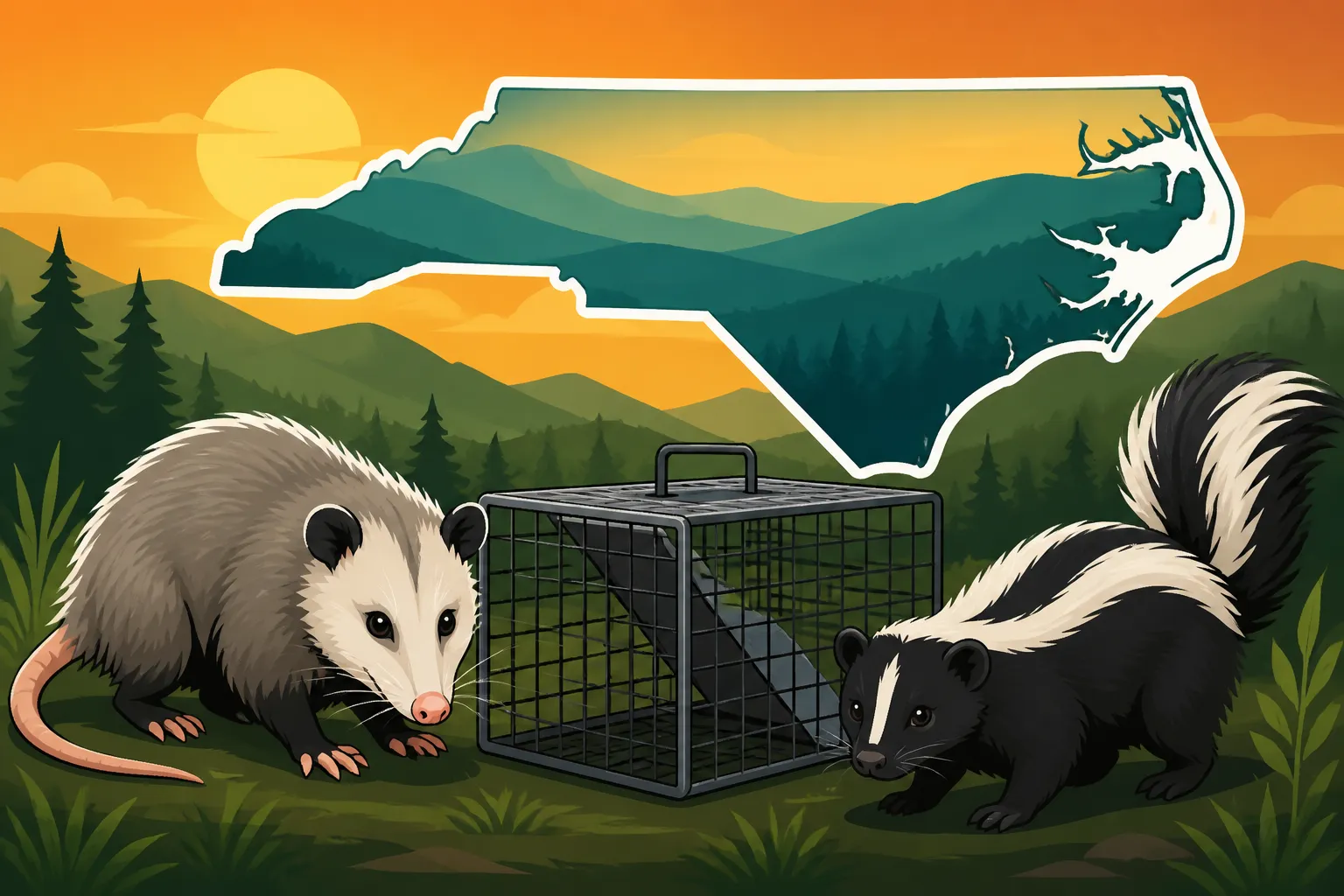
North Carolina law is very specific about the types of traps that are legal for furbearers, and it's designed to minimize harm to non-target animals and promote humane practices. For nuisance skunks and opossums, especially in residential or suburban areas, live traps (cage traps) are almost universally recommended and are certainly the most preferred method. These traps capture the animal unharmed, allowing you the option of releasing a non-target animal or dealing with the intended target in a more controlled manner. They are designed with a trip plate that, when stepped on, closes a spring-loaded door, securing the animal inside a wire mesh cage.
While foot-hold traps (like coil spring or long spring traps) and body-gripping traps (Conibear style) are legal for furbearers during the open season, they come with significant restrictions and are generally not advisable for nuisance control around populated areas. Foot-hold traps can injure an animal, and body-gripping traps are designed to be lethal, posing a serious risk to pets or children if not set and protected with extreme care. If you choose to use foot-hold traps during the season, ensure they meet size requirements (usually smaller, like #1.5 coil springs for these species) and are set according to setback distances from roads and public pathways. You can learn more about general furbearer trapping practices by reviewing resources like North Carolina Fox and Bobcat Trapping Season. Remember, any trap you set needs to be clearly labeled with your NC trapping license number.
Season Dates and Restrictions
For those interested in trapping opossums and skunks as furbearers for their pelts or for general management, North Carolina maintains a regulated trapping season. This season typically runs through the colder months, usually starting in November and extending into late February or early March, depending on the year. However, as noted earlier, if these animals are actively causing damage to your private property, you are often permitted to take them outside of the regular season dates, as long as you adhere to all other licensing and method regulations. This is the crucial "nuisance animal" clause that many residential trappers rely on.
It is absolutely imperative to check the most current regulations published by the North Carolina Wildlife Resources Commission (NCWRC) annually. Dates, specific rules, and even trap type restrictions can change. A quick visit to the NCWRC website, or utilizing a mapping and regulation tool like GoHunt, can provide you with the most up-to-date information for your specific county. These tools are invaluable for staying on the right side of the law and ensuring your efforts are both effective and legal. For context on other species, you might find our article on North Carolina Small Game Season Rules helpful, as furbearers often fall under similar regulatory umbrellas. Don't ever assume the rules are the same as last year; always verify before you set your first trap.
Effective Trapping Techniques and Equipment for Opossums and Skunks
Once you've got your head wrapped around the regulations, it's time to talk tactics! Trapping opossums and skunks effectively requires the right equipment, strategic baiting, and a keen understanding of their habits. It's not just about setting a trap; it's about smart placement and a commitment to responsible practice.
Choosing the Right Trap
When it comes to nuisance opossums and skunks, the live trap, or cage trap, is hands-down the best choice, especially in residential settings. These traps are designed to capture the animal alive and unharmed, giving you control over the situation without unnecessary injury to the animal or risk to non-target species like your neighbor's cat.
- Live Traps (Cage Traps): These are essentially wire mesh cages with a spring-loaded door and a trip plate inside. When the animal steps on the plate to get the bait, the door snaps shut. For opossums and skunks, a trap measuring roughly 10"x12"x30" (length, width, height) is a good all-around size. Brands like Havahart, Tomahawk, or Safeguard are well-regarded. The main advantage is humanity and safety: you can release a non-target animal unharmed, and for skunks, it gives you a chance to manage the spray situation more calmly. The downside? You'll have to handle a live, potentially stressed animal.
- Foothold Traps: While legal for furbearers during the season and effective when used by experienced trappers, I generally don't recommend these for nuisance situations, particularly around homes. They are designed to hold an animal by the foot, and while modern designs are intended to be humane, there's always a risk of injury, and the thought of catching a pet is a major concern. If you do use them during the legal season, specific small coil-spring traps (like a #1.5) are appropriate for these species, but they require significant skill, daily checking, and careful camouflage to be effective and safe.
- Body-Gripping Traps (Conibear Style): These are lethal traps designed to kill an animal quickly. They are highly effective for furbearers in appropriate, remote settings, but they are absolutely not suitable for use in residential areas for nuisance control. The risk to pets, children, or non-target wildlife is far too high.
For most people dealing with a backyard problem, the cage trap is your hero.
| Trap Type | Pros | Cons | Recommended Use for Opossum/Skunk |
|---|---|---|---|
| Live Trap | Humane, safe for non-targets, reusable, low risk of injury | Requires handling live animal, possible relocation issues (legal) | Highly Recommended |
| Foothold Trap | Effective, less visible, durable | Risk of injury, requires skill, not good for residential | Seasonal Furbearer Trapping |
| Body-Gripping Trap | Lethal, quick, effective for target species | High risk to non-targets, not suitable for residential | Remote, Dedicated Traplines |
Baiting Strategies for Opossums and Skunks
Good news! Both opossums and skunks are not particularly picky eaters. They are scavengers and opportunistic omnivores, which makes them relatively easy to bait. The key is using something stinky and irresistible.
- For Opossums: Think greasy and sweet. Canned cat food (especially fish-flavored), overripe fruit, peanut butter smeared on a cracker, a piece of fried chicken, or even bacon grease dripped into the back of the trap are all excellent choices. Opossums have a strong sense of smell and will follow a scent trail.
- For Skunks: Similar to opossums, skunks are drawn to strong, greasy smells. Canned sardines or tuna (the oilier the better), canned cat food, chicken scraps, or even a commercial skunk lure can be very effective. Peanut butter mixed with oats is also a winner.
- Placement is Key: Don't just plop the bait at the front of the trap. Place it at the very back, behind the trigger plate. This ensures the animal has to fully enter the trap and step on the plate to reach the treat, guaranteeing a capture. You can also "pre-bait" by placing some bait outside the unset trap for a night or two. This helps build the animal's confidence in the area around the trap, making it more likely to enter once the trap is set.
Setting and Checking Traps Safely
You’ve got your trap, you’ve got your bait – now let's talk about the actual process of setting and managing your trap. This is where safety, legality, and ethics all come together.
- Location, Location, Location: Place your trap along known travel routes. Think fence lines, edges of sheds, under dense bushes, near obvious den entrances, or where you've seen the most activity. If you're using a mapping tool like GoHunt, you can leverage its satellite imagery to identify natural funnels or cover where these animals might travel or hide on your property. Make sure the trap is on level ground so it doesn't wobble, which can spook a cautious animal. You can lightly camouflage it with natural debris like leaves or small branches, but be careful not to obstruct the trap door or trigger mechanism.
- Stabilize and Secure: A wobbly trap is a sure way to deter an animal. Make sure it sits firmly on the ground. Some trappers even use a brick or stake to keep it from shifting. This also prevents the animal from potentially tipping the trap over once captured.
- Mandatory Daily Checks: This is not optional. North Carolina law requires all traps to be checked every 24 hours. This isn't just a legal requirement; it's a humane one. An animal left for too long in a trap can become stressed, injured, or vulnerable to the elements or other predators. Neglecting a trap can lead to legal penalties and is simply irresponsible. Plan your trap setting so you can commit to checking it every single day. For more general trapping advice, our article Running a Trapline in Rural North Carolina offers broader insights into trap management.
- Safety First, Always: When handling traps, always wear heavy-duty gloves. Even a seemingly docile opossum can deliver a painful bite if it feels threatened. For skunks, this is especially critical. Approach a trapped skunk slowly, calmly, and without sudden movements or loud noises. Covering the trap with a blanket or tarp can help calm the animal and make it less likely to spray, as it removes your visual presence as a threat.
Handling Trapped Animals and Post-Capture Management
The moment of truth arrives when you find an animal in your trap. What you do next is crucial, both for humane reasons and to stay within North Carolina's wildlife regulations. This final stage requires careful planning and a clear understanding of your options.
Releasing or Dispatching Trapped Animals
This is often the most challenging part of nuisance trapping. The impulse to simply "relocate" the animal to a new spot might seem humane, but North Carolina has very strict rules about it. Generally, it is illegal to transport and release furbearers on lands you don't own without specific permits or permission. This isn't just bureaucracy; it's for good reasons:
- Disease Spread: You could inadvertently spread diseases like rabies to new areas, putting other wildlife and local populations at risk. This is a significant concern, especially with skunks.
- Survival Rates: Relocated animals often struggle to survive. They're unfamiliar with the new territory, don't know food or water sources, and can't find shelter, making them vulnerable to starvation, predators, or territorial disputes with existing wildlife.
- "Passing the Problem": You might just be moving your problem to someone else's backyard.
For most residential trappers dealing with a nuisance opossum or skunk, if you catch the targeted animal, the most legal and often most humane option is to dispatch it on-site. If this is your chosen course of action, it must be done humanely and safely. A small-caliber rimfire firearm, like a .22 rifle or handgun, is commonly used for a quick, clean kill. Always ensure you have a safe backstop and are in full compliance with all local ordinances regarding firearm discharge. This is a serious responsibility that every trapper must be prepared for before ever setting a trap.
Managing Skunk Spray Situations
Ah, the dreaded skunk spray. If you've ever experienced it, you know it's a smell that clings to everything. While covering the trap with a blanket can often prevent a spray, sometimes it's unavoidable. Don't panic, but be prepared.
- For Pets: Forget the tomato juice; it only masks the smell temporarily. The most effective de-skunking solution is a mixture you make yourself, right before you use it: 1 quart 3% hydrogen peroxide, 1/4 cup baking soda, and 1-2 teaspoons of liquid dish soap. Mix this concoction in an open container (it creates pressure) and immediately apply it to your pet, working it deep into the fur. Let it sit for 5-10 minutes, then rinse thoroughly. You might need to repeat this process a few times. Never store this mixture in a sealed container, as it can explode.
- For Objects/Area: For outdoor surfaces, a strong bleach solution or commercial odor eliminator can help, but time and ventilation are often the best remedies. For items that can be washed, use hot water, detergent, and perhaps a cup of ammonia or white vinegar in the wash cycle.
- Personal Protection: When dealing with a trapped skunk, wear old clothes you don't mind discarding and heavy gloves. Keep your distance, approach calmly, and move slowly. If you get sprayed, follow the pet formula for yourself, or try a long soak in a baking soda bath.
Carcass Disposal and Hygiene
Proper disposal of any dispatched animal is crucial for sanitation and to prevent the spread of disease, especially with species known to carry rabies.
- Burial: In rural areas, burying the carcass is a common and effective method. Dig a hole at least 2-3 feet deep to ensure scavengers cannot easily unearth it, and make sure you're away from any water sources.
- Waste Management: In some municipalities, double-bagging the carcass and placing it with your regular household trash for pickup might be an option. However, always check with your local waste management services for their specific guidelines, as rules vary widely.
- Hygiene: Always wear heavy-duty gloves when handling any animal, live or dispatched. After handling the animal or trap, thoroughly wash your hands with soap and hot water. It's also wise to sanitize your traps, tools, and any surfaces that came into contact with the animal using a bleach solution. This diligence helps prevent the spread of parasites and potential diseases, a critical aspect of responsible wildlife management, as detailed further in North Carolina Wildlife Disease Monitoring. By taking these steps, you're not just protecting yourself and your family, but also contributing to the overall health of North Carolina's ecosystem.
Disclaimer
This article is for general informational purposes only and does not constitute professional advice. Laws, prices and regulations vary by location and change over time. Consult a qualified professional for guidance on your specific situation.