North Carolina Falconry License Requirements
Embarking on the journey of falconry in North Carolina is an incredibly rewarding, yet deeply demanding, endeavor. Many aspiring falconers feel overwhelmed by the labyrinthine rules and the sheer commitment involved, often wondering where to even begin with the licensing process. This guide is designed to demystify North Carolina's falconry license requirements, breaking down each step to help you understand the path from passionate admirer to licensed falconer.
Navigating the Falconry World in North Carolina
Becoming a falconer isn't just about obtaining a license; it's a lifelong commitment to the ethical care and training of raptors. In North Carolina, this pursuit is governed by a dual regulatory system, involving both the U.S. Fish and Wildlife Service (USFWS) at the federal level and the North Carolina Wildlife Resources Commission (NCWRC) at the state level. This layered approach ensures that these magnificent birds are protected, and that those who work with them are truly dedicated and knowledgeable. It’s not a hobby you pick up on a whim; it requires serious study, significant time investment, and a financial commitment to create appropriate housing and ensure proper veterinary care.
Understanding the Federal and State Partnership
The USFWS sets the overarching federal standards for falconry permits across the nation. These regulations dictate the basic structure of the apprentice, general, and master permit levels, as well as the general rules for bird acquisition, housing, care, and reporting. Think of it as the big umbrella. However, each state then has the authority to implement its own, often more stringent, rules within that federal framework. This means that while federal guidelines provide a baseline, North Carolina's specific requirements might add extra steps, different definitions, or additional responsibilities.
For example, federal law specifies certain types of raptors that can be taken from the wild, but North Carolina might have further restrictions or specific seasons for doing so, much like its regulations for deer or turkey hunting. Understanding this partnership is crucial because you'll be interacting with both agencies, ensuring compliance with both sets of rules. Your state permit is the gateway to your federal one, so satisfying the NCWRC is the first and most critical hurdle.
The Deep Commitment Falconry Demands
Before you even think about permit applications, it's essential to grasp the profound commitment that falconry entails. We're talking about daily care, regardless of weather or personal schedule. A hawk or falcon is not a pet; it's a wild animal you've chosen to partner with for hunting. This means:
- Time: Daily training, feeding, and observation are non-negotiable. Missing a day isn't an option. You'll also spend significant time hunting with your bird, scouting potential areas, and maintaining equipment.
- Space: You'll need specialized facilities known as "mews" and "weathering areas" that meet stringent federal and state standards for size, construction, and security. These aren't cheap to build or maintain.
- Knowledge: Falconry requires a deep understanding of raptor biology, behavior, health, training techniques, and local hunting regulations. It's a continuous learning process.
- Hunting Prowess: Falconry is primarily about hunting. You must be an experienced hunter, proficient in field craft, tracking, and understanding prey species like rabbits and squirrels. If you're not already comfortable with small game hunting in North Carolina, this will be another skill to develop.
- Emotional Resilience: There will be triumphs and heartbreaks. Birds can get lost, injured, or even die. You need to be prepared for the emotional toll this can take.
This isn't to scare you off, but to provide a realistic picture. It's a passion that demands respect for the animal and a willingness to dedicate a significant portion of your life to it.
Starting Your Journey: The Apprentice Falconry Permit
For most aspiring falconers, the journey begins with the Apprentice Falconry Permit. This is the foundational level, designed to provide a supervised learning experience under the guidance of an experienced falconer. It's challenging, but every master falconer started here.
Prerequisites for Aspiring Apprentices
Before you even think about filling out an application, there are a few key requirements you'll need to meet. These ensure that you're prepared for the responsibilities ahead.
- Age Requirement: In North Carolina, you must be at least 12 years old to apply for an apprentice permit. However, federal regulations require you to be at least 12 years old and have a sponsor before you can get a federal permit.
- Sponsorship: This is arguably the most critical and often the most difficult hurdle. You must find a General or Master Falconer willing to be your sponsor. This individual will mentor you, providing guidance, instruction, and oversight for at least two years. Finding a sponsor can be challenging, as it's a significant commitment for them too. Networking within the falconry community, attending local hawking meets, or contacting the North Carolina Falconers Guild are good starting points. They'll want to see your dedication before they commit their time.
- Hunter Education: You must possess a valid North Carolina hunting license and have successfully completed a state-approved hunter education course. This is non-negotiable, as falconry is a form of hunting. If you haven't taken one yet, now is the time to enroll.
- Written Examination: You'll need to pass a written examination administered by the NCWRC. This exam covers a wide range of topics, including raptor identification, biology, diseases, husbandry, training, game hawking laws, and general hunting regulations. It's not a trivial test; expect to study extensively. Resources like "The Art of Falconry" by Frederick II or the North American Falconry and Hunting Hawks manual are invaluable study aids.
Facility and Equipment Requirements
Once you've found a sponsor and passed your written exam, the NCWRC will schedule an inspection of your facilities. This is where the rubber meets the road, as your housing and equipment must meet strict standards to ensure the safety and well-being of your raptor.
- The Mews (Indoor Enclosure): This is your bird's primary housing. It must be:
- Secure: Constructed to prevent the raptor from escaping and to protect it from predators, pets, and unauthorized entry. Heavy-duty wire mesh or solid materials are typically required.
- Spacious: Large enough for the raptor to stand upright, spread its wings fully, and move around comfortably. Specific dimensions often apply based on the species you intend to keep.
- Ventilated and Lit: Adequate natural light and ventilation are essential, but the mews should also provide protection from extreme weather.
- Equipped: Perches of various textures and sizes, a clean water source, and easy-to-clean flooring are necessary.
- The Weathering Area (Outdoor Enclosure): This is where your bird spends time outdoors, exposed to natural elements in a safe environment. It must be:
- Protected: Provide shade, shelter from wind and rain, and be secure from predators.
- Perched: Offer suitable perches, including a bath pan.
- Monitored: While not constantly observed, it must be secure enough for the bird to be left safely.
- Basic Equipment: You'll also need to demonstrate you have the essential gear for handling and training a raptor:
- Jesses: Straps attached to the bird's legs for handling and tethering.
- Leash and Swivel: For tethering the bird securely.
- Gloves: A thick leather glove for handling the bird.
- Scales: A precise digital scale for daily weighing of your raptor, crucial for health and training.
- Telemetry Equipment: A transmitter attached to the bird and a receiver to locate it if it flies out of sight during a hunt. This is invaluable, especially when hunting in dense North Carolina cover. This is where tools like GoHunt, which can mark exact locations and track movement, can really help if you integrate GPS technology from your bird's tracking device into mapping software.
- Bath Pan: For the bird to bathe.
The NCWRC inspector will review every detail, ensuring your facilities meet all criteria before you can proceed. It's wise to build or prepare these facilities with your sponsor's guidance.
What Birds Can an Apprentice Possess?
As an Apprentice, your choices for a raptor are limited to specific species known for being more forgiving for beginners. In North Carolina, you are generally restricted to possessing only one raptor at a time. The common species permitted for apprentices are:
- Red-tailed Hawk (Buteo jamaicensis): A robust, adaptable, and relatively common hawk, known for its versatility in hunting various small game. They are excellent teachers for new falconers.
- American Kestrel (Falco sparverius): A small, agile falcon, great for hunting insects and small birds. They require different training techniques but can be very rewarding.
You must acquire your bird either by taking it from the wild (under strict regulations and often requiring additional permits) or by obtaining it from a licensed breeder. Your sponsor will play a crucial role in guiding you through this process ethically and legally. Remember, the goal at the apprentice level is to learn the ropes with a manageable and robust species.
Advancing Through the Ranks: General and Master Permits
After two years of dedicated apprenticeship under the watchful eye of your sponsor, and assuming you've met all the requirements, you can apply to upgrade your permit. The journey continues with the General Falconer Permit, and eventually, the highly respected Master Falconer Permit.
The General Falconer Permit
The General Falconer Permit signifies a significant step up in experience and responsibility. To qualify, you must:
- Complete Apprenticeship: Have at least two years of experience as an Apprentice Falconer, including actively hunting with your raptor for a minimum of 120 days. Your sponsor will need to sign off on your experience and recommend you for the upgrade.
- Federal Permit: Apply for and receive a federal General Falconry Permit from the USFWS, which is contingent on your state permit.
- Pass Inspection: Your facilities will likely undergo another inspection by the NCWRC to ensure they continue to meet the standards for a General Falconer.
With a General Permit, you gain more privileges:
- Increased Number of Birds: You can typically possess up to three raptors at a time.
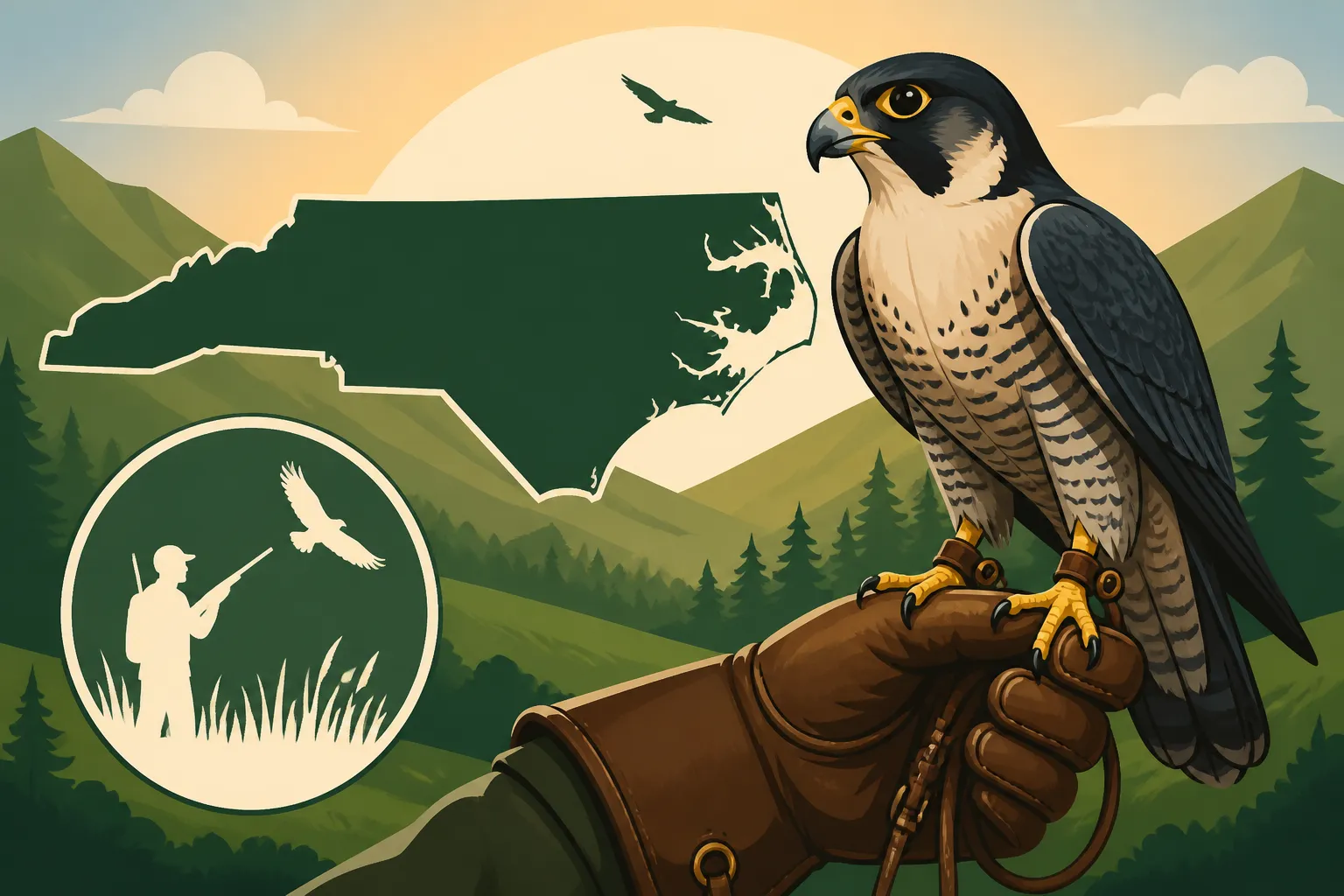
- Expanded Species List: Your choice of raptor species broadens considerably. You might be able to work with larger hawks, such as Harris's Hawks (if available and legal), or certain larger falcon species like Peregrine Falcons (often from breeders).
- Less Supervision: While you're still part of the falconry community and mentors are always valuable, you no longer require a formal sponsor. You are expected to be much more self-sufficient.
- Sponsor Apprentices: After a certain period, General Falconers can even become sponsors for new Apprentices, passing on their knowledge and helping grow the falconry community.
This phase is where you truly refine your skills, experiment with different species, and become an integral part of the North Carolina falconry scene. You'll likely be more adept at scouting potential hunting grounds, perhaps using advanced mapping tools like GoHunt to analyze topography, identify prime small game habitat, or mark precise stand locations if you were hunting with a firearm, but for falconry, it's about understanding the land for pursuit.
The Master Falconer Permit
The Master Falconer Permit is the pinnacle of falconry achievement, representing a lifetime of dedication, expertise, and ethical practice. It's not just about time served; it's about demonstrating exceptional knowledge and skill. To become a Master Falconer, you must:
- Extensive Experience: Have at least five years of experience as a General Falconer. This is a minimum; many spend much longer honing their craft.
- Demonstrated Expertise: Show a comprehensive understanding of raptor biology, advanced training techniques, conservation, and regulatory compliance. You're expected to be a true expert.
- Federal Permit: Obtain your federal Master Falconry Permit.
Master Falconers enjoy the greatest privileges and responsibilities:
- Maximum Number of Birds: You can typically possess up to five raptors at a time, sometimes more with special permission, including certain endangered or federally protected species (again, under strict regulation and often requiring breeding permits).
- Widest Species Selection: The full range of legally available raptor species is open to you, including those requiring more advanced handling.
- Leadership Role: Master Falconers are often leaders in the community, involved in conservation efforts, public education, and mentoring new falconers. They are the guardians of the tradition.
Attaining a Master Permit is a testament to years of unwavering commitment to both the birds and the sport. It's about more than just hunting; it's about husbandry, conservation, and passing on a venerable tradition.
Essential Considerations for North Carolina Falconers
Beyond the permits themselves, there are ongoing responsibilities and ethical considerations that every North Carolina falconer must embrace. Falconry is a dynamic practice, with regulations sometimes changing, and the health of your bird is paramount.
Annual Reporting and Health Checks
The NCWRC and USFWS require annual reporting on your raptors. This includes information on:
- Bird Status: What birds you possess, how they were acquired, and if any were released, lost, or died.
- Hunting Activity: Details about your hunting success and the species taken.
Maintaining meticulous records is crucial for compliance. Beyond paperwork, regular veterinary check-ups for your raptor are essential. Just like you'd ensure your hunting dog gets its annual vet visit, a falconer is responsible for their bird's health, proactive care, and immediate attention in case of injury or illness. Raptors are sensitive animals, and early detection of issues can be life-saving.
Hunting Regulations with Raptors
While you have a falconry permit, you are still subject to all state and federal hunting regulations for the game species you pursue. For example, if you are Hunting the North Carolina Rut by Zone with your bird, you must adhere to the deer season dates and bag limits. However, falconry is primarily focused on small game. This means:
- Small Game Seasons: Your raptor hunts must occur within the established North Carolina Small Game Season Rules for species like rabbits, squirrels, and certain migratory birds.
- Bag Limits: You must adhere to the daily and possession bag limits for the game species taken by your raptor.
- Hunting Areas: You must ensure you are hunting in legal areas, whether on private land with permission or on public lands like a North Carolina Game Land. Tools like GoHunt can be invaluable for identifying land ownership and boundaries, ensuring you're always within legal hunting areas.
- Non-toxic Shot: While not directly applicable to raptors, understanding regulations like non-toxic shot requirements for waterfowl is part of being a well-rounded hunter, especially if you ever pursue game where your raptor might interact with water.
It's also important to note that specific regulations apply to taking raptors from the wild for falconry purposes, including quotas and specific trapping methods. Always check with the NCWRC for the most up-to-date information before attempting to trap a wild bird.
Ethical Considerations and Conservation
At its heart, falconry is a deep connection to nature and a profound respect for the wild. Ethical falconers prioritize the well-being of their birds above all else. This includes:
- Responsible Hunting: Hunting with a raptor should be done sustainably, never depleting local game populations.
- Environmental Stewardship: Falconers often become advocates for raptor conservation and healthy ecosystems. They understand the critical role raptors play in the natural world.
- Public Education: Sharing the beauty and history of falconry with the public in a responsible manner helps to demystify the practice and foster appreciation for wildlife.
The North Carolina Falconers Guild is an excellent resource for connecting with other falconers, learning about local regulations, and participating in conservation efforts. They embody the spirit of camaraderie and shared passion that defines the falconry community.
Here's a quick overview of the permit levels:
| Permit Level | Minimum Age | Minimum Experience | Sponsorship Required | Number of Raptors Permitted | Permitted Species Examples | Key Privileges/Restrictions |
|---|---|---|---|---|---|---|
| Apprentice | 12 | None | Yes | 1 | Red-tailed Hawk, American Kestrel | Must be sponsored; must pass exam; strict facility inspection; limited bird selection; primary learning phase |
| General | No specific | 2 years as Apprentice | No | Up to 3 | Broader range, e.g., Harris's Hawk, Peregrine Falcon | No longer requires sponsor; can sponsor apprentices; expanded bird choices; expected greater self-sufficiency |
| Master | No specific | 5 years as General | No | Up to 5 (or more with special permits) | Widest range, includes more specialized species | Pinnacle of experience; leadership role; highest level of responsibility and bird selection; often involved in conservation |
This table provides a generalized overview. Always consult the official North Carolina Wildlife Resources Commission regulations and federal guidelines for the most precise and up-to-date requirements.
The path to becoming a licensed falconer in North Carolina is long and arduous, demanding patience, perseverance, and an unwavering love for raptors and the wild. But for those who commit, it offers a unique and profound connection to nature, a timeless tradition, and the thrill of the hunt as few other experiences can. Good luck on your journey, and may your flights be true!
Disclaimer
The information provided in this guide is for general informational purposes only and does not constitute legal advice. North Carolina hunting and falconry regulations are subject to change. Always consult the official North Carolina Wildlife Resources Commission (NCWRC) website and federal regulations (U.S. Fish and Wildlife Service) for the most current and accurate information regarding licensing, seasons, and legal requirements before engaging in any falconry activities.