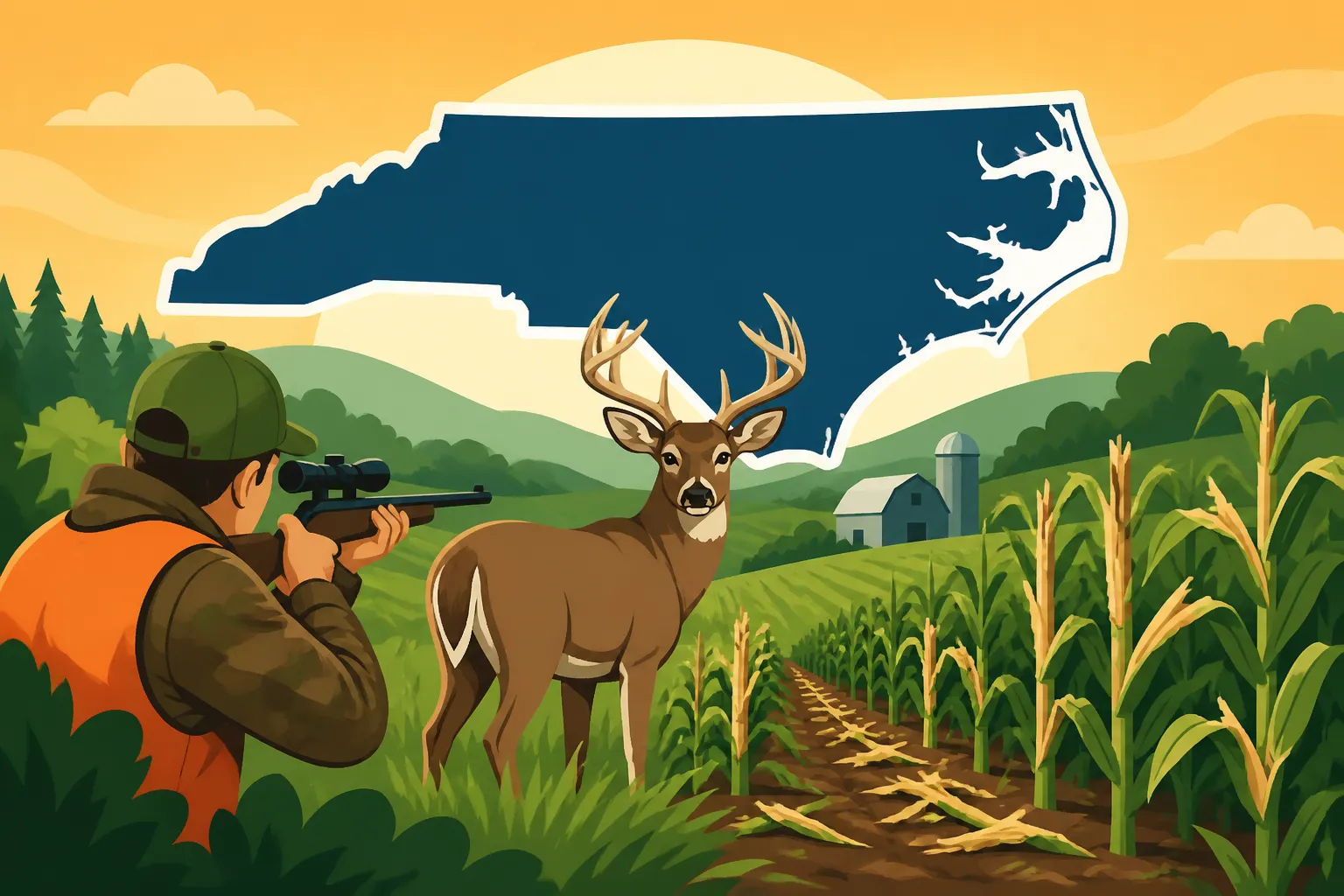
North Carolina Deer Damage Permits for Farmers
As a farmer in North Carolina, few things are as disheartening as watching your hard work disappear overnight, munched away by a healthy deer population that doesn't care about your bottom line. It's a real and constant battle, and when deer damage to crops or property becomes overwhelming, it's easy to feel helpless. This comprehensive guide is here to walk you through the process of obtaining a North Carolina Deer Damage Permit, offering a legitimate pathway to protect your livelihood when traditional hunting seasons aren't enough.
Understanding the Need for North Carolina Deer Damage Permits
Living and working in North Carolina, especially in agricultural areas, means coexisting with a thriving deer population. While beautiful, these animals can quickly become a significant economic threat to farmers. When you've planted fields, invested in fertilizer, irrigation, and countless hours of labor, only to find your corn, soybeans, tobacco, or even ornamental plants decimated, it’s not just a nuisance—it’s a direct hit to your income. That's where special deer damage permits come into play, offering a critical management tool outside of standard hunting regulations.
The Economic Impact of Deer on Agriculture
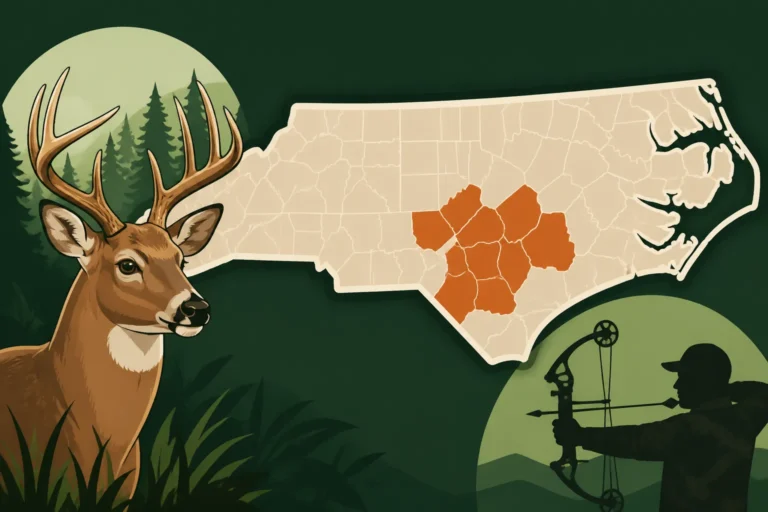
Deer damage isn't just a slight nibble around the edges; it can be catastrophic. Imagine a field of young soybeans, just emerging, meticulously cultivated, only to be browsed down to bare stalks by a herd of whitetails. Or a mature cornfield, ready for harvest, with rows upon rows of ears stripped clean. The financial losses can be staggering, affecting everything from crop yields and quality to equipment repair from deer collisions. Farmers report millions of dollars in losses annually across the state, making robust management options essential. These issues are often exacerbated in areas where deer populations are particularly dense, leading to significant challenges for local agriculture. Sometimes, traditional methods, even during established seasons, just can't keep up with the scale of the problem.
The NCWRC's Role in Managing Wildlife Conflicts
The North Carolina Wildlife Resources Commission (NCWRC) understands this inherent conflict. Their mission isn't just about protecting wildlife; it's also about managing these populations in a way that minimizes negative impacts on human lives and livelihoods. They serve as the primary authority for issuing special permits like the Deer Damage Permit. These permits are not given out lightly; they represent a targeted effort to address specific, documented instances of severe damage. The NCWRC acts as a mediator, recognizing the ecological importance of deer while also acknowledging the economic realities faced by the state's farmers. This balancing act is crucial for sustainable wildlife management. For farmers seeking a solution, understanding North Carolina's Chronic Wasting Disease Areas might also be relevant, as disease management can sometimes impact local deer populations and their movements.
The Application Process for a North Carolina Deer Damage Permit
When you decide that deer damage has reached a level requiring intervention beyond standard hunting seasons, applying for a Deer Damage Permit is the next step. It's not as simple as picking up an extra tag at the store; it's a formal process designed to ensure that permits are issued appropriately and to those with a genuine, documented need. The NCWRC wants to see evidence of the problem, understand the extent of the damage, and confirm that all other reasonable avenues have been explored.
Initial Contact and Damage Assessment
Your first move should be to contact the NCWRC. You'll typically speak with a local Wildlife Enforcement Officer or a wildlife biologist in your area. They are the eyes and ears on the ground and will be able to guide you through the initial steps. Don't wait until the damage is irreversible; act as soon as you recognize a pattern of significant loss. This contact usually triggers an on-site visit by an NCWRC representative. During this visit, they will assess the damage firsthand. They'll look at your crops, inspect fences, observe deer signs, and talk with you about the history of the problem. This assessment is crucial for documenting the extent and nature of the damage. They might even recommend you consider North Carolina Deer Damage Permits for Farmers as a long-term solution.
They want to see genuine agricultural loss, not just a few deer passing through. It's helpful to have your own documentation ready: photos, estimates of crop loss, planting records, and even a history of previous attempts to deter deer. This initial consultation is also where you'll discuss what methods you've already tried, whether that's fencing, scare tactics, or simply relying on North Carolina's Deer Season Structure Explained. Be prepared to demonstrate that standard hunting pressure isn't sufficient to mitigate the specific problem you're facing.
Receiving and Understanding Your Permit
If the NCWRC determines that a Deer Damage Permit is warranted, they will issue one to you. This permit is not a blank check; it comes with very specific conditions and limitations. It will outline the number of deer that can be harvested, the methods allowed, the specific dates and times when hunting under the permit is permitted, and even who can carry out the culling. It might specify antlerless deer only, or perhaps a mix of bucks and does, depending on the nature of the damage and local deer population dynamics.
It's absolutely critical to read and understand every detail of your permit. Violating the terms can lead to significant penalties, including fines and loss of future permit privileges. These permits are typically issued for specific periods outside of the regular hunting seasons when deer are doing the most damage to active crops. For instance, you might get a permit for late summer to protect ripening corn or early spring for newly planted soybeans. Make sure that anyone who will be hunting under your permit, whether it's you, a family member, or a designated hunter, fully understands these rules as well. Keep in mind that a North Carolina Landowner Deer Permit Rules might apply to other situations, but the damage permit is distinct and has its own set of rigorous requirements.
Rules, Regulations, and Restrictions for Damage Permits
Operating under a North Carolina Deer Damage Permit requires strict adherence to the rules. These permits are an exception to the general hunting regulations and are designed for a very specific purpose: mitigating documented agricultural damage. It’s not simply an extension of regular hunting season, and the NCWRC monitors compliance closely.
Permitted Methods and Conditions
The NCWRC permit will explicitly state the legal methods for taking deer. This might include specific firearms or archery equipment, and often, it will allow methods not typically permitted during regular hunting seasons, such as hunting at night with lights. However, these specialized methods are only allowed under the strict authority of the permit and must be carried out responsibly. For instance, while hunting at night might be permitted to address nocturnal crop raiding, it will come with conditions to ensure safety and prevent indiscriminate killing. The permit will also specify the exact areas where deer can be harvested—typically confined to the specific fields or properties experiencing damage. This ensures that the efforts are targeted and don't impact deer populations in areas where damage isn't occurring.
| Permit Condition | Typical Allowance | Important Restriction |
|---|---|---|
| Time of Day | May include night hours | Specific hours, usually tied to active damage |
| Methods | Firearms, archery, sometimes specific trap types | Must be approved by NCWRC, no general hunting methods |
| Bag Limit | Specific number of deer (often antlerless) | Exceeding limit is a violation |
| Location | Designated damaged fields/property | Hunting only within specified boundaries |
| Reporting | Immediate harvest reporting required | Failure to report leads to penalties |
Always double-check your permit for these specifics. You can't just assume what's allowed. If you're designating someone else to hunt, ensure they are also aware of North Carolina Legal Firearms for Deer Hunting and any special allowances made by the damage permit.
Reporting Requirements and Compliance
One of the most critical aspects of a Deer Damage Permit is the mandatory reporting. Every deer taken under the permit must be reported to the NCWRC within a specified timeframe, often immediately after harvest or within 24 hours. This typically involves using the NCWRC's online reporting system or their mobile app, similar to how regular season deer are reported. This isn't just a formality; it's how the NCWRC tracks the effectiveness of the permit and ensures accountability. Failure to report harvested deer can invalidate your permit and lead to serious consequences.
Moreover, the permit will dictate what can be done with the harvested deer. Often, the meat can be kept for personal consumption or donated to hunger relief programs. However, selling deer taken under a damage permit is almost always prohibited. It's a system designed for damage control, not for commercial venison operations. The NCWRC may also require you to keep detailed records of your activities under the permit, including dates, times, locations, and methods used. This meticulous record-keeping helps ensure compliance and provides valuable data for future wildlife management decisions. If you're involving other hunters, be sure they understand North Carolina Deer Reporting Requirements fully.
Beyond the Permit: Long-Term Deer Management Strategies
While a Deer Damage Permit offers immediate relief from acute damage, it's often a short-term solution. For sustainable agriculture and long-term peace of mind, farmers need to think beyond immediate culling and consider integrated deer management strategies that can reduce dependency on permits. This involves a combination of habitat modification, exclusion techniques, and smart scouting throughout the year.
Habitat Modification for Damage Prevention
Changing the landscape around your crops can significantly reduce deer damage. This doesn't mean clear-cutting everything, but rather thinking strategically about what deer need and how to make your fields less appealing or accessible. Planting buffer crops that deer prefer, but are less valuable to you, on the perimeter of your cash crops can sometimes divert their attention. For example, a strip of alfalfa or clover might take the brunt of browsing, protecting your more valuable corn or soybeans behind it. Another approach is to create natural barriers using dense, thorny vegetation that deer are less likely to penetrate.
Fencing, of course, is the most direct exclusion method, but it can be prohibitively expensive for large acreages. However, strategically placed electric fences, or even simple deterrents like motion-activated sprinklers or noise makers, can be effective in smaller, high-value areas. Consider what deer are using for cover and bedding near your fields. Reducing dense thickets right alongside your crops might force deer to travel further for security, making them less likely to linger and browse. The goal is to make your fields less convenient and less attractive than other available food sources or cover. This proactive approach can complement the reactive measures of a damage permit.
Integrating Modern Scouting Tools and Data
In today's world, technology offers powerful tools for understanding and managing deer populations on your property. Trail cameras, for instance, can provide invaluable data on when deer are most active, how many are present, and their preferred travel routes. Placing cameras along field edges, pinch points, or known deer trails can help you identify problem areas and anticipate browsing patterns. Monitoring these cameras, especially with advanced models that send images directly to your phone, can give you real-time intelligence. This intelligence is crucial for effective deer management.
Services and apps like GoHunt can be incredibly useful for private landowners looking to manage wildlife. These platforms often provide detailed mapping tools, aerial imagery, and overlays that help you understand terrain, vegetation, and potential deer movement corridors. You can mark areas of damage, track deer sightings, and even plan deterrent strategies more effectively. Scouting With the NC Wildlife App is a great start, but tools like GoHunt take it a step further by allowing you to overlay your own data and observations, creating a comprehensive picture of deer activity on your specific parcel. Understanding deer behavior through consistent observation and data analysis is key. This could involve identifying Late-Season Food Sources for North Carolina Whitetails or Entry Routes Through Standing Soybeans to better position deterrents or target specific deer if a permit is issued. GoHunt, for example, allows for detailed mapping of these elements. Utilizing these digital tools means you're no longer just reacting to damage but proactively seeking to understand and influence deer movements.
By combining the immediate relief of a Deer Damage Permit with these thoughtful, long-term strategies, North Carolina farmers can better protect their crops and establish a more harmonious, economically viable coexistence with the state's healthy deer population. Leveraging comprehensive tools available today, like those from GoHunt, can truly empower farmers to take control of their land and harvests.
Disclaimer
The information provided in this guide is for general informational purposes only and does not constitute legal advice. While we strive to offer accurate and up-to-date information, hunting regulations and permit processes are subject to change. Always consult the official North Carolina Wildlife Resources Commission (NCWRC) website or contact their offices directly for the most current rules, regulations, and application procedures regarding Deer Damage Permits. Compliance with all applicable state and federal laws is the responsibility of the individual.