Late-Season Food Sources for North Carolina Whitetails
The late season in North Carolina can be incredibly challenging for deer hunters. The woods often feel empty, deer become ghosts, and finding consistent movement near daylight can seem like an impossible task after the rut winds down and the weather turns bitter cold. But understanding where whitetails turn for crucial sustenance during these lean months is the key to unlocking success when others have hung up their bows and rifles. This guide will walk you through identifying and hunting the late-season food sources that keep North Carolina deer alive and, more importantly, moving.
Understanding the Late Season Whitetail Mindset in North Carolina
When December rolls around and pushes into January, North Carolina deer aren't just thinking about breeding anymore. The intense energy demands of the rut have taken their toll, and they've spent weeks, if not months, burning through fat reserves. Now, their primary focus shifts dramatically: survival. This means finding food that provides maximum calories and digestible energy, all while avoiding predators, including us hunters.
The Urgency of Calories
Imagine running a marathon, then trying to recover with just a light snack. That's essentially what a whitetail buck, and even a doe, experiences after the intense physical exertion of the breeding season. Bucks can lose 20-30% of their body weight, and does are either pregnant or still recovering from raising fawns. Their bodies are screaming for calories. This urgency drives them to the richest, most accessible food sources they can find. They're not just browsing on whatever's handy; they're actively seeking out nutrition-dense options to replenish those spent reserves and build a buffer against the harshest winter days.
This is why a slight preference for one food type earlier in the season becomes an absolute necessity now. If there's snow or ice on the ground, or even just persistent heavy frosts, finding forage becomes even harder. Their metabolisms are working overtime just to stay warm, burning even more critical calories. So, when you're looking for late-season deer sign, you're not just looking for any feeding activity; you're looking for intensive feeding activity, the kind that suggests deer are spending significant time gorging themselves. This need for constant calorie intake can sometimes override their instinct for caution, making them visible near prime food sources even during daylight hours.
Pressure and Seclusion
By late season, deer have been hunted for months. They've dodged arrows, navigated around rifle shots, and probably had their fair share of close calls. This constant pressure makes them incredibly wary. What was a hot food plot in October might be completely abandoned during daylight hours in January if it's too exposed or easily accessed by hunters. Deer become masters of moving under the cover of darkness or during periods of minimal human activity.
This means that while finding food is critical, finding safe food is paramount. They'll often seek out food sources that are close to thick, secure cover—be it a dense pine plantation, a sprawling pocosin swamp, or a steep, unhunted ridge. They might feed on the edges of open fields right at first light or last light, but they'll often retreat quickly into sanctuary areas to digest and rest. Understanding this balance between caloric need and safety is crucial. A great food source located far from any cover, or one that has seen continuous hunting pressure, might only be productive after dark, making it difficult to hunt. You'll need to use your scouting tools, like aerial imagery on platforms such as GoHunt, to identify these pockets of cover near potential food sources.
Key Natural Food Sources You Can Find
North Carolina's diverse landscape offers a range of natural food sources, even when many plants have gone dormant. Knowing what to look for, and where, will greatly increase your chances of finding late-season whitetails.
Persistent Acorns and Hard Mast
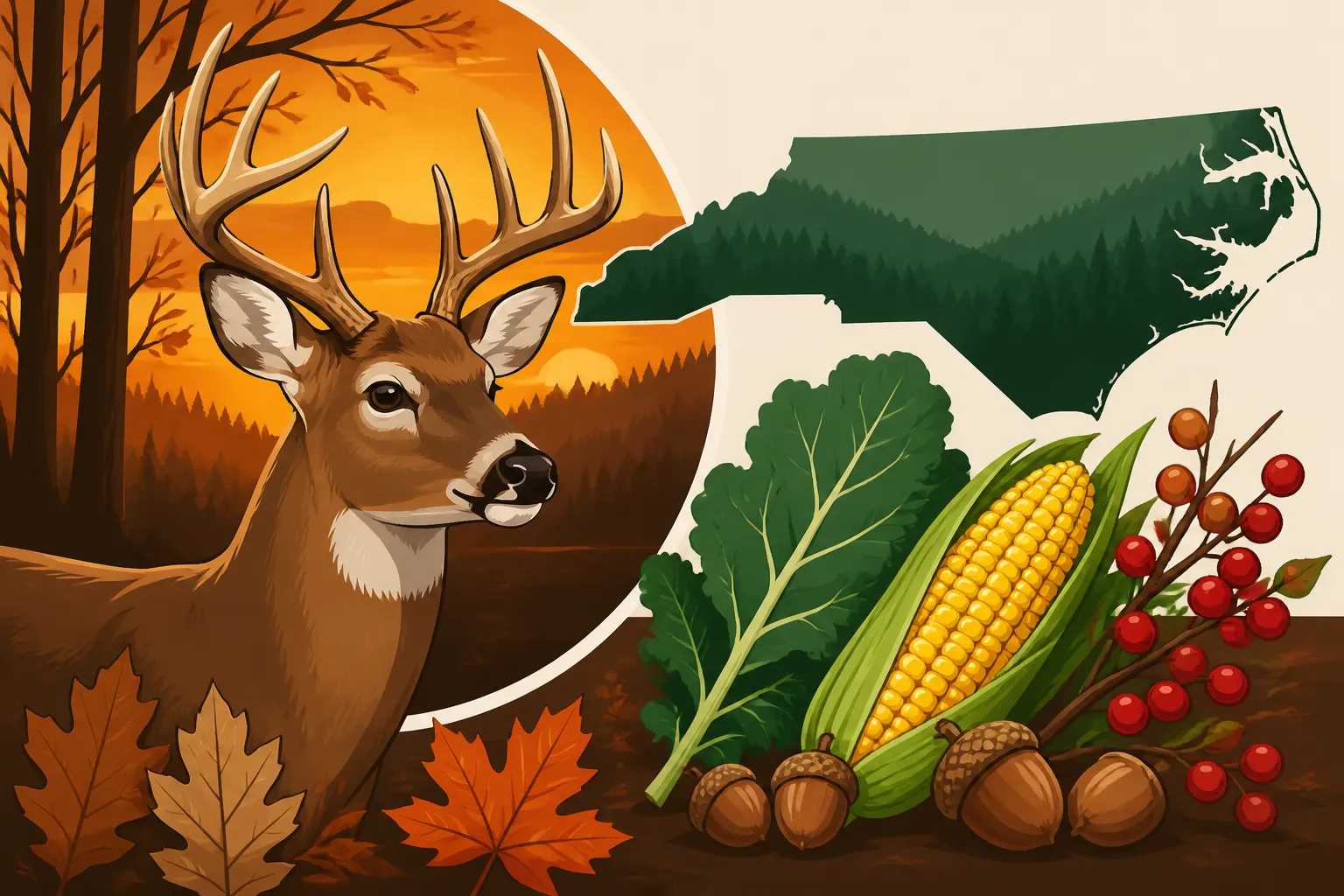
Even after a bountiful fall acorn drop, you'd be surprised how many acorns can still be found on the forest floor, especially if there wasn't a huge squirrel or bear population to clean them up. White oak acorns, with their lower tannin content, are generally preferred and often get eaten first. However, if there was a bumper crop, or if red oak varieties are more prevalent, you can find a treasure trove even into December and January. Red oak acorns, while less palatable due to higher tannins, last longer and can be a critical food source once white oak acorns are gone.
When scouting for these, look under older, mature oak stands, particularly on ridges or subtle benches where leaves might have piled up and protected the acorns from rapid consumption or decay. Often, south-facing slopes warm up faster, melting snow and ice more quickly, making acorns more accessible there. You can use mapping applications like GoHunt to pinpoint oak concentrations in your hunting area. After a poor acorn year, deer will spread out, making them harder to pattern, but a good late-season acorn find can concentrate them like nothing else. Pay attention to droppings—if you see deer scat filled with acorn fragments, you know you've hit the jackpot.
Browse and Evergreen Cover
When the ground cover turns brown and crunchy, and the hard mast is scarce, deer turn to browse. This is the tender twigs, buds, and leaves of woody plants. While not as calorie-dense as acorns or agricultural crops, it's readily available and essential for survival. North Carolina offers a variety of browse options that remain palatable into winter. Look for honeysuckle, greenbriar (a deer favorite, despite its thorns), and privet, which often stay green through much of the winter in many parts of the state.
Deer will also utilize evergreen trees and shrubs. Young pine needles, cedar, and even laurel can provide some sustenance. These thick evergreen thickets also offer crucial thermal cover, protecting deer from harsh winds and cold temperatures, creating perfect bedding and feeding areas. When scouting, look for "browse lines" where deer have consistently nipped off the ends of branches at a height they can reach. This is especially evident in dense areas where deer might bed and feed within the same small thicket. Understanding how deer utilize these areas can inform your strategy, whether you're Still-Hunting Nantahala Forest Ridges or hunting the dense Coastal Plain Pocosin Swamps.
Agricultural Leftovers and Waste Grain
For hunters near agricultural areas, harvested fields become late-season magnets. While the big combine has done its work, there's always waste grain left behind—shelled corn, dropped soybeans, or even overlooked sections of standing crops. These concentrated pockets of high-energy food are invaluable to whitetails. Deer will work these fields meticulously, often bedding in nearby cover and slipping out to feed at first and last light.
In areas like the Piedmont or Eastern Coastal Plain, scouting standing cornfields in farm country or cut soybean fields is a must. If there's a standing crop of winter wheat or rye planted as a cover crop, deer will gravitate to those tender green shoots. Even old peanut fields can still have buried peanuts that deer will root up. The key is finding actively used fields. Look for tracks entering and exiting the field, fresh droppings (often abundant due to the easy digestion of grain), and visible feeding lanes. A trail camera on the edge of a field can quickly tell you when and how deer are using it, giving you critical intel for Hunting a Standing Cornfield in Farm Country. Don't overlook these areas, even if they seem barren at first glance.
Strategic Scouting for Late-Season Food
Effective late-season hunting in North Carolina hinges on meticulous scouting. The deer are focused on survival, and so should your efforts be on finding where that survival is most easily achieved.
Aerial Intelligence and Topographic Maps
Before you even step foot in the woods, the best scouting starts from your couch with a good mapping tool. Applications like GoHunt allow you to overlay aerial imagery with topographic maps, giving you an invaluable bird's-eye view of your hunting area. You're looking for patterns here: where are the mature oak stands located in relation to thick cover? Can you identify harvested crop fields next to dense woods? Are there areas with a lot of green timber, like pines or cedars, that would offer both thermal cover and browse?
Specifically, use the aerial view to identify distinct changes in canopy. Darker green patches might indicate pines or cedars, while lighter green or tan areas might be hardwoods. Look for clear-cut regrowth edges which often hold a mix of browse and cover. Topographic maps reveal slopes and benches; south-facing slopes can be critical for melting snow faster and offering warmer bedding. Identifying these "macro" features from above helps you narrow down your ground scouting efforts, letting you focus on the most promising areas rather than aimlessly wandering. This kind of detailed scouting is essential, whether you're on public land or a small private tract.
Boots-on-the-Ground Reconnaissance
Once you've identified potential food sources and adjacent cover on your maps, it's time for boots-on-the-ground reconnaissance. This is where you confirm your theories and look for tangible evidence of deer activity. In late season, with less foliage, deer sign is often easier to spot. Look for fresh tracks in the mud, snow, or even frosted leaves leading to and from food sources. Pay close attention to droppings; fresh, soft droppings indicate recent activity. If the droppings are concentrated in an area, it's a strong indicator of a consistent feeding spot.
Don't forget to look up! Browse lines on honeysuckle, greenbriar, or young saplings are undeniable proof of deer feeding. Even if it's not a primary food source, heavy browsing near a bedding area indicates deer are nibbling as they travel. Also, look for old rubs and scrapes along travel corridors, which, while not active in late season, indicate historical movement patterns that deer might still follow to access preferred food. Focus your ground scouting efforts during midday, when deer are typically bedded, to minimize disturbance.
Thermal Hubs and Sheltered Areas
In North Carolina's varied terrain, deer are constantly seeking comfort. When the temperatures drop and the wind howls, they'll gravitate towards areas that offer both food and shelter. These "thermal hubs" are often south-facing slopes that catch more sunlight, thick evergreen stands like pine plantations or cedar thickets that block the wind, or dense pockets of river cane thickets for deer. These areas can retain heat better and provide a reprieve from the cold, making them ideal bedding locations, especially if a good food source is nearby.
Deer will often bed just inside these thermal sanctuaries and then simply stand up to feed on browse or acorns within the same thicket, only venturing out to larger food plots or agricultural fields under the cover of darkness. This means your best bet might be to hunt the transition zone between a thick thermal cover and a more open food source, or even to penetrate slowly and quietly into the thick cover itself if you believe deer are feeding there during the day. Consider how wind and thermals on a Blue Ridge Slope might affect deer movement in these sheltered pockets.
Hunting Tactics Around Late-Season Food
Finding the food is only half the battle. Successfully hunting late-season North Carolina whitetails requires adapted tactics that acknowledge their heightened wariness and focus on efficiency.
Entry and Exit Strategy
Deer in the late season are incredibly sensitive to disturbance. A careless entry or exit to your stand can spoil a hunt before it even begins. Your strategy must minimize your footprint and remain undetected. Whenever possible, approach your stand from a direction that keeps you out of the deer's primary travel or bedding areas. Use ditches, creek bottoms, logging roads, or terrain features to shield your movement. For instance, if deer are feeding in a field, approach your stand from the back side of the woods, parallel to the field, staying deep in the timber.
Wind direction is paramount. Always hunt with the wind in your favor, blowing away from where you expect deer to approach. If the wind is wrong, don't hunt that stand. It's better to stay home or find an alternative setup than to blow deer out of a key late-season food source. Your exit is just as important. Once you climb down, move quietly and efficiently out of the area, making as little noise and leaving as little scent as possible. This ensures that any deer you didn't see aren't immediately alerted to your presence and are likely to return to the food source. This attention to detail is critical whether you're using a ground blind on North Carolina public land or a treestand.
Stand Placement for Afternoon Feeds
Late-season deer often feed heavily in the evenings, trying to pack on calories before the long, cold night. This makes afternoon hunts around preferred food sources particularly effective. Your stand placement should capitalize on this pattern. Instead of setting up directly over the food source (which can be too exposed for wary deer), consider positioning yourself along the travel corridors leading to it. Look for funnels, pinch points, or well-used trails between bedding areas and the food.
The edge of thick cover, overlooking a field or a concentration of acorns, is often an ideal spot. You want to be close enough to get a shot but far enough away not to be winded or seen as deer approach. Think about where the sun will be in the afternoon to avoid being silhouetted, and utilize any existing cover like evergreen trees or brush to break up your outline. Remember that deer might linger near the cover, nibbling browse before committing to the open food source, so placing your stand slightly back from the edge can be beneficial. Consider the principles of Hanging a Stand on a Pisgah Ridge, adjusting for the specific terrain you're hunting.
All-Day Sits in Frigid Conditions
While late-season deer activity is often concentrated during morning and evening, sometimes an all-day sit can pay huge dividends, especially if the weather is severely cold, snowy, or drizzly. During harsh conditions, deer's need for calories can override their desire to stay bedded. They might get up and feed intermittently throughout the day, particularly if they can do so in a sheltered, low-pressure area. A steady, cold drizzle or light snow can actually improve hunting, as it dampens sound and scent, making deer feel more secure.
To make an all-day sit successful, prepare thoroughly. Dress in layers, wear insulated boots, and bring hand warmers. A good thermal mug with a hot drink and plenty of snacks will keep your energy up. The key is patience and endurance. Deer movement during midday might be subtle—a single doe slipping through, or a small group working a browse line in thick cover. These are the deer you'll miss if you're not in your stand. The article on Cold-Weather Sitting Strategy in the Mountains offers some great tips for staying out there when others head back to camp.
| Late-Season Food Source | Description | Typical Location | Scouting Signs |
|---|---|---|---|
| White Oak Acorns | Sweet, lower tannin acorns, often preferred. | Upland ridges, well-drained slopes, mature oak stands. | Fresh droppings with acorn fragments, scattered shells. |
| Red Oak Acorns | Higher tannin, but last longer. | Lower slopes, moister areas, mixed hardwood forests. | Piled up under leaves, persistent into winter. |
| Honeysuckle | Broadleaf evergreen vine, highly palatable browse. | Forest edges, old fields, dense thickets, clear-cuts. | Consistent browse lines, green leaves in winter. |
| Greenbriar | Thorny vine, remains green, high nutrition. | Thickets, clear-cuts, swamp edges, fencerows. | Heavy browsing, noticeable nipped ends. |
| Winter Wheat/Rye | Planted as cover crops, tender green shoots. | Agricultural fields, food plots. | Fresh tracks, abundant green growth. |
| Waste Corn/Soybeans | Leftover grain after harvest, high calories. | Harvested agricultural fields. | Tracks in mud/snow, visible grain, concentrated droppings. |
| Privet | Invasive shrub, often stays green. | Field edges, disturbed areas, stream banks. | Browsed leaves and twigs, often dense cover. |
| Young Pine/Cedar | Needles and tender twigs, also thermal cover. | Pine plantations, cedar thickets, clear-cuts. | Browse lines, especially in thick bedding areas. |
Disclaimer
Hunting is an inherently dangerous activity. This guide provides information for educational purposes only. Always consult and adhere to the latest regulations and laws set forth by the North Carolina Wildlife Resources Commission (NCWRC) before engaging in any hunting activities. Stay safe, understand your limits, and prioritize ethical hunting practices.