Hunting a Standing Cornfield in Farm Country
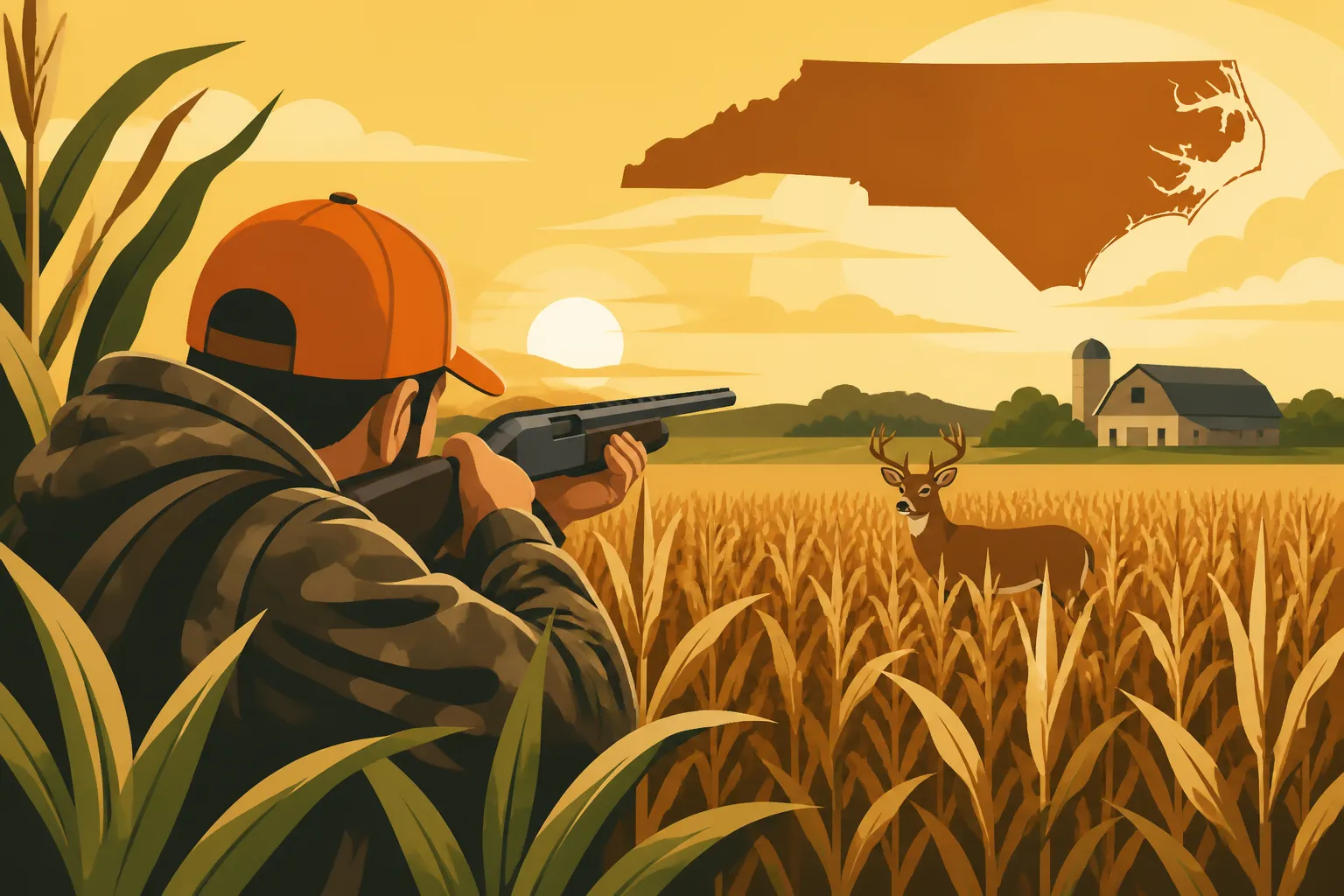
Hunting deer in North Carolina's vast agricultural landscapes can feel like chasing ghosts. Those endless rows of standing corn, stretching as far as the eye can see, offer an almost impenetrable fortress for whitetails, making them incredibly frustrating to hunt. They provide not just abundant food, but also unparalleled cover and a sense of security, often leaving hunters scratching their heads trying to figure out where the deer even are. This guide will walk you through proven strategies and tactics to successfully hunt standing cornfields in North Carolina's farm country, helping you unlock the secrets of these challenging environments.
Understanding Deer Behavior in Standing Corn
Deer absolutely love cornfields, and for good reason. These fields are literal magnets for whitetails from late summer through the fall and into the early winter, especially in the Piedmont and Coastal Plain regions of North Carolina. To effectively hunt them, you first have to grasp why deer utilize this habitat the way they do. It’s not just a casual stop for a meal; it’s a full-service resort.
Why Deer Seek Out Cornfields
Standing corn offers a trifecta of benefits for deer: food, cover, and security. First and foremost, it's a calorie-rich food source that helps them pack on fat reserves for the lean winter months and fuel the rigors of the rut. Deer will gorge themselves on corn, and you'll often find trails littered with chewed-up cobs and fresh droppings. Beyond the sustenance, the dense stalks create a phenomenal hiding place. A mature cornfield can easily be 8-10 feet tall, providing a complete visual barrier against predators, including hunters. This dense cover also offers thermal protection from the sun on warm days and can even block some wind on colder ones. The sheer scale of these fields often means deer can live their entire lives within a few hundred acres of corn, moving between bedding areas inside the field and feeding zones, rarely venturing into the open.
When you're trying to figure out how deer move in these areas, think about their basic needs. They need to eat, rest, and feel safe. A standing cornfield provides all of this in spades. In fact, deer often prefer to bed down inside the corn itself rather than in adjacent woods or thickets. They'll create little pockets or "rooms" within the corn, especially in areas where the corn might be a bit lodged or thicker. They can hear and smell danger approaching long before it sees them, giving them a significant advantage. This intimate relationship with the corn is what makes hunting it so challenging, but also so rewarding when you figure it out.
Typical Movement Patterns Within Fields
Deer movement in and around cornfields is heavily influenced by the availability of other food sources, hunting pressure, and the time of day. In areas with low pressure, deer might feed in the corn during daylight hours and bed nearby. However, in heavily hunted North Carolina farm country, they often become almost entirely nocturnal or crepuscular, moving mostly at dawn and dusk.
Their movement routes within the corn are surprisingly structured. They’ll establish distinct trails, almost like tunnels, running through the rows. These "corn tunnels" connect bedding areas to feeding spots, and also provide pathways to external food sources like soybean fields or oak bottoms, or water sources. Look for these worn-down paths at the edges of the field, where deer enter and exit, and try to visualize how they might extend into the dense interior. Deer also frequently use ditches, creek bottoms, or fence lines that cut through or run adjacent to cornfields as primary travel corridors, especially if these features offer even more concealment. Understanding these patterns is critical; you're not just hunting a field, you're hunting a complex network of deer highways and hideouts. Tools like the NC Wildlife App can be incredibly helpful for visualizing these features from an aerial perspective.
Scouting and Pre-Season Preparation for Cornfield Hunting
You wouldn't head into battle without a plan, and hunting standing corn is definitely a battle of wits. Pre-season scouting is not just important; it's absolutely essential to your success. Without it, you're literally just wandering into a maze hoping for a lucky encounter.
Aerial Reconnaissance and Mapping Tools
Before you ever set foot in a cornfield, grab your laptop or smartphone and start with some aerial reconnaissance. Satellite imagery from mapping apps is your best friend here. Look for patterns in the field's layout, adjacent cover, and potential travel corridors. Identify funnels, pinch points, drainage ditches, creek beds, fencerows, and areas where the corn might meet a patch of timber or a different crop field. These are all potential hotspots. You can often see subtle differences in crop density or areas where deer might have already started to "lodge" the corn by bedding it down.
Services like GoHunt offer advanced mapping layers that can show you property boundaries, topography, and even recent satellite imagery which might reveal subtle clues you wouldn't see on a standard map. I use a similar service to mark potential stand locations, entry and exit routes, and areas where I see evidence of deer activity during my digital scouting. Pay close attention to how the cornfield connects to other known deer habitat, like swamps or hardwood bottoms. A vast cornfield might be a security blanket during the day, but deer still need water and diverse food sources. Understanding these connections can help you identify strategic ambush points where they transition. For those hunting in the Piedmont, studying Reading Aerial Photos for Piedmont Deer can provide even more insights into interpreting these visual cues.
Ground Scouting for Fresh Sign
Once you've done your homework from the sky, it's time to hit the ground, ideally before the season opens or during a period of very low hunting pressure. This is where you confirm your suspicions and find the hard evidence of deer activity. Walk the edges of the cornfield, looking for entry and exit points. These will be obvious trails, often with tracks, droppings, and even rubs or scrapes if it's closer to the rut. Follow these trails a short distance into the corn, but be careful not to penetrate too deep and disturb potential bedding areas. You're looking for main travel corridors, not necessarily individual beds right now.
Focus on finding fresh tracks, droppings, and chewed corn cobs. Fresh sign indicates current use. Also, look for "lines" where the corn appears slightly trampled or pushed aside – these are the deer's internal highways. In North Carolina's varied terrain, deer will often utilize subtle elevation changes, even slight depressions, to move through the corn undetected. Mark these areas on your mapping app. Pay particular attention to the "fingers" of woods that might extend into the corn, or small islands of cover within the field itself. These areas act as natural funnels and staging points. Remember, the less you disturb the field, the better your chances will be when you actually hunt it.
Effective Hunting Tactics for Standing Corn
Hunting a standing cornfield successfully requires a blend of stealth, patience, and precise timing. It’s not a place for random wandering; you need a well-thought-out approach to avoid bumping deer and sending them deeper into the labyrinth.
Stand Placement and Entry/Exit Routes
Stand placement is paramount, and it needs to be chosen with extreme care to capitalize on deer movement without alerting them. The most common and often most effective strategy is to set up along the edges of the cornfield, or where the corn meets another type of cover or food source. Look for pinch points where deer are forced to travel a narrower path, such as where a creek cuts into the field, or where a point of woods extends out into the corn.
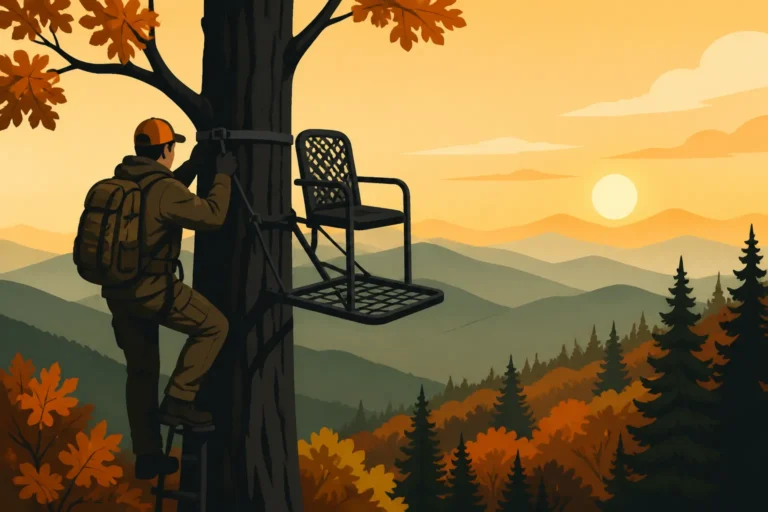
Consider prevailing wind direction carefully. Deer rely heavily on their noses, and a swirling wind can quickly give away your position. Always hunt with the wind in your favor, blowing your scent away from where you expect deer to approach. This often means having multiple stand options for different wind conditions. When possible, hang your stand 15-20 feet high to get your scent above their primary detection zone. Use natural cover around your stand to break up your silhouette. Your entry and exit routes are just as critical. Plan them to be as quiet and scent-free as possible, ideally using ditches, fence lines, or deep wood lines that put you out of sight and smell of where the deer are. Never walk through the standing corn itself to get to your stand unless it's absolutely unavoidable and part of a specific tactic. For more on strategic setup, consider checking out Setting Up on a Piedmont Field Edge.
| Hunting Method | Pros | Cons | Ideal Conditions |
|---|---|---|---|
| Edge Stand Hunting | High vantage point, clear shooting lanes at edges | Deer may stay entirely within the corn, wind-dependent | Deer feeding at edges, clear travel routes, favorable wind |
| Still-Hunting Rows | Active pursuit, covering ground | High risk of spooking deer, extremely wind-dependent, noisy | Very light wind, wet ground (quieter), low deer pressure |
| Ground Blind (Edge) | Good concealment, scent containment (some blinds) | Limited visibility, deer can circle, wind-dependent | Heavy deer movement at edges, bad weather, youth hunters |
| Funnel Ambush | High success rate due to concentrated movement | Requires precise scouting, may be pressured | Any conditions if deer are using the funnel |
Still-Hunting and Drives Through Corn
Still-hunting inside a standing cornfield is one of the most challenging yet potentially rewarding tactics. It requires extreme stealth, patience, and a keen understanding of wind and thermals. The idea is to move slowly, almost imperceptibly, along the rows, stopping frequently to scan ahead and listen. Take one or two steps, then pause for several minutes, looking for any flicker of movement, a horizontal line in the vertical stalks, or an ear twitch. This works best on quiet days with a very light, consistent breeze, or when the ground is wet from dew or rain, which dampens your footsteps. Your focus should be on moving into the wind or with a quartering wind, always thinking about where a deer might be bedded or feeding. It's a game of inches, and one wrong move or sound can send a deer bursting out of the rows. Mapping tools from GoHunt can help you visualize your path and potential escape routes for deer.
Deer drives can also be effective in cornfields, especially larger ones, but they require careful planning and enough hunters to be safe and effective. This is often a better tactic on public game lands where Deer Drives With Three or Four Hunters might be common. Assign blockers to key exit points (usually the corners or known escape routes) and have one or two pushers slowly walk through a section of the corn, making noise. The goal isn't to run deer, but to get them up and moving slowly towards the blockers. Communication is key, and safety must be the absolute priority. Know where every hunter is at all times. This method is often most successful when the corn is still fairly dense but has started to dry out, making noise a bit easier to generate.
Adapting to Post-Harvest Conditions
Once the combines roll through North Carolina's farm country, the entire landscape changes. The impenetrable fortress of standing corn becomes a field of stubble, and deer patterns shift dramatically. This new environment presents fresh opportunities, but also requires a different set of tactics.
Hunting Cut Cornfields
When the corn is cut, the primary draw for deer is no longer the cover, but the leftover kernels. Combines aren't perfect, and they always leave behind plenty of golden nuggets for deer, turkeys, and other wildlife. This makes cut cornfields an incredibly attractive food source. The challenge now is the lack of cover. Deer, especially mature bucks, will be very wary of entering these open fields during daylight hours.
Your best bet for hunting cut cornfields is to set up on the edges, ideally overlooking the field from an elevated position in a patch of timber or a fencerow that provides good concealment. Focus on mornings and evenings, when deer are most likely to venture into the open to feed. Look for trails leading from secure bedding areas (like dense woods, swamps, or thickets) to the cut corn. These transition zones are prime ambush points. Consider using a ground blind brushed in heavily along a field edge to break up your silhouette and help contain your scent, particularly if hunting highly pressured deer. Remember that Late-Season Food Sources for North Carolina Whitetails like cut corn become even more critical as other options disappear.
Late Season and Thermal Cover Considerations
As the North Carolina season progresses into late fall and early winter, colder temperatures become a factor. While cut corn is still a major food source, deer will also prioritize thermal cover. This often means they'll seek out thick pine plantations, dense pocosin swamps, or south-facing slopes with heavy timber that catches the sun.
If a cornfield is left standing late into the season, it transitions from just a food source to also providing vital thermal cover. The dense stalks can offer significant protection from cold winds and snow. In these late-season scenarios, deer might bed deep within remaining standing corn, only venturing out to feed on residual kernels or move to other nearby food sources like winter wheat or clover plots. Hunting these lingering patches of standing corn requires the same careful approach as earlier in the season, focusing on wind, subtle movements, and understanding where deer might seek refuge from the elements. Keeping an eye on weather patterns and how deer react to cold fronts is crucial, as this dictates their need for both food and thermal protection.
Disclaimer
Hunting is an inherently dangerous activity. Always prioritize safety, understand and follow all North Carolina Wildlife Resources Commission regulations, and obtain appropriate licenses and permits before heading afield. The information provided here is for educational purposes only and should not be considered a substitute for professional guidance or personal responsibility.