Safety Harnesses and Lifelines
It’s a scenario no hunter wants to imagine, but far too many have experienced: that sickening lurch, the sudden loss of footing, and the terrifying realization that gravity is about to win. Treestand falls are, tragically, one of the leading causes of serious injury and even fatalities among hunters, and it’s a reality we simply can’t ignore. This guide is dedicated to breaking down the critical role of safety harnesses and lifelines, ensuring that your next hunt in North Carolina ends with a full game bag and not a trip to the emergency room.
The Non-Negotiable Reality of Treestand Falls
Let's be honest, we’ve all heard the stories, or maybe even told one ourselves: "I only climbed up a few feet," or "I was just checking the stand." The excuses are endless, but the cold, hard truth remains – falls from elevated stands happen in an instant, often when you least expect them. It’s not just about the full-height, twenty-foot setups either; even a few feet off the ground can lead to devastating, life-altering injuries. The frustration of trying to get comfortable in a harness, or the extra minute it takes to connect a lifeline, often pales in comparison to the months of recovery from a broken bone or worse. We’re out there to enjoy the woods and chase game, and coming home safely should always be our top priority.
The Statistics Don't Lie: Why Every Hunt Demands Safety
The numbers are stark. Hunting accidents from treestand falls consistently rank at the top, year after year. These aren't just minor scrapes and bruises; we're talking about spinal injuries, broken limbs, concussions, and internal trauma. A moment of carelessness – reaching too far, a slippery boot, a worn strap – can transform a peaceful morning hunt into a nightmare. Many hunters feel an almost invincible sense of security when they've climbed the same tree a hundred times, but complacency is a silent killer. The deer won't care if you're injured, and neither will the hard ground below. This isn't just about protecting yourself; it's about protecting your family from the worry and hardship that comes with a preventable accident.
Dispelling the Myths About Treestand Safety
Oh, the myths! We've heard them all. "Harnesses are too uncomfortable, they restrict movement." "It takes too long to get hooked up, and I miss the prime hunting window." "I'm only using my stand for a quick sit." These are common feelings, and for a long time, early harnesses were bulky and restrictive. But modern safety gear has come a long, long way. Today's full-body harnesses are designed for comfort and mobility, with adjustable straps that conform to your body and quiet materials that won't spook game. The few extra minutes it takes to properly secure yourself are an investment, not a waste. Think of it this way: how many hours have you spent scouting, practicing with your Bow Draw Weight for North Carolina Whitetails, or Reading Aerial Photos for Piedmont Deer? What's a couple of extra minutes for your life?
Understanding Your Lifeline: Safety Harnesses Explained
A safety harness isn't just a piece of gear; it's your last line of defense against a fall. It's designed to distribute the forces of a fall across your entire body, preventing the kind of concentrated trauma that can come from a simple belt or rope. Investing in a good harness is as important as choosing the right Rifle Calibers for North Carolina Bear or ensuring your North Carolina Federal Duck Stamp Requirement is met. It’s part of your fundamental hunting kit.
The Anatomy of a Full-Body Harness
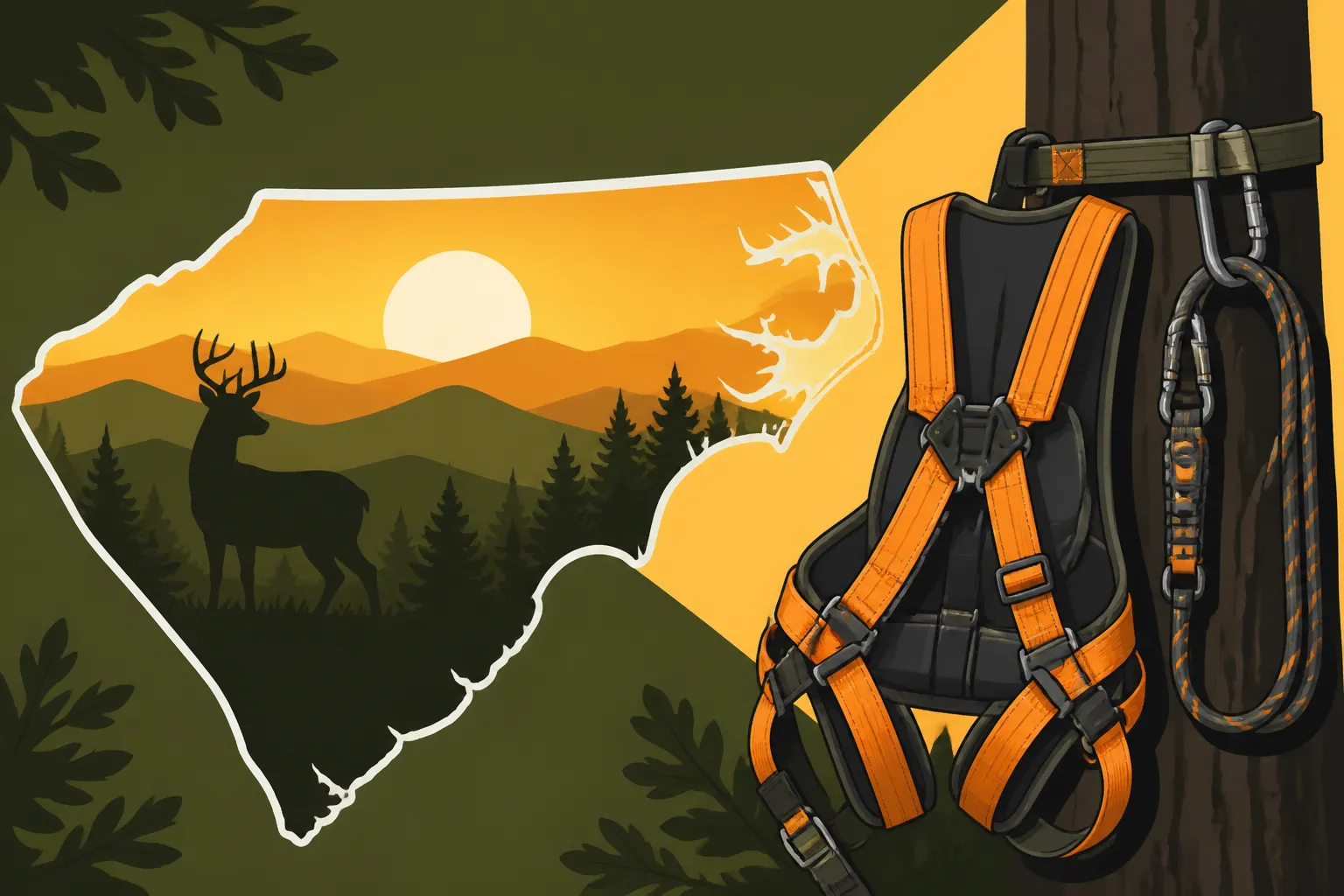
A modern full-body harness typically consists of several key components:
- Shoulder Straps: These go over your shoulders, distributing weight and preventing the harness from slipping.
- Leg Straps: These pass between your legs, ensuring the harness stays secure and prevents you from slipping out.
- Chest Strap: Connects the shoulder straps across your chest for added stability.
- Tether (or Lifeline Strap): This short strap extends from the back of the harness, usually between the shoulder blades, and is where you connect to your tree-stand lifeline. It often includes an energy-absorbing component to cushion a fall.
- Buckles and Adjusters: Allow for a custom fit to your body type and clothing layers.
- Suspension Relief Device: This is often a small strap or loop that you can deploy if you fall. Hanging in a harness for an extended period can lead to "suspension trauma," a dangerous condition where blood pools in your legs. A suspension relief device allows you to stand or push off, keeping blood circulating and buying you precious time.
Proper fit is paramount. Your harness should be snug but not restrictive, allowing for full range of motion without any sagging or excessive slack. Always adjust it over the clothing you'll be wearing while hunting to ensure a true fit.
Choosing the Right Harness for Your North Carolina Style
Just like there are different types of stands, there are different harnesses. For the North Carolina hunter, your choice might depend on your hunting style and the terrain you frequent.
- Vest-style harnesses: These are popular for their ease of use, as they resemble a vest and can be worn over or under your hunting jacket. They often have pockets and can be quite comfortable for longer sits.
- Minimalist harnesses: Lighter and less bulky, these are favored by mobile hunters or those using saddle hunting setups, where the harness itself is often integrated into the saddle design. If you're Saddle Hunting in North Carolina Hardwoods, a minimalist option might be ideal.
- Integrated systems: Some manufacturers offer harnesses that are designed to work seamlessly with their specific treestands, simplifying the setup process.
When selecting a harness, consider the comfort, weight, and ease of adjustment. Look for durable, quiet materials. Many reputable brands offer excellent options. Before you buy, research reviews and specifications carefully. You might find resources like GoHunt, which often feature articles or product guides on essential hunting gear, to be helpful in comparing different models and understanding their pros and cons. They can provide valuable insights into what other hunters are using and recommending for various situations, from sitting in a ladder stand on a Piedmont Farmland Deer hunt to a hang-on deep in Pisgah National Forest Hunting.
Securing Your Ascent and Descent: Lifelines in Detail
A safety harness is only half the equation. Without a lifeline, it's just a fancy vest. The lifeline is what keeps you connected to the tree from the moment your feet leave the ground until they touch it again. This crucial connection prevents falls during the most vulnerable parts of your hunt – climbing up, transitioning to the stand, and climbing back down.
Setting Up a Tree-Stand Lifeline System
The most common and effective lifeline system involves a rope or strap with a prusik knot. Here’s a general setup:
- Anchor Point: Secure the lifeline rope high up the tree, preferably above your stand location. You'll often use a special strap and carabiner for this. Ensure the tree is healthy and strong, free of dead limbs or rot.
- Rope Deployment: Allow the rope to hang all the way to the ground, with a small amount of slack at the bottom.
- Prusik Knot and Carabiner: Attach a prusik knot (a friction hitch that slides easily when pushed but locks under tension) to the main lifeline rope. Connect your harness's tether to this prusik knot via a carabiner.
- Ground Up Connection: Before you even step onto your first climbing stick, attach your harness tether to the prusik knot. As you climb, you push the prusik knot up the rope with one hand, keeping it above you at all times. If you slip, the prusik knot will instantly cinch tight, catching your fall.
- Transition to Stand: Once you reach your stand platform, you remain connected to the lifeline. When you transition from the climbing sticks to the stand, never unclip. If your stand is equipped with its own tether, you can clip into that before unclipping from the climbing lifeline. But ideally, the lifeline stays your primary connection.
Having a separate lifeline for every stand you hunt from is non-negotiable. Trying to move one lifeline between multiple stands is not only impractical but also incredibly risky. If you hunt public lands frequently, consider investing in multiple lifelines for your various setups.
Integrated Systems and Advanced Safety Considerations
Beyond the basic rope-and-prusik setup, there are more advanced systems and accessories that can enhance your safety. Some lifelines now incorporate built-in rope grabs that function similarly to a prusik, but with a mechanical advantage for smoother operation. Look for models that are certified by industry safety standards, such as those from the Treestand Manufacturer's Association (TMA).
Carabiners are critical components of any lifeline system. Always use climbing-grade, locking carabiners that are rated for significant weight. Avoid cheap, non-locking carabiners that can accidentally open or bend under stress. You might also consider carrying a small emergency rope cutter or knife that is easily accessible in case of a unique entanglement situation, though these are rare. When researching these specialized items, many hunters consult resources like GoHunt to explore different brands and user reviews, often finding detailed discussions on the nuances of specific climbing systems and accessories that other hunters swear by. Always remember that the goal is seamless, hands-free connection from the moment your feet leave the ground.
| Component | Purpose | Key Feature to Look For |
|---|---|---|
| Full-Body Harness | Distributes fall impact, keeps you upright | Comfortable fit, easy adjustment, S.R.D. |
| Treestand Lifeline | Continuous connection to tree | Durable rope, easy-to-slide prusik knot |
| Prusik Knot/Rope Grab | Locks onto lifeline during a fall | Smooth operation, secure grip |
| Locking Carabiner | Securely connects tether to prusik/rope grab | Climbing-grade, strong, reliable lock |
| Suspension Relief Dev. | Prevents suspension trauma after a fall | Easily deployable, sturdy |
| Anchor Strap | Secures lifeline to tree at the top | Strong, weather-resistant, non-damaging |
Practical Application and Maintenance for North Carolina Hunters
Having the gear is one thing; using it correctly and maintaining it is another entirely. The North Carolina woods can be tough on gear, from the scorching summer sun to the damp, cold winters. Your safety equipment needs just as much attention as your North Carolina turkey decoy placement for pressured birds or your Zeroing a Rifle for Mixed Distances.
Pre-Season Checks and In-Season Vigilance
Before every season, and honestly, before every hunt, you need to thoroughly inspect your harness and lifeline.
- Harness: Check all webbing for frays, cuts, tears, or excessive wear. Inspect stitching for loose threads or unraveling. Ensure all buckles and adjusters operate smoothly and lock securely. Check the tether for any damage. Look for signs of UV degradation – sun exposure can weaken webbing over time.
- Lifeline: Examine the rope for cuts, abrasions, flat spots, or discoloration. Check the anchor strap for wear. Ensure the prusik knot isn't fused or overly worn. Squirrels and other rodents love to chew on ropes, so look for any gnaw marks. If you find any compromise in the integrity of your safety gear, replace it immediately. It’s not worth risking your life over a worn strap.
- Storage: Store your harness and lifeline in a cool, dry, dark place when not in use. Avoid leaving them exposed to the elements or in direct sunlight for prolonged periods. Rodent-proof containers are a good idea, especially if storing gear in a shed or garage.
Drills, Practice, and Emergency Preparedness
Knowing how to use your harness and lifeline isn't enough; you need to practice. In a non-hunting situation, in your backyard or a safe environment, climb into a stand while properly attaching and detaching your harness and lifeline. Practice deploying your suspension relief device. Understand what it feels like to hang in your harness (even if only for a moment with assistance). This helps build muscle memory and reduces panic if a real fall occurs.
Furthermore, always carry a reliable communication device, such as a fully charged cell phone or a satellite messenger, especially if you hunt alone or deep in public lands like Nantahala National Forest Hunting. Tell someone exactly where you're going and when you expect to return. Consider carrying a small, easily accessible first-aid kit. Knowing how to self-rescue or signal for help can make all the difference. Many online communities and even resources like GoHunt offer advanced safety tips and discussions on emergency preparedness, highlighting the importance of having a plan B when you're far from the truck. Hunting Pressure on North Carolina Public Land often means you might be quite a ways from the nearest person.
Disclaimer
This article is for general informational purposes only and does not constitute professional advice. Laws, prices and regulations vary by location and change over time. Consult a qualified professional for guidance on your specific situation.