Mange in North Carolina Coyotes and Foxes
Seeing a coyote or fox with patchy fur, looking thin and miserable, is a jarring sight for any hunter or wildlife enthusiast in North Carolina. It immediately raises concerns, not just for the animal itself, but for the health of local wildlife populations, our domestic pets, and even ourselves. This guide will walk you through what mange is, how it impacts our native coyotes and foxes, and what you can do as a responsible hunter or landowner when you encounter this often-debilitating disease.
What is Mange and How Does it Affect North Carolina Coyotes and Foxes?
Mange is one of those words that immediately conjures up an image of a sickly, suffering animal, and for good reason. It's a truly nasty condition, and unfortunately, it's something we encounter regularly among our state's wild canids. Understanding what causes it and how it manifests is the first step toward recognizing and responding to it properly.
Sarcoptic Mange: The Primary Culprit
When we talk about mange in coyotes and foxes here in North Carolina, we're almost always referring to sarcoptic mange. This isn't just a generic skin condition; it's caused by a specific parasitic mite, Sarcoptes scabiei, which burrows into the skin of the host animal. Think of it like a microscopic digging machine, creating tunnels and laying eggs just under the surface. The animal's immune system reacts intensely to these mites and their waste, leading to an incredibly severe allergic reaction.
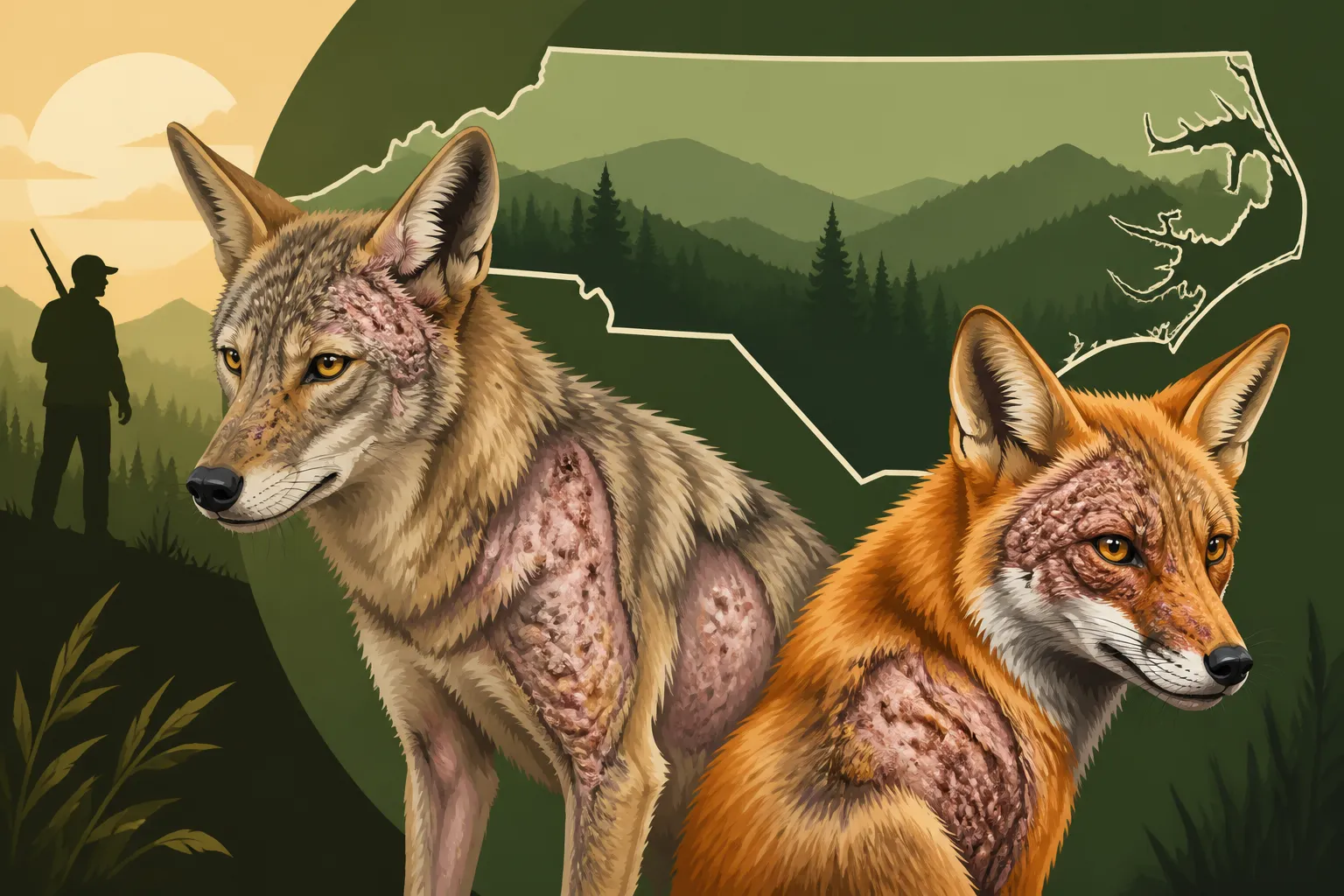
The symptoms are heartbreakingly visible. The most obvious sign is often significant hair loss, which can start around the tail and hindquarters, but eventually spreads across the entire body. The skin in these affected areas becomes thickened, crusty, and scabby, often looking leathery and grey. The itching is relentless and excruciating for the animal, causing them to scratch and bite themselves constantly, leading to open sores and secondary bacterial infections. These infections only add to their misery, making them smell quite foul, even from a distance. As the condition worsens, the animal becomes emaciated from the constant discomfort, inability to hunt effectively, and the sheer energy expended fighting the infection. Without intervention, severe cases of sarcoptic mange are almost always fatal, leaving the animal vulnerable to the elements, starvation, and other predators. It's a truly brutal way for them to go.
Identifying Mange in the Field
Spotting a mangy coyote or fox isn't usually hard once you know what to look for, but it's important to be able to distinguish it from other issues. The visual cues are quite pronounced. As mentioned, the patchy fur is usually the first thing you'll notice. It often starts thin and then progresses to large bald spots, particularly on the rump, tail, legs, and flanks. The exposed skin will look dry, flaky, scaly, and often raw or bleeding from constant scratching. In advanced stages, the animal can look almost completely naked, with thick, elephant-like skin. Their general body condition will typically be poor; they'll appear underweight, with their ribs and hip bones often visible.
Behavioral cues can also give it away. An animal suffering from severe mange will often be seen scratching, biting, or rubbing themselves almost non-stop, even when you might expect them to be alert to their surroundings. They might also appear lethargic or move with a noticeable lack of energy. Sometimes, these animals might even be more visible during the day than usual, simply because their discomfort overrides their natural nocturnal instincts. It's worth noting that an injured animal might also look disheveled, but they won't have the widespread, symmetrical hair loss and skin crusting typical of mange. Other skin conditions might cause some irritation, but few are as aggressive and widespread in their visible impact as sarcoptic mange. When you see an animal that looks like it's been through the wringer, chances are, mange is the culprit.
The Broader Impact of Mange on North Carolina's Wildlife and Ecosystem
When we see a mangy fox or coyote, our immediate thought is often about that individual animal's suffering. And rightly so. But it's crucial to understand that mange isn't just an isolated problem; it has ripple effects that can impact entire local populations and the delicate balance of our North Carolina ecosystems.
Population Dynamics and Predator Health
While mange might seem like a natural, if cruel, way for nature to "cull" weaker animals, severe outbreaks can genuinely impact local populations of coyotes and foxes. If the mite becomes widespread in a particular area, especially where predator densities are high, it can lead to significant declines in the local coyote and fox numbers. Imagine a hunting ground where you regularly see multiple coyotes; if mange takes hold, that number could drop drastically in a season or two. This isn't just about fewer predators; it's about the health of the entire predator guild. Healthy coyotes and foxes play a vital role in our ecosystems, helping to keep populations of white-tailed deer, rabbits, rodents, and other small game in check. A substantial dip in their numbers due to disease can have unforeseen consequences, potentially leading to localized surges in prey species or even other imbalances.
Furthermore, mange profoundly impacts the reproductive success of these animals. A mangy female is often too sick and malnourished to successfully carry a litter to term or to adequately nurse and raise her pups or kits. Their weakened state makes them less capable of hunting and defending themselves or their young. This means fewer young animals survive to adulthood, further contributing to population declines. The cycle is grim: sick adults lead to fewer, weaker offspring, perpetuating the struggle for the next generation. We want our predators to be healthy and robust; it speaks to the overall health of the entire wild community.
Potential for Transmission to Other Animals and Humans
One of the most concerning aspects of mange is its transmissibility. It doesn't just stay within the coyote or fox population. The mites that cause sarcoptic mange are notoriously hardy and can easily spread to other creatures, including our beloved domestic animals.
Domestic dogs are highly susceptible to sarcoptic mange, often referred to as "canine scabies." If your hunting dog, farm dog, or even your pampered house pet comes into direct contact with a mangy wild animal, or even just its bedding area where mites might persist, they can quickly contract it. The symptoms in dogs are very similar: intense itching, hair loss, skin lesions. It's incredibly uncomfortable for them and requires prompt veterinary care, including specialized dips, oral medications, and sometimes antibiotics for secondary infections. Mange can also jump to other wildlife, though less commonly and often with less severe outcomes. Bears, bobcats, and even raccoons have been known to contract sarcoptic mange, though they may not always suffer the same level of debilitation as coyotes and foxes.
For humans, the risk is real but typically less severe. The mites can temporarily infest human skin, causing a very itchy rash known as "scabies." It's incredibly uncomfortable, but thankfully, the mites are not well-adapted to human skin and usually die off within a few weeks without reproducing. Still, it's a miserable experience, and validation of any hunter's concern is certainly warranted. The key is to take precautions, especially when handling any wild animal that appears unhealthy. This is why practices like wearing gloves and washing thoroughly after any contact are so critical.
| Feature | Coyote/Fox Mange (Sarcoptic) | Dog Mange (Sarcoptic) | Human Scabies (Sarcoptic) |
|---|---|---|---|
| Cause | Sarcoptes scabiei mite | Sarcoptes scabiei mite | Sarcoptes scabiei mite |
| Symptoms | Severe hair loss, thick crusty skin, intense itching, emaciation, lethargy, secondary infections | Intense itching, red bumps, scabs, hair loss (often on elbows, ears, hocks) | Intense itching (especially at night), small red bumps or blisters, visible burrows |
| Transmissibility | Highly contagious to other canids, possible to other wildlife and domestic dogs. | Highly contagious to other dogs, possible to humans and other canids. | Contagious through prolonged skin-to-skin contact with infected humans. |
| Severity | Often fatal without intervention in wild canids due to debilitation. | Treatable with veterinary care, but very uncomfortable and persistent if untreated. | Treatable with topical creams or oral medication; mites do not reproduce on humans, but symptoms are severe. |
| Impact on Host | Starvation, exposure, secondary infections, increased predation risk. | Intense discomfort, skin damage, potential secondary infections. | Severe itching, skin irritation; self-limiting without treatment, but highly unpleasant. |
What Hunters and Landowners Can Do
It's easy to feel helpless when you see a wild animal suffering from mange. You can't exactly take a wild coyote to the vet! However, there are practical and responsible steps that hunters and landowners in North Carolina can take to monitor the situation, protect their own animals, and contribute to wildlife health.
Reporting Sightings and Wildlife Management Efforts
One of the most important things you can do when you spot an animal with suspected mange is to report it. Why? Because the North Carolina Wildlife Resources Commission (NCWRC) relies on these reports to track the prevalence and distribution of wildlife diseases. They can identify hot spots, understand trends, and monitor the overall health of the state's wildlife populations. Your sighting might seem small, but collectively, these reports paint a crucial picture for wildlife biologists.
You can typically report sick or dead wildlife through the NCWRC website or by contacting their district offices. Provide as much detail as possible: the location (GPS coordinates if you have them!), the species, what you observed (e.g., "fox, severe hair loss, scratching constantly, very thin"), and the date and time. This information is incredibly valuable. The NCWRC has programs dedicated to North Carolina Wildlife Disease Monitoring, and citizen science, in this case, plays a huge role. They use this data to guide their research and management strategies, ensuring a healthier future for our state's wild residents. While they won't intervene for every single mangy animal, understanding the scope of the problem is essential.
Best Practices for Hunters and Pet Owners
For hunters, encountering mangy animals requires a few common-sense precautions. If you harvest a coyote or fox that shows signs of mange, always wear gloves when field dressing or handling the carcass. Even if you don't plan to skin it, the mites can be present on the fur and skin. After handling, wash your hands thoroughly with soap and water, and disinfect any tools or surfaces that came into contact with the animal. Proper disposal of the carcass is also important; burying it deeply or double-bagging and disposing of it in a secure landfill can help prevent further spread.
For pet owners, especially those with hunting dogs or dogs that spend a lot of time outdoors, prevention is key. Regular veterinary check-ups are always a good idea, and talk to your vet about year-round parasite prevention. Many modern flea and tick medications also protect against mites that cause mange. Keep an eye on your dog for any signs of excessive scratching, hair loss, or skin irritation, especially after they've been in areas where wild canids are known to frequent.
Beyond that, managing bait stations or feeders, if you use them, means keeping them clean and ensuring they don't become communal hotspots for disease transmission. While we can't control what wild animals do, minimizing opportunities for close contact and maintaining good hygiene around any wild game can go a long way. When you're out scouting, perhaps using mapping tools like GoHunt to mark potential dens or areas of high coyote activity, you might also be looking for signs of sick animals. It all ties into being a responsible steward of the land and its wildlife. Never attempt to "treat" a wild animal yourself or handle it without proper protection; this can be dangerous for you and potentially cause more stress to the animal.
Mange in North Carolina: A Closer Look at the Regional Context
It's natural to wonder if mange is worse in certain parts of North Carolina. While outbreaks can occur anywhere coyotes and foxes roam, understanding some of the regional nuances and the nature of the disease can provide a clearer picture.
Where Mange is Most Prevalent
Unlike some diseases that might be concentrated in specific geographic zones, sarcoptic mange doesn't necessarily respect county lines in North Carolina. It can pop up anywhere there are susceptible populations of coyotes and foxes, which, let's be honest, is pretty much everywhere in our state these days. From the mountains to the coast, these adaptable predators have made themselves at home.
That being said, areas with higher densities of coyotes or foxes might experience more frequent or widespread outbreaks simply because there are more opportunities for the mites to spread through direct contact. Imagine a stretch of Piedmont farmland where coyotes are abundant, perhaps using shared den sites or moving through the same narrow corridors. Such close proximity increases the chances of transmission. Similarly, if a particular year sees a boom in the coyote population, you might coincidentally see a rise in mange cases. It's not a strict rule, but density can certainly be a contributing factor. The NCWRC's reporting system is vital for identifying any emerging patterns or localized spikes that warrant closer attention. Unfortunately, no region is entirely immune from the sight of a mangy predator.
Understanding the Lifecycle and Persistence
To really grasp why mange is such a persistent problem, it helps to understand the mite's lifecycle. These microscopic mites burrow into the skin, where the females lay eggs. After hatching, the larvae mature into nymphs and then adults, all within the skin. The entire lifecycle can be completed in as little as 17-21 days. What makes them so insidious is their ability to survive off the host for a limited time – typically a few days, but potentially longer in cool, humid conditions. This means an animal doesn't even need direct contact with another mangy animal to get infected; they can pick up mites from a contaminated den, a bedding area, or even a rubbing post.
This persistence is why mange is so hard to eradicate in wild populations. Even if a few animals die off, others may already be infected or pick up mites from the environment. Environmental factors can play a role; for example, a particularly wet and mild winter might allow mites to survive longer off a host, increasing transmission rates. The mites thrive in host-to-host contact, especially when animals are weakened or stressed, which can compromise their immune systems. This often means that a local outbreak might cycle through a population for several years, waxing and waning with the health and density of the local coyote and fox numbers. It's a tough battle, one that requires continuous monitoring and understanding to best manage our wild resources.
Disclaimer
This article is for general informational purposes only and does not constitute professional advice. Laws, prices and regulations vary by location and change over time. Consult a qualified professional for guidance on your specific situation.