Best North Carolina Counties for Big Bucks
Oh, the quest for a big buck in North Carolina! It's a dream that keeps many of us going through those long off-season months, pouring over maps and rehashing old hunts. There's a certain magic to seeing a true trophy whitetail step out, especially when you know the effort and dedication it takes to find one in our diverse state. But let's be honest, figuring out where to even begin looking for those elusive giants can feel like trying to find a needle in a haystack, leaving many hunters frustrated and wondering if they're even in the right zip code. This guide is all about cutting through that uncertainty, diving deep into the characteristics and counties that consistently produce the biggest bucks in North Carolina, and offering you a clearer path to that trophy you've been dreaming of.
Understanding What Makes a North Carolina County a "Big Buck" Hotspot
Before we even start pointing fingers at specific areas, it's crucial to understand what factors contribute to a county's ability to consistently grow large-antlered deer. It’s not just luck; it’s a confluence of environmental conditions, deer biology, and human influence.
Defining "Big Buck" for North Carolina Hunters
When we talk about "big bucks" here in North Carolina, we're not always talking about those massive Boone and Crockett scores you see from the Midwest. While North Carolina certainly produces its share of record-book animals, for most of us, a "big buck" is a mature, heavy-antlered deer – something in the 130 to 140-inch class, or even a solid 8-point with impressive mass and spread. These are the bucks that get your heart pounding and leave a lasting memory. They are older, wiser, and have survived multiple hunting seasons, which alone makes them a trophy in any hunter's book. Understanding this local context helps set realistic expectations and appreciate the true quality of the deer we have. A mature deer, regardless of its score, is a testament to good habitat and a well-managed herd.
The Pillars of Antler Growth: Age, Nutrition, Genetics
Every seasoned hunter knows that antlers don't just magically appear. They are the result of a delicate balance between three critical factors: age, nutrition, and genetics.
- Age: This is arguably the most important factor. A buck needs time to grow. Most whitetail bucks don't reach their full antler potential until they are 4.5 to 6.5 years old. If a deer is harvested too young, its antlers simply haven't had the chance to develop to their maximum size. Counties with lower hunting pressure or strong private land management often allow bucks to reach these older age classes.
- Nutrition: Just like us, deer need a robust diet to be healthy and grow big. Quality forage, rich in protein and minerals, is essential for antler development. This means good soils, diverse plant life, and often access to agricultural crops like corn, soybeans, peanuts, and alfalfa. Areas with poor soils or heavily browsed habitat will struggle to produce consistently large antlers, even if bucks reach maturity.
- Genetics: While often overemphasized compared to age and nutrition, genetics do play a role. Some deer lineages simply have the genetic blueprint for larger antlers. You can have the best habitat and age structure in the world, but if the genetic pool is limited, the ceiling for antler growth might be lower. Fortunately, North Carolina's deer herd generally has excellent genetic potential, meaning that when age and nutrition align, those genes can truly express themselves.
Counties that consistently produce big bucks are typically areas where these three pillars are strongly supported, often thanks to a mix of productive habitat, agricultural influence, and smart hunting practices.
Unpacking the Top North Carolina Counties for Trophy Whitetails
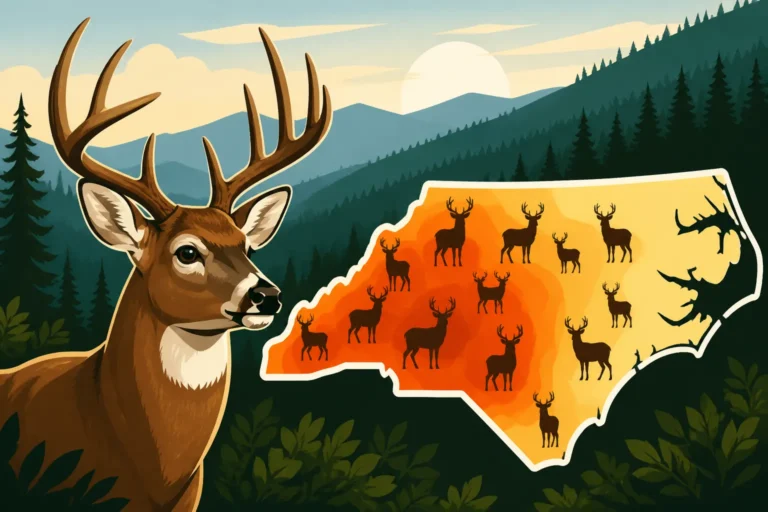
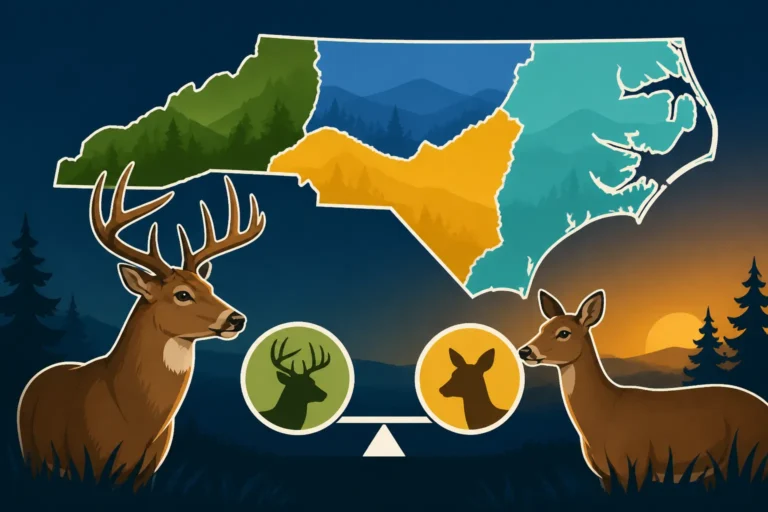
When you look at North Carolina's deer harvest records, a clear pattern emerges regarding where the biggest bucks are taken. While giants can literally come from anywhere, some regions and specific counties consistently outperform others.
The Piedmont Powerhouses
If you're serious about chasing a true North Carolina trophy, the Piedmont region should be at the top of your list. This area often shines when it comes to producing impressive whitetails. The reasons are pretty straightforward: the Piedmont boasts a fantastic combination of fertile soils, extensive agricultural lands, and diverse timber stands. Counties in the northern and central Piedmont, in particular, frequently appear in conversations about big buck potential.
Think about counties like Caswell, Rockingham, Person, and Granville, which sit right on the Virginia border. These areas have a long history of growing big deer. Further south, counties like Chatham, Orange, and even parts of Wake and Johnston, especially away from the heaviest development, can be sleepers. What makes them so good? They have sprawling fields of corn, soybeans, and wheat that provide an abundant, high-protein diet for deer. Interspersed with these agricultural fields are mature hardwood forests, pine plantations, and thick fencerows that offer excellent cover and bedding areas. Many of these areas also benefit from a strong tradition of private land ownership, where landowners might manage their deer herds for quality, allowing younger bucks to mature. When you consider tactics like Hunting Piedmont Farmland Deer, you start to understand how hunters leverage these prime conditions. The mix of cover, food, and often slightly lower hunting pressure than public lands allows bucks to achieve older age classes, directly translating into larger antlers. It’s no wonder so many hunters seeking impressive racks focus their efforts here. This is why you often hear the phrase, "Why the Piedmont Grows Big Bucks".
Coastal Plain Sleeper Spots
While the Coastal Plain is often associated with high deer densities and generally smaller body and antler size, it would be a mistake to completely discount its potential for producing big bucks. There are definite "sleeper" counties, particularly in the northeastern part of the state, or those with significant agricultural influence and large, contiguous tracts of timber or managed properties. Counties like Bertie, Halifax, Martin, and Northampton, which also share characteristics with the Piedmont in terms of agriculture, can certainly surprise you.
The key here is finding areas that deviate from the typical high-density, high-pressure coastal norm. Look for regions with vast, undisturbed tracts of land—often those managed for timber or agricultural purposes—where deer can find ample food and seclusion. The unique habitat, including expansive pocosins and swamp bottoms, can provide incredible sanctuary for mature bucks, making them incredibly difficult to hunt but also allowing them to age gracefully. Hunters who understand Hunting Coastal Plain Pocosin Swamps can unlock the potential of these areas. While the soil quality might not always match the Piedmont, targeted food plots on private land, combined with the natural bounty of large, diverse properties, can provide the nutrition needed for impressive antler growth. It often requires more effort to scout and hunt these coastal giants, but the reward can be substantial for those willing to put in the work.
Mountain Zone Realities
The North Carolina mountains, while undeniably beautiful and offering some of the most challenging hunting experiences, are generally not the first place hunters look for top-end trophy antlers. The rugged terrain, typically poorer soils (which translates to less nutrient-rich forage), and often significant public land hunting pressure can make it difficult for bucks to reach their full antler potential. Deer densities in the mountains are usually lower than in the Piedmont or Coastal Plain, and the growing season for forage is shorter.
However, this isn't to say big bucks don't exist in the mountains. They absolutely do, particularly in isolated pockets where conditions are favorable. These areas might include lower elevation farmlands nestled in valleys, or regions with consistent mast crops (acorns, persimmons) in mature hardwood forests that provide crucial nutrition. Hunters who spend countless hours scouting the more remote areas of the Pisgah and Nantahala National Forests, seeking out pockets of better forage or areas with less pressure, can certainly find success. But for sheer consistency in producing "big bucks" as defined earlier, the mountains generally lag behind their Piedmont and certain Coastal Plain counterparts. The challenge here is less about finding a deer and more about finding that specific, older deer that has defied the odds in a tougher environment.
Beyond Geography: Management, Pressure, and Scouting for North Carolina Giants
Pinpointing the best counties is only part of the equation. To consistently harvest big bucks, you need to understand the underlying factors that shape deer populations and antler quality within those areas, and then adjust your hunting strategy accordingly.
The Role of Hunting Pressure and Private Land
One of the most significant influences on buck age structure, and consequently antler size, is hunting pressure. Areas with high hunting pressure mean that bucks, especially younger ones, are often harvested before they can reach their full antler potential. It's a simple numbers game: the more hunters in an area, the higher the likelihood that bucks will be taken at a younger age. This is often the reality on much of North Carolina's public land, especially during opening weeks.
This is where access to private land becomes a game-changer. Private landowners often have the ability to implement herd management strategies that reduce the harvest of young bucks, allowing them to age. They might enforce stricter antler restrictions, manage habitat, or simply have fewer hunters on their property, creating sanctuaries where bucks can grow old. If you're looking for consistent big buck opportunities, gaining access to well-managed private land is paramount. This can involve anything from building relationships with local farmers (and understanding Asking a North Carolina Farmer for Permission) to joining a hunting club or leasing ground. For those without private land access, tools like GoHunt can offer mapping capabilities that allow you to analyze land ownership and identify potential adjacent public land honey holes that might benefit from low pressure on a private parcel. It's about finding those overlooked spots where deer can thrive without constant human interference.
Smart Management Strategies and Food Sources
Beyond simply reducing pressure, proactive management plays a massive role in growing big bucks. On private land, this often involves active habitat work and food plot programs. Landowners might plant nutrient-rich food plots of clover, brassicas, or corn to supplement the deer's natural diet. They might also engage in timber stand improvement, creating thicker bedding cover or promoting desirable browse species. Understanding and targeting Late-Season Food Sources for North Carolina Whitetails is crucial, whether on private or public land.
Even on public land, understanding management practices can give you an edge. The NC Wildlife Resources Commission manages many game lands to enhance wildlife habitat, which can indirectly benefit antler growth. While you can't control the harvest, you can focus your efforts on areas that offer superior nutrition, like clear-cuts with abundant browse, areas adjacent to agricultural fields, or mature mast-producing timber stands. Recognizing these zones means thinking like a deer biologist, not just a hunter. Smart management isn't just about what's planted; it's about creating a balanced ecosystem where deer have everything they need to flourish.
Putting it All Together: How to Hunt for a North Carolina Trophy
Knowing which counties have the potential for big bucks is a great start, but translating that potential into a successful hunt requires thoughtful planning, persistent scouting, and understanding North Carolina's hunting regulations.
Scouting Smart with Data
The modern hunter has an incredible array of tools at their disposal to scout smarter, not just harder. Utilizing aerial maps and digital mapping platforms is indispensable. These tools allow you to identify key features like bedding areas, natural funnels, food sources, and potential travel corridors from the comfort of your home. You can analyze terrain features, identify areas of dense cover, and even estimate distances, all before ever setting foot in the woods. Platforms like GoHunt offer incredible layering capabilities that provide details on land ownership, topography, and habitat types, which can be invaluable when trying to piece together a buck's home range. Many hunters find that Reading Aerial Photos for Piedmont Deer gives them a significant advantage.
Beyond digital tools, physical scouting remains critical. Look for historical harvest data (where generically available) to see where big bucks have been taken in the past. Walk the woods in the off-season, looking for old rubs, scrapes, and large tracks. Place trail cameras to gather intel on buck movement patterns and age structure. Remember, Scouting With the NC Wildlife App can provide real-time information about game lands and boundaries, helping you stay legal and informed. Year-round scouting helps you understand how deer use the landscape in different seasons, allowing you to adapt your strategy as conditions change.
Licensing and Season Considerations
Before you even think about stepping into the woods, ensure you understand North Carolina's licensing requirements and season dates. The state's deer season structure can seem complex at first, with varying dates across different gun zones and specific regulations for archery and muzzleloader seasons. Familiarize yourself with the North Carolina Deer Season Structure Explained to ensure you're hunting legally and at the right time. Obtaining the correct North Carolina Hunting Licenses and What They Cost is the first step for any hunter.
While big bucks can be harvested during any season, understanding the nuances of each can give you an advantage. The archery season, often running earlier, can offer opportunities to catch bucks in more predictable patterns before heavy pressure sets in. Bowhunting North Carolina's Statewide Archery Season can be incredibly rewarding. The rut, which varies slightly by zone but generally peaks in the Western Zone later than the Eastern, is a prime time to encounter mature bucks that are actively moving and less cautious. Focusing your efforts around Hunting the North Carolina Rut by Zone can be highly effective. No matter your preferred method, being knowledgeable about the specific rules and timing will maximize your chances of encountering that trophy buck.
Summary of North Carolina Big Buck Zones
To recap, here's a general overview of North Carolina's primary hunting zones and their typical big buck characteristics:
| Zone/Region | Typical Deer Density | Antler Quality Potential | Primary Contributing Factors | Common Hunting Style |
|---|---|---|---|---|
| Piedmont | Moderate to High | High | Rich agriculture, good age structure on private land, diverse habitat, good genetics | Stand hunting over food/cover, still-hunting, drives on large tracts |
| Coastal Plain | High | Moderate to High | Abundant food (ag/natural), thick cover, some areas with low pressure, good genetics | Stand hunting, still-hunting, deer drives, dog hunting (where allowed) |
| Mountains | Low to Moderate | Moderate | Rugged terrain, generally poorer soils, higher public land pressure. Pockets of good habitat exist. | Still-hunting, spot-and-stalk, stand hunting over mast/trails |
This table provides a generalized view. Within each zone, individual counties, and even specific properties, can vary wildly based on local conditions and management.
Disclaimer
This article is for general informational purposes only and does not constitute professional advice. Laws, prices and regulations vary by location and change over time. Consult a qualified professional for guidance on your specific situation.