Dragging a Deer Out of a Coastal Swamp
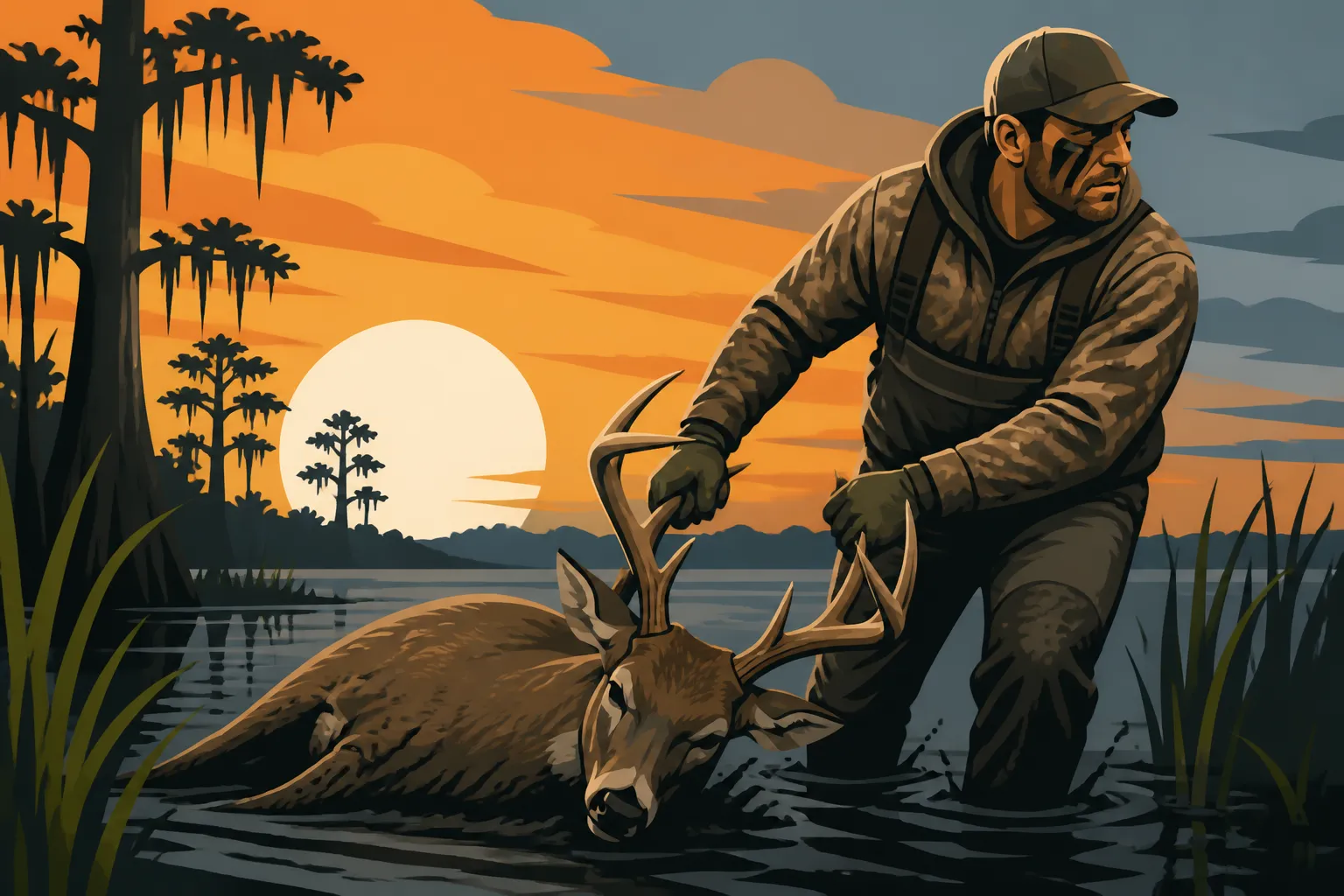
There’s almost nothing quite as exciting, or as immediately daunting, as watching that big North Carolina whitetail drop right in the middle of a coastal swamp. You’ve put in the work, made the shot, and now the real challenge begins: getting that deer out of what often feels like an impenetrable maze of mud, water, and dense vegetation. This guide is all about equipping you with the knowledge and tactics needed to successfully retrieve your hard-earned venison from the clutches of a coastal swamp, making what seems impossible, well, still hard, but definitely achievable.
Understanding the Coastal Swamp Environment
Coastal swamps in North Carolina are a world unto themselves. They're not just damp woods; they're intricate ecosystems with unique challenges that can turn a successful hunt into an exhausting ordeal if you're not prepared. From the Outer Banks to the lower Coastal Plain, these areas demand a different approach to deer recovery.
The Unique Challenges of North Carolina Swamps
The minute you step into a coastal swamp, you're hit with it: the humidity, the buzzing insects, and the soft, squishy ground. We’re talking about areas with consistently high water tables, meaning standing water is a given, often hidden beneath a deceptive layer of fallen leaves or moss. The ground can quickly transition from merely damp to ankle-deep mud, or worse, knee-deep muck that sucks at your boots with every step. This isn't just an inconvenience; it can be downright dangerous, leading to exhaustion, dehydration, and even lost footwear.
Compounding this is the incredibly dense vegetation. You'll encounter thickets of briars, tangled vines, and impenetrable stands of switch cane or pocosin shrubs. Imagine trying to drag a 150-pound deer through a wall of green, all while fighting off mosquitoes and navigating treacherous footing. It's a true test of grit and planning. The sheer physical exertion required is immense, and it’s why so many hunters dread the thought of a deer dropping in the deepest part of a coastal thicket.
Identifying Potential Dragging Obstacles
Before you even begin the drag, understanding what stands between you and your deer, and then between your deer and your truck, is paramount. Coastal swamps are full of hidden traps. Cypress knees, those knobby protrusions from cypress trees, are notorious for tripping hunters and snagging game. Downed trees, often submerged or partially covered by vegetation, create formidable barriers that you'll have to climb over or cut through. I’ve spent hours trying to navigate around a single large fallen pine that just seemed to stretch endlessly across my path.
Beyond the visible obstacles, there are hidden dangers. Submerged ditches or sloughs can drop unexpectedly, turning a wet walk into a full-on swim with a deer in tow. Dense patches of canebrakes or thick rhododendron can be almost impossible to push through, requiring creative routing or even cutting tools. Even something as seemingly benign as a large root system can snag your drag rope and add minutes, if not hours, to your extraction. It's crucial to acknowledge these obstacles and build a mental map of your potential extraction route, ideally before you even take the shot. Mapping tools like GoHunt can be invaluable here, letting you study the terrain for subtle elevation changes and potential waterways before you leave home.
Essential Gear for Swamp Deer Recovery
Successfully dragging a deer out of a coastal swamp isn't just about brute strength; it's about smart preparation and having the right tools for the job. You wouldn't try to build a house with just a hammer, and you shouldn't attempt a swamp deer recovery without suitable gear.
Personal Protective Equipment and Comfort
Your personal well-being is the first priority. Waders are almost non-negotiable for serious swamp hunters. Neoprene or insulated breathable waders will keep you dry, protected from briars, and add a layer of insulation if you're in water for extended periods. You'll want durable, waterproof boots that provide ankle support and traction, because losing a boot in deep muck is a real possibility and a quick way to derail a recovery. Many North Carolina hunters rely on quality rubber boots for swamp walking as they offer excellent waterproofing and decent traction in soft mud.
Beyond staying dry, consider insect protection. Mosquitoes, ticks, and gnats are relentless in these environments, especially during early seasons. A good head net and plenty of strong insect repellent, perhaps even permethrin-treated clothing, are absolute must-haves. Hydration is also critical; you'll be exerting yourself more than you think, even on a cooler day. Carry ample water, perhaps a hydration pack, and some high-energy snacks. Finally, a compact first-aid kit is essential for dealing with cuts, scrapes, and insect bites that are common in such unforgiving terrain.
Retrieval Tools That Make a Difference
Forget the image of just throwing a rope around an antler and pulling. For coastal swamps, you need specialized tools. A sturdy game cart designed for rough terrain, with large, pneumatic tires, can be a lifesaver. While traditional two-wheeled carts might struggle in truly deep mud or over downed logs, some innovative designs feature wider wheels or even a single-wheel approach that can navigate tougher spots. However, even the best cart has its limits in the densest swamp, so be realistic about its utility.
Deer drags and drag harnesses are your most basic, yet indispensable, tools. A strong drag rope or a specialized deer harness allows you to distribute the weight and pull more efficiently. For solo hunters, a shoulder harness can make a significant difference, allowing you to use your body weight rather than just arm strength. Beyond drags, consider a small, portable sled. These heavy-duty plastic sleds glide surprisingly well over mud, through shallow water, and even over some downed vegetation, protecting the deer's hide and making the pull much easier. In many cases, a sled is far more effective than a cart when you’re truly deep in a coastal bog. I've seen them used to great effect when Recovering a Deer From a Coastal Swamp seemed impossible otherwise.
| Retrieval Tool | Best Use Case | Terrain Suitability (Swamp) | Solo Hunter Friendly | Pros | Cons |
|---|---|---|---|---|---|
| Drag Rope/Harness | Short distances, dense cover, no clear path | Good (basic, adaptable) | Yes | Simple, lightweight, always useful | Physically demanding, deer snags easily |
| Sled (Heavy-Duty Plastic) | Mud, shallow water, semi-open swamps | Excellent | Moderate to High | Protects hide, glides over obstacles, reduces friction | Can be cumbersome to carry in, limited turning radius |
| Game Cart (Large Wheels) | Firmer trails, less dense vegetation | Limited to Fair | Yes | Efficient on good terrain, keeps deer clean | Struggles in deep mud, dense cover, over large obstacles |
| Packs (Boned-Out Meat) | Long distances, extremely rugged/dense terrain | Excellent (for small pieces) | Yes | Maximizes efficiency for difficult extracts | Requires field dressing on-site, more trips |
Navigation and Safety Gear
Getting lost in a coastal swamp is easier than you might think, especially when you're focused on dragging a deer. A reliable GPS unit or a smartphone with robust mapping apps (like GoHunt) and downloaded offline maps is crucial. Mark your entry point, the deer's location, and any potential obstacles or clear paths you notice on your way in. This foresight, combined with a tool like Scouting With the NC Wildlife App before the season, can save you hours of frustration and potential danger.
A bright headlamp or flashlight is essential, even if you plan to be out before dark. Recoveries often take longer than expected, and navigating a swamp in fading light or full darkness is treacherous. Always carry a whistle to signal for help if you're with a group or to alert others to your presence. Finally, a fully charged cell phone (in a waterproof case) is important, but be aware that service can be spotty in remote swamp areas. Consider a satellite messenger device for true wilderness excursions, especially if you're deep in areas like the Croatan National Forest where cell service is notoriously unreliable.
Strategic Approaches to Deer Retrieval
Bringing a deer out of a North Carolina coastal swamp is a strategic endeavor, not just a test of strength. Planning and technique can dramatically reduce the effort and time involved, turning a potential nightmare into a manageable challenge.
Scouting Your Exit Before the Shot
This is perhaps the most overlooked, yet most critical, piece of advice for swamp hunting. Before you even climb into your stand or start still-hunting, take the time to identify your most probable exit routes. Look for slight rises in elevation, old logging roads, powerline cuts, or even subtle trails deer use. Pay attention to water depth and the density of the vegetation along these routes. Often, the path you took in isn't the best path out with a deer in tow. I always make it a point to use my mapping app to mark potential escape routes, imagining myself dragging a deer through them. This proactive approach can make all the difference, especially when you're hunting coastal areas known for their thick, wet terrain, such as those where you might be Hunting Coastal Plain Pocosin Swamps.
If possible, identify areas of higher, drier ground near your stand. These spots make ideal field dressing locations, allowing you to reduce the deer's weight before starting the drag. Think about how you'll get the deer from where it drops to this "staging area" and then to your final extraction point. Sometimes, a short, incredibly tough drag to slightly firmer ground makes the overall recovery much easier than trying to drag directly through the nastiest parts of the swamp.
Techniques for Solo and Team Drags
Dragging a deer solo from a swamp is perhaps one of the most physically demanding tasks a hunter can undertake. For solo efforts, leverage is your best friend. A good deer drag harness that goes over your shoulders and waist, allowing you to use your legs and core, is infinitely better than just pulling with your arms. When pulling, keep your center of gravity low, take small, measured steps, and use the momentum of each pull. Don't be afraid to take frequent breaks to conserve energy and rehydrate. If you encounter a particularly dense section, try to pull the deer backwards, using its antlers or head as a pivot point to navigate around obstacles.
With a team, communication and coordination are key. Designate a lead person who will call out obstacles and direct the pullers. Two people can pull significantly more efficiently than one, especially if one is pulling from the front and the other is pushing/lifting from the rear, or if two are pulling from the front using separate ropes for better weight distribution. A third person can be invaluable for clearing brush or holding back vines. For very heavy deer or extreme terrain, consider using multiple ropes to distribute the pulling power. When you're Deer Drives With Three or Four Hunters in a swampy area, having everyone prepared for the recovery beforehand can save valuable time and energy.
Dealing with Difficult Terrain
Mud is the bane of swamp deer recovery. If you encounter deep mud, try to stay on any subtle rises or harder edges you can find. If a sled is available, it will perform much better than a cart in these conditions. Sometimes, laying down small logs or branches can create a temporary "corduroy road" to get through a particularly soft spot. For water crossings, assess the depth and current carefully. If the water is too deep to drag through, you might need to find a different route or consider boning out the deer.
Dense thickets and canebrakes are often best navigated by simply going through them, not around. If you have a small saw or machete, you can create a narrow path. Otherwise, push and pull, using the deer's body to flatten vegetation as you go. Remember to check for hidden snags like cypress knees that can grab your drag rope or the deer itself. For steep banks or ditches, use ropes to help lower and then pull the deer up the other side. This is where teamwork truly shines. In North Carolina, the coastal swamps are often intermixed with managed timber areas, so knowing how to navigate through various types of cover is paramount, even when you're just Hunting a Clear-Cut Regrowth Edge that abuts a swamp.
Post-Retrieval Care and Cautions
Congratulations, you've successfully dragged your deer out of the coastal swamp! But the work isn't quite done. Proper post-retrieval care is crucial for ensuring the quality of your venison and your own well-being.
Initial Field Dressing in the Field
The moment that deer hits the ground, especially in warm coastal temperatures, the clock starts ticking. Field dressing should begin as soon as safely possible. This isn't just about hygiene; it’s about cooling the animal down rapidly and significantly reducing its weight, which makes the drag substantially easier. Removing the internal organs allows air to circulate and the body heat to escape, preventing spoilage. Use a sharp, reliable field dressing knife, such as those discussed in Field Dressing Knives Worth Carrying, and be methodical.
Once field dressed, if you have a chance to get the deer to slightly higher, drier ground, even if it's still within the swamp, it's worth the extra effort. This prevents the carcass from sitting directly in stagnant water or mud, which can contaminate the meat. Even a partial field dress, where you remove the stomach and intestines to relieve pressure and start the cooling process, can be beneficial if a full dress isn't immediately feasible due to your location or immediate need to move the animal.
Post-Drag Clean-up and Meat Care
After the arduous drag, your deer will likely be covered in mud, leaves, and possibly water. Once you get it to your vehicle, the first priority is to get it cleaned up and cooled down as quickly as possible. If available, rinse off the exterior with fresh water. If you can't get it immediately to a cooler or processing facility, hang the deer in a shaded, well-ventilated area to allow it to cool further. Prop open the chest cavity with a stick to maximize airflow.
For those long hauls or warm days, having high-quality game bags and plenty of ice in a sturdy cooler is non-negotiable. Breaking the deer down into quarters on site, if you have the skills and tools, and placing the meat into game bags with ice, is the ultimate way to preserve quality, especially during North Carolina's warmer early archery or gun seasons. This approach significantly speeds up cooling and makes transport much easier, particularly when considering options like Coolers and Game Bags for Early Archery. Don't forget to thoroughly clean all your retrieval gear – ropes, sleds, waders – to prevent odor and prolong their life.
Recognizing the Dangers of Overexertion and Environment
Dragging a deer out of a coastal swamp is no joke, and it's easy to push yourself too hard. Be acutely aware of the signs of heat exhaustion or heat stroke, especially on warmer days. Dizziness, nausea, cramping, excessive sweating, or a sudden lack of sweat are all red flags. If you experience these, stop, rehydrate, and rest. It’s far better to leave a deer overnight and come back refreshed than to risk your health.
Beyond heat, consider the other environmental hazards. Swamps are home to snakes, alligators (in some parts of the Coastal Plain), and other wildlife. Always be aware of your surroundings. Stay vigilant for poisonous plants like poison ivy and oak, which are prevalent. The sheer physical toll on your body means you're more susceptible to accidental falls or injuries, so take every step carefully. Knowing your limits and being prepared for the environment will ensure that your successful hunt ends safely and enjoyably.
Disclaimer
The information provided in this guide is for general informational purposes only and does not constitute professional advice. Hunting regulations and safety protocols can change. Always consult the latest North Carolina Wildlife Resources Commission (NCWRC) regulations and prioritize safety during all hunting activities.