Trapping North Carolina Muskrat and Beaver
Living in North Carolina, you know all too well the incredible beauty of our natural waterways, but you also understand the challenges that come with managing them. For many landowners, farmers, and even folks managing stormwater ponds, muskrats and beavers aren't just part of the scenery; they're a legitimate headache causing everything from flooded fields to eroded banks and damaged culverts. This guide will walk you through the ins and outs of trapping these persistent critters, ensuring you understand the legalities, the methods, and how to do it safely and effectively in our diverse North Carolina landscapes.
The Nuisance and Necessity: Why Trap Muskrats and Beavers in North Carolina
Muskrats and beavers, while vital parts of our ecosystem, can quickly become a significant problem when their activities conflict with human interests. Their natural behaviors, intended to shape their environment for survival, often lead to considerable damage and financial loss for property owners across North state. It's not about eradication, but responsible management.
Understanding Their Impact on Land and Water
Muskrats are prolific tunnelers. They'll dig extensive burrow systems into creek banks, pond dams, and dikes, creating a network of tunnels that can severely compromise the structural integrity of these features. Imagine a perfectly good pond dam, built to last, suddenly springing leaks because a family of muskrats decided to call it home. The water seepage can lead to catastrophic dam failure, draining your pond, flooding downstream areas, and causing expensive repairs. For farmers, these burrows can ruin irrigation ditches, make fields unsafe for machinery, and undermine roadbeds, turning a productive season into a costly ordeal. Their feeding habits can also decimate aquatic vegetation, impacting other wildlife and water quality.
Beavers, on the other hand, are master engineers. Their primary goal is to create still, deep water by building dams, and they'll use whatever resources are available – trees, brush, mud – to achieve it. While a beaver pond might look picturesque in a remote forest, it's a different story when that dam floods thousands of dollars worth of agricultural crops, timberland, or even threatens homes and roads. Their habit of felling trees can quickly clear out valuable timber or ornamental trees around homes, and their gnawing can girdle mature hardwoods, leading to their death. The standing water they create also provides prime breeding grounds for mosquitoes, which can carry diseases. Often, the damage is so extensive that trapping becomes the only viable solution to protect property and infrastructure.
The Year-Round Nature of Control
Unlike many game species with specific hunting seasons, the control of nuisance furbearers like muskrats and beavers often needs to be a continuous effort, especially when dealing with active damage. While North Carolina does have established trapping seasons, which we'll delve into shortly, specific regulations allow for the trapping of these animals outside of those seasons when they are causing property damage. This is a crucial distinction for landowners who find themselves battling a breached dam in July or a flooded field in September. The North Carolina Wildlife Resources Commission (NCWRC) understands that these animals don't adhere to a calendar when causing problems, so they provide pathways for year-round removal under specific nuisance wildlife control permits or general trapping rules for landowners experiencing damage. This flexibility is essential for preventing ongoing and escalating destruction.
Navigating North Carolina's Trapping Regulations and Licensing
Before you even think about setting a trap, it's paramount to understand the rules of engagement. North Carolina has a well-defined set of regulations for trapping, designed to promote ethical practices, ensure public safety, and manage wildlife populations sustainably. Ignoring these can lead to hefty fines and legal trouble, so pay close attention.
Essential Licenses and Legal Requirements
To legally trap muskrats and beavers in North Carolina, you generally need a valid North Carolina trapping license. This isn't just a suggestion; it's a legal requirement for anyone actively engaged in trapping, whether for fur, nuisance control, or personal interest. The specific license you need will depend on your residency status and what other activities you might be pursuing. For residents, a comprehensive hunting and trapping license or a lifetime license typically covers trapping privileges. Non-residents will need to secure a non-resident trapping license. You can find detailed information on costs and options on the North Carolina Hunting Licenses and What They Cost page.
It's crucial to understand that even if you're trapping on your own private land for nuisance control, you still need the proper licensing. There are some exceptions for landowners acting directly on their own property to control depredating animals, but it's always best to be fully licensed to avoid any ambiguity. Always check the most current North Carolina Inland Fishing, Hunting & Trapping Regulations Digest published by the NCWRC, as rules can change. This digest is your bible for all things trapping.
Season Dates, Permitted Areas, and Ethical Considerations
North Carolina establishes specific seasons for trapping furbearers, including muskrats and beavers. Historically, these seasons run through the colder months when pelts are prime, typically from November through February or March. However, as mentioned earlier, for nuisance situations, you can often trap year-round with appropriate authorization. This usually involves documenting the damage and ensuring you're only targeting the problem animals.
When it comes to permitted areas, trapping is allowed on private lands with landowner permission, and on certain Game Lands with a valid Game Lands license. If you're planning to trap on public lands, such as national forests or state game lands, you must ensure that trapping is specifically permitted in that area and adhere to any additional site-specific rules. Not all public lands allow trapping, and some might have specific stipulations on trap types or checking frequencies. Before heading out, it's a good idea to consult the NCWRC's interactive maps or call the local Game Land office. Using mapping tools like GoHunt can also help you understand property boundaries and identify suitable public land areas where trapping might be allowed, assuming you verify with official NCWRC resources. For broader context on public land access, you might find information on Scouting North Carolina Public Land Before Season useful.
Ethical considerations are paramount in trapping. This includes checking your traps frequently (North Carolina law usually requires checking traps at least once every 24 hours), using humane traps, and dispatching animals quickly and mercifully. The goal is to minimize stress and suffering for the captured animal. Responsible trappers also strive to avoid non-target catches by careful trap placement and selection.
Approved Trapping Methods and Equipment
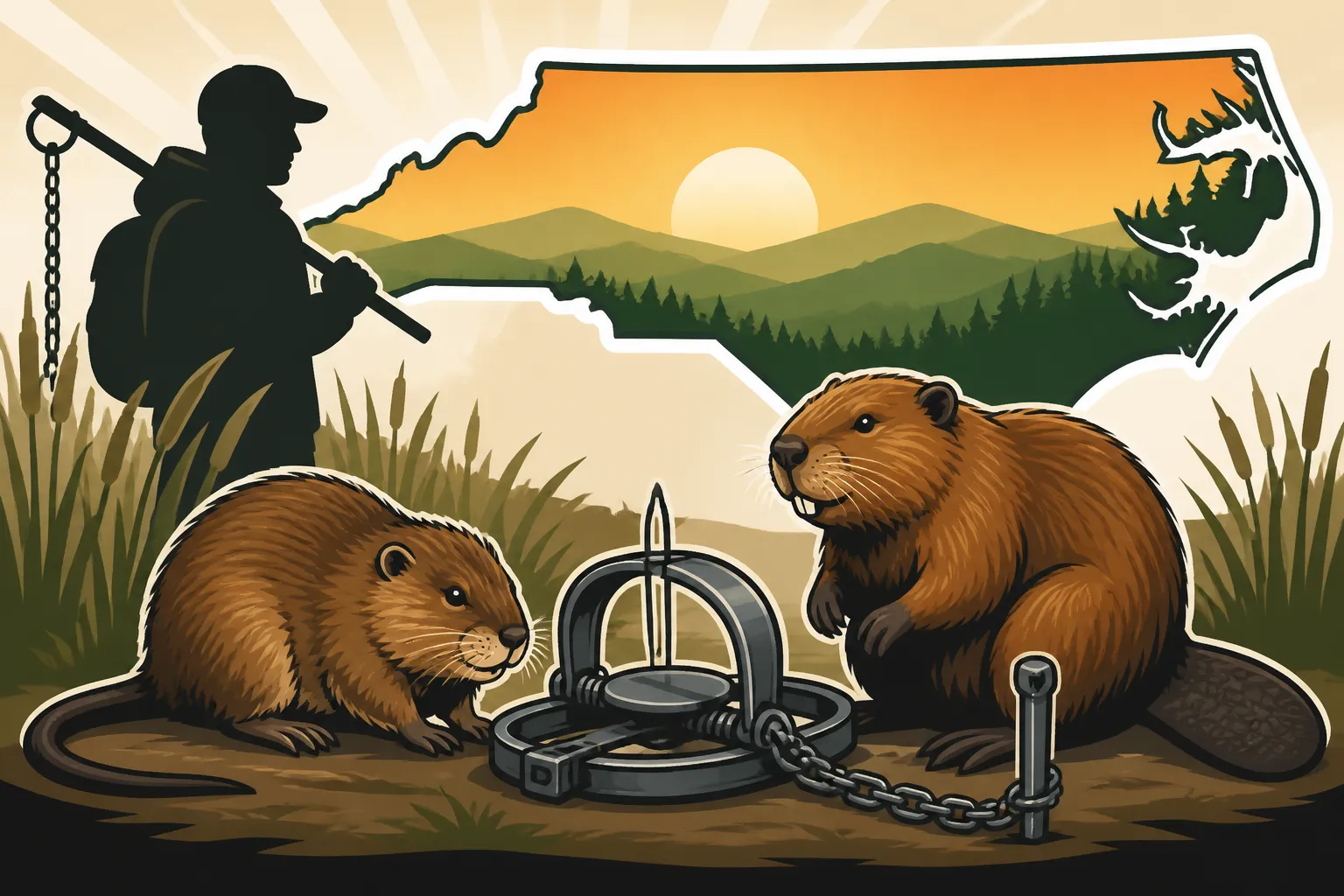
North Carolina regulations specify the types of traps that are legal for furbearers. Generally, leghold traps (also known as foothold traps) and body-gripping traps (like Conibear-style traps) are permitted, alongside snares. However, there are often restrictions on size, jaw spread, and where certain traps can be set. For example, some larger body-gripping traps might only be allowed in water sets to reduce the risk to domestic animals. It's illegal to use poisons, and certain types of traps, like those with teeth on the jaws, are typically prohibited.
Common Legal Traps for Muskrat and Beaver in NC:
| Trap Type | Target Species | Common Sizes (Approx.) | Typical Set Locations | Considerations |
|---|---|---|---|---|
| Foothold Traps | Muskrat | #1 to #1.5 | Trails, dens, shallow water | Must be equipped with swivels; often require drowning sets for muskrats. |
| Beaver | #3 to #4 | Dive poles, castor mounds, dam breaches | Larger size for powerful animals; generally used with drowning or entanglement sets. | |
| Body-Gripping Traps | Muskrat | #110, #155 | Den entrances, narrow runs, channels | Excellent for quick, humane dispatch; ideal for water sets. |
| Beaver | #220, #330 | Main channels, dam runs, lodge entrances | Very powerful; require careful placement to avoid non-target catches, especially #330. | |
| Snares | Beaver | Heavy cable | Beaver runs, dam crossover points | Highly effective; must be set to either drown or hold securely; specific locking mechanisms. |
This table is for illustrative purposes only. Always consult current NCWRC regulations for precise legal requirements regarding trap types, sizes, and setting methods.
When choosing equipment, quality matters. Durable traps, strong anchors, and reliable drowning wires are essential. For beaver, you'll need heavy-duty wire cutters, a shovel, and possibly a hatchet or saw for preparing sets. For muskrats, lighter gear suffices, but a good pair of waders is almost always a necessity. Remember, the effectiveness of a trap often comes down to its proper placement and concealment.
Practical Strategies for Successful Muskrat Trapping
Muskrats are wily, but predictable. Understanding their habits is key to successful trapping. They thrive in shallow water environments, making them common inhabitants of farm ponds, slow-moving creeks, and marshy areas across North Carolina's Coastal Plain and Piedmont.
Identifying Prime Muskrat Habitat and Sign
Muskrats are semi-aquatic rodents, meaning they spend a lot of time in and around water. You'll often find them in areas with abundant aquatic vegetation, which forms a significant part of their diet. Look for signs like:
- Bank Burrows: Their most common dwelling. These burrows have underwater entrances and tunnel upward into the bank, creating den chambers above the waterline. The entrances might be visible, or you might spot "push-ups" where they've cleared debris from an entrance.
- Feeding Platforms: Small platforms of vegetation in the water where muskrats sit to eat. You'll often find chewed cattail stems, lily pads, or other plant fragments around these spots.
- Runs and Trails: In shallow water or along muddy banks, muskrats will create well-defined trails or "runs" where they consistently travel. These are prime locations for trap sets.
- Floating Droppings: Small, dark, pellet-like droppings can sometimes be seen floating near feeding areas or den entrances.
Pay particular attention to areas where banks meet water, especially where there's a gentle slope or a concentration of reeds and cattails. These are their highways and homes.
Selecting and Setting Effective Muskrat Traps
For muskrats, smaller traps are generally used. The #110 body-gripping trap (Conibear) is a favorite among trappers due to its efficiency and humane dispatch. For foothold traps, a #1 or #1.5 long-spring or coilspring is typical.
Body-Gripping Trap (e.g., #110 Conibear) Sets:
- Run Set: Identify a narrow run or channel muskrats frequently use. Submerge the #110 trap so that the bottom jaw is about 1-2 inches below the water surface. Guide sticks can be used on either side of the trap to funnel the muskrat through the jaws. This is incredibly effective.
- Den Entrance Set: Place a #110 directly in front of an underwater den entrance. Ensure the trap is stable and the muskrat will swim directly into it.
- Feed Bed Set: On a feeding platform, place a small piece of apple or carrot as bait, with a #110 body-gripping trap strategically placed in the water approach, or a foothold on the platform itself.
Foothold Trap (e.g., #1 Long-Spring) Sets:
- Drowning Set: Since footholds don't instantly dispatch, a drowning set is crucial for muskrats. Use a stake and wire with a sliding lock to ensure the muskrat quickly slides into deeper water where it drowns. Place the trap in a shallow run or at the edge of a feeding platform.
- Bottom Edge Set: Position the trap in about 2-3 inches of water directly at the base of a bank burrow entrance or a well-used slide. A piece of carrot or apple impaled on a stick above the trap can serve as an effective visual attractant or bait.
Always ensure your traps are securely anchored to prevent loss, and that any drowning wires function properly. Concealment is important; try to blend your set with the natural environment using mud, grass, or leaves.
Advanced Muskrat Sets and Lure Tactics
While basic sets are highly effective, a few advanced tricks can boost your success. Muskrats are naturally curious and respond well to certain lures and baits.
- Carrot or Apple Bait: These are classic muskrat baits. Place a small piece on a stick above a drowning set or directly on a foothold trap pan.
- Muskrat Lure/Gland Lure: Commercial muskrat lures, often based on their natural musk, can be very attractive. Apply a few drops near your set, perhaps on a nearby piece of wood or vegetation, but not directly on the trap itself.
- "Blind" Sets: These sets rely purely on the muskrat's natural travel patterns. Instead of baiting, you're placing the trap in a location where you're confident the muskrat will pass through, such as a narrow culvert, a tight run between cattails, or a natural pinch point. Using GoHunt's satellite imagery can help identify these potential travel corridors before you even step foot on the property.
Remember, persistence is key. If a set isn't producing, don't be afraid to move it to a different location. Check your traps diligently, every single day, as required by law and ethical practice.
Mastering Beaver Trapping in North Carolina
Beavers are larger, more powerful, and require different strategies than muskrats. Their impact can be far more significant, demanding a more robust approach to trapping. You'll find beavers anywhere there's permanent water and ample woody vegetation for food and building materials, from mountain streams to Coastal Plain swamps.
Recognizing Beaver Damage and Travel Routes
Identifying beaver activity is usually straightforward. Look for:
- Chewed Trees: Freshly cut trees, often with distinct chisel-like teeth marks, are the most obvious sign. Smaller saplings might be completely cut down, while larger trees will have a characteristic hourglass shape at the base.
- Dams: The most prominent feature. Beaver dams can range from small, crude constructions to massive, complex structures capable of holding back significant amounts of water.
- Lodges: In larger ponds or lakes, beavers build lodges from sticks and mud, rising above the water surface. Bank dens are also common, particularly in rivers or larger creeks.
- Canals and Slides: Beavers often dig canals to float timber to their dam or lodge, and they create slick "slides" where they enter and exit the water from land. These are excellent places for traps.
- Scent Mounds: Beavers create small mounds of mud and debris, often near the water's edge, and mark them with castor (a pungent, oily substance from their castor glands). These are territorial markers and powerful attractants for other beavers.
Choosing and Placing Beaver Traps for Maximum Success
For beavers, you'll need bigger, stronger traps. The #330 body-gripping trap is the gold standard, but larger foothold traps (#3 or #4 coilspring or long-spring) and snares are also highly effective.
Body-Gripping Trap (e.g., #330 Conibear) Sets:
- Channel Set: Locate a narrow channel, canal, or run that beavers consistently use. Submerge a #330 in the deepest part of the channel, usually with guide sticks to funnel the beaver directly through the trap. This is an incredibly effective and humane set.
- Dam Break Set: Beavers will almost always repair a breach in their dam. Make a small, strategic break in the dam, then set a #330 directly in the opening, ensuring the trap is submerged. The beaver will swim through the opening to repair it.
- Lodge/Bank Den Entrance Set: Place a #330 directly in front of the underwater entrance to a beaver lodge or bank den.
Foothold Trap (e.g., #4 Coilspring) Sets:
- Castor Mound Set: Create an artificial castor mound (a small pile of mud and grass) near the water's edge where beavers are active. Apply beaver castor lure to the mound. Place a large foothold trap, securely staked, just underwater (1-2 inches deep) in front of the mound. Be sure to use a drowning wire or heavy cable to ensure the beaver drowns quickly. This is often called a "post set" or "lure set."
- Dive Pole Set: Secure a desirable branch (like sweet gum or poplar) to the bank, extending into deep water. Place a foothold trap at the base of the branch, underwater, where the beaver will "dive" to access the bait. This can be combined with bait wired to the branch itself.
Snares are also very effective, especially in beaver runs on land or at crossovers on dams. They require careful adjustment to ensure proper function and humane capture. Make sure to use heavy-duty cable and a legal locking mechanism.
Specialized Beaver Sets: Dam Breaches and Scent Mounds
Beyond the basics, specialized sets often yield the best results for stubborn beavers.
- Dam Breaches for Recalcitrant Beavers: If a beaver colony is particularly wary of traps, a dam breach is often the best trigger. Make a larger, more impactful break in the dam. Beavers are obsessive about maintaining their water levels and will rush to repair the breach, often within hours. This creates a natural pinch point for your #330.
- Maximizing Castor Mound Appeal: For castor mound sets, don't just use commercial lure. Some trappers incorporate fresh mud, beaver cuttings, or even a few drops of beaver urine to enhance the natural appeal of the mound. The goal is to mimic a rival beaver's territory marker, drawing in curious and aggressive beavers.
- Underwater Cuttings Set: Beavers often create piles of freshly cut branches underwater near their lodge or feeding areas. A foothold trap set strategically near these "cuttings piles" can be effective, as beavers frequent these spots.
- "GoHunt" for Scouting Hotspots: Before you even haul traps, spend time scouting the area. Tools like GoHunt can be immensely helpful for identifying potential beaver activity points, like flooded timber, new ponds, or critical pinch points in creeks by analyzing aerial photos. This reconnaissance saves time and increases your odds of success by revealing hidden travel routes or feeder creeks that lead to problem areas. A good understanding of the local topography and water flow, perhaps gathered by using similar methods to Reading Aerial Photos for Piedmont Deer, will greatly enhance your beaver trapping strategy.
No matter the set, remember that beavers are powerful animals. Always use strong anchors, capable of holding a large, struggling animal, and ensure your drowning setups are foolproof.
Responsible Trapping: Safety, Ethics, and Resource Utilization
Trapping is a highly skilled activity that demands not only knowledge of animal behavior but also a deep commitment to safety and ethical practice. It's about more than just removing a nuisance; it's about doing so responsibly.
Minimizing Non-Target Catches and Ensuring Humane Dispatch
One of the trapper's primary responsibilities is to minimize the capture of non-target animals, including pets, livestock, or other wildlife not intended for harvest. This is where careful trap selection and placement come into play.
- Water Sets for Body-Gripping Traps: For larger body-gripping traps (like the #220 or #330), setting them fully submerged in water is crucial. This significantly reduces the risk to land-based non-target animals, including dogs, cats, and even deer. A beaver in a channel set, for example, is far less likely to accidentally catch a raccoon than a trap placed on a dry bank.
- Snare Placement: If using snares, place them precisely in known beaver runs, making sure the bottom of the snare loop is at a height that targets beaver necks, not smaller animals. Breakaway deer stops are also available to release larger animals like deer if they blunder into a snare intended for a beaver.
- Visual Deterrents: In areas with heavy foot traffic or where pets are common, consider posting signs indicating "Traps Set." While not foolproof, it's a responsible step.
- Trap Checks: Checking your traps at least once every 24 hours is not just law; it's humane. It ensures that any captured animal, target or non-target, is not left suffering for an extended period. If you catch a non-target animal, release it safely if possible, or contact the NCWRC for guidance.
When an animal is caught, humane dispatch is paramount. For muskrats and beavers caught in body-gripping traps, dispatch is usually instant. For those caught in footholds, a quick, clean shot from a small-caliber firearm or a sharp blow to the head with a blunt object is typically used. Always prioritize a swift and painless end.
Personal Safety and Equipment Maintenance
Trapping can be dangerous if proper precautions aren't taken. You're dealing with powerful traps and wild animals.
- Trap Safety: Body-gripping traps, especially the #330, are incredibly powerful. Always use a safety setter or compressor tool when setting these traps. Never place your hands or fingers within the jaws of a set trap without engaging the safety catches. Even smaller traps like the #110 can cause serious injury.
- Water Safety: Many sets involve working in and around water. Wear appropriate waders or chest-high boots, and be aware of currents, slippery banks, and deep spots. If trapping alone, always let someone know where you're going and when you expect to return.
- Animal Handling: Wild animals can bite or scratch, even when injured. Approach a caught animal carefully. Wear heavy gloves, especially when handling beavers, which have powerful teeth.
- Equipment Maintenance: Keep your traps clean, rust-free, and in good working order. Lubricate springs, replace worn parts, and ensure all swivels and chains are strong. Dull traps or faulty mechanisms can lead to poor catches and prolonged suffering for the animal. A well-maintained trap is a safe and effective trap.
Processing and Utilizing Muskrat and Beaver Resources
Once you've successfully trapped a muskrat or beaver, the job isn't over. These animals offer valuable resources, and processing them properly is part of responsible trapping.
- Fur Handling: Both muskrat and beaver pelts have historical and current market value. Learning to properly skin, flesh, and stretch a pelt is a valuable skill. Muskrat pelts are relatively straightforward, while beaver pelts, being much larger and thicker, require more effort, particularly in fleshing. There are numerous online tutorials and books dedicated to fur handling that can guide you through the process.
- Meat Utilization: Surprisingly to some, both muskrat and beaver meat are edible and, when prepared correctly, can be quite delicious. Muskrat meat is dark and lean, often compared to duck. Beaver meat is richer and has a unique flavor, often braised or slow-cooked. Utilizing the meat is a way to honor the animal and reduce waste, especially if you're taking them for nuisance control.
- Beaver Castor: Beaver castor glands produce a musk used by the animals for territorial marking. This castor is highly prized by lure makers for various furbearers, including other beavers, coyotes, and even bears. Properly harvesting and drying castor can add another layer of value to your beaver catch. It's often shipped dried to fur buyers or lure manufacturers.
- Sustainable Practice: By utilizing the fur, meat, and castor, you're engaging in a more sustainable practice, treating the animal as a valuable resource rather than simply a pest. This aligns with the long-standing traditions of trapping and strengthens your connection to the outdoors.
Remember, successful trapping in North Carolina isn't just about catching animals; it's about understanding the ecosystem, adhering to the law, practicing safely, and respecting the wildlife you manage.
Disclaimer
The information provided in this guide is for informational purposes only and is not a substitute for official North Carolina Wildlife Resources Commission (NCWRC) regulations. Always consult the most current NCWRC Inland Fishing, Hunting & Trapping Regulations Digest or contact the NCWRC directly before engaging in any trapping activities. Regulations are subject to change.