Entry Routes Through Standing Soybeans
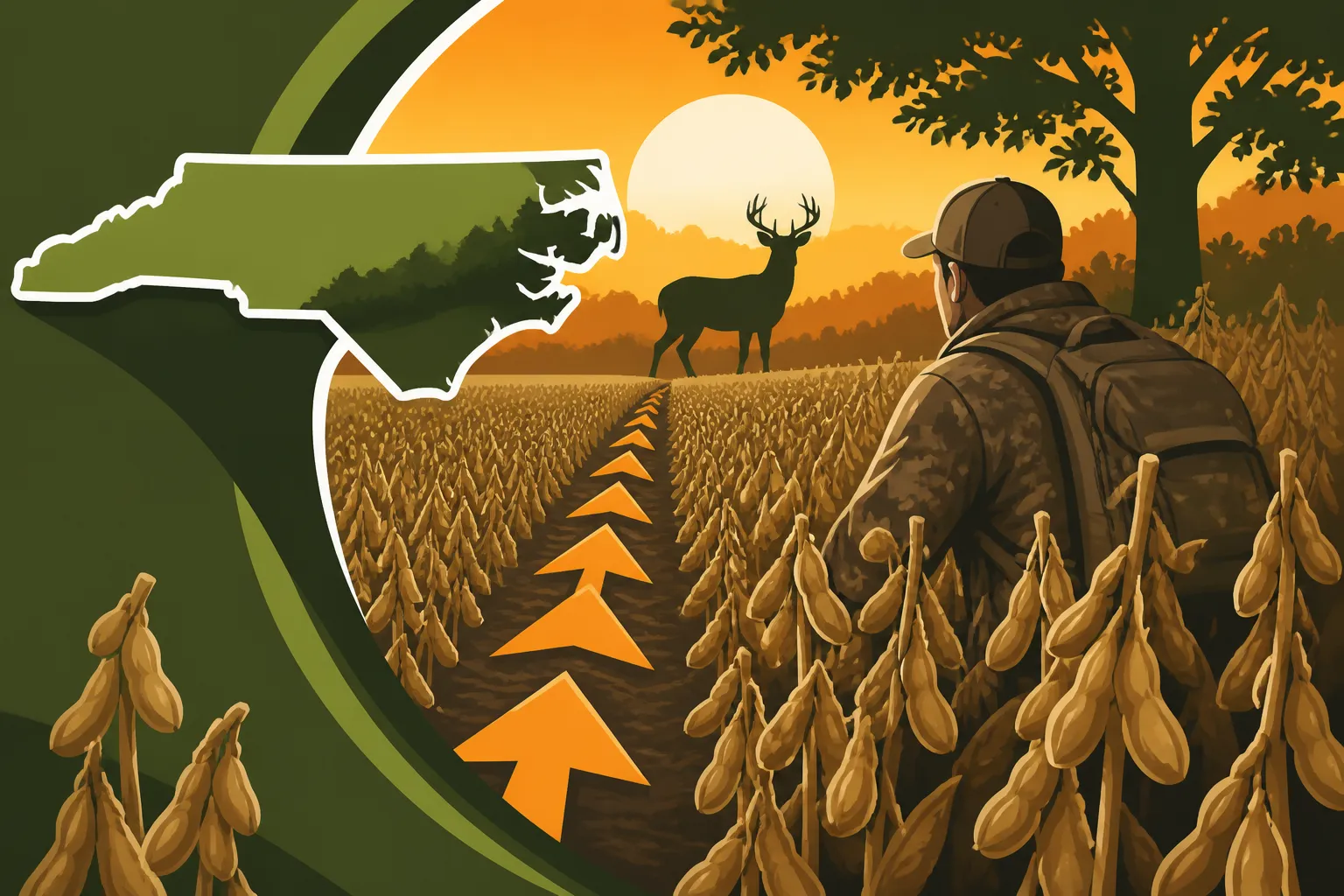
Hunters often face a real head-scratcher when it comes to approaching deer in or around massive standing soybean fields. These fields are magnets for deer, offering both abundant food and incredible cover, but their wide-open nature makes stealthy access feel almost impossible. This guide dives deep into the strategic art of identifying and utilizing the most effective entry routes through standing soybeans, helping you get into position without spooking every deer for a quarter-mile.
Understanding Deer Behavior Around Standing Soybeans
Deer, especially in North Carolina's agricultural regions, view standing soybean fields as a five-star resort. They offer everything a deer could want: a massive, nutritious food source that lasts well into the fall, and unparalleled security cover where they can bed down, browse, and hide from predators and hunters alike. It’s this dual function – food and shelter – that makes them so attractive, but also so challenging to hunt effectively. You’re not just dealing with deer coming to feed; you’re dealing with deer that might be living in the field for extended periods.
Why Soybeans are a Deer Magnet
From the moment soybeans emerge as tender green shoots in late spring, they become a crucial part of a deer's diet, packed with protein essential for antler growth and fawn development. As the summer progresses and the pods fill, the nutritional value only increases. By the time North Carolina's early archery season rolls around, and certainly as we move into gun season, those standing fields are a major draw. Deer will often prioritize these rich food sources over natural browse, particularly when other options are thinning out or less appealing.
The sheer volume of a soybean field, especially large tracts common in the Piedmont and Coastal Plain, provides an incredible amount of concealment. Deer can seemingly vanish within the chest-high, leafy canopy. This means they feel incredibly secure, often bedding right in the middle of these fields during the day, emerging only to feed or move to adjacent cover. The challenge for us as hunters is not just catching them moving, but understanding that their primary sanctuary might be the very field we're trying to hunt around.
What's more, soybeans aren't just for feeding. Deer use the dense rows for travel lanes, social interactions, and even as nursery areas for fawns. A significant portion of a deer’s daily life can occur entirely within a large soybean field, making it difficult to predict their exact point of entry or exit to surrounding woods or other cover. This makes scouting and planning your approach absolutely critical, as a misstep can blow out an entire area.
Daily Movement Patterns in and Around Fields
Deer movement patterns around standing soybeans are largely dictated by the time of day and the level of hunting pressure. In low-pressure scenarios, especially during the early season, deer might filter into the fields in the late afternoon, browse casually, and then bed down within the field itself as daylight fades. They might even stay bedded in the field through the night and into the morning, only leaving for water or to seek thicker, permanent cover if disturbed or when the sun gets too high.
As hunting pressure increases, or as the season progresses, deer often become more nocturnal or utilize the fields more cautiously. They might hold tight in heavy cover during the day, only venturing into the soybeans well after dark. Their entry and exit points will become more defined, often using the thickest sections of a field edge or established trails that lead directly to dense timber. This is where understanding wind, thermals, and specific access points becomes paramount. They’re looking for the safest routes, and so should you.
It's not uncommon to observe deer 'staging' just inside the timber line, waiting for confidence-building darkness before stepping out into the beans. Conversely, in the mornings, they'll often be the first to retreat to these same staging areas or deeper cover well before sunrise. The key is to recognize that their movement around these fields is a response to perceived safety, and any entry route you plan needs to respect this inherent wariness. This is also why understanding tactics like those discussed in Hunting Piedmont Farmland Deer can be so valuable, as deer behavior is often consistent across agricultural landscapes.
The Challenge of Concealment
The biggest hurdle when hunting standing soybeans is the inherent lack of concealment for the hunter, especially when trying to get into a prime ambush location. Fields are, by their nature, open. While the soybeans themselves offer cover to the deer, they offer little to us once we're outside the tree line. Any approach across open ground to a stand on a field edge, or even worse, into the field itself, is fraught with risk. Deer have incredible eyesight, and even a slight movement or an unnatural silhouette can send them scattering.
This is compounded by the fact that many soybean fields are quite large, meaning any approach from a vehicle or even a distant walk-in might expose you to deer already out in the field, or to those observing from the safety of the adjacent woods. The ambient light at dawn and dusk, when deer are most active, often creates long shadows that can work against you if you're not careful. It's a game of cat and mouse where the mice have the advantage of being able to disappear into their own environment.
Therefore, every single step you take must be calculated. You can’t afford to be seen, and you certainly can’t afford to be heard or smelled. This means planning your approach down to the minutest detail, often relying on natural features that provide cover, or making your move under the cloak of complete darkness. This challenge is precisely why specialized entry route strategies are so critical to success.
Scouting for Effective Entry Routes
You wouldn't just walk into a job interview without preparing, right? The same goes for hunting around standing soybeans. Your success hinges not just on the shot, but on the journey to the shot. Effective scouting is about becoming a detective, piecing together clues about deer movement and identifying weaknesses in the deer's natural defenses that you can exploit. This isn't just about finding tracks; it's about understanding the entire landscape and how deer use it.
Aerial Intelligence and Topographical Maps
Before you ever set foot on the ground, modern technology can give you a massive advantage. Satellite imagery and topographical maps, often found on apps like GoHunt, are your first line of defense in planning entry routes. Zoom in on your hunting area and look for key features:
- Funnels: Narrow strips of woods connecting larger blocks of timber, especially those that border the soybean field. Deer love to funnel through these pinch points.
- Drainages and Creeks: These often have denser, taller vegetation along their banks, providing excellent cover for both deer movement and hunter approach. They act like natural corridors.
- Finger Ridges or High Ground: Even subtle elevation changes can create breaks in the canopy or provide higher vantage points where deer might cross.
- Thick Brush Lines: Look for any thickets, briar patches, or overgrown fencerows that extend into or along the field. These are prime cover for deer moving from the timber to the beans.
- Points and Inside Corners: Areas where the woods jut out into the field, or where the field wraps around a section of timber, are natural magnetic points for deer entry and exit.
When you're studying these maps, don't just look for where the woods meet the field. Look for how the terrain guides deer to specific spots. If you see a drainage that parallels the field for 200 yards before turning sharply into a block of timber, that’s a potential gold mine for a hidden approach. Consider using mapping tools like those offered by GoHunt to drop pins and mark potential stand locations, then trace out several hypothetical entry routes from different directions. This digital legwork saves countless hours and minimizes disturbance on the ground. For more on this, check out Reading Aerial Photos for Piedmont Deer.
Boots-on-the-Ground Sign Reading
Once you’ve got a few promising spots marked on your map, it’s time to get boots on the ground. This needs to be done well before the season, ideally in late summer or early fall, to avoid spooking deer during hunting season. Your goal is to confirm what you saw on the map and find fresh, unmistakable deer sign that validates a particular entry point.
Walk the edges of the soybean field, but stay just inside the timber line. Look for:
- Well-used trails: These will often be distinct, beaten-down paths leading from the timber directly into the soybeans. Pay attention to how many tracks are on the trail and if there are fresh droppings.
- Scrapes and rubs: While deer aren't exclusively making these along soybean edges, finding them here indicates buck activity in the immediate vicinity.
- Bedding areas: This can be tricky, but sometimes you'll find beds just inside the timber, overlooking the soybeans, or in thick cover within the field itself. Finding these shows where deer feel secure.
- Broken bean stalks or trampled areas: These indicate where deer are actively feeding and moving within the field. A heavily trampled edge where trails converge is a strong indicator.
When you find a promising entry point, walk the actual route you plan to take to your stand. Look for obstacles, noisy leaves, or anything that could compromise your stealth. Are there low-hanging branches you'd have to duck under? Are there thorny bushes that would snag your clothing? Can you walk it silently in the dark? This reconnaissance is crucial for Scouting North Carolina Public Land Before Season, even if you're on private land, as the principles remain the same: understand the ground you'll be covering.
Wind and Thermal Considerations
No matter how perfect your entry route looks on paper or feels on the ground, if you don't account for wind and thermals, you're dead in the water. Deer rely heavily on their sense of smell, and even a faint whiff of human scent can send them packing. This is perhaps the most overlooked, yet most critical, aspect of a successful approach.
Wind: This is the most obvious factor. Always approach from downwind of where you expect deer to be. This means if deer are typically feeding on the north side of a field, and the wind is coming from the north, you absolutely cannot approach from that direction. You need an alternative entry route that puts the wind in your favor. Pay attention to swirling winds, especially in areas with varied topography or thick timber, as described in Wind and Thermals on a Blue Ridge Slope. What might seem like a consistent wind on a weather app can be very different at ground level.
Thermals: These are currents of air that rise and fall with temperature changes, especially prevalent at dawn and dusk. In the mornings, as the sun heats the earth, thermals rise. This means your scent will be carried up the hillside or out of low-lying areas. In the evenings, as the air cools, thermals fall, carrying your scent down into valleys or draws. If you're hunting a soybean field at the base of a hill, your morning approach might need to be different from your evening approach to ensure your scent is always blowing away from where deer are likely to be. Understanding these invisible currents is a hallmark of truly stealthy hunting.
Crafting Your Stealthy Approach
Once you've done your homework and identified potential entry routes, the real challenge begins: executing a flawless approach. This is where patience, discipline, and attention to detail separate successful hunters from those who consistently spook deer. Remember, every step you take, every sound you make, every scent you leave, contributes to your success or failure.
Utilizing Natural Cover and Field Edges
The key to a stealthy approach through standing soybeans is to become one with the landscape, using every available natural feature to your advantage. You want to blend in, not stand out.
- Ditch Lines and Depressions: Many agricultural fields have drainage ditches or subtle depressions that run along their edges or even cut across sections. These offer fantastic low-profile cover. Walking in a ditch, even if it's only waist-deep, can keep your silhouette below the horizon line of a deer's keen vision. It also often keeps you out of sight from deer already in the field.
- Tall Grass and Brush: Look for unkempt field edges, old fencerows that have grown up, or patches of tall weeds and native grasses. These can provide a natural screen as you move parallel to the field or approach your stand. Imagine yourself as a predator, hugging every bit of cover.
- Timber Edges: The most common and often safest approach is to stay deep within the timber that borders the soybean field. Use the dense woods as your curtain, moving slowly and deliberately, paralleling the field edge until you are directly downwind of your intended stand location. Only emerge from the timber at the very last moment to climb your stand or get into your ground blind. This strategy is critical for Setting Up on a Piedmont Field Edge.
- Standing Corn or Other Crops: While this guide focuses on soybeans, if there are other tall standing crops nearby, such as corn, they can offer phenomenal cover for an approach. Deer will often relate to these fields in similar ways, and you might find a hidden access point through one to get closer to the soybeans. For more on this, consider Hunting a Standing Cornfield in Farm Country.
When using any of these forms of natural cover, remember to move slowly. Take one or two steps, then pause, listen, and scan. Use your binoculars to check the field ahead for any deer movement, especially at the edges.
Timing Your Entry and Exit
The timing of your approach is almost as important as the route itself. You're trying to intercept deer when they are active, but you need to get into your stand long before they make their appearance, and get out without disturbing them.
- Early Morning Entries: For a morning hunt, you need to be at your stand, settled, and ready to hunt at least 45 minutes to an hour before legal shooting light. This means a significant portion of your approach will be in complete darkness. A reliable headlamp (used sparingly and on a low red-light setting) is essential, but try to navigate by feel and your pre-scouted route as much as possible to avoid alerting deer. The goal is to be a silent ghost in the pre-dawn hours, letting the woods slowly wake up around you.
- Late Afternoon Entries: For an evening hunt, aim to be in your stand 2-3 hours before sunset. This gives the woods time to settle after your disturbance and allows you to calmly observe deer movement as they begin to stir. It also provides enough daylight to make a safe and quiet approach to your stand without rushing. Trying to slip in too late risks bumping deer that are already moving towards the field.
- Exiting After the Hunt: This is often where hunters make critical mistakes. After a morning hunt, if deer are still in the field, you might need to wait well past shooting light, perhaps even until mid-morning, for them to clear out or for a sudden gust of wind to help cover your exit. For an evening hunt, waiting until full dark, or even an hour after dark, can be beneficial. Use the cover of darkness to slip out the same stealthy way you came in, or, if safe, make a wider, less intrusive loop to get back to your vehicle. The goal is to leave the area undisturbed for future hunts.
This methodical timing reduces your chances of being detected by deer that are already active, or by those that are about to become active.
Managing Your Scent and Sound
Even if you execute a perfect visual approach, scent and sound can blow your hunt. Deer have an incredible sense of smell, far surpassing a bloodhound's, and their hearing is extremely acute. This means every aspect of your hunting attire and movement needs to be considered.
- Scent Control: This is non-negotiable. Before heading to the field, take a shower with scent-free soap and use scent-free deodorant. Wash your hunting clothes in scent-free detergent and store them in airtight containers or bags, away from household odors. Dress in the field to avoid picking up car scents or other smells. Consider using scent-eliminating sprays on your outer layers and gear. While no product completely eliminates scent, they significantly reduce your human odor signature. Pay close attention to your boots, as they pick up a lot of ground scent. For more ideas on how to tackle odor, Scent Control Gear for Humid Coastal Hunts offers some excellent advice that applies everywhere.
| Entry Route Strategy | Pros | Cons | Ideal Conditions |
|---|---|---|---|
| Ditch/Drainage Walk | Excellent low-profile visual cover; often quiet ground; can keep scent low. | Limited to existing features; can be muddy/wet; restricted mobility. | Light wind, wet ground, pre-dawn/post-dusk. |
| Deep Timber Edge | Maximum visual and auditory cover; can control scent with wind. | Longer walk; can be noisy with dry leaves; may not lead directly to stand. | Any conditions with appropriate wind; ideal for stand hunting. |
| Tall Crop Corridor | Blends with crop; good visual cover if standing tall. | Limited to specific crop types; can be noisy; may not be accessible. | Calm winds; during day for scouting, dark for hunting. |
| Natural Funnel/Thicket | Direct route to deer travel; good visual cover. | Can be narrow, making silent movement difficult; may be overgrown. | Anytime deer are using the funnel; requires careful movement. |
- Sound Discipline: Move slowly and deliberately. Every step should be placed, not shuffled. Avoid snapping twigs or rustling leaves unnecessarily. Soft-soled boots are a game-changer for silent movement. If you anticipate heavy ground noise (like dry leaves), try to plan routes along softer soil, damp areas, or even through sparse patches of pine needles. Silence also extends to your gear – ensure buckles don't clank, zippers are lubricated, and anything hanging on your pack is secured to prevent rattling. Practice walking quietly in your hunting boots before the season starts. Your ability to move through the woods like a shadow will directly impact your success.
Common Pitfalls and How to Avoid Them
Even with the best planning, hunting around standing soybeans presents unique challenges that can easily derail your efforts. Recognizing these common mistakes and actively working to avoid them is paramount to consistently putting yourself in a position to succeed. It's often the small oversights that lead to big disappointments.
Pressure from Unwise Approaches
The most significant pitfall, especially on heavily hunted public land or even private tracts, is over-pressuring the deer by making an unwise or detectable approach. If you consistently spook deer going into or coming out of a soybean field, they will quickly adapt. They’ll either go completely nocturnal, abandon the field altogether for a safer food source, or shift their patterns to times and locations where human intrusion is less likely. This pressure can affect not just your immediate hunt, but subsequent hunts for days or even weeks.
To avoid this, always prioritize stealth over speed. If you have any doubt about the wind, the noise you're making, or if deer are already in a position to see or hear you, back out and try a different approach, or wait for another day. It's better to preserve the hunting opportunity than to burn out a stand location by being impatient or careless. This ties directly into understanding Hunting Pressure on North Carolina Public Land, as deer on private farmland can become just as educated. Sometimes, the best entry route is the one you don't take because conditions aren't perfect.
Furthermore, consider the number of times you visit an area. While scouting is vital, excessive visits, especially during the season, can leave too much scent and create too much disturbance. Use your mapping tools and game cameras (if permitted and ethically placed) to gather as much information as possible remotely, minimizing your physical presence until hunt day.
Underestimating Deer Awareness
Another critical mistake is underestimating just how aware deer are of their surroundings, particularly when they feel secure in a soybean field. You might think you're hidden, but deer have an uncanny ability to detect subtle changes in their environment. This isn't just about their nose and ears; it's about their keen eyesight and their ability to interpret cues. A flicker of movement that seems negligible to you can be a blaring alarm bell to a mature buck.
This means being incredibly disciplined throughout your approach. Don't check your phone, don't fiddle with your gear, and absolutely do not stand upright unless you are fully concealed. Every time you lift your binoculars, move your head, or shift your weight, consider if a deer could spot that movement. Your camouflage needs to be effective for the exact environment you're in, breaking up your outline against the field edge or timber. Remember, deer are not looking for a full human silhouette; they are looking for anomalies in their environment. A slight flash, a sharp line where there should be none, or an unusual color can be enough to give you away.
This heightened awareness is why planning multiple entry routes is so important. If the wind shifts, or if you spot deer already in your primary approach path, having a backup plan to get into a stand on the opposite side of the field, or to completely abandon that particular spot for the day, is crucial. Never assume you can "get away with it" when it comes to deer in standing soybeans; they are almost always one step ahead.
Disclaimer
Hunting is an activity with inherent risks. Always prioritize safety, adhere to all local, state, and federal hunting regulations, and ensure you have the necessary licenses and permits before venturing afield. The information provided in this guide is for educational and informational purposes only and should not be considered a substitute for professional instruction or official regulations.