Crossbow Rules During North Carolina Archery Season
Hunting deer with a crossbow in North Carolina can feel a bit like navigating a winding mountain road – sometimes the rules change, and it's easy to get turned around. Many hunters, especially those new to crossbows or returning after a break, struggle to keep up with the specific regulations that govern their use during the statewide archery season. This guide is here to untangle all that confusion, giving you a clear, detailed understanding of exactly when, where, and how you can legally and ethically hunt deer with a crossbow in the Old North State.
The Evolving Landscape of Crossbow Use in North Carolina Archery Season
It wasn't always as straightforward as it is today, and that's often where the confusion for hunters stems from. For years, the use of crossbows during North Carolina's archery season was a topic of much discussion, and the rules were quite restrictive. Thankfully, for those who appreciate the accessibility and precision a crossbow offers, the landscape has significantly broadened.
Historical Context and Recent Changes
Back in the day, if you wanted to hunt with a crossbow during archery season in North Carolina, you typically needed a special permit. This permit was often tied to specific physical disabilities or age restrictions, aiming to provide an alternative for hunters who might not be able to comfortably or safely draw and hold a traditional compound or recurve bow. It was a well-intentioned rule, but it certainly limited who could participate and often felt like an extra hurdle for many.
The North Carolina Wildlife Resources Commission (NCWRC) eventually recognized that modern crossbows are a legitimate and effective hunting tool, and that opening up their use could encourage more people to get out into the woods. They understood that the barrier of entry for vertical bows can be high for some, whether due to physical limitations, the learning curve, or simply personal preference. So, after careful consideration and listening to hunter feedback, the regulations were changed. Now, a crossbow is generally considered a legal archery device for anyone holding a valid hunting license and big game privilege, without the need for additional permits or certifications related to physical ability. This change has truly been a game-changer, making deer hunting more inclusive and allowing a wider range of individuals to enjoy the thrill of the archery season.
Crossbows as a Valid Archery Tool
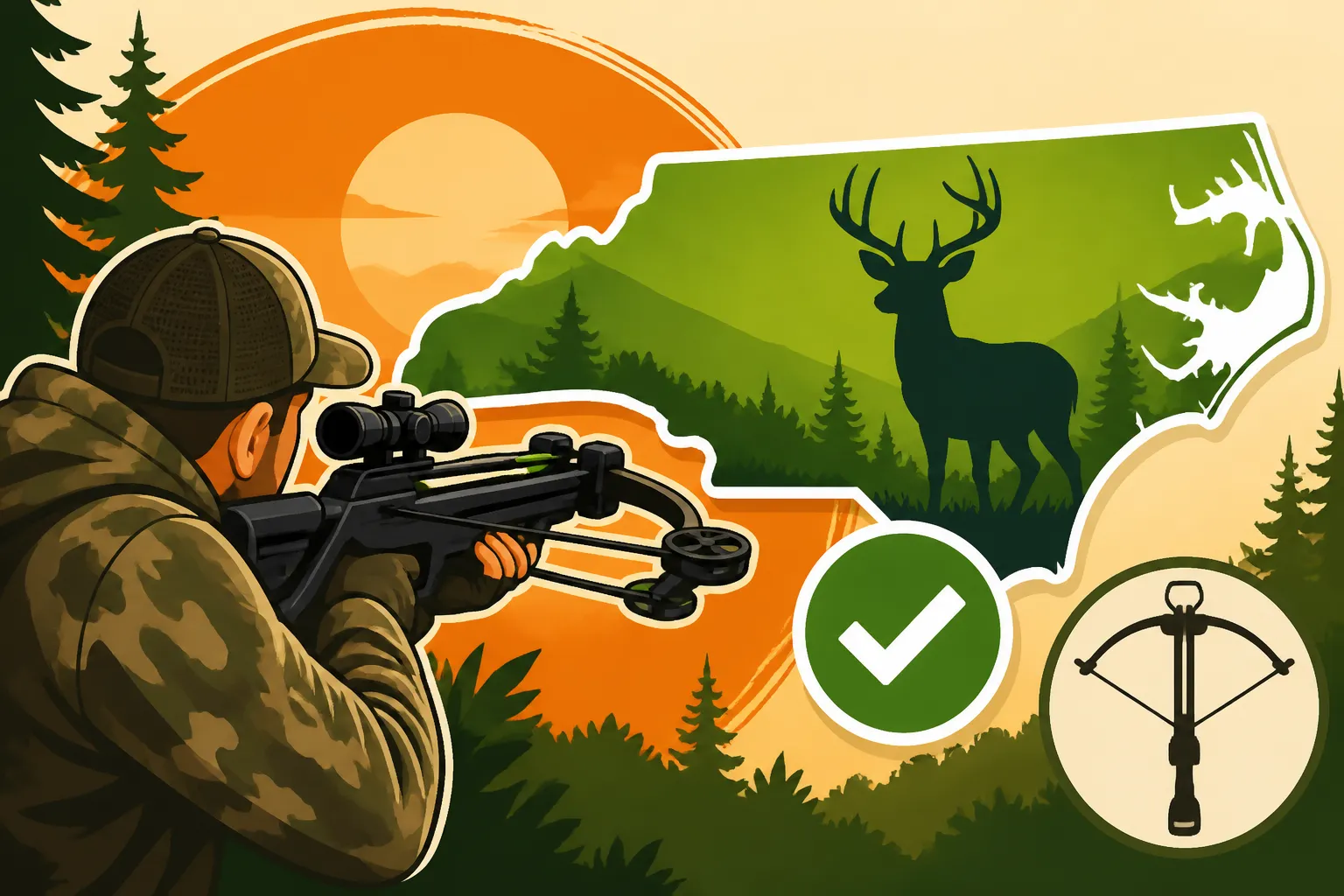
Under the current rules, the NCWRC firmly places crossbows within the category of valid archery equipment for deer hunting. This means that if you're out there during North Carolina's Archery Season Opening Day, your crossbow is treated with the same legal standing as a compound bow, recurve bow, or longbow. You're not using a "special" weapon; you're simply choosing a different type of bow.
This shift acknowledges that the fundamental principles of archery hunting—close range, stealth, precision, and ethical shot placement—remain the same, regardless of whether you're drawing a string or cocking a limb. For many hunters, especially those who might find it challenging to hold a compound bow at full draw for an extended period, a crossbow offers a stable, accurate platform that allows them to remain engaged in the sport. It brings a new level of confidence for some, knowing they can accurately place a shot when the moment arises. This inclusion has undoubtedly contributed to an increase in hunter numbers, which is vital for conservation funding and maintaining a robust hunting tradition in North Carolina.
Specific Regulations for Crossbow Hunting in North Carolina
While the good news is that crossbows are now broadly legal for archery season, it's still crucial to understand the specific rules that apply to their use. North Carolina's hunting regulations are comprehensive, and knowing the details ensures you're always hunting legally and ethically.
Equipment Requirements and Legal Specifications
Just like with any hunting weapon, there are certain specifications your crossbow and its projectiles must meet to be legal for deer hunting in North Carolina. These regulations are designed to ensure humane and ethical harvests.
Firstly, your crossbow must have a minimum draw weight. While the exact figure can sometimes be updated, the general rule is around 100 pounds for taking big game. This ensures sufficient power to effectively dispatch a deer. It's not about how fast your arrow travels, but about delivering enough kinetic energy to penetrate deeply and quickly.
Secondly, the arrows (often called bolts) you use must also meet certain criteria. They typically need to be at least 18 inches long and fitted with a broadhead. And this is a really important point: broadheads must be of the "barbed" or "fixed blade" type, or a "mechanical" broadhead that expands upon impact. The key is that they must have at least two cutting edges. Field points, target points, or small game points are explicitly illegal for hunting big game. This is for ethical reasons, ensuring that the projectile causes sufficient damage for a quick, humane kill. Always ensure your broadheads are razor-sharp. A dull broadhead, even on the most powerful crossbow, can lead to a wounded animal and a difficult tracking job. A GoHunt subscription can often provide state-specific regulation summaries that are easy to digest, which can be a real lifesaver when trying to keep up with these details.
Season Dates and Management Zones
One of the beautiful simplifications of the current regulations is that if you're hunting with a crossbow, you follow the exact same season dates as any other archery hunter. There's no separate "crossbow season"; it's all part of the overarching North Carolina Archery Season. This means if the archery season opens on September 9th in your zone, that's when you can start hunting with your crossbow.
North Carolina, as many of us know, is divided into various deer management zones—Eastern, Central, and Western. Each of these zones has slightly different season dates, not just for archery but for muzzleloader and gun seasons too. It’s absolutely critical that you know which zone you are hunting in and consult the current North Carolina Deer Season Structure Explained booklet or the NCWRC website for the precise dates. For example, the Western Zone often has a later start date for deer season compared to the Eastern or Central zones, due to differences in deer populations and rut timing. Additionally, if you're hunting within one of the state's Chronic Wasting Disease (CWD) Management Areas, there might be special early seasons or other unique regulations to be aware of, so always double-check.
| Equipment Type | Minimum Draw Weight | Projectile Type | Broadhead Requirements | Legal During Archery Season |
|---|---|---|---|---|
| Compound Bow | Not specified | Arrow | At least 2 cutting edges | Yes |
| Recurve Bow | Not specified | Arrow | At least 2 cutting edges | Yes |
| Longbow | Not specified | Arrow | At least 2 cutting edges | Yes |
| Crossbow | 100 lbs | Bolt (Arrow) | At least 2 cutting edges | Yes |
Blaze Orange Requirements and Other Safety Considerations
This is an area where confusion often creeps in. Many hunters assume that because they are "archery hunting," blaze orange isn't required. And for a pure, stand-alone archery season, that's often true. However, North Carolina's regulations are nuanced, especially when other hunting seasons might overlap.
If you are hunting during an archery-only period where no other firearm seasons (like muzzleloader or gun) for deer or bear are open in that specific area, then typically, you are not required to wear blaze orange. However, if any firearm season for deer or bear is open in the area you are hunting, even if you are still hunting with your crossbow during the archery portion of the overlapping season, then North Carolina's Blaze Orange Requirements kick in. This usually means wearing at least 500 square inches of solid fluorescent orange above the waist, visible from all sides. This is a critical safety rule designed to prevent accidental shootings, especially on heavily pressured public lands where multiple hunting methods might be legal concurrently. Always assume blaze orange is required if there's any doubt or if gun hunters are in the woods.
Beyond blaze orange, general hunting safety remains paramount. Always treat your crossbow as if it's loaded, keep the safety on until you're ready to shoot, and be absolutely certain of your target and what lies beyond it. Tree stand safety is also non-negotiable; always wear a full-body harness, even when using fixed-position stands or climbing sticks. Accidents happen quickly, and a fall from even a moderate height can be devastating.
Practical Considerations for Crossbow Hunters in North Carolina
Having the right equipment and understanding the rules is just the beginning. To be a consistently successful and ethical crossbow hunter in North Carolina, you need to apply sound hunting strategies that are tailored to the unique aspects of crossbow hunting and our diverse terrain.
Scouting and Shot Placement
Crossbow hunting, at its core, is an archery pursuit. This means that unlike rifle hunting, you are generally limited to much shorter, more precise shot distances. While a crossbow can be accurate out to 50-60 yards for a skilled shooter on a target, most ethical hunting shots on deer are taken within 20-30 yards. This reality makes scouting absolutely non-negotiable.
You need to know your hunting area intimately. Spend time before the season using tools like the NC Wildlife App or a mapping service like GoHunt. These platforms allow you to study aerial photos, identify potential bedding areas, travel corridors, food sources, and water. Look for pinch points, saddles, creek crossings, and field edges where deer are likely to pass within your effective range. Understanding prevailing wind patterns and thermals, especially in the rolling terrain of the Piedmont or the steep slopes of the mountains, is also vital. A good scouting app will help you mark these potential stand locations.
Once you’ve identified a promising spot, consider your shot angles. Can you get a clear, unobstructed shot at a deer from various directions? Are there small branches or leaves that could deflect your arrow? Remember, a crossbow bolt, while faster than some vertical bows, is still relatively slow compared to a rifle bullet, making even small obstructions a significant problem. Ethical shot placement means aiming for the vitals (heart/lungs) to ensure a quick, clean kill. Practice regularly from different positions and distances to know your personal maximum effective range.
Treestand and Ground Blind Strategies
Just like with vertical bows, treestands and ground blinds are the bread and butter for most North Carolina crossbow hunters. Each offers distinct advantages depending on your hunting style and the terrain.
Treestands, whether they are fixed-position stands, climbing stands, or even the increasingly popular saddle setups, allow you to get above a deer’s primary line of sight and often help with scent dispersal. When setting up, think about what a deer will do when it approaches your stand. Where will it be walking? What are your shooting lanes? With a crossbow, you often need more room to maneuver to make a shot than with a vertical bow, especially if you're not using a compact model. Ensure your shooting lanes are clear and wide enough to accommodate the width of your crossbow and your full draw. For specific advice on elevating your setup, you might find valuable insights in articles like Treestand Setups in Pisgah National Forest or Hanging a Stand on a Pisgah Ridge, even if you're not hunting those exact locations, the principles of stand placement remain the same.
Ground blinds offer excellent concealment and can be a fantastic option, especially in open field edges, dense thickets, or areas where suitable trees for a stand are scarce. They're also a great choice for new hunters or those with mobility issues. When deploying a ground blind, ensure it's well-brushed in and set up far enough in advance that deer become accustomed to its presence. Pay close attention to shooting windows – ensure they are clear of obstructions and provide you with comfortable shooting angles. A well-placed ground blind can be incredibly effective, allowing you to patiently wait for that close-range shot. Learn more about effective concealment in a piece like Using a Ground Blind on North Carolina Public Land. Remember to always check Game Land rules for specific requirements regarding temporary structures like blinds.
Reporting and Post-Harvest Protocols
Harvesting a deer is a big part of the hunting experience, but your responsibilities don't end there. North Carolina has mandatory deer reporting requirements that apply to all hunters, regardless of the weapon used.
Once you’ve successfully harvested a deer with your crossbow, the first step is to tag it immediately with your Big Game Kill Tag, attaching it securely to the carcass. Then, you must report the harvest. This can be done online through the NCWRC website, via their mobile app, or by calling a toll-free number. The process is straightforward and typically requires details like the county of harvest, species, sex, and date. Reporting a Deer Through North Carolina's App is a quick and efficient way to fulfill this requirement, often directly from the field. This data is incredibly important for wildlife biologists to monitor deer populations, track harvest trends, and make informed management decisions.
Beyond reporting, proper field dressing and meat care are crucial. Especially during the early archery season in North Carolina, temperatures can still be quite warm, and rapid cooling of the carcass is essential to preserve the quality of the venison. Get the deer field dressed as quickly as possible, and if you have a long drag out of the woods, consider bringing a deer sled or cart to make the job easier and help keep the meat clean. Getting the deer into a cooler with ice or to a processor as soon as possible will make all the difference in the final table fare.
Disclaimer
The information provided in this guide is for educational purposes only and is based on general knowledge of North Carolina hunting regulations. Hunting laws and regulations are subject to change. It is the hunter's responsibility to consult the most current North Carolina Inland Fishing, Hunting & Trapping Regulations Digest or the North Carolina Wildlife Resources Commission website for precise and up-to-date information before engaging in any hunting activities.