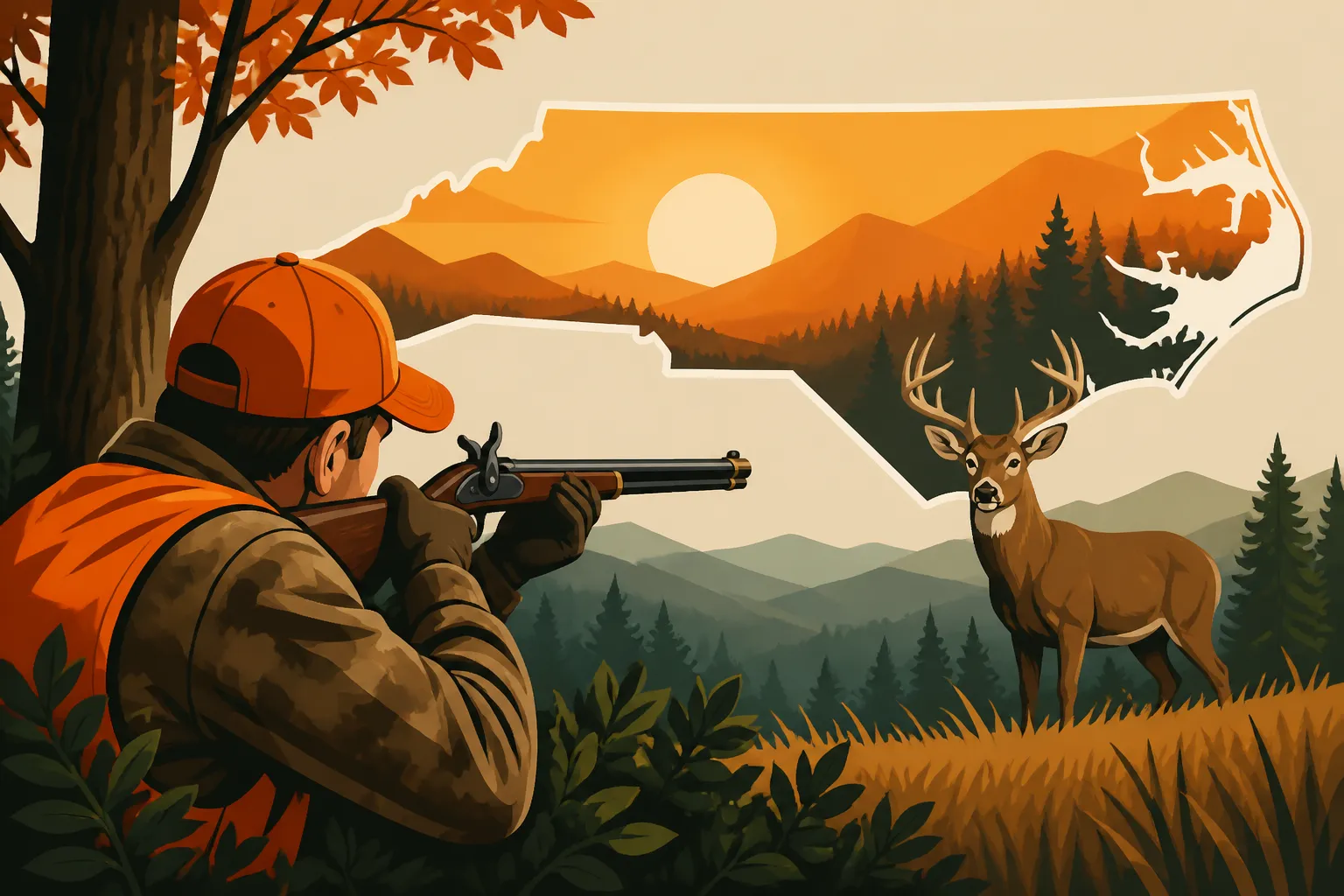
Muzzleloader Deer Hunting in North Carolina
The crisp North Carolina air, the smell of gunpowder from a black powder rifle, and the unique challenge of a single-shot opportunity against a wary whitetail—muzzleloader season offers a special kind of thrill that modern firearms just can't replicate. It’s a chance to slow down, embrace tradition, and test your skills in a season often marked by colder weather and more predictable deer patterns. This comprehensive guide will walk you through everything you need to know to make your North Carolina muzzleloader deer hunt a success, from understanding regulations to advanced field tactics.
Understanding North Carolina's Muzzleloader Deer Season
Muzzleloader season in North Carolina is a distinct period that provides hunters with an earlier opportunity than the general gun season in some zones, or a dedicated time before or between modern gun seasons in others. It's designed to be a bridge, offering a unique challenge and extending hunting opportunities. However, navigating the specific dates and understanding what legally constitutes a "muzzleloader" can sometimes feel like trying to decipher an ancient scroll.
Key Season Dates and Zones
North Carolina divides its deer hunting into four distinct zones: Eastern, Central, Western, and Northwestern. The muzzleloader season dates vary significantly between these zones, which can be a real headache if you hunt multiple counties or travel across the state. Generally, the season offers a roughly week-long window. For instance, in the Eastern and Central zones, muzzleloader season often precedes the opening of the general gun season, giving hunters a quieter, less pressured experience. This early slot can be fantastic for catching deer in their late-summer patterns before they get heavily pressured. Conversely, the Western and Northwestern zones often see their muzzleloader season fall after the initial gun season opener, sometimes even overlapping with or immediately following the peak rut, offering a completely different set of tactical considerations. It’s crucial to know your specific county and its corresponding zone to avoid any costly misunderstandings. Always double-check the current year's North Carolina Deer Season Structure Explained on the NC Wildlife Resources Commission website, or use a mapping tool like GoHunt to plot your hunting area and immediately see the regulations for that specific parcel.
Understanding when and where you can hunt is the absolute first step. Imagine planning a hunt in the Piedmont, assuming it follows the Eastern Zone dates, only to find out you're a week early or late for the muzzleloader window in the Central Zone. That's a frustration many hunters have experienced. These season dates are not arbitrary; they're set to manage deer populations effectively across varied habitats and breeding cycles. For example, the earlier muzzleloader season in the Eastern Zone capitalizes on more predictable deer movement before extensive crop harvests and general gun pressure scatter the herds. In contrast, the later Western Zone muzzleloader dates coincide with colder weather, pushing deer to specific food sources and increasing their daytime activity in search of calories.
Legal Muzzleloader Definitions and Equipment
What exactly counts as a legal muzzleloader in North Carolina? This isn't just about loading from the front; there are specific rules about ignition types and even optics. According to the North Carolina Wildlife Resources Commission (NCWRC), a legal muzzleloader is a firearm that loads from the muzzle and can be either a traditional flintlock or caplock design, or a more modern in-line design. The critical distinction often lies in the ignition. Percussion caps and flintlock systems are generally allowed. When it comes to modern in-line muzzleloaders, 209 primers are typically permissible. However, North Carolina has specific rules about "Muzzleloaders Under North Carolina Rules" concerning things like scopes. While most states allow any optic, NC specifies that during the dedicated muzzleloader season, only open sights (iron sights) or scopes magnifying up to 1x (non-magnifying) are permitted on muzzleloading rifles. This means no 3-9×40 variable power scopes during the muzzleloader-only period! This rule is a major point of confusion and frustration for hunters accustomed to using magnified optics on their modern in-lines.
The intent behind this regulation is often to maintain a more traditional hunting experience and to limit the effective range of muzzleloaders during a special season, differentiating it from general gun season. This means practicing with the sights you’ll actually use is paramount. You might have a tack-driving in-line, but if you've only shot it with a magnified scope, switching to iron sights for the season will significantly change your effective range and accuracy. Shotgun-style muzzleloaders (smoothbores) that load shot are generally not permitted for deer, focusing instead on single-projectile rifles. Always verify the latest regulations on the NCWRC website to ensure your specific setup is compliant before heading to the woods.
Licensing and Reporting Requirements
Before you even step foot in the woods with your muzzleloader, you need the proper paperwork. Hunting deer in North Carolina requires a valid North Carolina Hunting Licenses and What They Cost, which includes a Base Hunting License and a Big Game Privilege License. If you plan to hunt on public lands, you'll also need a Game Lands License. It’s not just about having the licenses; it’s also about understanding their validity periods and any specific endorsements required for big game. Many resident hunters opt for combination licenses or lifetime licenses to simplify the process. Nonresidents will find their licensing options and costs are different, often requiring specific nonresident big game privileges.
Once you harvest a deer with your muzzleloader, the responsibility doesn’t end there. North Carolina Deer Reporting Requirements are strict: all harvested deer must be reported to the NCWRC by midnight on the day of harvest. This can be done online through the NCWRC website, via their mobile app, or by phone. Failing to report a deer is a violation, so make sure you're familiar with the process. You'll need information like the date of kill, county, sex of the deer, weapon used (muzzleloader in this case), and the type of land (private or public). This data is crucial for wildlife biologists to monitor deer populations, track harvest trends, and make informed management decisions, which ultimately benefits all hunters by ensuring sustainable deer herds for future generations. Don't let the excitement of the hunt make you forget this critical final step!
Choosing the Right Muzzleloader for North Carolina's Diverse Terrain
North Carolina is a state of incredible diversity, from the rugged peaks of the Blue Ridge Mountains to the vast, flat coastal plains and swamps. This varied landscape means that what works perfectly for one hunter might be less ideal for another, especially when it comes to the specialized world of muzzleloaders. Selecting the right firearm involves weighing tradition against modern convenience, and considering the distances you're likely to shoot in your hunting grounds.
In-line vs. Traditional Muzzleloaders
The debate between in-line and traditional muzzleloaders is a classic one, and North Carolina hunters have strong opinions on both. Traditional muzzleloaders, like flintlocks and caplocks, embody the historical spirit of black powder hunting. They require more finesse, typically use loose black powder, round balls or patched conicals, and have slower lock times, demanding a higher degree of skill and patience. If you're someone who cherishes the historical aspect and loves the challenge, a traditional Hawken-style rifle or a classic Kentucky flintlock might be your choice. They offer a certain romanticism, a deeper connection to the hunting heritage. However, their practical range is often limited to under 100 yards, and they can be more susceptible to moisture, which is a significant factor in North Carolina's often humid and rainy weather, especially during "Muzzleloaders for a North Carolina December."
In-line muzzleloaders, on the other hand, offer a more modern approach. They feature an enclosed breach and use 209 primers for ignition, which are hotter and more reliable, leading to faster lock times and increased accuracy. Many in-lines are designed to shoot saboted bullets, which can greatly extend their effective range, often out to 150-200 yards or more, depending on the shooter and bullet choice. This extended range, combined with modern rifle-like stocks and sometimes adjustable triggers, makes them a favorite for hunters who prioritize performance and reliability. The ease of cleaning and maintenance for an in-line is also often simpler, as many have removable breeches. The choice often comes down to personal preference: do you seek the ultimate challenge and tradition, or maximum performance within the muzzleloader framework?
| Feature | Traditional Muzzleloader (Flintlock/Caplock) | In-line Muzzleloader |
|---|---|---|
| Ignition System | External hammer, exposed cap or flint/frizzen | Enclosed breach, 209 primer |
| Loading | Loose powder, patched round ball/conical | Loose/pelletized powder, saboted bullet |
| Reliability | More susceptible to moisture, slower lock time | Highly reliable, faster lock time |
| Effective Range | Typically under 100 yards | Often 150-200+ yards |
| Optics (NC Rules) | Open sights (iron) only | Open sights (iron) or 1x non-magnifying scopes only during muzzleloader season |
| Maintenance | Can be more involved to clean and maintain | Often simpler with removable breech |
| Experience | Emphasis on tradition, skill, and challenge | Emphasis on performance, reliability, and convenience |
Caliber Considerations for Whitetails
When it comes to muzzleloader calibers for North Carolina whitetails, there are two dominant choices: .50 caliber and .45 caliber. While other calibers exist, these two are by far the most popular and effective. The .50 caliber has long been considered the standard for deer hunting. It throws a heavier projectile, whether it's a .490 round ball or a hefty sabot-encased bullet, delivering substantial kinetic energy and creating a good wound channel. For closer shots in dense timber or across a small clearing, the sheer stopping power of a .50 caliber is hard to beat. It’s forgiving if your shot placement is slightly off, providing a larger diameter hole. Many hunters feel more confident with the bigger impact of a .50 caliber, especially when "Tracking a Deer Through North Carolina Leaf Litter" in thick cover.
The .45 caliber, while smaller in diameter, can also be highly effective, especially when paired with modern saboted bullets. Many .45 caliber in-lines are incredibly accurate, and with the right projectile, they can achieve impressive velocities and flat trajectories, making them suitable for longer shots across fields or clear-cuts, where allowed by NC's optics rules. A common setup involves a .45 caliber pushing a .40 or .429 diameter bullet in a sabot. The debate often comes down to personal preference and typical shot distances. For most North Carolina hunting scenarios, a .50 caliber offers a great balance of power and versatility. However, an accurate .45 caliber is certainly capable of taking down any whitetail you'll encounter in the state. No matter the caliber, the key is proper bullet construction and precise shot placement.
Essential Accessories and Ammunition
Your muzzleloader is only as good as the accessories and ammunition you pair with it. For powder, you have options beyond traditional black powder. Black powder substitutes like Pyrodex, Triple Seven, and Blackhorn 209 are popular because they are less corrosive and often easier to clean. They also offer consistent performance. Pay attention to the recommended load data for your specific muzzleloader and chosen projectile. Speaking of projectiles, you'll need saboted bullets for most in-line muzzleloaders, which allow a smaller bullet to be fired through a larger bore for increased accuracy and velocity. Brands like Hornady, Barnes, and Federal offer excellent muzzleloader bullets designed for deer. For traditionalists, a good supply of patched round balls or conical bullets is essential.
Beyond the projectile, a quality ramrod is non-negotiable. Many factory ramrods are flimsy; upgrading to a solid, one-piece carbon fiber or aluminum ramrod with a T-handle will make loading much easier and safer. You'll also need a bullet starter, a capper/de-capper for percussion caps, and a supply of 209 primers if you're shooting an in-line. A small pouch or loading block to keep your powder, primer, and bullet organized and readily accessible for a quick reload (should a follow-up shot ever be needed, though rare) is highly recommended. Don't forget a cleaning kit specifically for muzzleloaders, including a bore solvent designed for black powder, a bore brush, patches, and a jag. Keeping your powder dry, especially if hunting near the coast or in the mountains where humidity is high, is crucial. Invest in waterproof containers for your powder and primers. A good mapping tool, like the features found on GoHunt, can also be an indispensable accessory for scouting and navigating unfamiliar public lands during your muzzleloader hunt.
Preparing Your Muzzleloader for the Field
Taking your muzzleloader into the field isn't just about loading it and pulling the trigger. It's a system, and every component needs to be prepared and understood to ensure a safe, accurate, and successful hunt. Neglecting the basics here can lead to frustrating misfires, inaccurate shots, or even safety hazards.
Sighting In and Practice Drills
Sighting in your muzzleloader is arguably the most critical step before hunting season. Unlike a modern rifle where you might be comfortable with a 200-yard zero, muzzleloaders, especially with open sights, demand a more conservative approach. For most North Carolina hunting scenarios, a 50 to 75-yard zero is practical and effective. If you’re hunting the mountains or open fields, and are confident in your shooting, a 100-yard zero might be considered, but remember the NC optics restrictions if hunting during the dedicated muzzleloader season. Begin your sighting-in process at 25 yards to get on paper, then move to your desired zero distance. Shoot multiple three-shot groups to confirm your zero and understand your rifle's capabilities. Remember, the NCWRC regulations for muzzleloader season dictate that only non-magnifying (1x) scopes or open sights are permitted during the dedicated muzzleloader season. This makes practicing with these specific sights even more important.
Beyond just zeroing, practice shooting from various field positions: offhand, kneeling, sitting, and braced against a tree or shooting sticks. These are the real-world scenarios you’ll encounter. A common mistake is only practicing from a bench rest. Can you quickly load a second shot if necessary (though not often needed for deer)? Can you manage the recoil and smoke effectively? The smoke from black powder can momentarily obscure your view, so practice holding your position after the shot to observe the deer's reaction and direction of travel. Knowing your maximum ethical range with your muzzleloader and your chosen sighting system is paramount. Don’t push shots beyond what you’ve confidently practiced.
Keeping Your Powder Dry in North Carolina Weather
North Carolina's weather can be notoriously unpredictable, especially during the fall and early winter muzzleloader seasons. One day it's crisp and clear, the next it's a damp, foggy coastal morning or a cold, drizzling mountain afternoon. Nothing is more frustrating than pulling the trigger on a deer and hearing a click instead of a bang because of wet powder or a damp primer. "Keeping Powder Dry in Wet Snow" or persistent humidity is a constant battle for muzzleloader hunters. For traditional percussion cap rifles, ensure your caps are seated firmly and consider using a small piece of electrical tape or a "capper protector" over the cap to seal it from moisture. Flintlocks require a dry pan of powder. Carry a small, waterproof container of dry priming powder and re-prime frequently in damp conditions.
For in-line muzzleloaders, 209 primers are much more resistant to moisture, but they are not impervious. Ensure the primer pocket is clean and dry before seating the primer. Use pelletized powder or pre-measured charges in waterproof speedloaders to minimize exposure to humidity. If using loose powder, keep it in a sealed flask or container. A good tip for any muzzleloader is to carry a few pre-loaded charges (powder and bullet) in a waterproof speedloader or film canister, ready for quick deployment. When hunting in wet conditions, wiping down the exterior of your rifle, especially around the breech and muzzle, and storing it in a dry, breathable case (not a sealed plastic one that can trap moisture) is essential after each hunt. Before heading out each morning, even if it looks clear, assume moisture could be an issue and take preventative measures.
Cleaning and Maintenance for Reliability
Muzzleloaders, especially those using black powder or its substitutes, require meticulous cleaning. Unlike modern smokeless powder, black powder leaves behind corrosive fouling that can quickly damage your barrel and components if not addressed promptly. Ideally, your muzzleloader should be cleaned on the same day it's fired, or at the very least, within 24 hours. A thorough cleaning involves disassembling the breech plug (on in-lines) or removing the nipple (on percussion caps), and scrubbing the bore with a black powder solvent. Hot soapy water (like Windex or a specialized black powder cleaner) followed by patches and brushes is an old but effective method. Make sure to clean until patches come out completely white.
After cleaning, dry all components thoroughly and apply a light coat of rust preventative oil or bore butter to the barrel and metal parts. This is especially important in North Carolina’s humid climate. Pay particular attention to the breech plug or nipple, ensuring the flash hole is clear of any residue. A clogged flash hole can lead to misfires. Regular maintenance isn't just about preventing rust; it's about ensuring consistent performance. A well-maintained muzzleloader will be more reliable, more accurate, and ultimately safer. Developing a routine for post-shoot cleaning will extend the life of your firearm and prevent the heartbreak of a misfire during a critical moment in the field.
Effective Muzzleloader Hunting Tactics by Region
North Carolina's varied landscapes mean that a one-size-fits-all approach to muzzleloader hunting simply won't cut it. What works on a flat coastal plain will likely be ineffective in the steep mountains. Adapting your tactics to the specific terrain and deer behavior in each region is key to success.
Mountain Zone Strategies
Hunting deer with a muzzleloader in North Carolina's mountain zones, like the Pisgah or Nantahala National Forests, is a physically demanding but incredibly rewarding experience. The steep topography, thick rhododendron thickets, and vast hardwood forests present unique challenges. Deer here often travel and bed on benches, saddles, and along the numerous ridge lines to conserve energy and take advantage of thermals. "Reading a Ridge for Mountain Zone Deer" is a critical skill. During muzzleloader season, which often falls later in the year here, deer are primarily focused on remaining food sources, such as lingering acorns, browse, or, if available, agricultural fields in valleys.
Your tactics should revolve around covering ground quietly and efficiently, often using a still-hunting approach. Focus on south-facing slopes in the mornings for deer seeking sunlight and warmth, and north-facing slopes in the afternoons where deer might be feeding on mast. Using thermals to your advantage is crucial: ascending thermals in the morning, descending thermals in the evening. Look for transition areas, such as where a hardwood ridge meets a dense conifer thicket, or saddles that funnel deer traffic between drainages. A reliable mapping app on your phone or a GPS unit is indispensable for navigating these vast areas, and a tool like GoHunt can provide valuable public land boundary information and topo maps to identify key terrain features. Because shots are often closer in the timber, your open-sighted muzzleloader is right at home, but practice quick, steady shots in varying light conditions.
Piedmont Farmland Approaches
The rolling hills and mixed agricultural landscapes of North Carolina's Piedmont region offer a different challenge. Here, deer heavily utilize crop fields, woodlots, and creek bottoms. Muzzleloader season in the Piedmont might coincide with the rut or the post-rut, depending on the specific zone, making deer movement more dynamic. The key here is identifying natural funnels and pinch points between bedding areas (often dense woodlots or creek drainages) and feeding areas (corn, soybean, or winter wheat fields). "Setting Up on a Piedmont Field Edge" at dawn or dusk is a classic and effective strategy. Deer will travel these edges, often using the cover of a treeline or a fencerow before entering or leaving a field.
Consider entry and exit routes carefully to avoid spooking deer. Setting up a ground blind brushed into a field edge can be very effective, especially if you anticipate longer shots across a field. If hunting during the rut, rattling and grunting can be surprisingly effective with a muzzleloader, as deer are more mobile and curious. Pay attention to late-season food sources like standing corn, winter wheat, or brassicas if planted by landowners. Scouting the edges of these fields for fresh tracks and trails is paramount. The deer in the Piedmont are often accustomed to human activity, so stealth and scent control are crucial. Your single-shot muzzleloader forces you to make that first shot count, so practice patience and wait for the perfect broadside opportunity.
Coastal Plain and Pocosin Tactics
Hunting the Coastal Plain and its unique pocosin swamps with a muzzleloader presents a truly distinct set of conditions. This region is characterized by dense, often impenetrable thickets, vast pocosins, and large tracts of pine timberland. Deer here are often smaller-bodied but incredibly elusive, masters of navigating their thick environment. Muzzleloader season in this zone is typically earlier, often before the general gun season, offering a less pressured hunt. "Hunting Coastal Plain Pocosin Swamps" requires a different mindset. Still-hunting through the edges of these swamps, or finding higher ground and natural ridges within them, can be productive. Look for signs of deer movement along the edges where swamps meet agricultural fields or pine plantations.
Stand hunting over natural funnels or pinch points that force deer to travel specific routes through the thick cover is a highly effective tactic. Identifying trails leading into or out of bedding areas within the pocosin, or trails that crisscross between blocks of pines, is key. Because visibility is often limited to short distances, the effective range of a muzzleloader with open sights is perfectly suited for this environment. Scent control is vital, as the air in these areas can be still and humid, allowing scent to hang. Rubber boots are a must-have for navigating the often wet and muddy terrain. Consider how you will "Recovering a Deer From a Coastal Swamp" before you even take a shot, as dragging a deer out of these areas can be a monumental task. The Coastal Plain demands patience, perseverance, and a willingness to embrace the wild, rugged nature of its hunting grounds.
Scouting and Locating Deer During Muzzleloader Season
Success during muzzleloader season, like any hunting season, often boils down to effective scouting. You need to know where the deer are, what they’re eating, and how they’re moving. The distinct timing of muzzleloader season, whether early or late, means you’ll be looking for different types of sign and patterns compared to other seasons.
Identifying Late-Season Food Sources
If your muzzleloader season falls in the late fall or early winter (as it often does in the Western Zone), identifying reliable late-season food sources is paramount. The lush green browse of early fall is gone, and many natural mast crops like acorns may be depleted. Deer become highly concentrated around remaining calorie-rich foods. Think about what's still available: standing corn or soybean fields (if not yet harvested), winter wheat, clover plots, or brassicas if planted by landowners. Even if fields are harvested, deer will often glean leftover grains. For natural food sources, look for areas with lingering mast, like white oaks that drop later, or browse that remains palatable into winter. "Late-Season Food Sources for North Carolina Whitetails" are often found in secluded pockets, away from heavy human disturbance.
In the mountains, deer might be hitting honeysuckle patches, greenbriar, or even certain conifer browses as other options disappear. In the coastal plain, persistent green vegetation in bottomlands or swamp edges can be key. Deer will travel significant distances to access these critical food sources, especially when temperatures drop. Scouting these areas involves not just looking for the food itself, but for fresh deer sign around it: tracks, droppings, and browsed vegetation. Focus your efforts on the thick cover leading to and from these food sources, as deer will spend the daylight hours bedded close by before moving out to feed under the cover of darkness.
Reading Sign and Understanding Deer Movement
Beyond food, understanding deer movement patterns is crucial. Muzzleloader season often means colder temperatures, which can make deer more active during daylight hours as they seek calories and sunlight. Look for fresh rubs and scrapes, though scrape activity might be waning if the rut is over. Trails leading from bedding areas to feeding areas will be heavily used. Pay attention to the size and freshness of tracks. Fresh tracks, especially those with sharp edges and no leaf litter inside, indicate very recent activity.
Consider prevailing winds and thermals. Deer will almost always travel with the wind in their favor, or use thermals to detect danger. In the mountains, thermals rise in the morning and fall in the evening. In flatter areas, wind direction is more consistent. Use a mapping tool, like GoHunt, to identify potential bedding areas (dense cover, south-facing slopes for warmth), and then scout for trails leading to known food sources. Note natural funnels—places where topography or dense vegetation forces deer into predictable travel corridors. These are prime locations for a muzzleloader stand. Look for broken branches, fresh droppings, and distinct travel lanes. Knowing when deer are using these areas (dawn, dusk, midday) can be further refined by trail camera use if allowed on your hunting property.
Using Technology for Pre-Season Prep
Modern technology has revolutionized scouting, even for traditional muzzleloader hunting. Satellite imagery and topographic maps available through apps like GoHunt or other reputable mapping platforms are invaluable for "Scouting North Carolina Public Land Before Season." You can identify potential bedding areas (dense canopy, thick cover), food sources (agriculture fields, oak flats), and travel corridors (ridges, creek bottoms, funnels) all from your couch. Use the public land layers to verify boundaries and access points. These tools allow you to virtually explore vast tracts of land, narrowing down promising areas before you ever set foot in the woods.
Beyond mapping, trail cameras are an excellent way to monitor deer activity without pressuring the animals. Set them up on active trails leading to food sources, or along rub lines. Pay attention to the time stamps on photos to understand when deer are most active in a particular area. This can help you refine your stand placement and hunting times. While cell service can be spotty in some remote parts of North Carolina, particularly in the mountains, many mapping apps allow you to download maps for offline use, ensuring you always have navigation even without a signal. Utilize all the tools at your disposal to gain an edge, allowing you to maximize your limited muzzleloader season opportunities.
Ethical Considerations and Shot Placement
Muzzleloader hunting, with its inherent limitations, places a greater emphasis on ethical shot placement and responsible hunting practices. The single-shot nature of these firearms means there's often no quick follow-up, making that first shot absolutely critical.
Understanding Muzzleloader Range Limitations
One of the most important ethical considerations for muzzleloader hunting is a deep understanding of your personal and your firearm's range limitations. While modern in-lines can be accurate out to 200 yards or more from a bench, hunting conditions are rarely ideal. Factors like adrenaline, wind, temperature, and shooting from an unsteady position significantly reduce effective range. For most hunters using open sights, an ethical shot with a muzzleloader is typically limited to 75-100 yards, sometimes even less in dense cover. With a 1x non-magnifying scope (the only type allowed in North Carolina during the dedicated season), you might extend that slightly, but still, refrain from attempting shots beyond your proven capability.
Before the season, identify what your maximum ethical range is under various field conditions. Practice shooting from kneeling, sitting, and offhand positions to truly understand your limitations. If you can’t consistently hit a 6-inch target (representing a deer’s vital zone) at a given distance, do not attempt that shot in the field. Pushing beyond your limits significantly increases the risk of wounding a deer rather than achieving a clean, humane kill. This respect for the animal and commitment to a clean harvest is a cornerstone of ethical hunting.
Tracking and Recovery Challenges
Due to the slower velocities and different bullet types associated with muzzleloaders, deer shot with black powder might react differently than those hit with a high-velocity modern rifle. While a well-placed shot with a heavy .50 caliber sabot can be devastating, the wound channel might not be as expansive or produce as much immediate blood as a high-powered rifle bullet. This means "Blood Trailing After Dark in North Carolina" or even during daylight, can present unique challenges. Deer may run further, and blood trails might be less obvious.
After the shot, resist the urge to immediately pursue the deer. Give it at least 30 minutes for a suspected lung shot, and an hour or more for a questionable hit or if you suspect a liver or gut shot. This allows the deer to bed down and stiffen, making recovery more likely. Carefully mark the spot where the deer was standing at the shot, and the last place you saw it. Begin your tracking slowly and methodically, looking for blood, disturbed leaves, broken twigs, and tracks. In North Carolina's varied terrain, from the dense undergrowth of the mountains to the thick pocosin swamps, a good blood trail can quickly disappear. Having a strong headlamp if darkness falls, and perhaps even a tracking dog (where legal and necessary), can be invaluable for ensuring a successful recovery.
Field Dressing and Meat Care
Once you've successfully recovered your muzzleloader harvest, proper field dressing and meat care are essential, particularly in North Carolina's often mild fall temperatures. Promptly field dressing the deer is critical to cooling the carcass and preventing bacterial spoilage. Remove all internal organs, paying special attention to cleanliness. Wear gloves and bring a sharp, dedicated "Field Dressing Knives Worth Carrying." In colder weather, this process might be more comfortable, but in warmer early muzzleloader seasons, speed is of the essence.
After field dressing, focus on cooling the meat. If temperatures are above 40°F, you'll need to work quickly. Get the deer to a cooler with ice as soon as possible, or hang it in a cool, shaded area with good airflow. Consider quartering the deer in the field, especially if you have a long drag out of a remote location. Game bags can protect the meat from flies and debris. "Butchering a Deer at Camp" immediately, or taking it to a reputable processor, ensures the best quality venison. Remember that the unique taste of venison from a muzzleloader hunt is a reward in itself for embracing the challenges of this traditional method.
Overcoming Common Muzzleloader Hunting Challenges
Muzzleloader hunting isn't without its quirks and challenges. Unlike the near-instant reliability of a modern cartridge rifle, black powder arms require a bit more attention and understanding. Being prepared for common issues can mean the difference between a successful hunt and a frustrating day in the woods.
Dealing with Misfires and Hangfires
One of the most nerve-wracking moments for a muzzleloader hunter is hearing a click instead of a boom. Misfires and hangfires (a delayed ignition) can happen, and knowing how to handle them safely is crucial. A misfire occurs when the primer or cap ignites, but the main powder charge does not. A hangfire is when there's a noticeable delay between the primer igniting and the main charge firing. The most common causes are wet powder, a fouled flash hole, or an improperly seated primer/cap.
If you experience a misfire, never immediately open the action or look down the barrel. Keep the muzzle pointed in a safe direction and wait at least 30 to 60 seconds. In the case of a hangfire, this waiting period prevents injury if the delayed ignition occurs. After the waiting period, if there’s no shot, re-cock the hammer and try firing again. If it still misfires, then you can safely remove the primer/cap, ensure the flash hole is clear, and try a fresh primer/cap. If that doesn't work, you'll need to carefully unload the rifle according to its specific instructions (often involving removing the breech plug and using a ramrod from the breech, or in some cases, a CO2 discharge tool). Preventive measures are the best defense: keep powder dry, use fresh primers, and ensure your flash hole/nipple is always clean and clear.
Managing Noise and Scent
Muzzleloaders, by their very nature, are loud. The explosion of black powder and the subsequent cloud of smoke are part of the experience, but they also create significant noise and scent signatures that can alert other deer in the area. While you can't reduce the muzzle blast much, you can manage the overall noise you make in the woods. Moving slowly and deliberately, especially when "Still-Hunting Nantahala Forest Ridges" or through dense brush, is essential. Avoid snapping twigs or rustling leaves unnecessarily. Your muzzleloader’s loud report means that if you're hunting in an area with multiple deer, a shot at one will likely send the others scattering. Be aware of this and try to anticipate potential follow-up opportunities if legal and ethical.
Scent control is as important with a muzzleloader as with any other firearm. Deer have an incredible sense of smell, and any unnatural human odor will send them fleeing. Use scent-eliminating sprays, wash your hunting clothes in scent-free detergent, and store them in airtight containers. Play the wind: always try to hunt with the wind in your face or crosswind to your anticipated deer movement. North Carolina’s often humid air can carry scent for long distances, so proper scent management isn't just a suggestion, it's a necessity. Being patient and letting the deer come to you, rather than trying to stalk aggressively, can also minimize your scent footprint.
Patience and Persistence in the Woods
Perhaps the greatest challenge, and reward, of muzzleloader hunting in North Carolina is the demand for patience and persistence. With a single-shot rifle, you truly have to make that first opportunity count. This means waiting for the perfect shot angle, ensuring the deer is fully broadside or quartering away, and waiting for it to clear any obstructions. There's no luxury of a quick follow-up shot if you rush. This deliberate pace forces you to slow down, observe more, and become more attuned to your surroundings.
Muzzleloader seasons are often shorter than general gun seasons, which can add a sense of urgency. But rushing leads to mistakes. Embrace the challenge; enjoy the crisp mornings, the quiet woods, and the anticipation. Public lands in North Carolina, even during muzzleloader season, can experience some hunting pressure. Persistence means returning to areas where you've seen sign, adapting your tactics based on what the deer are telling you, and not giving up after a few slow sits. The satisfaction of harvesting a North Carolina whitetail with a muzzleloader, knowing you overcame the technical challenges and relied on pure hunting skill, is an experience that truly connects you to the rich tradition of the hunt.
Disclaimer
Hunting is an inherently dangerous activity. This guide provides general information for muzzleloader deer hunting in North Carolina. Regulations, dates, and requirements are subject to change by the North Carolina Wildlife Resources Commission (NCWRC). Always consult the most current NCWRC regulations and statewide hunting proclamations before engaging in any hunting activity. Safety should always be your top priority. Ensure you have proper training, understand your equipment, and follow all applicable laws. The author and publisher are not responsible for any incidents or accidents resulting from the use of this information.