ATV Rules on North Carolina Forest Roads
It's incredibly frustrating when you're trying to plan a hunting trip, especially on public land, and you can't get a straight answer on something as simple as whether you can use your ATV to get around. North Carolina has some fantastic hunting opportunities, but the rules for using off-highway vehicles (OHVs), like ATVs, on forest roads can feel like a tangled web, leaving many hunters confused and worried about accidental violations. This guide is here to untangle that web, helping you understand the regulations governing ATV use on North Carolina's forest roads, so you can hunt legally and responsibly.
Navigating the Maze: Understanding ATV Rules on North Carolina Forest Roads
Let's be honest, the idea of using an ATV to access those remote hunting spots or to haul out a big buck sounds pretty appealing, doesn't it? It can save a ton of time and effort, especially in rugged terrain or vast tracts of public land. But here in North Carolina, the rules are far from simple, varying significantly depending on who owns and manages the land. What might be perfectly acceptable on one piece of ground could land you a hefty fine and a revoked license on another. This patchwork of regulations is one of the biggest headaches hunters face when planning their trips, and it’s why understanding the specific nuances is so crucial.
The Regulatory Landscape: Who Makes the Rules?
The first layer of confusion often comes from trying to figure out which government agency is actually in charge. In North Carolina, you're primarily dealing with a few key players: the U.S. Forest Service for our National Forests, the North Carolina Forest Service for State Forests, and the North Carolina Wildlife Resources Commission (NCWRC) for State Game Lands. Each of these entities has its own set of rules, and they don't always align perfectly. For instance, a gravel road that looks exactly the same in a National Forest might have completely different ATV access rules than a similar road on an adjacent Game Land. It’s enough to make your head spin, and it forces hunters to do their homework county by county, or even tract by tract. You can’t just assume if one part of the state allows it, another will.
The frustration is real when you’ve driven hours to a new hunting spot, only to find the access road you scouted on a map is suddenly off-limits to your quad. This is where the importance of knowing the managing authority comes into play. National Forests, being federal land, adhere to federal regulations often supplemented by local forest district rules. State Forests, as the name implies, are governed by state-level forestry rules. And the NCWRC manages its extensive system of Game Lands with regulations specifically tailored to wildlife management and public recreation. Before you even load your ATV, you need to identify which agency's rules apply to your chosen hunting area.
Designated Trails vs. Forest Roads: A Critical Distinction
This is perhaps the most common misconception. Many hunters see a dirt or gravel road winding through public land and automatically assume it's open to all vehicles, including ATVs. Unfortunately, that's rarely the case, especially for recreational ATV riding. In most public land settings, forest roads are specifically for street-legal vehicles to provide access to hiking, hunting, camping, or other permitted activities. They are not typically designated ATV trails.
A designated ATV trail is a specific, marked route, often part of an organized OHV park or system, that is explicitly designed and managed for ATV use. These trails will be clearly signed and appear on specific Motor Vehicle Use Maps (MVUMs) for National Forests, or on dedicated maps for state-managed OHV parks. A regular forest road, even an unpaved one, is generally considered off-limits for ATVs unless it is specifically marked as a multi-use trail that includes OHVs. The line can be blurry, which is why enforcement officers are always on the lookout. If you ride your ATV down an unmarked forest road and get caught, the excuse "I thought it was open" won't save you from a ticket. It's crucial to consult official maps and signage, and remember that Vehicle Rules on North Carolina Public Land are very particular about what can and cannot be driven where.
Why Restrictions Exist: Safety, Environment, and Management
It's easy to feel targeted by these restrictions, especially when you just want to access your hunting spot. But there are very good reasons why public land managers place limits on ATV use. First and foremost, safety is a huge concern. Mixing high-speed recreational ATVs with hikers, equestrians, and licensed vehicles on narrow, winding forest roads is a recipe for disaster. Additionally, these machines can cause significant environmental damage. ATVs contribute to soil erosion, especially on unpaved roads and in wet conditions, leading to sedimentation in streams and rivers, which harms aquatic life. They can also disturb wildlife, pushing game further into remote areas or altering their natural behavior, which is counterproductive to good wildlife management.
Beyond safety and environmental impact, there's the sheer management headache. Maintaining miles of forest roads is expensive and labor-intensive. When ATVs create ruts, widen trails, or damage sensitive habitats, it costs taxpayer dollars and agency resources to repair. These resources would otherwise be spent on habitat improvement, trail maintenance for non-motorized users, or other conservation efforts. The rules, while sometimes inconvenient, are designed to balance public access with resource protection and the diverse needs of all users. It's a tough balancing act, and unfortunately, a few irresponsible riders can spoil it for everyone, leading to stricter rules across the board.
National Forests: Where the Rubber Meets the Trail (or Doesn't)
North Carolina is blessed with vast National Forests like Pisgah, Nantahala, Croatan, and Uwharrie, which offer incredible hunting opportunities. However, these lands are managed under federal regulations, meaning the rules for ATV use on forest roads follow a specific framework, primarily dictated by Motor Vehicle Use Maps (MVUMs). It's a completely different ballgame than private land, and understanding it is paramount for any hunter hoping to use an ATV.
General Rules for OHV Use in National Forests
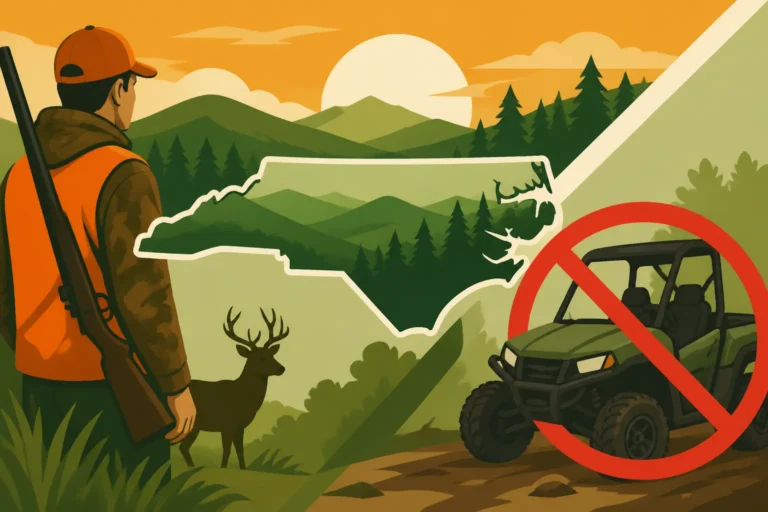
In a nutshell, within all National Forests, including Pisgah National Forest Hunting, Nantahala National Forest Hunting, and Croatan National Forest Hunting areas, motorized vehicle use is restricted to roads and trails explicitly designated for such use on an official Motor Vehicle Use Map (MVUM). These maps are your bible. If a road or trail is not shown on the MVUM as open for your specific vehicle type, then it is closed to that vehicle. This includes most forest roads you might encounter. They are typically open only to highway-legal vehicles – think your pickup truck, SUV, or a jeep with a license plate. Your ATV, by federal definition, is usually an Off-Highway Vehicle (OHV) and requires a specific designation.
This "if it's not on the map, it's closed" rule is ironclad. It means you can't just drive down what looks like a perfectly good two-track road if it's not marked for OHV use. The MVUMs are available at Forest Service offices and often online. It’s important to get the most current version, as designations can sometimes change. Keep in mind that even if a road is open to licensed vehicles, it might not be suitable for towing a camper or even parking overnight. You'll also want to be aware of other regulations, such as Camping Rules on North Carolina National Forest Land, which might affect where you can pull off and set up camp, regardless of your vehicle type.
Finding Legal ATV Opportunities on National Forest Land
So, does this mean you can never use an ATV in a National Forest? Not necessarily. There are designated OHV trail systems within some National Forests. The Uwharrie National Forest, for example, has the Badin Lake Recreation Area, which includes an extensive network of trails specifically for OHVs. However, these are recreational riding areas, and their primary purpose isn't usually direct hunter access into prime hunting grounds. Hunters typically use these areas for the thrill of the ride, not to haul their gear to a remote stand. Even if you are hunting in Uwharrie National Forest Hunting areas, the main forest roads are still typically restricted to street-legal vehicles.
For hunters, the real utility of ATVs in National Forests is often limited to using them on designated, short-distance access roads (if they exist and are marked for OHVs) or for specific game retrieval purposes where explicitly allowed. You'll need to meticulously check the MVUM for the specific ranger district you plan to hunt. Some roads might be open seasonally or for administrative use only. This is where modern mapping apps like onX Hunt can be incredibly valuable. They often include MVUM layers, allowing you to see at a glance which roads and trails are open to OHVs directly on your phone or GPS device. This can save you hours of driving and prevent you from unknowingly trespassing or violating regulations. Another option is a dedicated hunting app like GoHunt, which offers detailed public land maps that can help identify these designated areas. Always cross-reference with the official MVUM, but these tools give you a fantastic starting point for planning.
Penalties for Illegal ATV Use on Forest Roads
Getting caught using an ATV illegally on a National Forest road can lead to some serious consequences. Forest Service law enforcement officers are regularly patrolling these areas, and they don't take violations lightly. The penalties can range from significant fines, potentially hundreds of dollars, to impoundment of your ATV. In some cases, repeated violations could even lead to bans from public lands.
Beyond the immediate financial and logistical headaches, illegal ATV use can tarnish your reputation as a responsible hunter and contribute to negative perceptions of the hunting community as a whole. It fuels the argument that hunters are destructive or don't respect public lands. Avoiding these issues requires diligent research. Assume nothing, and always consult the official Motor Vehicle Use Maps for the specific National Forest and Ranger District you intend to visit. Ignorance of the rules is never a valid defense, and the forest service has clear protocols for addressing violations.
North Carolina Game Lands: State-Specific ATV Regulations
When you move from federal National Forests to North Carolina's State Game Lands, you're stepping into a different regulatory framework. These lands are managed by the North Carolina Wildlife Resources Commission (NCWRC), and while the goal is still conservation and public access, their approach to ATV use on forest roads often varies considerably from federal guidelines. It’s another layer of complexity that hunters need to navigate carefully.
North Carolina Wildlife Resources Commission (NCWRC) Regulations
The NCWRC manages an extensive system of North Carolina Game Lands across the state, from the mountains to the coast. Generally, the rules on Game Lands are quite strict regarding ATV use. Most Game Lands do not permit recreational ATV riding on forest roads or trails. Instead, these roads are typically designated for administrative use, foot traffic, or licensed vehicles to access specific parking areas. The primary purpose of these roads is usually to provide access for management activities or to get hunters close to their hunting areas, not to drive an ATV right up to a stand.
It's critical to understand that the NCWRC's focus is wildlife management, and uncontrolled ATV use can significantly disrupt habitat, create excessive noise, and lead to user conflicts. Therefore, blanket restrictions on ATVs are common. However, some specific Game Lands may have limited exceptions, often for very specific purposes like game retrieval during certain hours or on particular designated roads. These exceptions are rare and always come with strict conditions. You won't find a universal "Game Land ATV rule" – it's often specific to each individual Game Land, which requires even more localized research. This highlights why understanding How North Carolina Game Lands Are Managed is so vital for planning any hunting trip.
Permit Requirements and Designated Access Points
For the rare instances where ATV use is allowed on a North Carolina Game Land, you'll almost always encounter specific permit requirements or highly designated access points. This isn't a free-for-all. For example, some Game Lands might allow ATV use only during the period immediately following a deer harvest for game retrieval, and even then, it might be limited to certain marked roads and specific times of day. You might need a special permit from the NCWRC, or simply be required to adhere to strict signage.
It's common for hunters to drive their licensed vehicle to a parking area, then proceed on foot to their hunting spot. Using an ATV from that parking area further into the Game Land would likely be a violation. Always look for official signage at the entry points of Game Lands. These signs will dictate what vehicles are permitted, where they can go, and any associated restrictions. Don't rely on unofficial advice or what you've seen others do. A quick call to the local NCWRC District Biologist or Game Lands Manager before your trip can save you a lot of trouble. This is another area where a comprehensive mapping tool like onX Hunt can provide valuable context, often showing Game Land boundaries and, in some cases, specific regulations or access points.
Interpreting Signs and Maps for State Lands
Just like with National Forests, successfully navigating Game Land ATV rules comes down to diligent map reading and paying attention to signage. The NCWRC provides maps for its Game Lands, often available online or at local offices. These maps are crucial because they will delineate public access roads, foot traffic areas, and any areas where specialized vehicle use might be permitted. Look for legends and specific symbols.
Beyond maps, physical signs on the ground are non-negotiable. If a sign says "No Motorized Vehicles Beyond This Point" or "Foot Traffic Only," it means exactly that. Don't try to interpret it loosely or assume it doesn't apply to your specific ATV. Remember that game wardens regularly patrol these areas, and they know the rules inside and out. They are there to enforce them. While a tool like GoHunt can help you visualize the boundaries and general access points of a Game Land, always combine that with a careful review of official NCWRC maps and, most importantly, the actual signs posted at your entry point. This dual-check approach ensures you're fully compliant and can enjoy your hunt without worry.
Practical Considerations for Hunters Using ATVs
While the rules for ATVs on North Carolina's public lands are often restrictive, there are specific scenarios where they might be utilized, particularly for hunters. Understanding these limited applications and adopting best practices is key to responsible and legal ATV use. It’s all about working with the regulations, not against them.
Using ATVs for Game Retrieval: When is it Allowed?
This is perhaps the most common question I hear from hunters regarding ATVs on public land. You've worked hard, made a clean shot, and now you have a magnificent deer (or bear!) on the ground, sometimes deep in tough terrain. The thought of dragging it out for miles is daunting. In North Carolina, the use of ATVs for game retrieval is a nuanced topic that varies. On National Forests, MVUMs sometimes designate specific routes or roads where OHVs are permitted for retrieval purposes, but these are rare exceptions, not the rule. More often, you're expected to field dress and pack out your game. For our Tracking a Deer Through North Carolina Leaf Litter and Dragging a Deer Out of a Coastal Swamp scenarios, you often won't have the luxury of ATV assistance.
On NCWRC Game Lands, the rules are even stricter. Most Game Lands prohibit ATVs for retrieval unless explicitly stated. Some Game Lands might have very limited, specific "game retrieval periods" or designated roads where ATV use is permitted for this purpose, often requiring a specific permit or advance notification. This is usually to accommodate specific conditions or to manage populations. Never assume you can just drive your ATV off-road to retrieve an animal. Always check the specific Game Land regulations beforehand. If it's not explicitly stated as allowed, assume it's prohibited. The best bet is to plan your hunt assuming you'll be packing out your game on foot, and consider an ATV a bonus if you find an area with specific allowances.
Minimizing Impact and Being a Responsible User
Even in areas where ATV use is permitted, responsible behavior is paramount. The reputation of OHV users, including hunters, is often tarnished by the actions of a few who operate irresponsibly. If you have legal access, stick to the designated routes. Do not widen trails, create new ones, or engage in mud bogging that tears up the landscape. These actions cause erosion, damage sensitive ecosystems, and lead to increased restrictions for everyone.
Think about other users. Hikers, birdwatchers, and other hunters are often seeking solitude and quiet. Loud ATVs can disturb their experience and push wildlife deeper into cover. Keep your speed down, especially on shared roads, and be courteous. Consider the noise your machine makes and try to minimize it. Good ethics go a long way in ensuring continued access. Remember, public lands are a shared resource, and our actions directly impact their future and our ability to use them. Being a good steward helps maintain access for future generations.
Planning Your Hunt Around ATV Restrictions
The most crucial advice for any hunter considering an ATV in North Carolina is to plan, plan, plan! This isn't a state where you can just show up with your ATV and hope for the best. Before you ever leave your driveway, you need to know the specific regulations for the exact public land tract you intend to hunt. This includes checking official Motor Vehicle Use Maps for National Forests and specific regulations for NCWRC Game Lands. Apps like onX Hunt and GoHunt can be powerful tools to help with this pre-scouting, showing you land boundaries and sometimes even specific access rules or MVUM layers.
When you're doing your Scouting North Carolina Public Land Before Season, factor in how you'll access your hunting areas and how you'll retrieve game without ATV assistance if restrictions apply. This might mean adjusting your hunting locations to be closer to accessible roads, or investing in a good game cart or frame pack. If you discover ATV use is highly restricted in your chosen area, you'll need to adapt your strategy. Remember to always double-check the current regulations, as rules can sometimes change. Being proactive in your research will prevent fines, frustration, and ensure a more enjoyable, legal hunt. Even seemingly minor details, such as North Carolina Public Land Hunting Hours, can affect how you retrieve game, so knowing all the rules is essential.
| Public Land Type | ATV Access General Rule | Common Exceptions/Considerations | Primary Governing Body | Helpful Tools |
|---|---|---|---|---|
| National Forests | Restricted to designated routes on MVUMs (Motor Vehicle Use Maps) | Recreational OHV trails exist in specific areas; Forest roads generally for licensed vehicles; Limited game retrieval on some designated roads. | U.S. Forest Service | Official MVUMs, onX Hunt, Forest Service offices |
| NC Game Lands | Generally Prohibited | Very limited exceptions for specific game retrieval on some designated roads, often with permits/during specific times. | NC Wildlife Resources Commission (NCWRC) | NCWRC Game Land Maps, GoHunt, local NCWRC offices |
| State Forests | Typically Prohibited | May have specific recreational OHV parks or limited access for administrative purposes. | NC Forest Service | State Forest maps, official websites |
Disclaimer
This article is for general informational purposes only and does not constitute professional advice. Laws, prices and regulations vary by location and change over time. Consult a qualified professional for guidance on your specific situation.