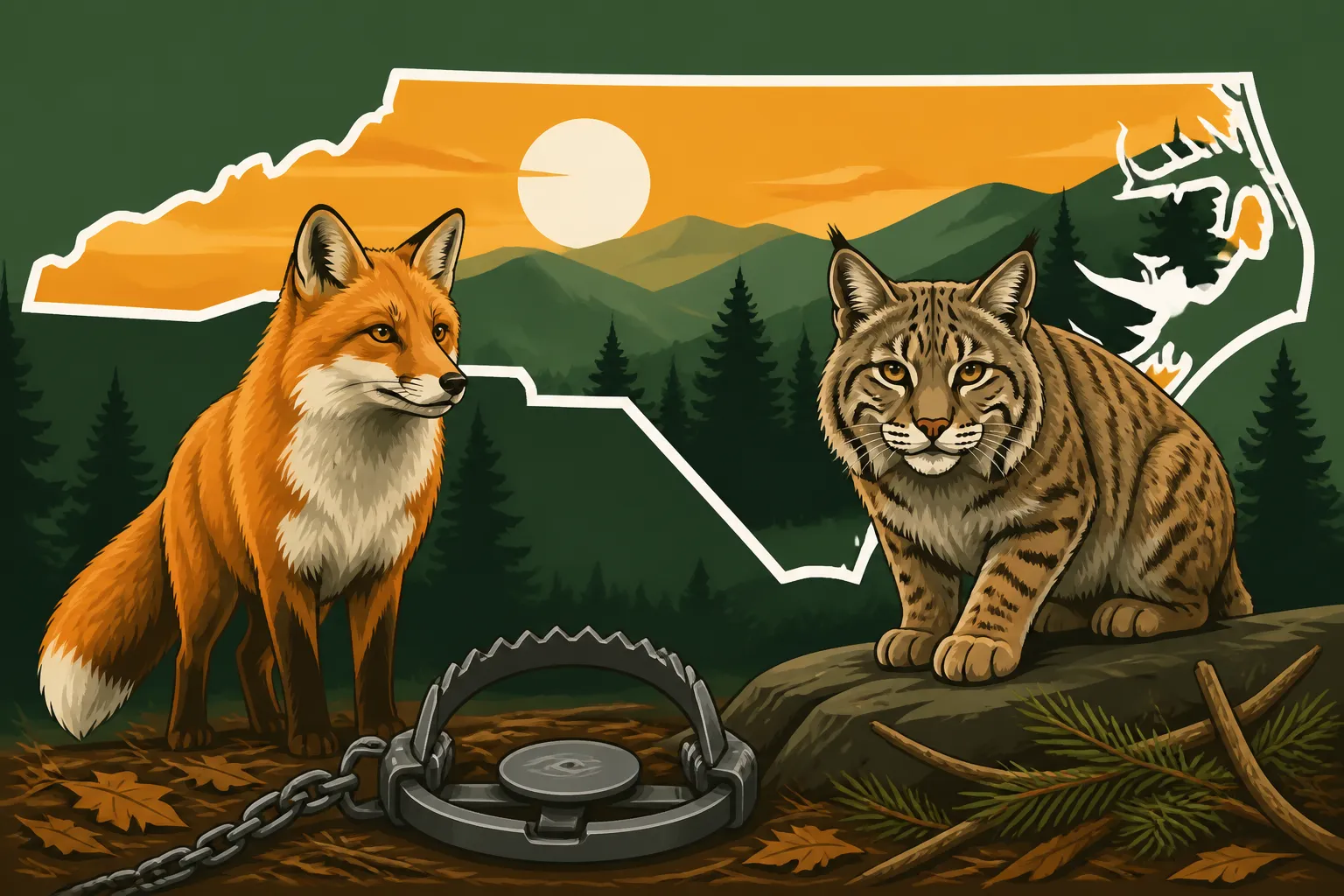
North Carolina Fox and Bobcat Trapping Season
Navigating the complex world of North Carolina's trapping seasons for animals like fox and bobcat can feel like trying to untangle a fisherman's knot in the dark. It’s not just about knowing what you can trap, but when, where, and how, all while adhering to a dense web of regulations that can differ dramatically even from one county to the next. This guide aims to shine a bright light on those often-confusing rules, helping both seasoned trappers and curious newcomers understand the legal framework for pursuing fox and bobcat in the Tar Heel State.
Navigating North Carolina's Trapping Regulations for Fox and Bobcat
Trapping in North Carolina isn't something you can just jump into without preparation. There's a foundational understanding of licenses, permits, and specific regulations that govern the pursuit of furbearers like fox and bobcat. Overlooking any of these critical steps can quickly turn an otherwise enjoyable outdoor activity into a legal headache.
General Principles and Permits for Trapping in NC
Before you even think about setting a trap, you need to ensure you're legally authorized to do so. In North Carolina, trapping isn't covered by a standard hunting license alone. You'll need a specific trapping license, often coupled with a general hunting or fishing license, to be fully compliant. For many residents, this means securing a North Carolina Resident Hunting License Options and then adding the necessary Furbearer Trapping License. This Furbearer Trapping License is your golden ticket, confirming you've met the state's requirements to harvest furbearers by trapping. Think of it like this: your base license gets you in the door to participate in wildlife activities, but the furbearer license gives you the specific authorization to trap.
It’s also important to remember that new trappers might need to complete hunter education requirements, just like hunters. The state wants to ensure everyone interacting with its wildlife resources does so safely and ethically. Imagine a young trapper, eager to learn, mistakenly assuming their dad’s hunting license covers them for trapping. Without that distinct trapping permit, they'd be breaking the rules before they even set their first foothold. The North Carolina Wildlife Resources Commission (NCWRC) website is always the first stop to verify current license requirements and costs, which can sometimes change season to season.
Understanding the Season Dates by Species and Zone
One of the biggest hurdles for any trapper in North Carolina is understanding that "season dates" aren't always a simple, statewide affair. While some species might have a fairly consistent season across the state, others, particularly the fox, are riddled with county-specific nuances. For bobcats, the season tends to be more unified, typically running from the first Monday in November through the last day of February, but it's always wise to double-check the latest regulations.
However, when it comes to fox, the situation becomes much more granular. North Carolina has a long history of local control over fox populations, meaning that a county just an hour down the road might have entirely different rules than your home county. Some areas might have a full open season for both red and gray fox, allowing for trapping during the general furbearer season. Other counties might only allow "chase-only" seasons, where foxes can be hunted with hounds but not actually harvested. And still, a few counties might have no open season at all for foxes, except in very specific circumstances like documented depredation. This patchwork of regulations can be incredibly frustrating. A trapper in the western mountains, familiar with one set of rules, might assume they apply to the Piedmont, only to find themselves inadvertently breaking the law. Always consult the most current NCWRC Furbearer Regulations Digest or utilize the NC Wildlife App to pinpoint the exact rules for your specific county of interest.
Specific Fox Trapping Seasons and Rules in North Carolina
Foxes in North Carolina are a unique case when it comes to trapping. Their historical management has created a complex tapestry of regulations that demand careful attention from any trapper hoping to pursue them.
Red and Gray Fox Seasons and Exceptions
The general furbearer trapping season for red and gray fox in North Carolina usually coincides with other furbearers, often beginning on the first Monday in November and extending through the last day of February. However, this is where the "general" part of "general season" needs a massive asterisk. As mentioned, North Carolina has a long-standing tradition of county-by-county management for foxes, and these local rules often supersede the statewide furbearer season.
For instance, you might find yourself in a county in the central Piedmont where trapping foxes during the general season is perfectly legal, allowing you to target both red and gray fox populations that might be impacting local poultry or small game. But drive an hour east or west, and you could enter a county designated as "chase-only," meaning you can enjoy the thrill of a fox chase with hounds, but you absolutely cannot set a trap or otherwise harvest a fox. To complicate matters further, some counties may have no open season for foxes at all, meaning any take of a fox is strictly prohibited unless it's under a specific depredation permit issued by the NCWRC. This is not a situation where "ignorance is bliss"; it's a situation where "ignorance is a fine." It’s absolutely critical to confirm the specific fox regulations for each individual county you plan to trap in. This often means going beyond the statewide general season dates and diving into the specific county appendices in the NCWRC regulations.
Legal Trapping Methods and Equipment for Fox
Once you've navigated the tricky season dates, you'll need to ensure your trapping methods and equipment are compliant. North Carolina has clear guidelines on the types of traps you can use and how they must be set. For land sets targeting foxes, foothold traps are the primary legal method. These traps must meet certain size requirements to minimize injury to the animal. Generally, the jaw spread of foothold traps is regulated to prevent the capture of larger, non-target species. You can't just throw out any old trap from your grandpa's shed without checking its specifications against current regulations.
Beyond the trap itself, the setup is crucial. All traps must be checked at least once every 24 hours. This isn't just a rule; it's an ethical obligation to ensure any captured animal is either humanely dispatched or released as quickly as possible. Every trap must also be marked with the trapper's name and address or their NCWRC customer number. Imagine setting a line of traps, only to have one found by a landowner or wildlife officer. Without proper identification, you're looking at potential legal trouble. Additionally, there are setback requirements – how far your traps must be from public roads and occupied dwellings. These rules are in place to ensure public safety and minimize conflicts. For example, setting a trap too close to a jogging path or someone's backyard could lead to an unfortunate incident. Therefore, careful consideration of your trapping location, ensuring it's on land where you have permission (more on that later with resources like GoHunt), and adhering to all setback rules is paramount for responsible fox trapping.
Bobcat Trapping Seasons and Management in North Carolina
Unlike the often-convoluted fox regulations, bobcat trapping in North Carolina is generally more straightforward, but it comes with its own set of critical rules, particularly regarding tagging and reporting.
Statewide Bobcat Trapping Season and Export Tags
The bobcat trapping season in North Carolina is typically more consistent across the state, usually running from the first Monday in November through the last day of February. This unified season makes planning a bobcat trapping endeavor much simpler than the county-specific fox regulations. Bobcats are a valuable furbearer, and their pelts are sought after, both domestically and internationally. Because bobcats are listed under the Convention on International Trade in Endangered Species of Wild Fauna and Flora (CITES), their pelts require special export tags if you plan to sell them or transport them out of North Carolina.
This tagging requirement is a non-negotiable step. Any bobcat taken by trapping (or hunting, for that matter) must be tagged with a CITES tag provided by the NCWRC. These tags are proof of legal harvest and are absolutely essential for the lawful sale or interstate transport of bobcat pelts. You'll typically obtain these tags directly from NCWRC offices or designated reporting stations. Failing to tag a bobcat could result in legal penalties and the confiscation of the pelt. It's not enough to simply take the animal; you must complete the administrative steps to legitimize your harvest, especially if you're planning on processing the hide for sale. This process also contributes to the NCWRC's ability to monitor bobcat populations and ensure sustainable harvest levels across the state.
Best Practices for Ethical and Effective Bobcat Trapping
Ethical and effective bobcat trapping involves more than just knowing the season dates and tagging rules; it's about responsible practices in the field. When targeting bobcats, trappers typically use larger foothold traps than those used for foxes, appropriate for the bobcat's size and strength. Traps like the Bridger Brawn #3 or Duke #3 are common choices, often modified or "tuned" for optimal performance and animal welfare. The goal is a quick, clean capture that holds the animal securely with minimal injury.
Set placement is also crucial for effective bobcat trapping. Bobcats are ambush predators, often traveling along game trails, logging roads, and natural funnels, especially in areas with dense undergrowth or rocky outcrops. Trappers often use "dirt hole" sets, "flat sets," or "cubby sets" with enticing baits and lures to attract bobcats. Proper concealment and scent control are paramount, as bobcats are notoriously wary. You're trying to appeal to their natural curiosity and predatory instincts without alarming them.
Beyond the technical aspects, ethical trapping demands a commitment to minimizing animal stress. This reinforces the need for daily trap checks. A bobcat caught in a trap needs to be handled promptly and humanely. This could mean dispatching it quickly and cleanly, or if it's a non-target species, releasing it safely. For any trapper, understanding the local wildlife and setting traps in a way that minimizes the capture of non-target animals (like domestic pets or protected species) is a sign of true professionalism and respect for the resource. This is where tools like GoHunt, with its detailed mapping capabilities, can really shine, helping you identify areas away from residential zones and high human traffic, reducing the chance of unwanted encounters.
Key Regulations, Reporting, and Resources for Trappers
Beyond the species-specific rules, there are overarching regulations and essential resources every North Carolina trapper must be familiar with to ensure a legal and responsible season.
General Trapping Rules and Mandatory Reporting
As with all wildlife harvest activities, trapping comes with a strict set of general rules designed to ensure humane treatment of animals and compliance with state law. We've already touched on the mandatory 24-hour trap check, but it bears repeating. This isn't just a suggestion; it’s a legal requirement. Failure to check your traps daily is a violation and can lead to penalties. The purpose is two-fold: to minimize suffering for captured animals and to allow for the timely release of non-target species. Imagine a domestic dog or an accidental deer fawn caught in a trap – a daily check allows for immediate action.
Additionally, proper carcass disposal is important. While trappers often keep pelts, the rest of the carcass must be disposed of ethically and legally. This generally means burying it or taking it to an appropriate disposal site, not leaving it in plain sight where it could attract scavengers or be a nuisance.
Perhaps one of the most critical, yet sometimes overlooked, requirements for all furbearer trappers is mandatory harvest reporting. Every fox and bobcat (along with other furbearers like raccoons, mink, and otter) harvested by trapping must be reported to the NCWRC. This data is vital for wildlife biologists to monitor populations, assess harvest impacts, and set future seasons. This reporting can usually be done conveniently online through the NCWRC website or via their mobile application. Just like when you're checking a North Carolina Deer Harvest Online, the process is streamlined to make it as easy as possible. Neglecting to report your harvest is a violation and can carry fines. The integrity of wildlife management relies on accurate data, and trappers play a direct role in providing that information. Understanding and adhering to North Carolina Wildlife Violation Penalties is crucial for avoiding legal issues.
Utilizing Digital Tools and Local Knowledge
In today's interconnected world, trappers have access to an incredible array of tools that can make their season more successful and compliant. The NC Wildlife App, for example, is an indispensable resource. It often provides immediate access to the latest regulations, allowing you to check county-specific fox seasons on the fly. You can also use it to report your harvest directly from the field. It's like having the full regulations digest and a reporting station right in your pocket.
Beyond regulatory compliance, mapping tools are invaluable for scouting and planning traplines. While the NCWRC provides resources like Using the NC Wildlife Map Tool for public lands, advanced mapping platforms can offer even more detail. Services like GoHunt are excellent for this, providing comprehensive land ownership data, topographical maps, and satellite imagery. A trapper looking for new ground to set up a line, especially if seeking private land permission, can use GoHunt to identify potential landowners, evaluate habitat, and plan access routes. This can save countless hours of walking and guesswork. For instance, if you're interested in Hunting Piedmont Farmland Deer, you might also find excellent fox or bobcat habitat along the edges of those fields or in the adjoining woodlots, and a tool like GoHunt can help you visualize those areas.
But no digital tool can replace local knowledge. Connecting with experienced trappers in your area, joining a local trapping association, or simply striking up conversations with landowners and NCWRC staff can provide insights that no app or website can offer. They might know about specific areas where bobcats are active, or local nuances of fox behavior, or even subtle changes in county regulations that aren't widely publicized yet. Finding Ground Others Walk Past often comes down to that local wisdom combined with diligent scouting. This blend of cutting-edge technology and time-honored local expertise is the recipe for a successful and responsible trapping season in North Carolina.
| Species | Typical Statewide Season Dates | Key Considerations | Reporting Requirements | Export Tag Needed? |
|---|---|---|---|---|
| Fox | First Mon. Nov. – Last Day Feb. | County-specific variations are CRITICAL. Many counties are "chase-only" or "no open season" for take. Check local rules carefully. | Mandatory harvest reporting (online/app) | No |
| Bobcat | First Mon. Nov. – Last Day Feb. | Generally statewide consistent. Must be tagged if selling pelt or transporting out of state (CITES compliance). | Mandatory harvest reporting (online/app) | Yes |
Disclaimer
Please remember that wildlife regulations can change. While every effort has been made to provide accurate and up-to-date information, it is your responsibility to consult the most current North Carolina Wildlife Resources Commission (NCWRC) regulations digest or visit their official website before engaging in any hunting or trapping activities. This guide is for informational purposes only and does not constitute legal advice.