How Many Acres Uwharrie Forest Covers
It's easy to look at a map of North Carolina and see a green blob labeled "Uwharrie National Forest," but understanding the sheer scale of that green space and what it means for your hunting experience is a whole different ballgame. Many hunters, especially those new to public land or coming from smaller private tracts, find themselves overwhelmed by the vastness, unsure how to approach such a large, wild area. This guide will walk you through the actual size of Uwharrie National Forest, break down what those acres mean for the dedicated hunter, and offer practical advice on how to navigate and make the most of this incredible resource.
Unpacking the Actual Size of Uwharrie National Forest
When you're planning a hunt, knowing the exact dimensions of your hunting grounds is more than just a fun fact; it's a crucial piece of strategy. Uwharrie National Forest isn't just "big"; it has a specific footprint that dictates everything from how deer move to where you might find less pressured pockets.
The Official Acreage and What It Really Means for Hunters
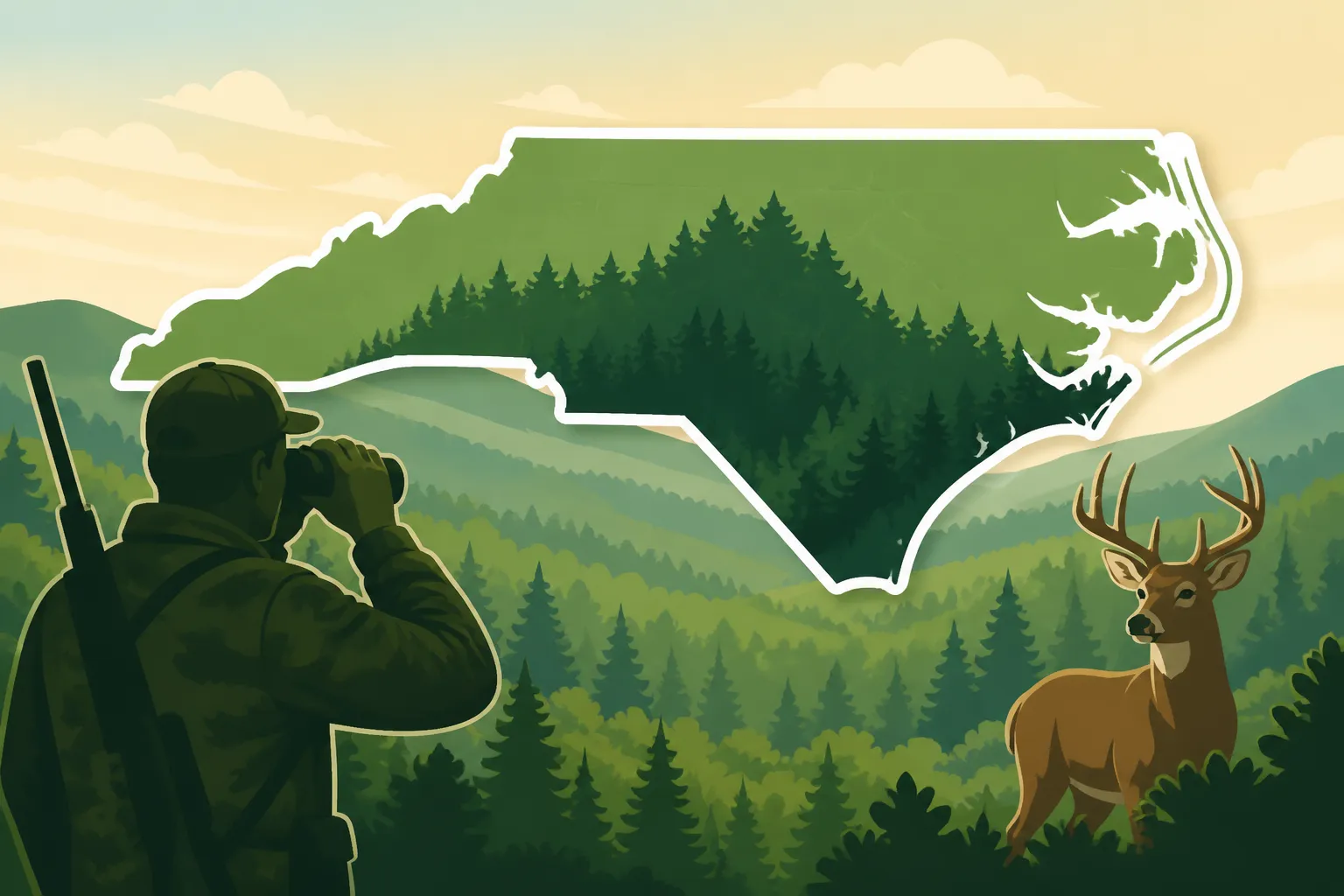
Uwharrie National Forest officially encompasses 52,000 acres of public land. Now, let that number sink in for a moment. Fifty-two thousand acres isn't a small woodlot or a couple of farm fields strung together. It's a significant chunk of forest, hills, and creek bottoms that stretches across parts of Montgomery, Randolph, and Stanly counties in the central Piedmont region of North Carolina. For hunters, this translates into immense opportunity, but also considerable challenges.
On one hand, 52,000 acres means there's always room to roam. If you encounter too much pressure in one area, you can pack up and move to another, sometimes just a ridge away, and find a completely different hunting experience. It offers a sense of wildness that's hard to come by in the increasingly fragmented landscapes of the Piedmont. This expansive habitat supports a healthy deer population, as well as turkeys, small game, and even some black bears, though they're not as common as in the mountains or coastal plain. The sheer volume of ground means that, with enough effort, you can find unpressured pockets of timber, overlooked creek bottoms, or secluded benches that rarely see human intrusion. It’s a place where dedicated scouting can truly pay off, as the rewards are often hidden deep within its vastness.
Beyond the Numbers: Understanding Uwharrie's Geography and Topography
While the 52,000-acre figure gives you a general idea, Uwharrie's unique geography and topography truly define the hunting experience. This isn't flat, featureless land. Uwharrie National Forest is characterized by ancient, rolling hills — the oldest mountain range in North America, in fact — that have been worn down over millennia. These aren't towering peaks like in the Blue Ridge, but they present a consistently undulating landscape of ridges, hollows, and drainages that can be physically demanding to navigate.
The elevation changes, while not extreme, are constant. You'll find yourself climbing and descending repeatedly throughout a day's hunt, which impacts scent control, shot angles, and how sound travels. Dense hardwood forests dominate, primarily oaks, hickories, and poplars, offering critical mast crops. Interspersed throughout are pine plantations, creek bottoms with thick undergrowth, and occasional open areas. This varied terrain creates a mosaic of habitats crucial for different game species. Deer will bed on thick south-facing slopes in the winter, feed in oak flats in the fall, and travel along benches and saddles that connect these areas. Turkeys roost in tall hardwoods along creek beds and forage in more open timber. Understanding these micro-environments and how they relate to the broader topography is key to deciphering where game might be on any given day. You can really get a feel for this by Hunting Uwharrie's Rolling Piedmont Hollows.
Hunting Opportunities Within Uwharrie's Extensive Landscape
The vastness of Uwharrie means diverse opportunities for hunters, but each species requires a different approach to truly leverage the acreage. It's not a one-size-fits-all kind of forest.
Pursuing Whitetails in the Piedmont Hills
Deer hunting is arguably the most popular pursuit in Uwharrie National Forest, and the 52,000 acres provide ample space for it. The rolling hills, thick timber, and numerous drainages create fantastic whitetail habitat. Unlike some agricultural areas, deer here are often wilder, more attuned to natural food sources, and less accustomed to human scent. This makes for a challenging but incredibly rewarding hunt.
Hunters often focus on saddles, ridge lines, and creek bottoms, as these are natural travel corridors. During the early archery season, you might find deer feeding on acorns in oak flats, and later in the season, they'll gravitate towards evergreens or thickets for cover. The sheer size of the forest allows deer to establish large home ranges, particularly mature bucks, which can make them harder to pattern than deer on smaller, more confined private lands. However, it also means there are always new areas to explore, new rubs and scrapes to find. Tactics like still-hunting slowly through the hardwoods or setting up a treestand overlooking a natural funnel between two draws can be highly effective. The key is putting in the legwork to scout thoroughly before the season. Understanding Hunting the Rut in the Eastern Zones can also be particularly helpful, as Uwharrie's deer activity peaks around the same time.
Spring Turkey and Small Game in Uwharrie's Diverse Habitats
Beyond deer, Uwharrie's 52,000 acres are also a fantastic place to chase wild turkeys and a variety of small game. The diverse habitat, from mature hardwoods to pine stands and brushy creek edges, supports healthy populations.
For spring turkeys, the expansive forest means birds have plenty of room to roam and establish their territories. You'll find gobblers strutting in open timber, responding to calls from ridge tops, and roosting in tall trees along the many creek drainages. Uwharrie Piedmont Turkey Hunting is a rewarding experience, but it often requires covering significant ground. Run-and-gun tactics, where you move and call frequently, can be very effective as you try to locate a responsive tom. The sheer acreage also means that if one area is quiet or pressured, you can move to a different block of timber and try your luck.
Small game hunting, particularly for squirrels and rabbits, thrives in Uwharrie. The vast oak and hickory stands are squirrel havens, especially during fall when the mast crop is abundant. A leisurely walk through the hardwoods with a .22 rifle or a shotgun can yield a full bag. For rabbits, focus on the edges of clearcuts, thick briar patches, and brushy creek bottoms. The expansive nature of the forest means there's always more cover to explore, making it a great place to introduce new hunters to the sport or just enjoy a relaxing day in the woods. You can learn more about general small game rules in North Carolina Small Game Season Rules.
Navigating and Maximizing Your Hunt Across Uwharrie's Acreage
The biggest challenge, and often the biggest reward, of hunting Uwharrie's 52,000 acres is navigation. Without a solid plan and the right tools, it's easy to get turned around or miss prime hunting spots.
Leveraging Mapping Tools to Master the Terrain
Given the vastness and often remote nature of Uwharrie National Forest, modern mapping tools are indispensable. Gone are the days of relying solely on paper maps, although carrying one as a backup is always a good idea! Apps like onX Hunt or GoHunt have revolutionized how hunters approach large public land tracts. These tools allow you to:
- See property lines: Crucial for staying on public land and away from private holdings that might border the forest.
- Identify terrain features: Visualize ridges, hollows, saddles, and drainages in detail. This helps you understand how deer might move and where to set up.
- Mark waypoints: Drop pins for stand locations, rub lines, scrapes, water sources, or even your vehicle, ensuring you can find your way back, especially in the dark.
- Track your movement: See exactly how much ground you've covered and where you've been, helping you learn the forest over time.
- Identify vegetation types: Differentiate between hardwoods, pines, and clearcuts, which are vital for understanding food sources and bedding cover.
Before you even step foot in Uwharrie, spend time at home studying these maps. Look for access points, potential pinch points, secluded basins, and areas far from roads that might hold less pressured game. This pre-scouting with technology saves invaluable time in the field. You can even overlay different satellite views or topographic maps to get a comprehensive understanding of the landscape. It's a game-changer for Scouting North Carolina Public Land Before Season.
Finding Solitude and Success in the Expansive Forest
One of the greatest advantages of Uwharrie's 52,000 acres is the potential to find solitude, even during peak hunting seasons. While popular access points and areas close to main roads will see pressure, the sheer size means that a willingness to walk an extra mile or two can put you in truly quiet, unpressured territory. This is where the challenge and reward truly intertwine.
To find these hidden gems, consider these strategies:
- Walk Farther: Don't just hunt the first ridge you come to. Venture deep into the forest, especially away from designated trails or parking areas. Most hunters won't go beyond a certain comfortable distance, creating natural sanctuaries further in.
- Focus on Difficult Terrain: Areas with steep climbs, thick briar patches, or numerous creek crossings often deter less determined hunters. These tough spots can hold undisturbed game.
- Utilize Overlooked Access Points: Look for lesser-used logging roads, old fire breaks, or even small pull-offs that aren't obvious entry points.
- Hunt Mid-Week: If your schedule allows, hunting on a Tuesday or Wednesday will significantly reduce the number of other hunters you encounter compared to opening weekend or Saturdays.
- Use Your Mapping Tools: As mentioned, onX Hunt can show you public land boundaries that extend far from main roads, allowing you to pinpoint remote sections that are harder to get to. Similarly, GoHunt can help analyze terrain and identify those elusive, out-of-the-way spots.
By combining detailed map study with a commitment to cover ground, you can leverage Uwharrie's expansive acreage to find incredible hunting experiences that feel truly wild and remote. The forest offers a genuine challenge, but for those willing to put in the effort, its 52,000 acres hold endless possibilities.
Disclaimer
This article is for general informational purposes only and does not constitute professional advice. Laws, prices and regulations vary by location and change over time. Consult a qualified professional for guidance on your specific situation.